Professional Mould Remediation in South Melbourne
Mould can develop when building materials remain damp or indoor humidity is not adequately controlled. Common contributors include plumbing leaks, roof or façade entry, failed wet-area waterproofing, flooding, stormwater, condensation, poor subfloor airflow and insufficient extraction from bathrooms or kitchens.
Surface treatment alone may not address affected porous materials, settled contamination or concealed moisture. A suitable remediation plan considers the source, extent, material type, access, occupants, contents and how the work area connects with the rest of the property.
South Melbourne Property Considerations
South Melbourne includes Victorian terraces, apartments, converted buildings, rentals, strata properties, offices, retail and hospitality premises. Moisture may enter through ageing roofs and parapets, balconies, plumbing, shared services, wet areas, façades or subfloors. Dense building layouts, condensation and limited ventilation can also contribute to persistent dampness and mould growth.
In strata buildings, moisture pathways may involve private lots, common property or shared services. ARS documents accessible restoration conditions but does not determine lot boundaries, legal liability or insurance coverage.
When to Arrange a Mould Assessment
- Visible or recurring mould on walls, ceilings, flooring or contents
- Persistent musty or damp odours
- Water staining, bubbling paint or damaged plaster
- Damp carpet, timber, cabinetry or stored contents
- Condensation on windows, walls, ceilings or services
- A recent or historic leak, flood or stormwater event
- Suspected moisture beneath flooring or inside wall systems
- A rental, strata, insurance or workplace documentation requirement
People with health concerns should consult an appropriate healthcare professional. ARS assesses property conditions and does not diagnose illness or determine whether symptoms were caused by mould.
Our Melbourne Mould-Removal Process
- Project review: discuss the property, moisture history, previous repairs, affected areas and purpose of the work.
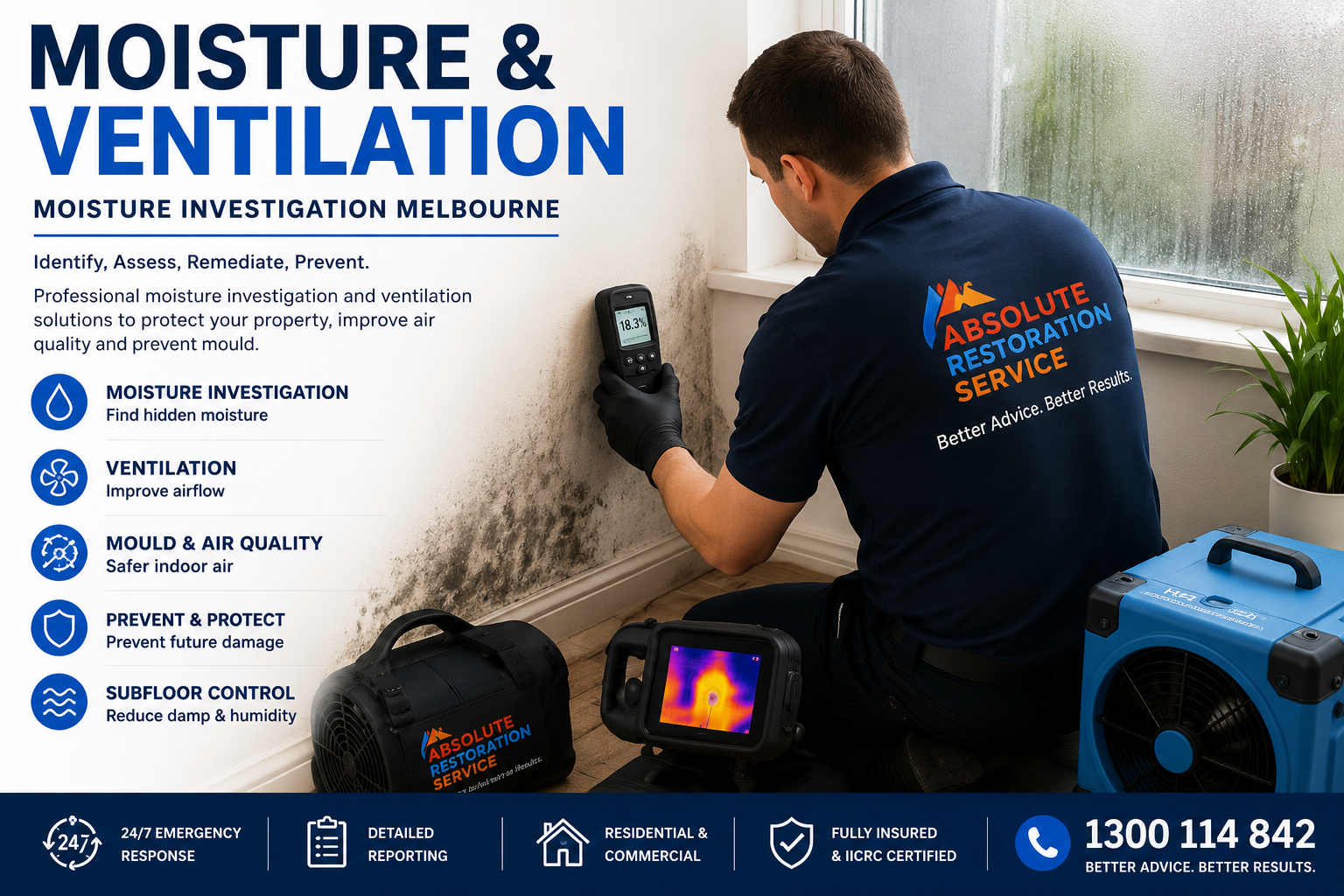
- Accessible assessment: document visible growth, material damage, odours, moisture readings and relevant ventilation conditions.
- Source coordination: confirm active water has stopped or recommend the appropriate licensed trade for repair.
- Scope development: identify work areas, affected materials, access controls, exclusions and completion criteria.
- Containment and preparation: protect unaffected finishes and establish project-appropriate controls.
- Material remediation: remove affected porous materials where required and clean suitable retained surfaces.
- Detailed cleaning: address residues and settled dust within the defined work area.
- Drying and monitoring: confirm agreed moisture criteria where structural drying forms part of the scope.
- Review and handover: document completed work, limitations and any remaining repair or verification requirements.
Containment and HEPA-Filtered Air Management
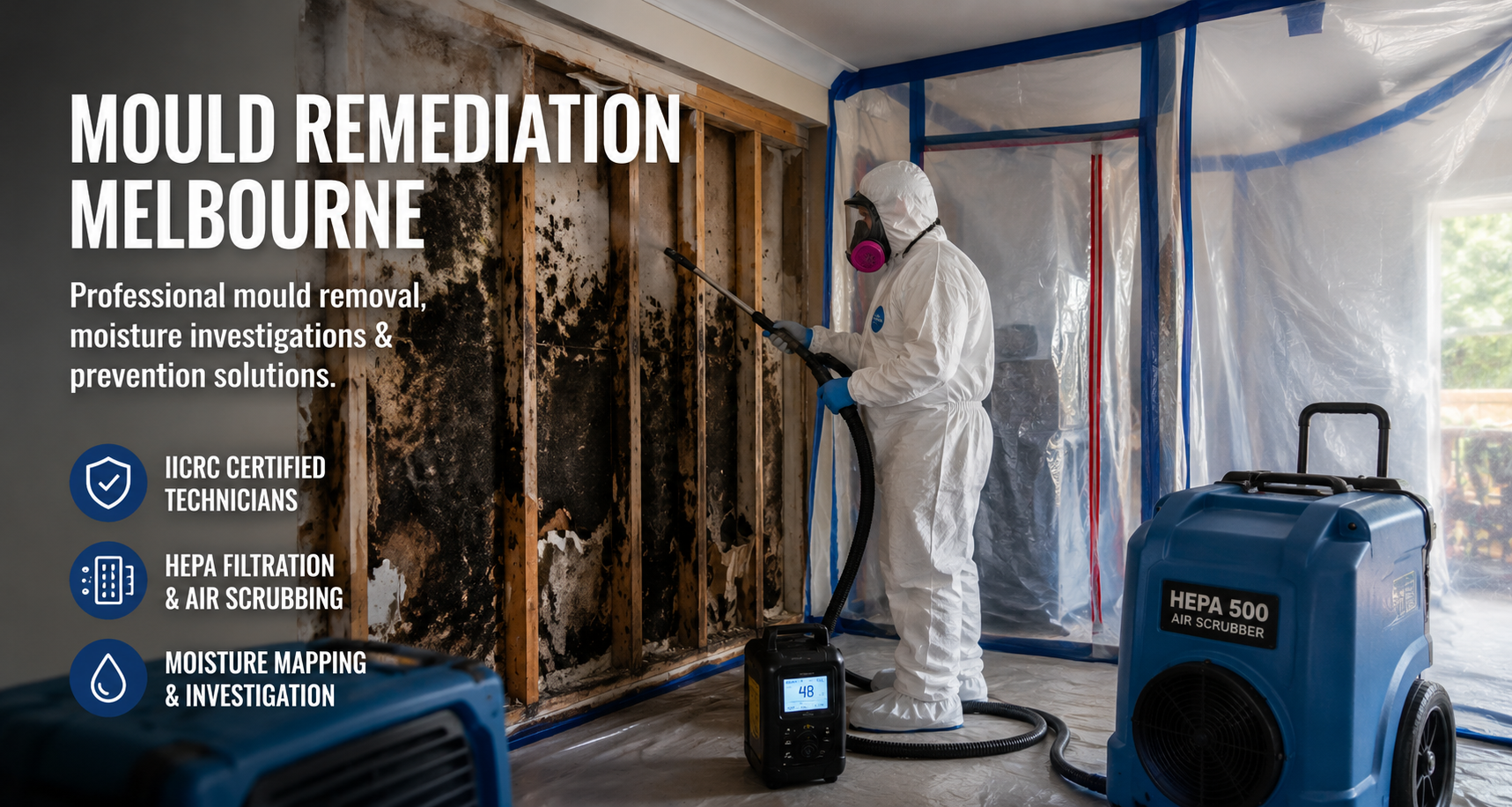
Containment should match the size, location and risk of the project. It may include critical barriers, controlled access, protective floor paths and HEPA-filtered pressure management. The plan must also consider occupants, pets, neighbouring rooms, shared corridors, HVAC systems, fire-safety requirements and emergency access.
Containment is a work control, not proof that a building is airtight or that no particles can move. Its condition and performance should be monitored during relevant work.
Cleaning Versus Removing Materials
Hard, non-porous materials can often be cleaned when sound and accessible. Semi-porous and porous materials require case-by-case assessment. Plasterboard, insulation, ceiling tiles, carpet underlay and badly deteriorated composite materials may require controlled removal when contamination cannot be adequately addressed.
Decisions consider material composition, condition, contamination, access, heritage or financial value, occupant requirements and the ability to confirm an acceptable result.