Mycotoxin Decontamination Melbourne

Professional mycotoxin contamination assessment and toxic mould remediation services for residential, rental, strata and commercial properties throughout Melbourne.
Professional Mycotoxin Decontamination Across Melbourne
Mycotoxin contamination may occur in buildings affected by prolonged
moisture, water damage or hidden mould growth. Although not every mould
species produces mycotoxins, certain moulds may generate these naturally
occurring compounds under specific environmental conditions.
Absolute Restoration Service provides professional
mycotoxin decontamination Melbourne services for homes,
apartments, rental properties, strata buildings, healthcare facilities,
schools and commercial properties.
Our experienced remediation technicians investigate moisture sources,
establish appropriate containment, remove mould-affected materials and
complete detailed environmental cleaning using commercial HEPA filtration,
Goldmorr remediation technology and recognised mould remediation procedures.
Why Choose Absolute Restoration Service?
- IICRC-certified restoration technicians
- Goldmorr-trained remediation professionals
- Specialised Goldmorr remediation technology
- Professional mould and moisture investigations
- Advanced HEPA air scrubbing and filtration
- Containment and negative-air management
- Thermal imaging and moisture mapping
- Indoor air quality assessment experience
- Residential, commercial and government projects
- Melbourne-wide service coverage
- 24/7 emergency response available
- Rated 4.9/5 from 769+ HiPages reviews
Call 1300 114 842 to arrange a professional
assessment.
What Are Mycotoxins?
Mycotoxins are naturally occurring compounds that may be produced by certain
mould species under particular environmental conditions. They are microscopic
and cannot be identified through visual inspection alone.
Where mould growth has remained active for an extended period, mycotoxins,
mould fragments and other particulates may become associated with settled
dust, porous materials and contaminated building surfaces.
These contaminants may remain within a building after visible mould has been
cleaned, especially where the moisture source has not been identified or
affected materials have not been properly remediated.
Hidden mould contamination may develop inside walls, ceilings, insulation,
flooring systems, roof spaces and other concealed building areas.
Goldmorr Mycotoxin Remediation Technology

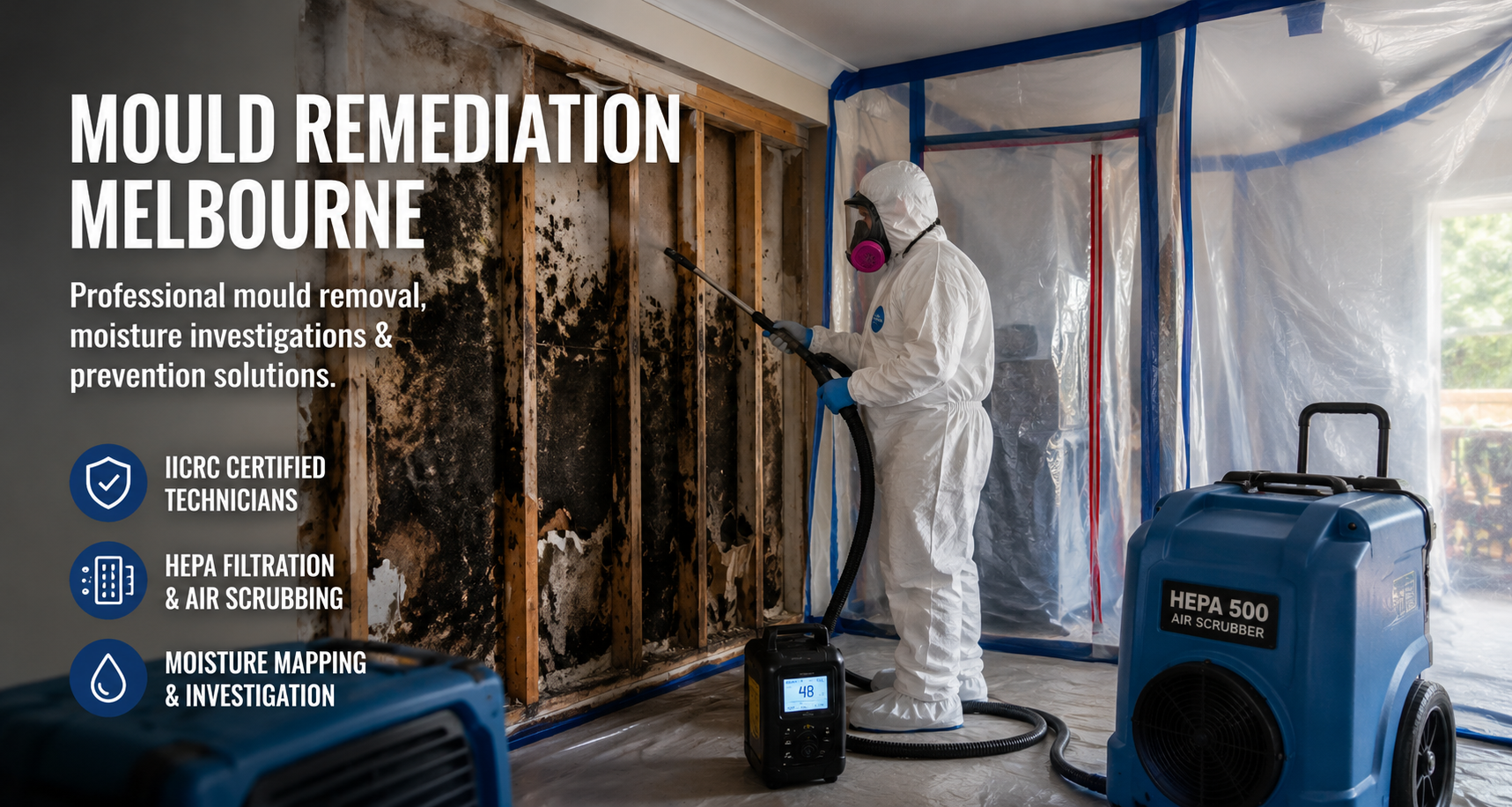
Commercial Goldmorr HEPA air scrubbing equipment operating within a sealed containment zone to capture airborne mould spores, contaminated dust and particulates during professional mycotoxin remediation.
Visible mould is only one part of a contamination event. In buildings affected
by prolonged moisture or hidden mould growth, microscopic spores, mould
fragments, contaminated dust and, in some situations, mycotoxins may remain
associated with building materials and indoor surfaces.
In 2020, Goldmorr developed specialised remediation treatments and protocols
intended to assist trained remediation professionals when addressing
mycotoxin-related contamination within indoor environments.
Absolute Restoration Service incorporates Goldmorr remediation technology
into our comprehensive mould and mycotoxin decontamination process where
appropriate.
Our technicians combine Goldmorr treatment products with moisture
investigation, containment, HEPA air filtration, source removal and detailed
environmental cleaning. Goldmorr treatment is used as part of an integrated
remediation process and is not relied upon as a substitute for removing
contaminated materials or correcting the underlying moisture source.
Our Integrated Remediation Approach
- Identify and correct the source of moisture
- Assess the extent of mould and building-material contamination
- Establish containment and controlled airflow
- Operate commercial HEPA air scrubbers and negative-air systems
- Remove contaminated porous materials where required
- HEPA vacuum and clean remaining structural surfaces
- Apply Goldmorr remediation treatments where appropriate
- Complete a final inspection and remediation review
This combined approach is designed to address visible mould, airborne
particulates, contaminated dust and affected building materials while reducing
the likelihood of recurring mould growth.
Common Causes of Mycotoxin and Mould Contamination
Mycotoxin concerns are commonly associated with unresolved mould growth caused
by excess moisture. Potential causes include:
- Burst pipes and plumbing leaks
- Roof leaks
- Storm and flood damage
- Wet plasterboard or insulation
- Poor bathroom or kitchen ventilation
- Condensation on walls and windows
- Rising damp
- Subfloor moisture
- Roof-space moisture
- Air-conditioning or drainage faults
- Long-term hidden water ingress
Moisture control is essential. Cleaning visible mould without correcting the
underlying water or humidity problem is unlikely to provide a lasting result.
Signs Your Property May Require Assessment

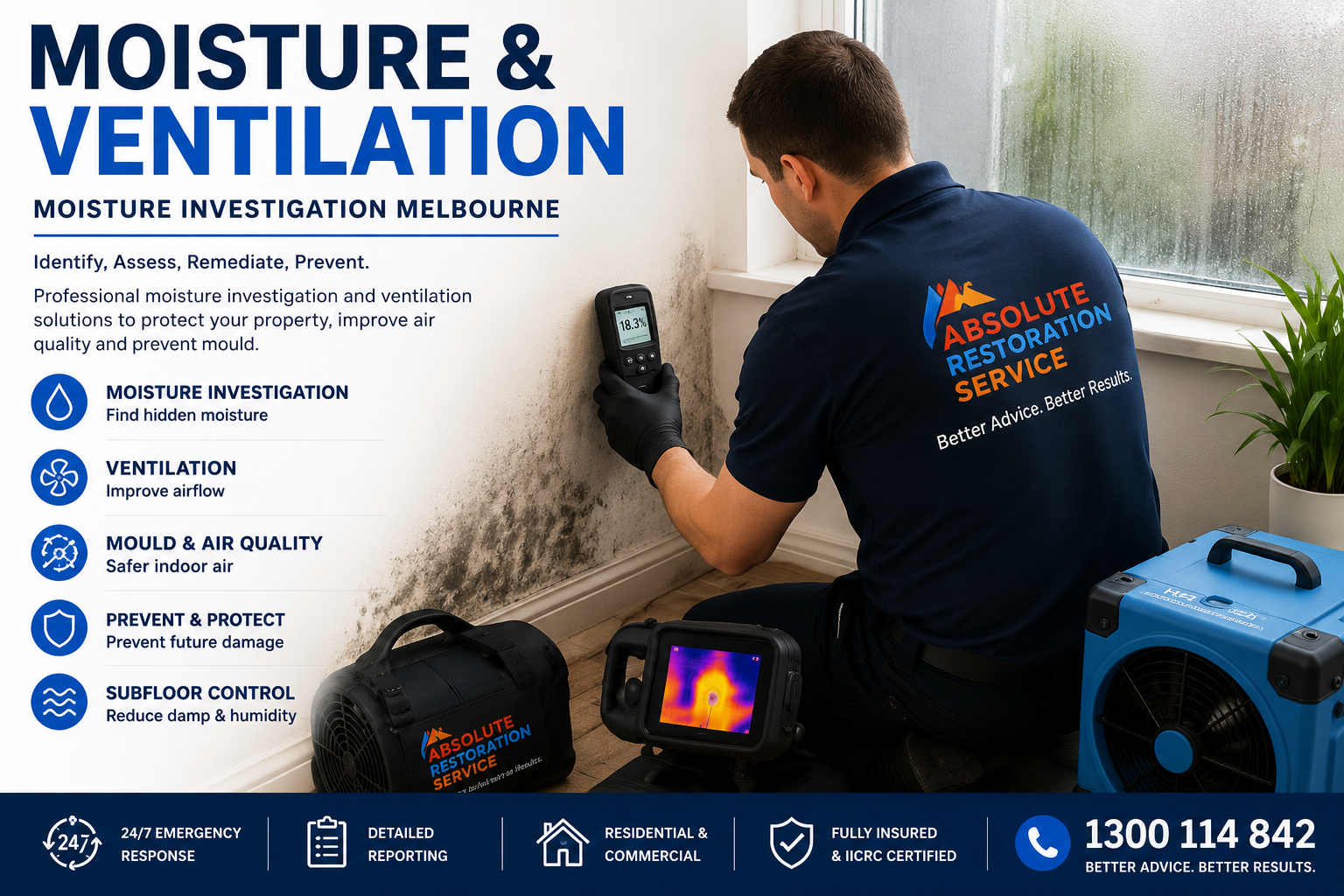
FLIR thermal imaging used during inspection to identify concealed moisture and mould risk areas within building structures.
Consider arranging a professional mould and moisture assessment if you notice:
- Recurring mould growth after cleaning
- Persistent musty or earthy odours
- Water-stained walls or ceilings
- Damp plasterboard or insulation
- Previous flooding or water damage
- Visible mould inside cupboards or wardrobes
- Condensation and elevated indoor humidity
- Damp subfloors, basements or roof spaces
- Ongoing indoor air quality concerns
- Occupant complaints associated with the indoor environment
Because mycotoxins are not visible, their presence cannot be confirmed through
visual inspection alone. The first priority is to identify moisture problems
and determine the extent of mould-affected materials.
Thermal imaging, moisture mapping and building diagnostics can help identify
hidden dampness that may be supporting mould growth.
How Mould-Related Contamination Can Spread
Mould spores, fragments and contaminated dust can move beyond the original
growth area through normal air movement and building-pressure differences.
Potential movement pathways include:
- Wall and ceiling cavities
- Roof spaces
- Air-conditioning systems
- Mechanical ventilation systems
- Subfloor-to-living-area air leakage
- Service penetrations
- Doorways and open stairwells
- Natural convection currents
- Foot traffic and disturbed dust
This means contamination may affect adjoining rooms or surfaces where visible
mould growth is not immediately apparent.
Our Mycotoxin Decontamination Process

HEPA air scrubbing equipment used by Absolute Restoration Service during mould remediation projects to capture airborne contaminants, improve indoor air quality, and support safe restoration outcomes.
1. Site Assessment
We inspect the property for visible mould, moisture damage, musty odours,
ventilation problems and building conditions that may support ongoing
microbial growth.
2. Moisture Investigation
Moisture meters, thermal imaging and building diagnostics are used where
appropriate to identify hidden dampness, elevated moisture and potential
water-entry points.
3. Remediation Planning
A remediation scope is prepared based on the contamination extent, affected
materials, property use, accessibility and required engineering controls.
4. Containment
Affected work areas may be isolated using sealed containment barriers to
reduce the movement of dust, mould spores and other particulates during
remediation.
5. HEPA Air Filtration
Commercial HEPA air scrubbers and negative-air systems may be operated to
capture airborne particulates and maintain controlled airflow within the
remediation area.
Commercial HEPA filtration and containment help reduce cross-contamination
during mould remediation.
6. Removal of Contaminated Materials
Materials that cannot be effectively cleaned may require controlled removal.
This can include severely affected plasterboard, insulation, carpet, underlay
and other porous materials.
7. Detailed HEPA Cleaning
Remaining structural surfaces and accessible areas are cleaned using HEPA
vacuuming, damp wiping and specialised remediation procedures appropriate to
the material and contamination conditions.
8. Goldmorr Remediation Treatment
Following source removal and detailed cleaning, specialised Goldmorr
remediation products may be applied by trained technicians where appropriate.
Goldmorr treatment forms part of a complete remediation process designed to
address mould-affected indoor environments. It is used alongside containment,
HEPA filtration, controlled material removal, environmental cleaning and
moisture correction.
9. Final Inspection
A final inspection is completed to confirm that the agreed remediation scope
has been addressed and that identified moisture issues have been corrected or
referred for further building repairs.
10. Post-Remediation Verification
Where required, independent post-remediation verification or indoor
environmental testing may be arranged to assess whether the remediation area
meets the nominated project criteria.
Why We Use Goldmorr Technology
Goldmorr has developed professional mould remediation products and treatment
systems for use by trained remediation technicians. Its specialised
mycotoxin-related treatment was developed in 2020 to support remediation
projects involving complex mould-contaminated indoor environments.
Goldmorr technology may be incorporated into a process that includes:
- Moisture investigation
- Building diagnostics
- Containment and engineering controls
- Commercial HEPA air filtration
- Controlled demolition where required
- Detailed HEPA cleaning
- Professional surface treatment
- Moisture management and prevention recommendations
Absolute Restoration Service does not rely on a single product to resolve
mould or mycotoxin concerns. Our technicians use Goldmorr technology as part
of a broader remediation strategy that addresses the contamination source,
affected materials and building moisture conditions.
Why Moisture Control Is Critical
Successful mycotoxin and mould remediation depends on eliminating the
conditions that allowed mould to grow.
Common moisture problems that may require correction include:
- Roof and gutter defects
- Leaking plumbing fixtures
- Failed waterproofing
- Flood-damaged building materials
- Inadequate exhaust ventilation
- Condensation caused by poor air exchange
- Subfloor moisture and drainage problems
- Building-envelope leaks
Without effective moisture control, mould growth may return even after
professional cleaning and remediation.
Properties We Service
Our mycotoxin decontamination and toxic mould remediation services are
available for:
- Residential homes
- Apartments and townhouses
- Rental properties
- Strata and owners corporation buildings
- Commercial offices
- Retail tenancies
- Schools and education facilities
- Healthcare and aged-care facilities
- Government buildings
- Warehouses and industrial properties
Related Restoration Services
- Mould Removal Melbourne
- Mould Inspection Melbourne
- Water Damage Restoration Melbourne
- Flood Damage Restoration Melbourne
- Emergency Flood Cleanup Melbourne
- Indoor Air Quality Services Melbourne
- Subfloor Ventilation Melbourne
- Fire and Smoke Damage Restoration Melbourne
- Clandestine Drug Laboratory Remediation
- Biohazard Remediation Services
Frequently Asked Questions
What are mycotoxins?
Mycotoxins are naturally occurring compounds that may be produced by certain
mould species under specific environmental conditions.
Does every mould problem involve mycotoxins?
No. Not every mould species produces mycotoxins. Production may depend on the
mould species, available nutrients, moisture levels and environmental
conditions.
Can mycotoxins be seen?
No. Mycotoxins are microscopic and cannot be identified visually. Visible
mould growth, water damage and persistent moisture may indicate that further
assessment is appropriate.
What is Goldmorr mycotoxin remediation?
Goldmorr mycotoxin remediation refers to specialised remediation treatments
and protocols developed for use by trained professionals when addressing
mould-contaminated indoor environments. The treatment is used as part of a
broader remediation process that may include containment, HEPA filtration,
source removal, detailed cleaning and moisture correction.
Does Goldmorr treatment replace mould removal?
No. Goldmorr treatment does not replace the need to identify the moisture
source, remove unsalvageable mould-contaminated materials or complete detailed
HEPA cleaning. It is incorporated into a comprehensive remediation process
where appropriate.
Why does Absolute Restoration Service use Goldmorr products?
Goldmorr has developed specialised mould and mycotoxin remediation products
for professional application. We combine Goldmorr technology with moisture
investigation, containment, HEPA filtration, source removal and detailed
cleaning to provide a comprehensive remediation service.
Can water damage contribute to mould contamination?
Yes. Water intrusion and prolonged elevated moisture create conditions that
support mould growth on plasterboard, insulation, carpet, timber and other
building materials.
Can mould contamination spread to other rooms?
Yes. Mould spores, fragments and contaminated dust may move through wall
cavities, ceiling spaces, ventilation systems, open doorways and normal air
movement.
Can mould return after remediation?
Yes. Mould may return if the underlying moisture source, ventilation problem
or building defect has not been corrected.
Do you provide inspection reports?
Yes. Absolute Restoration Service can provide inspection findings, moisture
assessments, remediation scopes and supporting documentation where required.
Do you service all Melbourne suburbs?
Yes. We provide mould remediation, moisture investigation and mycotoxin
decontamination services throughout metropolitan Melbourne and selected
regional areas of Victoria.
Book a Professional Mycotoxin Decontamination Assessment

An Absolute Restoration Service technician explains mould testing and indoor air quality results to a homeowner, providing clear recommendations for remediation and long-term moisture control.
Mycotoxin concerns are often associated with prolonged mould growth, hidden
water damage, poor ventilation and unresolved moisture problems. A
professional assessment can help identify the likely contamination source and
determine an appropriate remediation strategy.
Absolute Restoration Service provides professional mycotoxin decontamination,
Goldmorr remediation treatment, mould removal and indoor environmental
services for homeowners, landlords, property managers, businesses, schools,
healthcare facilities and government properties throughout Melbourne.
Our remediation specialists assess the property, identify moisture problems
and implement practical remediation procedures designed to improve indoor
environmental conditions and reduce the risk of recurring mould growth.
Book your professional mycotoxin assessment today.
Call 1300 114 842
Request a Mycotoxin Decontamination Assessment
Professional Mycotoxin Decontamination, Goldmorr Remediation, Mould
Remediation and Indoor Environmental Services Across Melbourne.