Energy Recovery Ventilation Melbourne
Assessment, design and installation support for balanced fresh-air ventilation in Melbourne homes and selected buildings.
An Energy Recovery Ventilator (ERV) exchanges stale indoor air with filtered outdoor air while transferring part of the heat and moisture energy between the two airstreams. A correctly designed system can support ventilation, comfort and humidity management, but it does not replace repairs to leaks, rising damp, failed waterproofing or other moisture sources.
Call 1300 114 842 or request an ERV assessment for your Melbourne property.
What Is an Energy Recovery Ventilator?
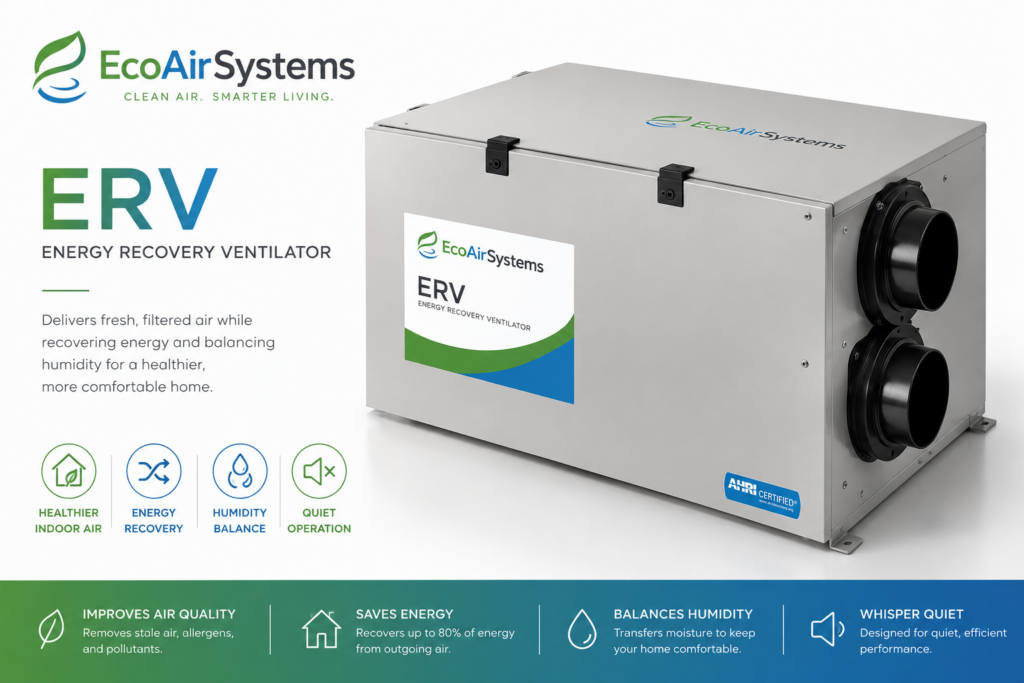
An ERV uses separate supply and exhaust air paths through an energy-exchange core. Outdoor air is filtered and supplied to selected rooms while stale indoor air is exhausted from appropriate locations. The airstreams remain separated within a correctly functioning unit while energy transfers through the core.
Compared with opening windows or using intermittent exhaust alone, a balanced mechanical system can provide more consistent, controllable air exchange. Actual performance depends on system design, duct layout, filters, commissioning, building leakage, occupancy and maintenance.
How an ERV System Works
- Outdoor air intake: external air enters through a suitably positioned weather-protected intake.
- Filtration: filters reduce selected airborne particles before supply air reaches occupied spaces.
- Energy exchange: the core transfers part of the sensible and latent energy between the exhaust and supply airstreams.
- Fresh-air supply: conditioned outdoor air is distributed to nominated living or sleeping areas.
- Stale-air exhaust: air is removed from suitable return or extract points in accordance with the design.
- Balanced commissioning: airflow is measured and adjusted so supply and exhaust rates align with the design intent.
When an ERV Assessment May Help
- Airtight new homes, renovations or energy-efficient buildings
- Persistent condensation associated with occupancy and limited ventilation
- Bedrooms or living areas with stale air and restricted window use
- Properties requiring controlled filtered outdoor-air supply
- Homes where outdoor noise or security concerns limit natural ventilation
- Post-remediation moisture-management planning
- Apartments or townhouses where a compliant duct route may be possible
Condensation and mould can also result from leaks, thermal bridging, insulation defects, ground moisture or inadequate local exhaust. ARS investigates the broader conditions before recommending ventilation equipment.
Potential Benefits of a Correctly Designed ERV
- More consistent outdoor-air exchange
- Filtered supply air using the specified filter class
- Reduced heating or cooling penalty compared with uncontrolled ventilation
- Support for indoor humidity and condensation management
- Removal of stale air and some internally generated odours
- Controlled operation when windows remain closed
- Measured airflow that can be adjusted during commissioning
An ERV does not eliminate all pollutants, guarantee a mould-free property or provide medical treatment. Source control, cleaning, suitable local exhaust and building repairs remain important.
ERV, HRV and Exhaust Ventilation
Energy Recovery Ventilation
An ERV transfers part of both heat and moisture energy between airstreams. This may assist comfort and humidity management when properly selected for the climate, building and occupancy.
Heat Recovery Ventilation
An HRV primarily transfers sensible heat. Whether an ERV or HRV is more suitable depends on design objectives, indoor moisture loads, local climate and manufacturer performance data.
Local Exhaust Ventilation
Bathroom, laundry and kitchen-source extraction remains important. Grease-laden kitchen exhaust and other specialised exhaust should not be connected to an ERV unless the system design, manufacturer instructions and applicable requirements expressly allow it.
Our ERV Assessment and Installation Process
1. Property and Moisture Assessment
We discuss occupancy, condensation, existing exhaust, mould history, building construction and the intended ventilation outcome. Active water entry or building defects may need correction first.
2. Ventilation Design Review
The proposed design considers floor area, room use, occupancy, outdoor-air paths, duct routes, intake and discharge separation, noise, condensate management, controls and access for maintenance.
3. Equipment Selection
Unit capacity, external static pressure, energy-recovery performance, filter options, sound data and manufacturer operating limits are reviewed against the project needs. A larger unit is not automatically a better design.
4. Installation Coordination
Ductwork, penetrations, grilles, supports, drainage and controls are installed or coordinated with appropriately licensed trades where required. Fire, acoustic, waterproofing, electrical and owners-corporation requirements may affect the work.
5. Airflow Balancing and Commissioning
Supply and exhaust airflow should be measured, adjusted and recorded. Controls, operating modes, filters and maintenance access are reviewed with the client.
6. Maintenance Plan
Filters, grilles, ducts, condensate components and the energy-exchange core require inspection or service at intervals suited to the manufacturer, environment and operating hours.
EcoAirSystems ERV Solutions
ARS works with EcoAirSystems equipment as one option within a property-specific ventilation strategy. The appropriate model and layout depend on measured requirements rather than the brand image alone. Product availability, specifications and installation scope should be confirmed at quotation.
Important Design Considerations
- Outdoor air quality: intake location and filtration matter near roads, smoke, industry or other pollution sources.
- Noise: unit location, duct velocity, attenuation and grille selection affect sound.
- Pressure balance: poor balancing can influence drafts, door operation and moisture movement.
- Condensation: insulation, vapour control and drainage must suit the duct route and climate.
- Maintenance access: filters and internal components need safe, practical access.
- Existing defects: ventilation cannot repair roof leaks, plumbing faults, rising damp or failed waterproofing.
Related Indoor Environmental Services
- Indoor Air Quality Assessment Melbourne
- Indoor Air Quality Matters Melbourne
- Subfloor Ventilation Melbourne
- Mould Removal Melbourne
- Moisture Investigation Melbourne
Frequently Asked Questions
Will an ERV stop condensation?
An appropriately designed ERV may help manage occupancy-related moisture and ventilation, but it cannot guarantee condensation will stop. Surface temperatures, insulation, thermal bridging, leaks, outdoor conditions and indoor moisture loads also matter.
Will an ERV prevent mould?
Ventilation can support moisture management, but an ERV does not remove existing mould or repair a moisture source. Existing contamination and building defects should be assessed separately.
Does an ERV cool or heat the home?
An ERV transfers part of the energy between incoming and outgoing air. It is not normally a replacement for heating or air conditioning, and recovery efficiency varies with the unit and operating conditions.
How often do ERV filters need changing?
The interval depends on the filter, outdoor environment, occupancy and operating hours. Follow the manufacturer’s instructions and inspect filters regularly rather than relying on one universal schedule.
Can an ERV be installed in an existing home?
Often, but feasibility depends on ceiling or service-space access, duct routes, external penetrations, drainage, power, noise and approvals. A site assessment is required.
Do apartments need owners-corporation approval?
Approval may be required for penetrations, external grilles, common property, fire systems or other building changes. Confirm requirements with the owners corporation and relevant professionals before installation.
Book an ERV Assessment in Melbourne
Call 1300 114 842 or contact Absolute Restoration Service to discuss Energy Recovery Ventilation for your home or building.