Professional Subfloor Ventilation Melbourne
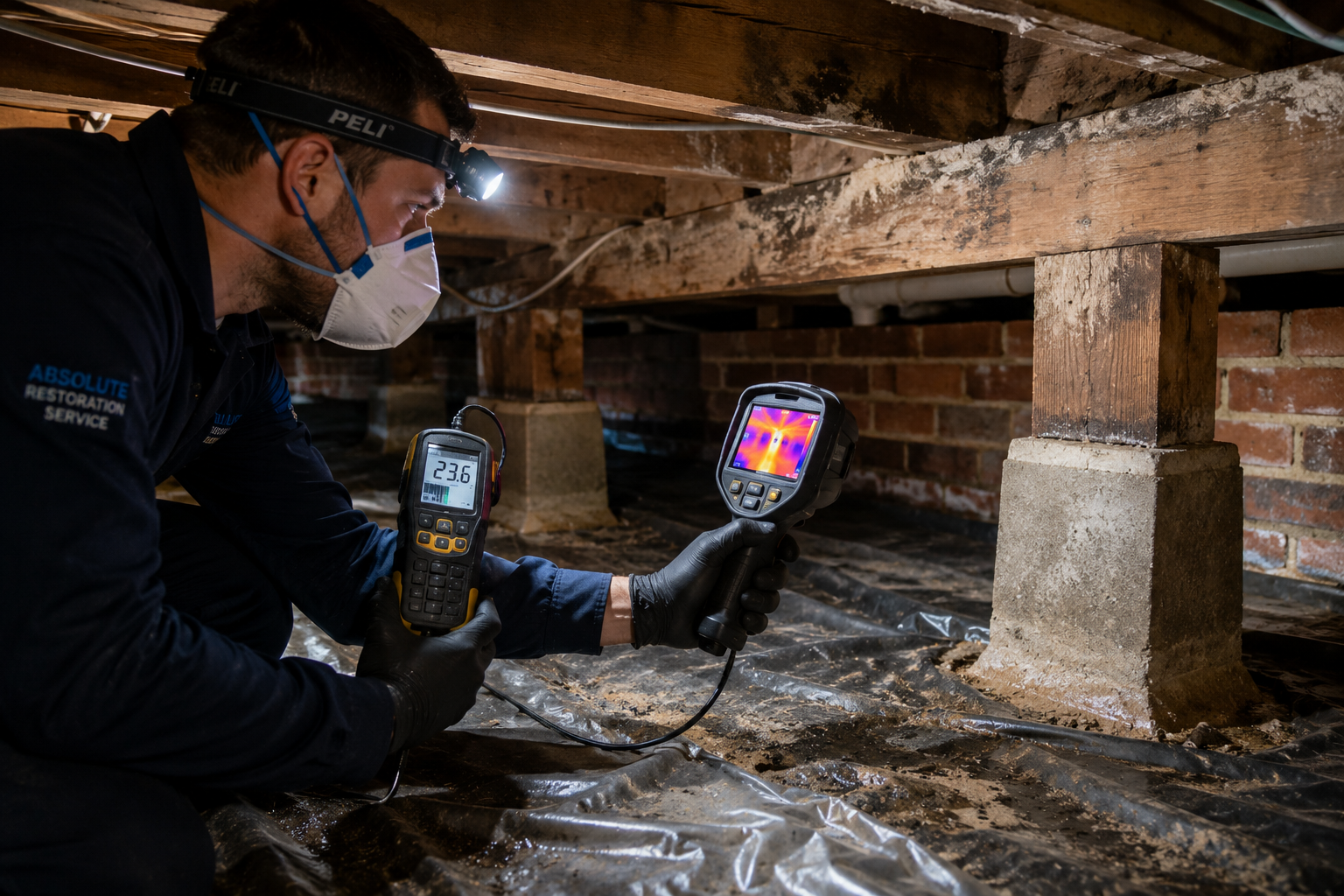
Professional subfloor moisture investigations identify hidden water intrusion, assess dampness levels and help prevent mould growth before structural damage occurs.
Absolute Restoration Service provides professional Subfloor Ventilation Melbourne solutions designed to improve airflow beneath homes, control excess moisture, reduce mould growth, and protect building structures from long-term deterioration.
We design and install mechanical subfloor ventilation systems for residential, commercial, industrial, and strata properties throughout metropolitan Melbourne. Every system is tailored to the property’s construction, moisture conditions, and ventilation requirements to deliver effective long-term moisture management.
Many Melbourne homes—particularly older properties with suspended timber floors—experience poor airflow beneath the building. When moisture becomes trapped in the subfloor, humidity levels increase and create ideal conditions for mould growth, timber decay, rising damp, condensation, and poor indoor air quality.
Our experienced technicians carry out comprehensive moisture investigations before recommending the most appropriate ventilation solution. Whether you’re experiencing musty odours, damp flooring, recurring mould, or excessive humidity, we identify the underlying cause and develop a practical solution that protects your property.
Why Subfloor Ventilation Is So Important
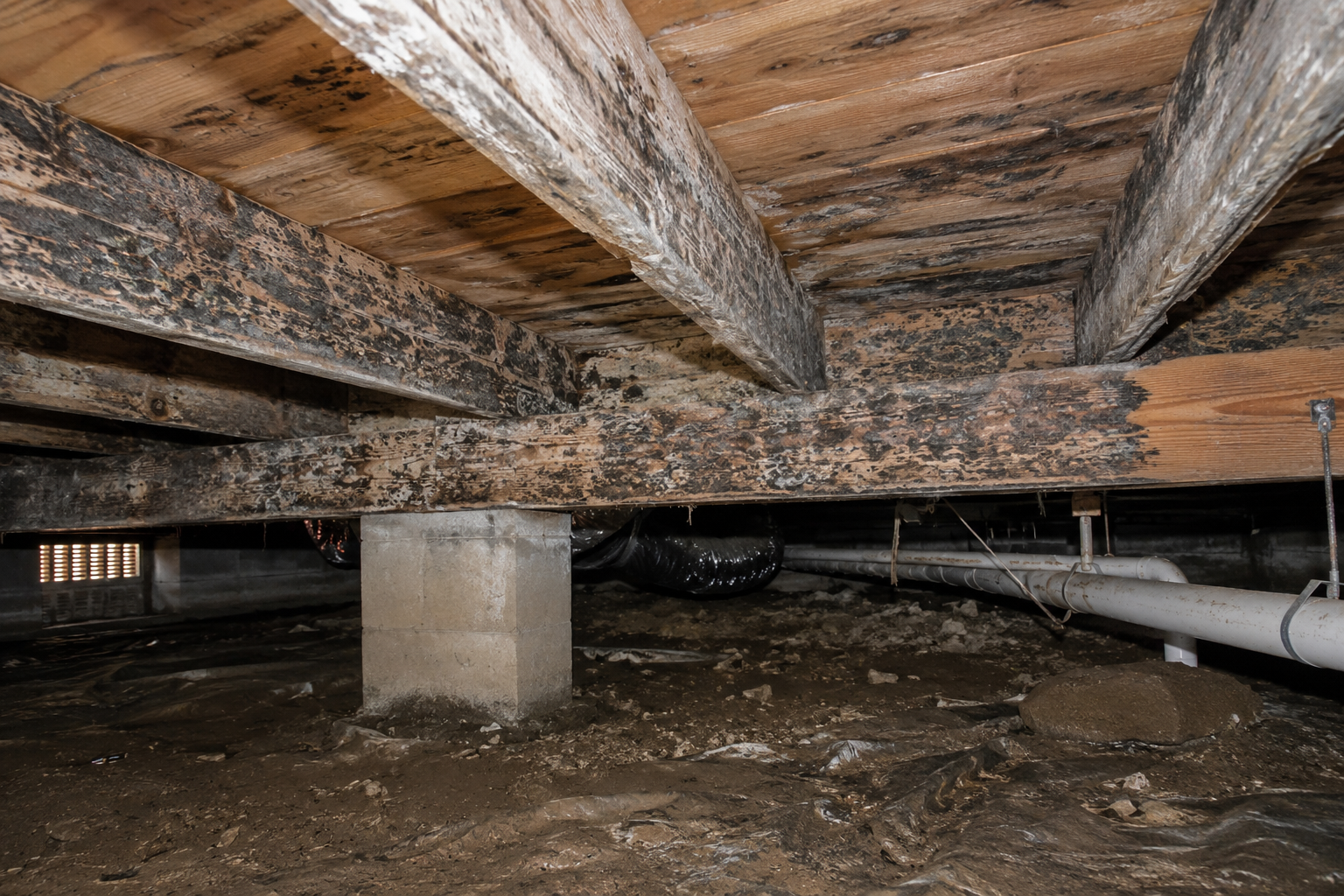
Extensive mould contamination beneath a suspended timber floor. Absolute Restoration Service provides professional crawl space mould removal, moisture investigations and subfloor mould remediation throughout Melbourne.
The subfloor is one of the most important yet overlooked areas of a building.
Without adequate crossflow ventilation, moisture can accumulate beneath suspended floors for extended periods. Over time, this excess moisture affects timber framing, floor joists, insulation, and internal air quality.
Professional subfloor ventilation continuously removes damp air and replaces it with fresh outside air, helping maintain a drier and healthier environment beneath your home.
Benefits of professional subfloor ventilation include:
- Reduced mould growth beneath the home
- Lower subfloor humidity levels
- Reduced condensation
- Protection against timber decay
- Reduced fungal growth
- Improved indoor air quality
- Reduced musty odours
- Healthier living environments
- Improved building durability
- Long-term moisture control
Improving airflow beneath a property not only protects structural building materials but also helps create a healthier indoor environment for occupants.
Signs Your Home May Need Subfloor Ventilation
Subfloor moisture problems often develop slowly and remain hidden until noticeable symptoms begin appearing inside the home.
Common warning signs include:
- Persistent musty or earthy odours
- Recurring mould on walls or skirting boards
- High indoor humidity
- Condensation on windows
- Damp carpets or flooring
- Timber floors lifting or cupping
- Warped floorboards
- Visible mould beneath the house
- Rotting floor joists or bearers
- White fungal growth on structural timber
- Poor airflow beneath the building
- Cold, damp indoor conditions during winter
If left untreated, these problems can progressively worsen, increasing repair costs and contributing to recurring mould contamination.
Common Causes of Excess Subfloor Moisture
Moisture beneath a property can originate from several different sources. Identifying the cause is essential before any ventilation system is installed.
Our technicians investigate both the symptoms and the underlying moisture source to achieve the best long-term outcome.
Common causes include:
- Poor site drainage
- Ground moisture
- Rising damp
- Blocked or damaged subfloor vents
- Insufficient natural crossflow ventilation
- Leaking plumbing pipes
- Leaking stormwater drains
- Roof water entering the subfloor
- Flooding events
- Poor landscaping around the building
- Seasonal humidity
- Inadequate ventilation beneath suspended floors
Correcting these issues is often just as important as improving ventilation.
Our Professional Subfloor Ventilation Assessment
Every property is different, which is why every ventilation project begins with a comprehensive subfloor inspection.
We assess moisture levels, existing ventilation pathways, building construction, and structural conditions before recommending the most appropriate ventilation strategy.
Our assessment may include:
- Comprehensive subfloor inspection
- Moisture mapping
- Digital moisture meter readings
- Thermal imaging inspections
- Relative humidity testing
- Ground moisture assessment
- Crossflow ventilation assessment
- Inspection of existing vents
- Identification of mould growth
- Inspection for fungal decay
- Timber condition assessment
- Identification of plumbing or drainage leaks
Following the inspection, we provide practical recommendations based on the property’s moisture conditions, ventilation performance, and long-term durability requirements.
Why Early Intervention Matters
Moisture problems beneath a building rarely resolve without intervention.
The longer excess moisture remains beneath suspended floors, the greater the likelihood of mould growth, timber deterioration, rising damp, and indoor air quality issues.
Professional subfloor ventilation helps address these problems before significant structural damage occurs, reducing future maintenance costs and improving the overall health of the building.
Related Services:
- Mould Removal Melbourne
- Mould Inspection Melbourne
- Rising Damp & Moisture Control
- Water Damage Restoration Melbourne
- Indoor Air Quality Assessments Melbourne
Mechanical Subfloor Ventilation Systems
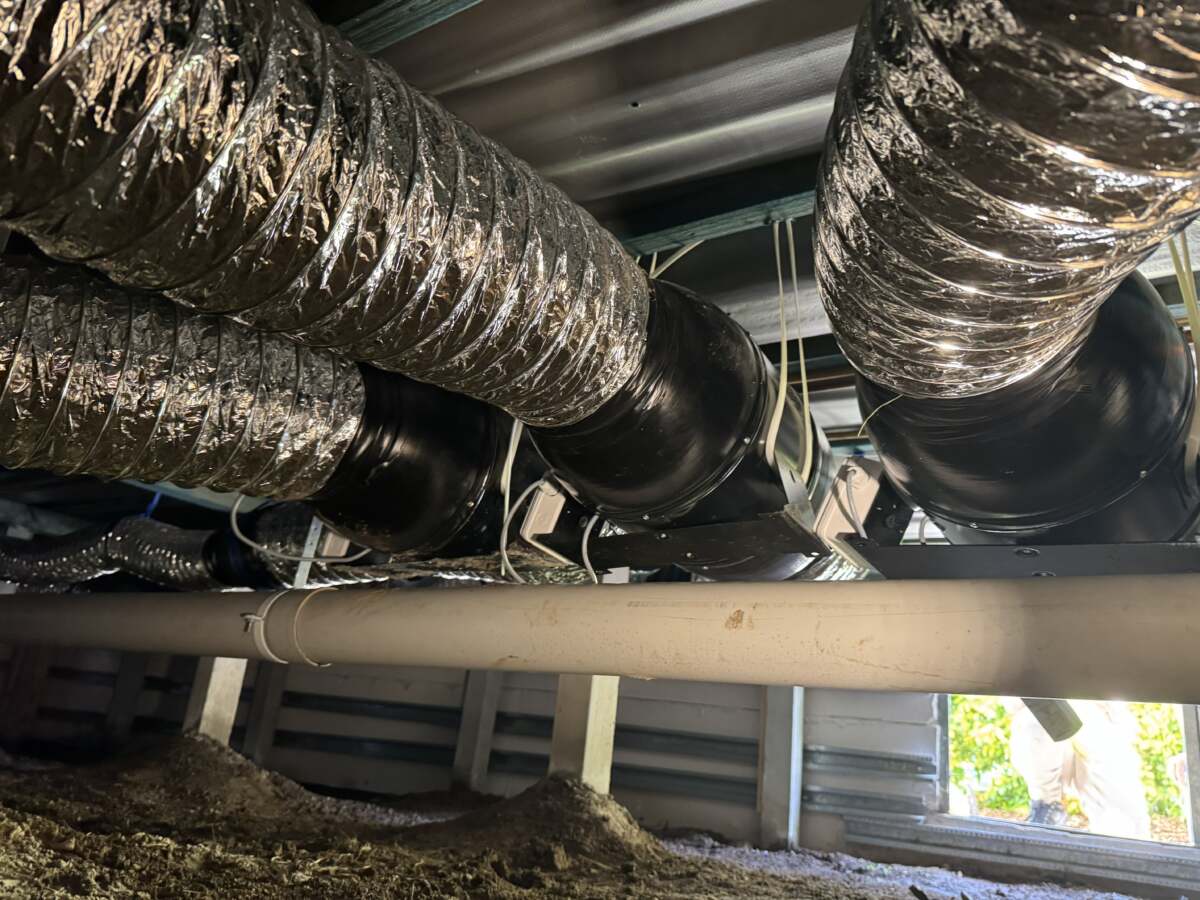
Subfloor ventilation improves airflow beneath the home to control moisture and prevent mould growth.
Where natural ventilation is inadequate, mechanical subfloor ventilation provides continuous airflow beneath the building to control excess moisture and improve indoor air quality.
Many older Melbourne homes were constructed with limited subfloor ventilation. Over time, landscaping changes, renovations, blocked vents, and increased ground moisture can further reduce natural airflow.
Mechanical ventilation actively removes damp air from beneath the home while drawing fresh outside air through the subfloor, creating continuous crossflow ventilation.
Depending on the property’s construction and moisture conditions, our solutions may include:
- Mechanical subfloor exhaust systems
- 150mm inline ventilation fans
- Crossflow ventilation systems
- Positive pressure ventilation systems
- Hybrid natural and mechanical ventilation
- Targeted ventilation for isolated damp areas
- Humidity-controlled ventilation systems
Every installation is designed to maximise airflow while reducing humidity beneath suspended timber floors.
Passive Subfloor Ventilation Improvements
Not every property requires mechanical ventilation.
Where natural airflow can be improved, passive ventilation may provide an effective and economical solution.
Passive improvements may include:
- Installing additional subfloor vents
- Replacing damaged ventilation grilles
- Removing soil build-up against vents
- Improving crossflow ventilation pathways
- Removing stored materials blocking airflow
- Correcting landscaping that restricts ventilation
- Repairing damaged brick vents
During every inspection, we determine whether passive ventilation, mechanical ventilation, or a combination of both will provide the best long-term outcome.
How Mechanical Ventilation Prevents Mould
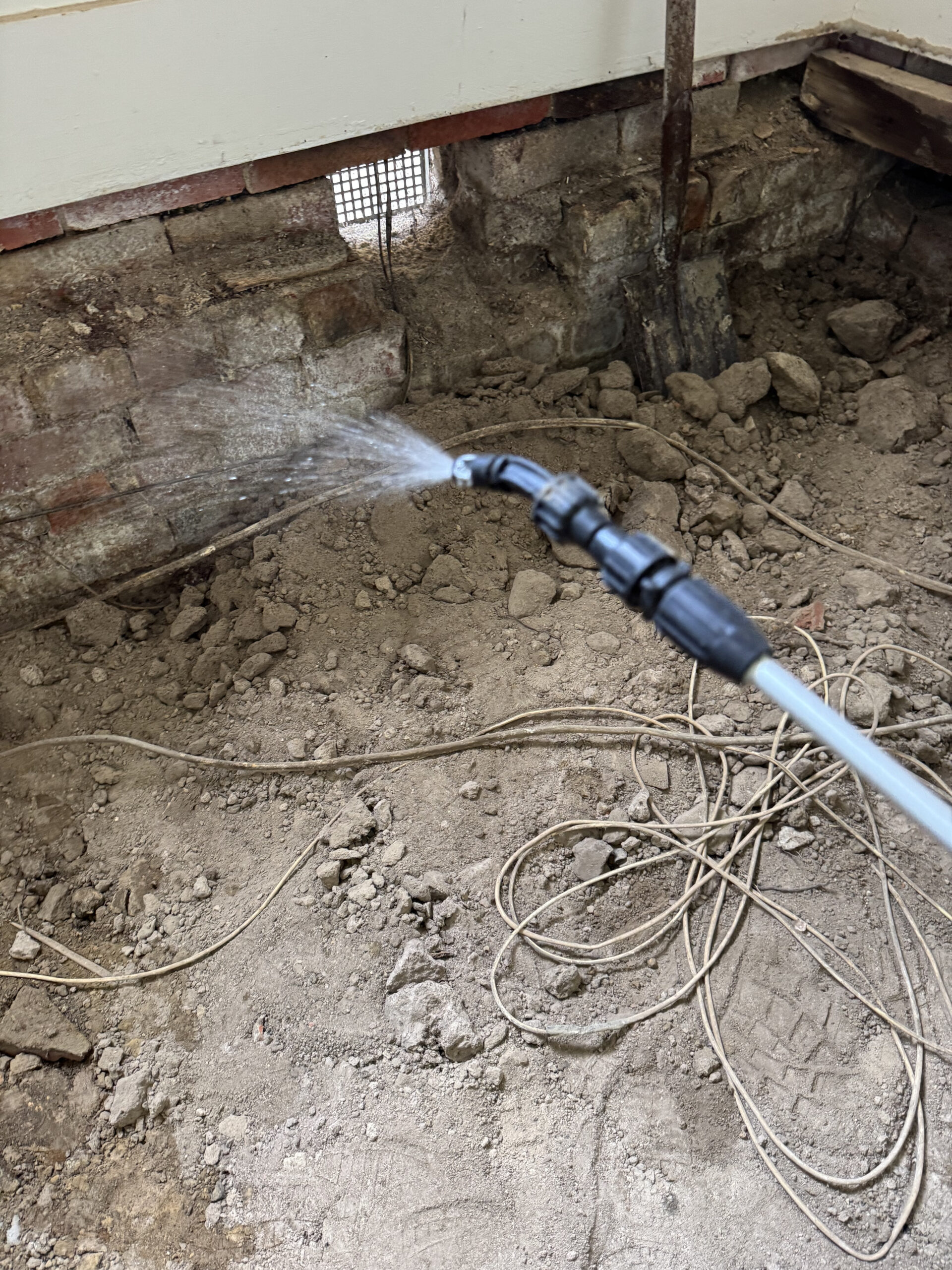
Subfloor mould growth identified on structural timber framing due to restricted airflow and prolonged moisture exposure beneath suspended flooring systems.
Mould requires moisture to survive.
Reducing humidity beneath a building removes one of the primary conditions mould needs to develop.
Improved subfloor ventilation helps:
- Reduce moisture accumulation
- Lower relative humidity
- Reduce condensation beneath suspended floors
- Protect timber framing
- Reduce fungal decay
- Prevent mould beneath flooring systems
- Improve indoor air quality
- Reduce musty odours
If mould contamination is already present, subfloor ventilation is often recommended alongside professional mould remediation to reduce the likelihood of recurrence.
Subfloor Ventilation & Indoor Air Quality
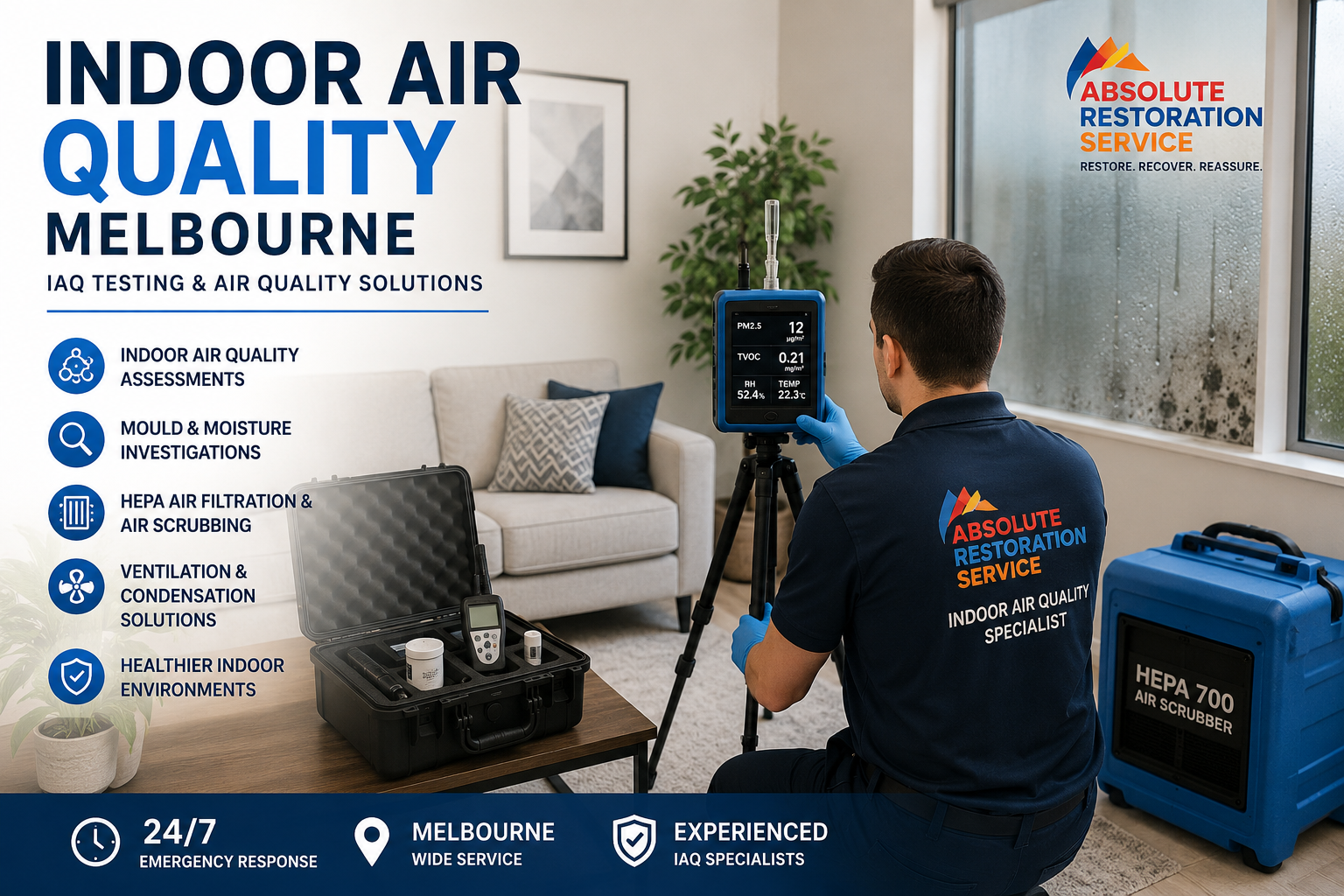
Professional indoor air quality assessments, mould investigations, HEPA air filtration and ventilation solutions for healthier indoor environments across Melbourne.
The air beneath your home directly influences the air inside your living areas.
Warm air naturally rises through gaps around flooring, pipe penetrations, service openings, and construction joints.
If damp air beneath the home contains elevated humidity or mould spores, these contaminants may migrate into occupied rooms.
Improving airflow beneath the building helps create healthier indoor environments by:
- Reducing airborne moisture
- Lowering indoor humidity
- Reducing mould spores
- Minimising musty odours
- Improving overall ventilation
- Supporting healthier indoor air quality
Where occupants experience ongoing indoor air quality concerns, we may also recommend professional mould inspections, moisture investigations, and indoor air quality assessments.
Protecting Timber Floors & Structural Components
Suspended timber floors rely on adequate ventilation to remain dry.
Without sufficient airflow, prolonged exposure to moisture can contribute to:
- Rotting floor joists
- Decaying bearers
- Warped floorboards
- Cupping timber flooring
- White fungal growth
- Structural timber deterioration
- Termite-attracting damp conditions
Professional subfloor ventilation helps maintain a dry environment that protects structural timber and supports the long-term durability of your property.
Compliance with the National Construction Code (NCC)
Our ventilation systems are designed to support the intent of the National Construction Code (NCC) by improving moisture management, encouraging crossflow ventilation, and reducing the long-term effects of condensation and excessive humidity beneath buildings.
Where natural ventilation alone cannot provide sufficient airflow, mechanical subfloor ventilation offers continuous air movement beneath suspended floors to assist with:
- Moisture management
- Condensation control
- Crossflow ventilation
- Building durability
- Protection of structural timber
- Long-term mould prevention
Every recommendation is based on the property’s construction, moisture conditions, and ventilation requirements.
Why Choose Absolute Restoration Service?
Absolute Restoration Service combines restoration experience with moisture management expertise to deliver practical ventilation solutions throughout Melbourne.
- ✔ Professional Subfloor Ventilation Specialists
- ✔ IICRC-Certified Restoration Technicians
- ✔ Advanced Moisture Mapping & Thermal Imaging
- ✔ Mechanical & Passive Ventilation Solutions
- ✔ Rising Damp & Moisture Control Specialists
- ✔ Water Damage & Mould Remediation Experts
- ✔ Residential, Commercial & Strata Experience
- ✔ Insurance-Ready Reporting
- ✔ Melbourne-Wide Service
- ✔ 4.9-Star Rating from 769+ Verified HiPages Reviews
Related Services
- Mould Removal Melbourne
- Mould Inspection Melbourne
- Mould Testing Melbourne
- Rising Damp & Moisture Control
- Water Damage Restoration Melbourne
- Crawl Space Mould Removal
- Indoor Air Quality Assessments
- Energy Recovery Ventilation (ERV) Melbourne
Helpful Industry Resources
Learn more about subfloor ventilation, moisture management, mould prevention, and healthy buildings from trusted industry organisations.
- National Construction Code (NCC)
- Australian Building Codes Board (ABCB)
- Better Health Channel – Mould and Your Health
- Institute of Inspection, Cleaning and Restoration Certification (IICRC)
- Restoration Industry Association (RIA)
Frequently Asked Questions
What is subfloor ventilation?
Subfloor ventilation is the process of improving airflow beneath a suspended timber floor. Mechanical or passive ventilation removes damp, stagnant air and replaces it with fresh outside air, helping reduce moisture, condensation, mould growth, and timber decay.
Does subfloor ventilation stop mould?
Subfloor ventilation significantly reduces the moisture that mould requires to grow. While ventilation alone will not remove existing mould, it forms an important part of a long-term mould prevention strategy when combined with correcting the underlying moisture source and professional mould remediation where required.
Can subfloor ventilation reduce musty odours?
Yes. Musty odours are commonly caused by damp air, mould growth, or fungal activity beneath the home. Improving airflow helps remove moisture-laden air, reducing unpleasant odours and creating a healthier indoor environment.
How do I know if my home has poor subfloor ventilation?
Common signs include musty smells, damp or cold floors, condensation on windows, mould on skirting boards, cupped timber flooring, elevated indoor humidity, and visible mould or fungal growth beneath the house. A professional inspection can determine whether inadequate ventilation is contributing to these issues.
Can subfloor ventilation help with rising damp?
Subfloor ventilation can assist in reducing moisture beneath a building and may help manage some of the effects associated with rising damp. However, rising damp often requires additional moisture management measures, including drainage improvements and damp-proofing solutions.
Is mechanical subfloor ventilation better than passive ventilation?
It depends on the property. Homes with limited natural airflow or persistent moisture problems often benefit from mechanical ventilation. Properties with adequate ventilation pathways may only require passive improvements. Our recommendations are based on a detailed assessment of your property’s construction and moisture conditions.
Can subfloor ventilation improve indoor air quality?
Yes. Damp air beneath a home can migrate into living areas through flooring gaps and service penetrations. Improving subfloor ventilation helps reduce humidity, airborne mould spores, and musty odours, contributing to healthier indoor air quality.
Do you inspect the subfloor before installing a system?
Yes. Every project begins with a comprehensive inspection that includes moisture mapping, thermal imaging, humidity testing, airflow assessment, and an inspection for mould, timber decay, plumbing leaks, and drainage issues. This allows us to recommend the most suitable ventilation solution.
Do you install subfloor ventilation throughout Melbourne?
Yes. Absolute Restoration Service designs and installs professional subfloor ventilation systems throughout metropolitan Melbourne for residential homes, commercial buildings, strata properties, and heritage buildings with suspended timber floors.
Can subfloor ventilation protect timber floors?
Yes. By reducing excess humidity beneath the home, subfloor ventilation helps protect floor joists, bearers, timber flooring, and other structural components from moisture damage, fungal decay, warping, and mould growth.
Book a Professional Subfloor Ventilation Assessment
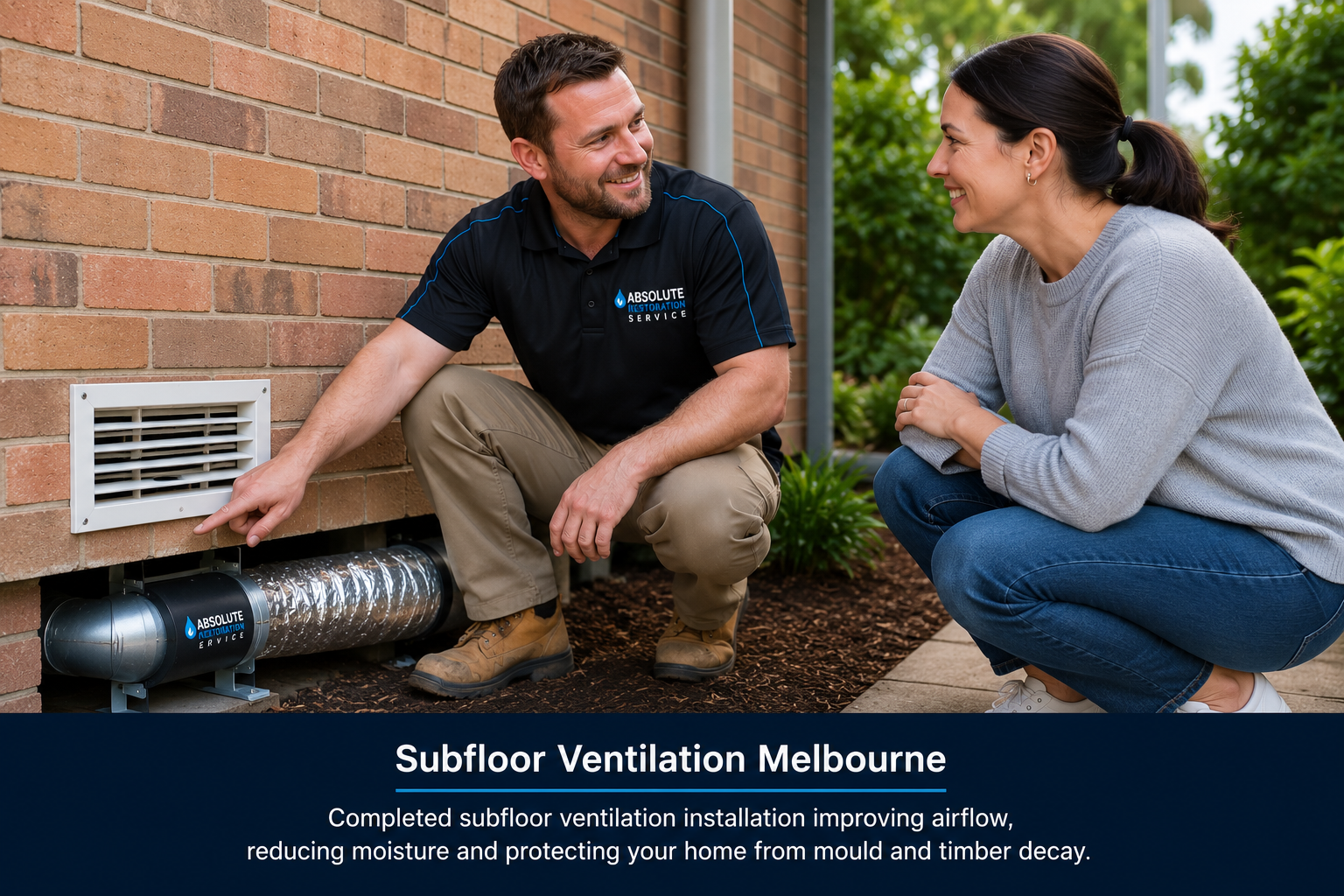
If your home has persistent musty odours, damp flooring, condensation, mould growth, or signs of excess moisture beneath the building, a professional subfloor ventilation assessment can identify the underlying cause before more significant structural damage occurs.
Absolute Restoration Service provides professional Subfloor Ventilation Melbourne services, including moisture investigations, thermal imaging, mechanical ventilation system design, passive ventilation improvements, mould prevention, and indoor air quality solutions.
Our experienced technicians assess every property individually, identifying moisture sources and recommending practical long-term solutions that improve airflow, reduce humidity, protect structural timber, and help prevent mould from returning.
Whether your property requires mechanical subfloor ventilation, improved crossflow ventilation, moisture management, or professional mould remediation, our team has the expertise and equipment to deliver effective, long-lasting results.
Call 1300 114 842 today to arrange your professional subfloor ventilation assessment, or contact us online to request an obligation-free quotation anywhere across metropolitan Melbourne.
24/7 Moisture Investigations • Mechanical Subfloor Ventilation • Crossflow Ventilation • Mould Prevention • Rising Damp Solutions • Melbourne-Wide Service