Fire and Smoke Damage Restoration Melbourne
Property assessment, soot and smoke-residue cleaning, odour treatment and post-fire water-damage restoration across Melbourne.
Fire damage does not end when the flames are extinguished. Smoke residues, firefighting water, corrosion, odours and damaged materials can affect areas beyond the visible burn zone. Absolute Restoration Service develops a restoration scope after the relevant emergency authority releases the property as safe to access.
Call 1300 114 842 for urgent restoration assistance. If there is an active fire, smoke, gas, live electricity, structural instability or a medical emergency, leave the area and call 000 first. Attendance depends on location, access, site safety and technician availability.

Fire and smoke restoration may include residue assessment, controlled cleaning, HEPA air management and odour-source treatment.
What to Do After a Property Fire
- Follow emergency-authority instructions. Do not enter until firefighters, police or the responsible authority permit access.
- Do not assume the structure or services are safe. Engineers, electricians, gas providers or other licensed professionals may be required.
- Avoid disturbing soot and debris. Walking through or wiping residues can spread contamination and permanently alter some surfaces.
- Do not operate HVAC systems. Wait for assessment if smoke, soot or water may have affected ducts, equipment or electrical components.
- Document only from a safe location. Photographs and incident details can support insurer and restoration discussions.
- Contact ARS after release. Provide the suburb, affected areas, authority status, water damage and any insurer instructions.
Fire and Smoke Restoration Services
- Post-fire restoration assessment
- Work-area containment and protection
- Soot and smoke-residue cleaning
- HEPA vacuuming and filtered air management
- Odour-source identification and treatment
- Cleaning trials for affected substrates
- Contents assessment and cleaning coordination
- Water extraction and structural drying
- Controlled removal of unsalvageable materials where agreed
- Photographs, moisture records and reporting where included
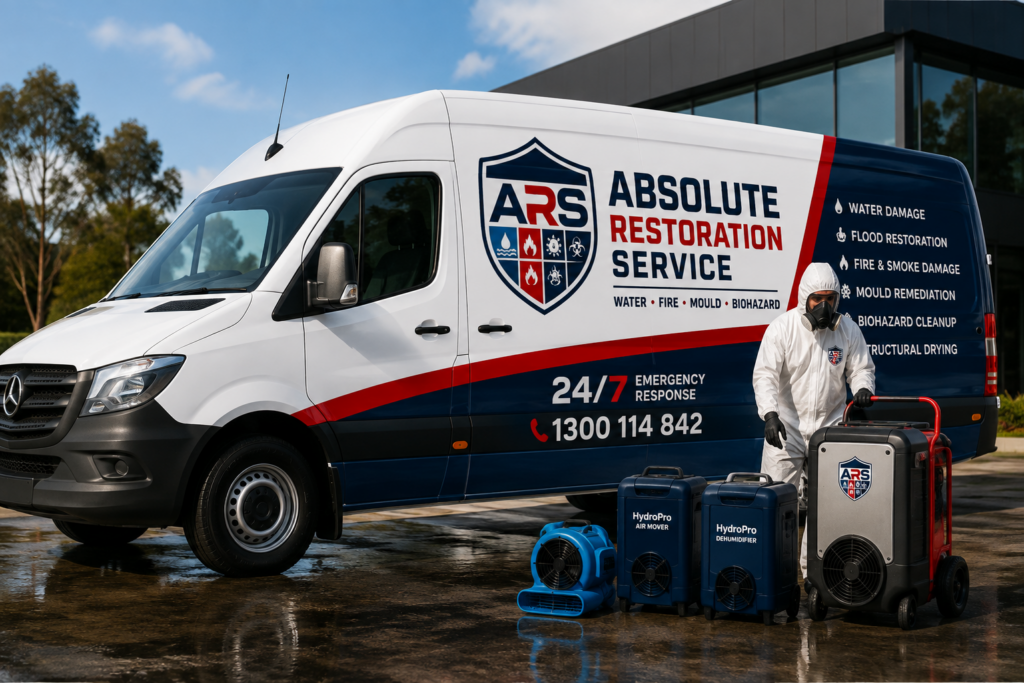
ARS provides restoration response across metropolitan Melbourne, subject to safe access and availability.
Understanding Smoke and Soot Damage
Residues vary with the materials burned, fire temperature, oxygen conditions, suppression methods and movement of smoke through the building. Dry soot, oily residues, protein residues and combustion by-products can respond differently to cleaning.
The correct method should be selected after inspecting the substrate and testing an inconspicuous area. An unsuitable cleaner or aggressive wiping can drive residue into porous materials, smear surfaces or cause further damage.
Our Fire Restoration Process
1. Authority Release and Initial Triage
We confirm that authorised access is available and gather information about the fire, suppression water, affected rooms, utilities, known hazards and insurer involvement.
2. Site Assessment and Scope
Technicians assess accessible soot, smoke residue, odours, moisture and material condition. Structural engineering, asbestos assessment, electrical testing or other specialist services may be required outside the restoration scope.
3. Stabilisation and Containment
Where appropriate, unaffected areas are protected and work zones established. HEPA-filtered air management may support particulate control during authorised cleaning and removal.
4. Water Extraction and Drying
Firefighting water and damaged plumbing can leave materials wet. ARS may extract water, map moisture and install drying equipment after electrical and structural safety requirements are addressed.
5. Soot, Smoke and Contents Cleaning
Cleaning methods are matched to the residue and substrate. Some materials can be restored; others may be unsafe, physically damaged or uneconomical to clean and may require documented removal.
6. Odour Treatment and Handover
Odour work begins with removing or cleaning the source. Additional treatment may be considered for retained materials and concealed areas. Completed accessible work is reviewed against the agreed scope, with repairs or independent assessment recommended where required.
Smoke Odour Treatment
Smoke odour can remain in porous materials, cavities, insulation, contents and HVAC components. No single deodoriser suits every fire. Effective treatment may require source removal, detailed cleaning, ventilation, filtration and a method compatible with the property and occupants.
ARS does not promise that one treatment will permanently eliminate every odour. Results depend on access to affected materials, the fire residues, concealed contamination and the agreed restoration scope.
HEPA Air Management and Containment

HEPA-filtered air equipment can support particulate management within a controlled restoration work area.
HEPA-filtered equipment can reduce selected airborne particles generated within a controlled work area. It does not make an unsafe building suitable for occupancy or replace source removal, cleaning, ventilation assessment or specialist hazardous-material controls.
Water Damage After Firefighting
Suppression water can migrate into floors, walls, ceilings, insulation and contents. The source, contamination, exposure time and material condition influence whether drying or removal is appropriate. Learn more about water damage restoration Melbourne and structural drying.
HVAC and Concealed Contamination
Smoke can move through return-air paths, penetrations, ceiling spaces and mechanical systems. HVAC inspection or cleaning may require a qualified mechanical contractor. Systems should not be restarted until the relevant electrical, mechanical and contamination concerns have been assessed.
Insurance Documentation
Where included, ARS can provide photographs, moisture readings, damage observations, cleaning trials, work scopes and restoration records. The insurer decides coverage, authorisation and reimbursement; restoration documentation does not guarantee claim approval.
Residential, Commercial and Strata Properties
We support homes, apartments, offices, retail premises, warehouses, managed properties and other facilities. Commercial and strata projects may require staged access, occupant communication, work-area isolation and coordination with insurers, managers, engineers and licensed trades.
Why Choose Absolute Restoration Service?
- 24/7 telephone assistance for urgent fire-related restoration
- IICRC-trained restoration technicians
- Soot and substrate-specific cleaning trials
- HEPA filtration and containment options
- Post-fire water extraction and monitored drying
- Residential, commercial and strata experience
- Clear scopes and documentation where agreed
- Melbourne service coverage subject to availability
Related Restoration Services
- Emergency Restoration Services Melbourne
- Water Damage Restoration Melbourne
- Flood Damage Restoration Melbourne
- Mould Removal Melbourne
- Indoor Air Quality Assessment Melbourne
- Melbourne Service Coverage
Frequently Asked Questions
When can restoration technicians enter after a fire?
Only after the responsible emergency authority releases the property and access is authorised. Structural, electrical, gas, asbestos or other hazards may still require specialist assessment before restoration proceeds.
Can all soot be cleaned from every surface?
No. Results depend on the residue, heat damage, substrate, porosity and time. ARS tests suitable methods and recommends removal where a material is unsafe or cannot be acceptably restored.
Can smoke odour always be completely removed?
Odour often improves through source removal and detailed cleaning, but no universal result can be guaranteed. Concealed contamination, damaged porous materials and access limitations influence the outcome.
Do you restore water damage caused by firefighting?
Yes, where safe and within scope. Services may include extraction, moisture mapping, structural drying and monitoring after relevant structural and electrical concerns are addressed.
Should I clean soot myself?
Avoid wiping or vacuuming significant soot with domestic equipment. Incorrect methods can spread residue or damage surfaces. Obtain advice after the property is released as safe.
Can ARS provide insurance documentation?
Yes, where included in the scope. Photographs, moisture records, observations and restoration documentation may support assessment, but the insurer determines coverage and claim outcomes.
Request Fire and Smoke Restoration Assistance
Call 1300 114 842 after the property has been released as safe, or contact ARS online for a non-urgent assessment request.