Professional Structural Drying & Water Damage Drying Services in Melbourne
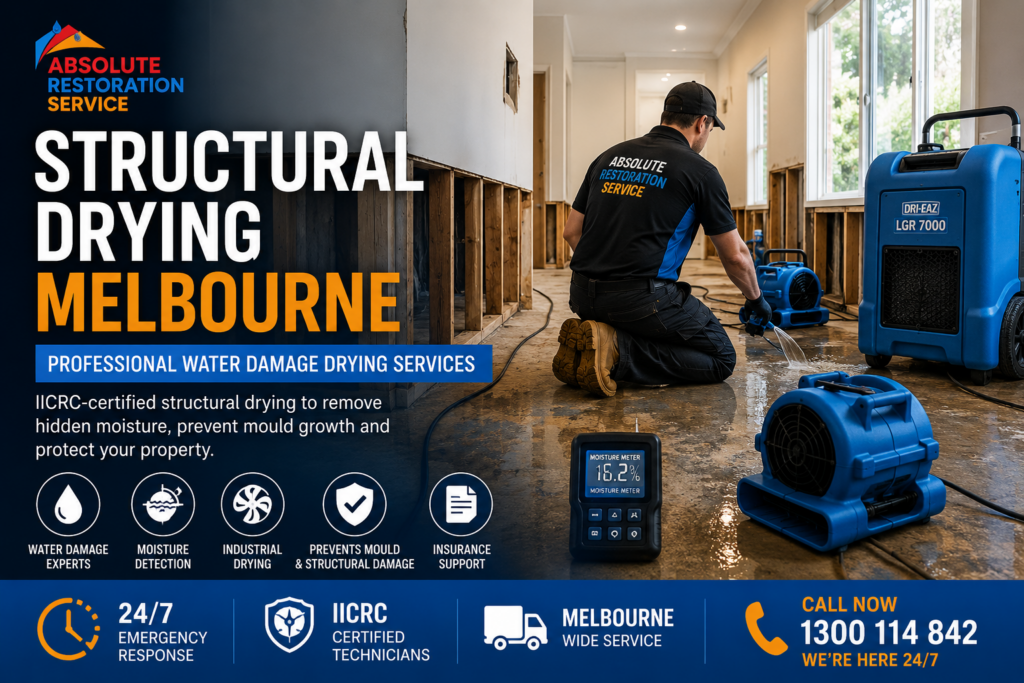
Professional structural drying Melbourne services using advanced moisture detection, industrial dehumidification and controlled drying techniques to prevent mould growth and structural damage.
Professional structural drying throughout Melbourne using commercial drying equipment, moisture mapping, thermal imaging, and IICRC-approved restoration procedures to restore homes, businesses, and strata properties after water damage.
Professional Structural Drying Throughout Melbourne
Water may disappear from the surface within hours, but hidden moisture often remains trapped inside walls, ceilings, floors, insulation, concrete slabs, and structural timbers.
Without professional structural drying, this trapped moisture can continue damaging building materials long after the initial water event. It can also create ideal conditions for mould growth, timber deterioration, unpleasant odours, and expensive repairs.
Absolute Restoration Service provides professional structural drying throughout Melbourne following burst pipes, roof leaks, flooding, storm damage, plumbing failures, overflowing appliances, and firefighting operations.
Our IICRC-certified technicians use commercial drying equipment, advanced moisture detection technology, thermal imaging cameras, and proven restoration procedures to return affected building materials to appropriate moisture levels while helping minimise further damage.
Whether you’re restoring a family home, apartment, office, warehouse, retail premises, or strata property, we provide rapid emergency response and comprehensive structural drying solutions throughout metropolitan Melbourne.
What Is Structural Drying?
Structural drying is the controlled process of removing excess moisture from building materials after water intrusion.
Unlike surface drying, structural drying removes moisture trapped inside:
- Wall cavities
- Ceiling cavities
- Timber framing
- Concrete slabs
- Plasterboard
- Insulation
- Subfloors
- Flooring systems
- Roof spaces
Professional drying uses specialised equipment to reduce moisture levels safely without causing unnecessary demolition wherever possible.
When Is Structural Drying Required?
Professional structural drying is recommended whenever water has entered a building and affected structural materials.
Common situations include:
- Burst water pipes
- Plumbing leaks
- Roof leaks
- Storm damage
- Flash flooding
- Overflowing washing machines
- Dishwasher failures
- Hot water system leaks
- Sewer overflows
- Firefighting water damage
- Commercial water losses
The sooner drying begins, the better the outcome.
Why Immediate Drying Is Important
The first 24 to 48 hours after water damage are critical.
Moisture spreads rapidly through porous building materials.
Without professional drying:
- Timber absorbs moisture and begins to swell.
- Flooring adhesives may fail.
- Plasterboard softens.
- Insulation becomes saturated.
- Paint finishes deteriorate.
- Structural materials weaken.
- Mould can begin growing within 24 to 48 hours.
Fast intervention reduces secondary damage and helps shorten restoration time.
Signs Hidden Moisture May Still Be Present
Water damage is not always visible.
You may still have hidden moisture if you notice:
- Water stains
- Damp walls
- Soft plasterboard
- Bubbling paint
- Warped timber flooring
- Musty odours
- High indoor humidity
- Condensation
- Persistent dampness
- Visible mould
Professional moisture mapping helps identify moisture before additional damage occurs.
Our Structural Drying Process
Every property requires an individual drying plan.
1. Inspection & Moisture Assessment
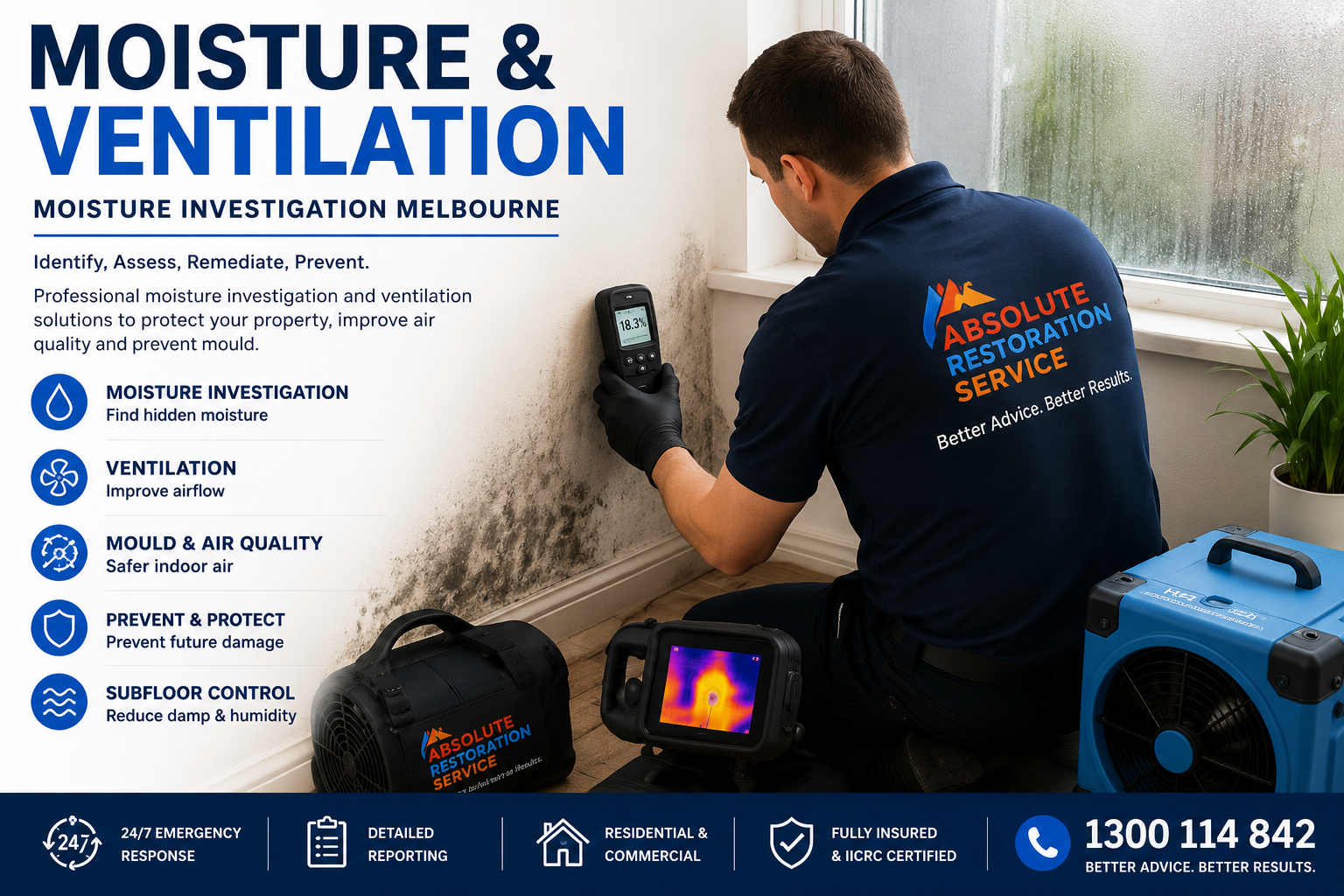
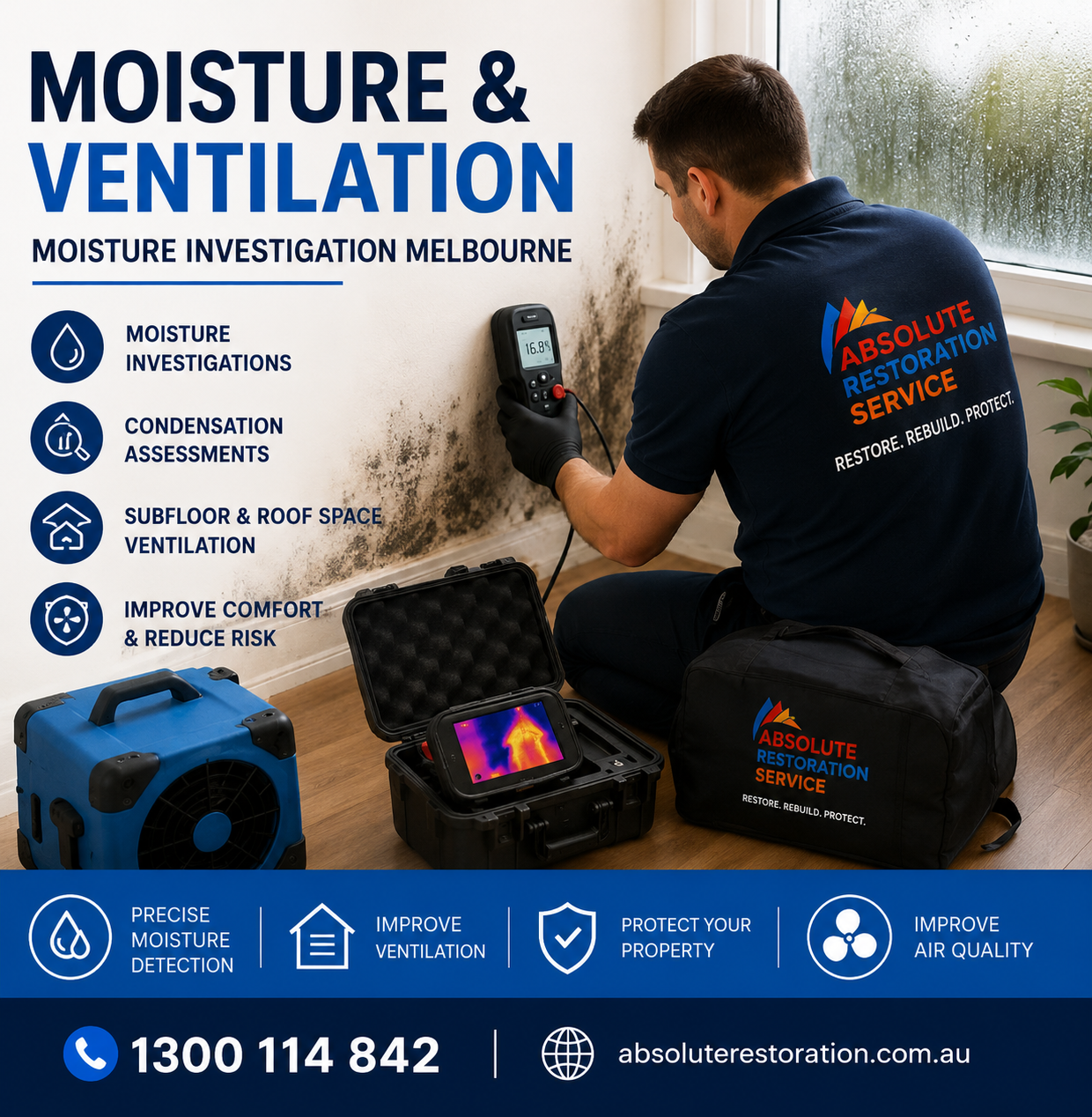
An Absolute Restoration Service technician investigates hidden moisture and mould using advanced moisture detection equipment to improve indoor air quality and prevent recurring mould growth.
We begin by inspecting the property using professional moisture meters and thermal imaging cameras.
This allows us to identify:
- Hidden moisture
- Wet building materials
- Water migration
- Areas requiring drying
2. Water Extraction
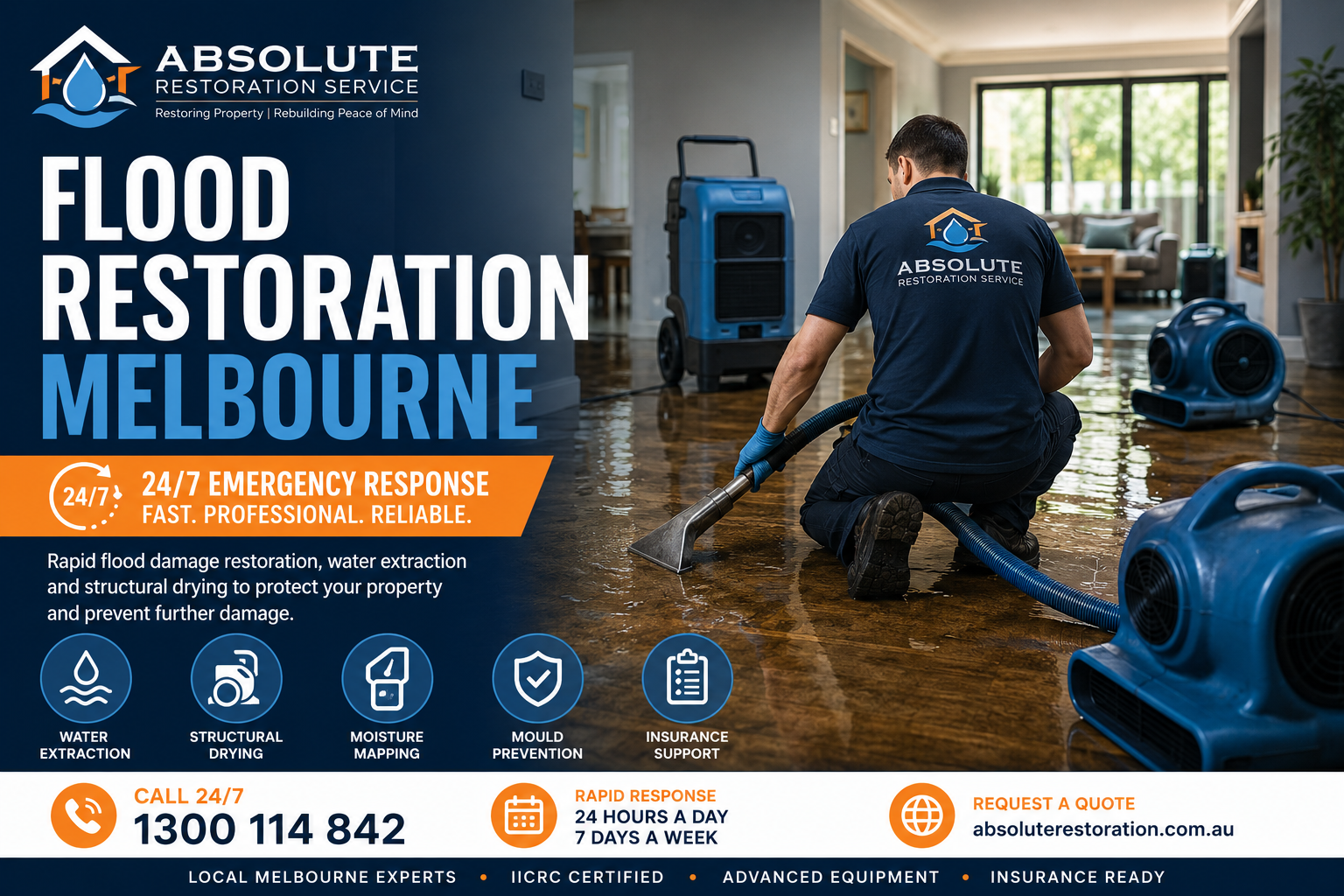
Professional flood restoration Melbourne services including emergency water extraction, structural drying, moisture mapping and flood damage recovery available 24/7.
Standing water is removed using commercial extraction equipment before drying begins.
Removing excess water significantly improves drying efficiency.
3. Moisture Mapping
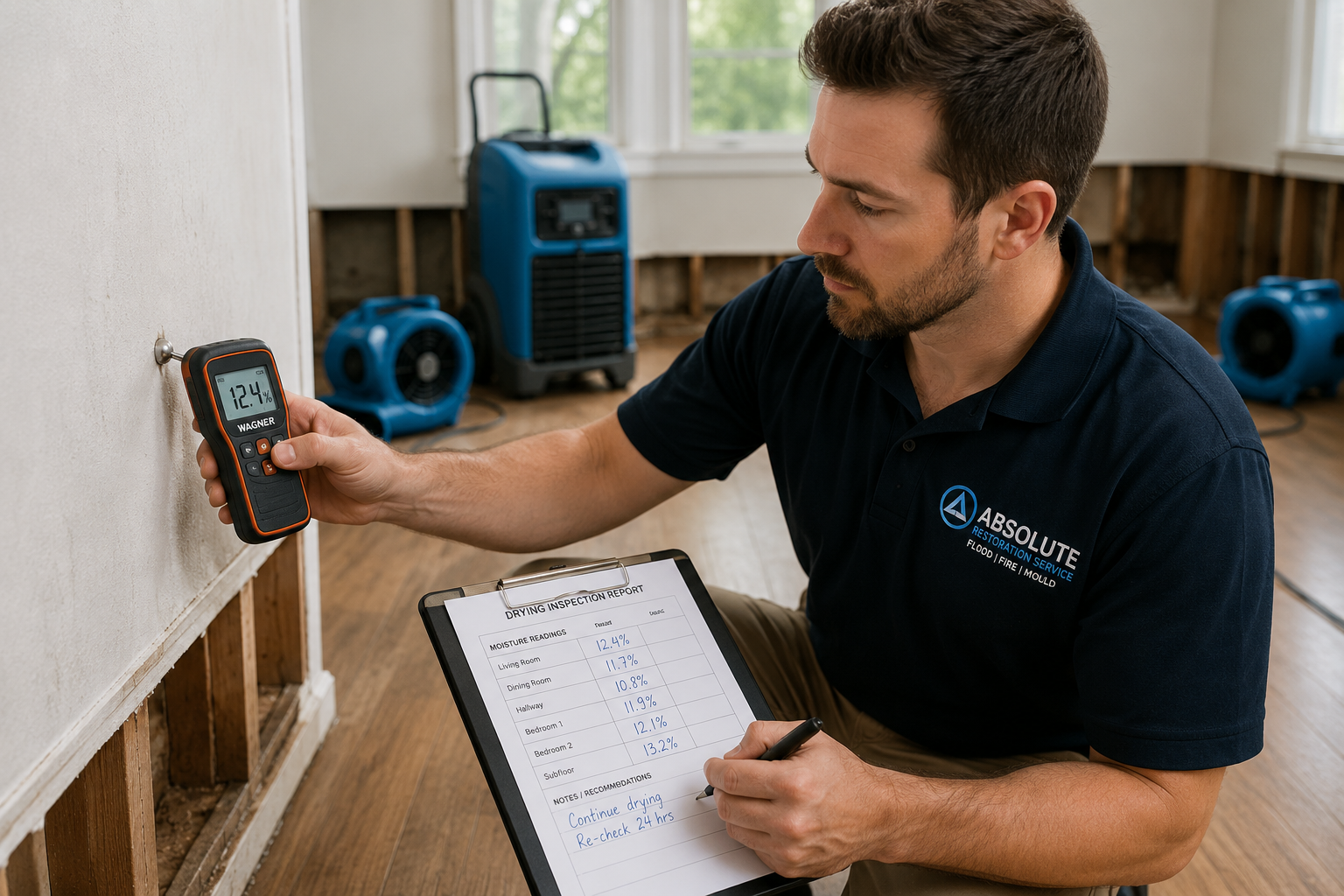
Professional moisture mapping identifies hidden moisture after flooding, ensuring affected building materials are thoroughly dried before restoration is complete.
Moisture readings are recorded throughout the property to establish the extent of water intrusion.
These readings guide equipment placement and drying strategies.
4. Equipment Installation
Depending on the property, we install:
- Commercial air movers
- Refrigerant dehumidifiers
- Low Grain Refrigerant (LGR) dehumidifiers
- Desiccant dehumidifiers
- HEPA air scrubbers where required
Equipment is positioned to maximise airflow and accelerate evaporation.
5. Moisture Monitoring
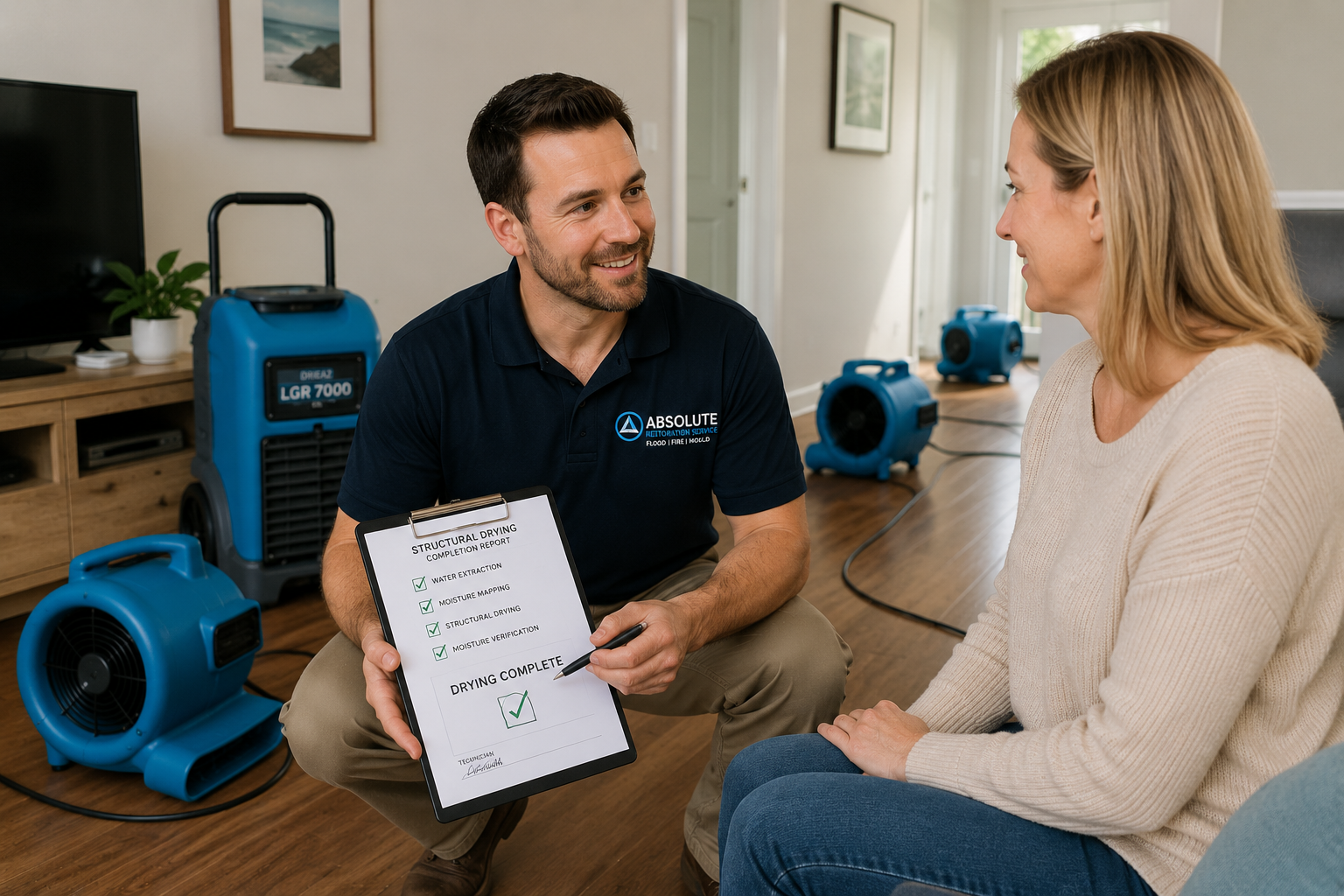
An Absolute Restoration Service technician records moisture readings during a follow-up structural drying inspection to verify that building materials are drying to industry standards.
Our technicians regularly monitor moisture levels throughout the drying process.
Equipment is adjusted as conditions improve to ensure efficient drying.
6. Final Verification
Once drying is complete, final moisture readings confirm affected building materials have returned to acceptable moisture levels before repairs begin.
Equipment We Use
Professional structural drying relies on specialised restoration equipment.
Our technicians utilise:
- Commercial water extractors
- Industrial air movers
- Refrigerant dehumidifiers
- Low Grain Refrigerant (LGR) dehumidifiers
- Desiccant drying equipment
- Thermal imaging cameras
- Professional moisture meters
- Hygrometers
- HEPA air scrubbers
- Moisture mapping technology
Using commercial equipment significantly reduces drying times compared with household fans or portable dehumidifiers.
What Happens If Structural Drying Is Delayed?
Delaying structural drying can lead to serious building damage.
Potential consequences include:
- Hidden mould growth
- Timber decay
- Swollen flooring
- Delaminated timber floors
- Damaged cabinetry
- Ceiling collapse
- Structural deterioration
- Electrical hazards
- Persistent musty odours
- Higher insurance repair costs
Professional drying helps prevent these issues before reconstruction begins.
Residential & Commercial Structural Drying
Absolute Restoration Service provides structural drying for:
- Residential homes
- Apartments
- Townhouses
- Commercial offices
- Retail stores
- Warehouses
- Schools
- Childcare centres
- Healthcare facilities
- Hotels
- Industrial buildings
- Strata properties
Every project receives a drying plan tailored to the property, building materials, and moisture levels.
Why Choose Professional Structural Drying?
Professional drying provides many benefits, including:
- Faster drying times
- Reduced mould growth
- Protection of structural timbers
- Lower repair costs
- Better indoor air quality
- Accurate moisture monitoring
- Reduced disruption
- Insurance-ready documentation
Professional equipment and monitoring help ensure moisture is removed from hidden areas, not just visible surfaces.
Related Services
Structural drying is often completed alongside other restoration services.
We also provide:
- Water Damage Restoration Melbourne
- Emergency Flood Cleanup Melbourne
- Flood Damage Restoration Melbourne
- Storm Damage Restoration Melbourne
- Mould Inspection Melbourne
- Mould Removal Melbourne
- Indoor Air Quality Matters Melbourne
Helpful Resources
Learn more about structural drying, moisture management, and building performance from trusted Australian organisations.
National Construction Code (NCC)
Official guidance on moisture management, condensation control, ventilation, and building performance.
Better Health Channel – Mould and Your Health
Health information about mould exposure, dampness and indoor environments.
Victoria State Emergency Service (VICSES)
Information on flood preparedness, storm recovery, and emergency response.
Frequently Asked Questions
How long does structural drying take?
Most projects take between three and seven days, depending on the extent of water damage, the affected building materials, and environmental conditions.
Can walls dry without removing plasterboard?
In many cases, yes. Professional structural drying equipment can often dry wall cavities without unnecessary demolition.
Does structural drying prevent mould?
Rapid structural drying significantly reduces the likelihood of mould growth by removing excess moisture before mould can develop.
Do you monitor the drying process?
Yes. We regularly record moisture readings throughout the drying process to confirm the property is drying correctly.
Do you provide insurance documentation?
Yes. We provide moisture reports, photographs, drying records, and insurance-ready documentation where required.
Book a Structural Drying Assessment
An Absolute Restoration Service technician reviews the completed structural drying process with a homeowner, explaining moisture monitoring results and confirming the property is progressing towards a safe, dry condition.
Hidden moisture rarely dries properly without professional equipment. The longer moisture remains inside a building, the greater the risk of mould growth, structural deterioration, and expensive repairs.
Absolute Restoration Service provides professional structural drying, moisture mapping, commercial dehumidification, water extraction, and complete water damage restoration throughout Melbourne. Our IICRC-certified technicians use industry-approved drying methods and advanced moisture detection technology to restore your property safely and efficiently.
Call 1300 114 842 today for immediate assistance or contact us online to arrange a professional structural drying assessment anywhere across metropolitan Melbourne.