Water Damage Restoration Melbourne
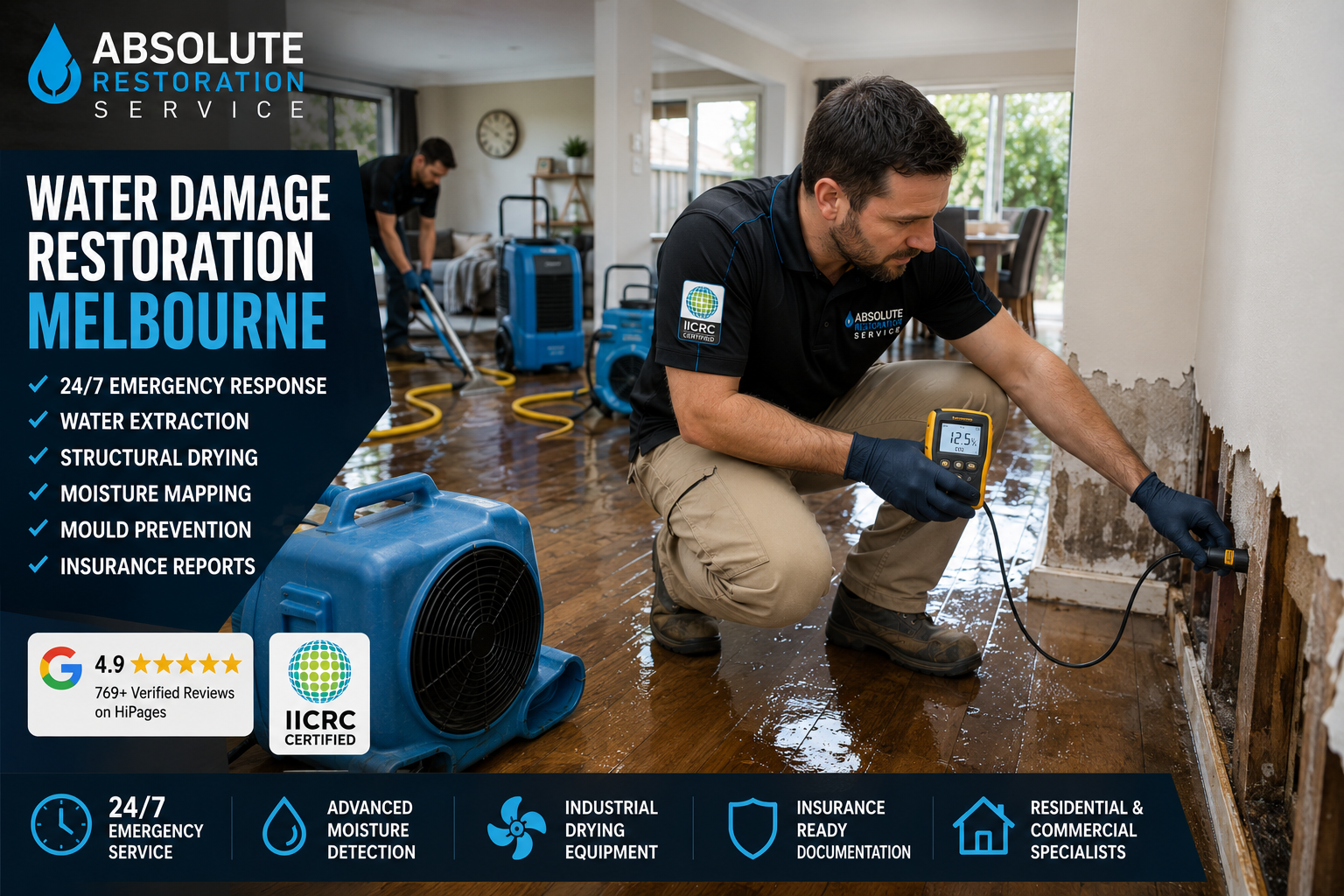
Absolute Restoration Service provides professional Water Damage Restoration Melbourne services 24 hours a day, 7 days a week. Our IICRC-certified technicians assist residential, commercial, industrial and strata properties affected by burst pipes, roof leaks, flooding, stormwater intrusion, overflowing appliances and other water-related emergencies.
Water intrusion caused by severe weather may affect roofing, ceilings, wall cavities, flooring and electrical systems. Learn more about our 24/7 Melbourne storm damage restoration services.
Water can quickly migrate through carpets, timber flooring, plasterboard, insulation, ceilings, cabinetry, concrete slabs and structural framing. Without professional extraction and controlled drying, trapped moisture may lead to mould growth, timber decay, structural deterioration, persistent odours and expensive repairs.
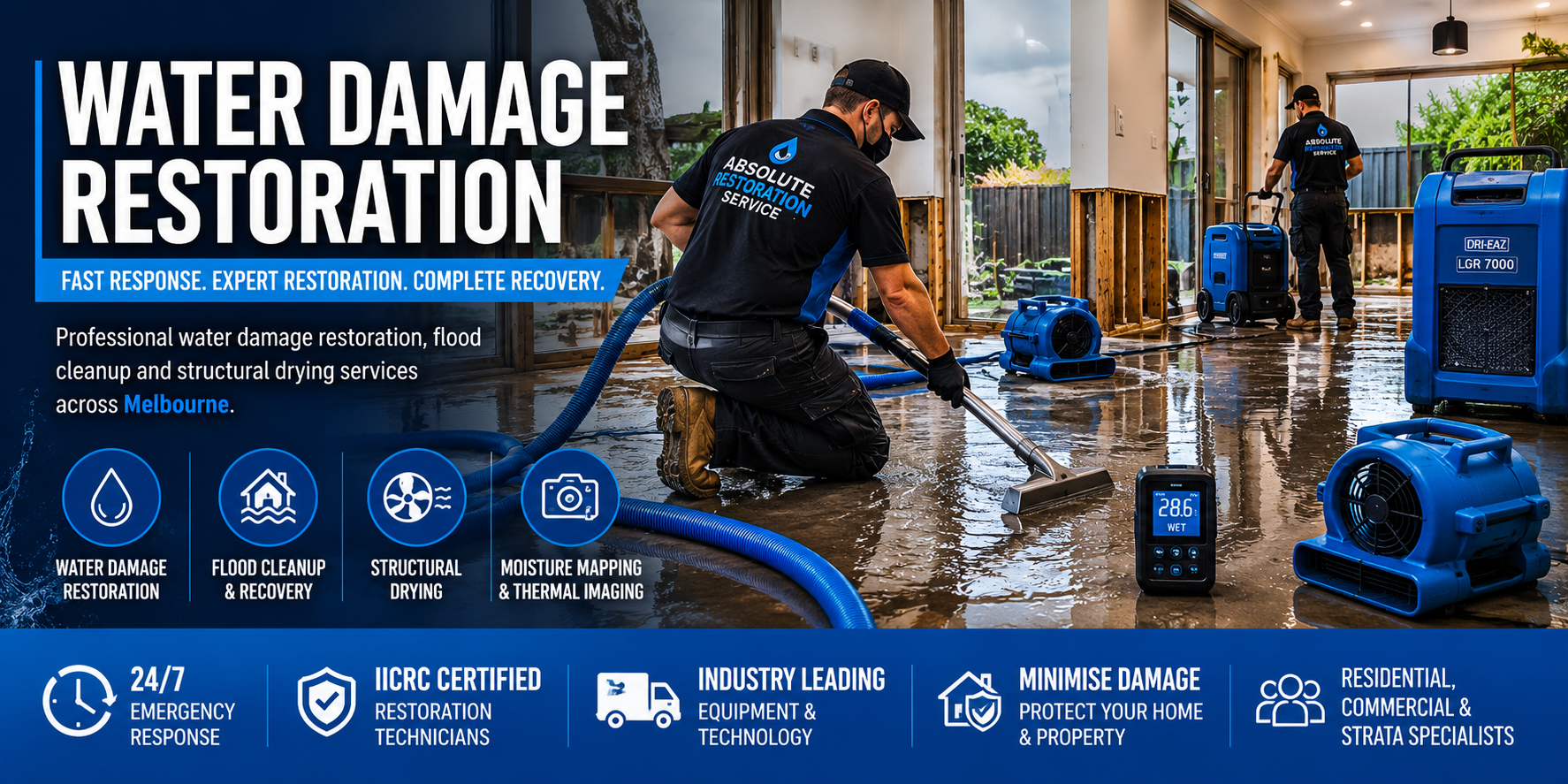
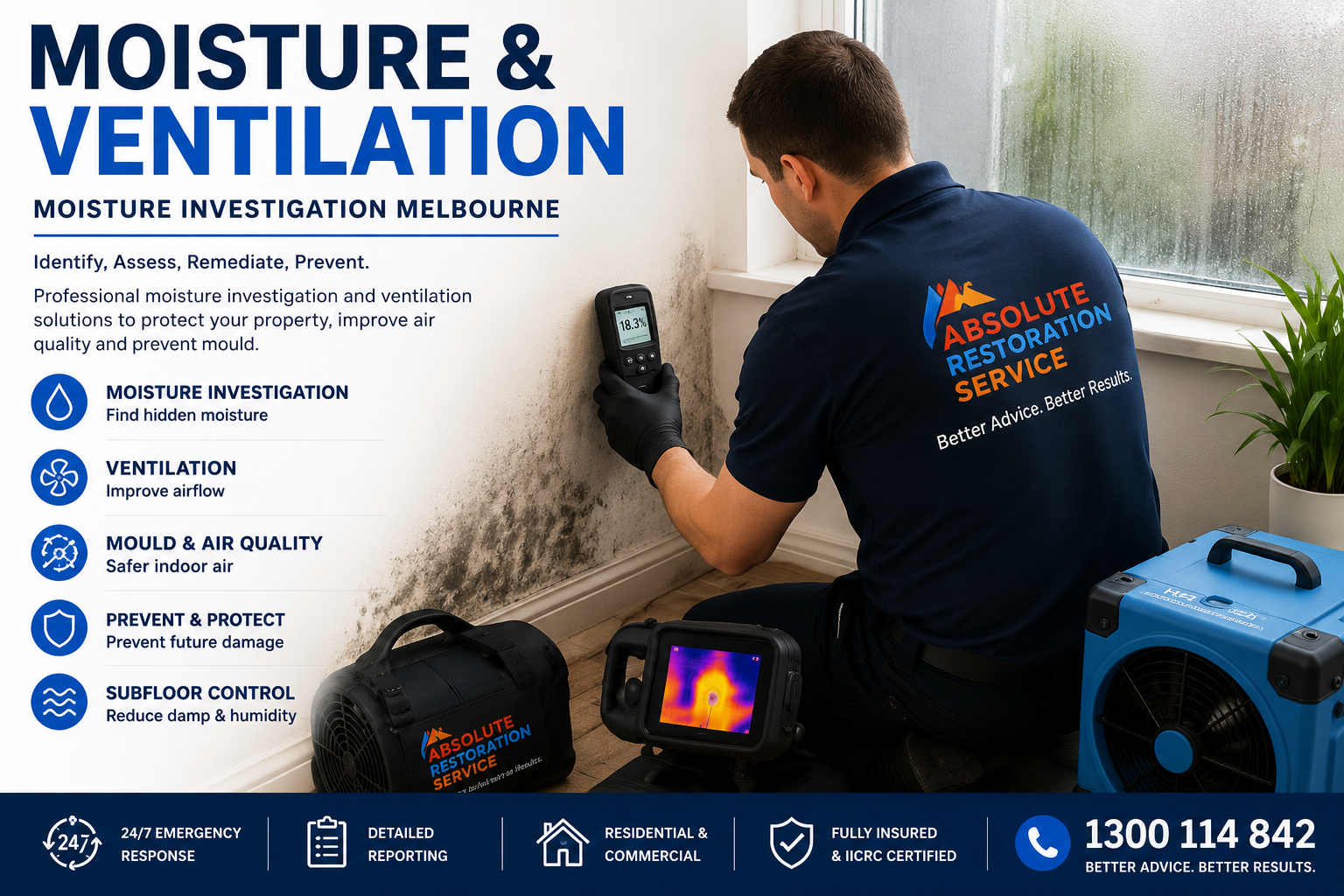
Using commercial water extraction equipment, industrial dehumidifiers, high-capacity air movers, thermal imaging cameras and digital moisture meters, we identify hidden moisture and implement a controlled structural drying process.
Our restoration procedures are undertaken with reference to the ANSI/IICRC S500 Standard for Professional Water Damage Restoration, from the initial inspection through to final moisture verification.
Need Emergency Water Damage Assistance?
Call 1300 114 842 for 24/7 water extraction, moisture assessment and structural drying throughout metropolitan Melbourne.
24/7 Emergency Water Damage Restoration Melbourne
When water enters a property, every minute counts. The longer moisture remains within building materials, the greater the risk of permanent damage and secondary mould contamination.
Water can travel beneath flooring, through wall cavities, into insulation, subfloors and ceiling spaces. Surfaces may appear dry while substantial moisture remains concealed inside the building.
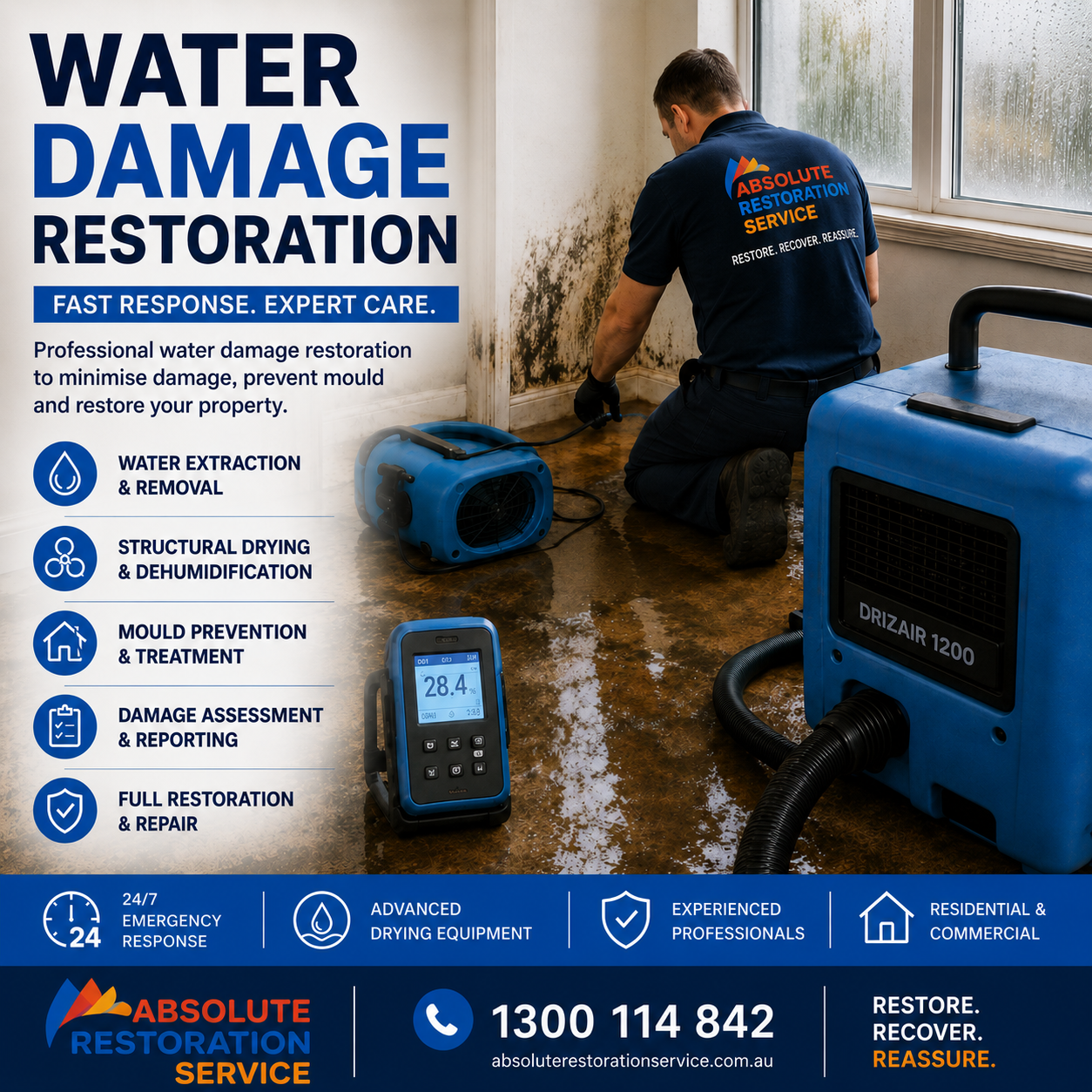
Our emergency restoration team attends properties throughout metropolitan Melbourne to assess the damage, stabilise the affected area, remove standing water and commence professional drying as quickly as possible.
We Respond to Water Damage Caused By:
- Burst water pipes and failed flexi hoses
- Roof leaks and storm damage
- Flooded homes and commercial premises
- Overflowing washing machines and dishwashers
- Hot water service failures
- Bathroom, kitchen and laundry leaks
- Stormwater and groundwater intrusion
- Balcony and waterproofing failures
- Commercial and industrial water damage
- Insurance-related water damage claims
- Emergency flood cleanup events
Fast professional intervention can reduce drying times, minimise demolition and help protect valuable building materials.
Common Signs of Hidden Water Damage
Water damage is not always immediately visible. Moisture may remain behind plasterboard, beneath flooring, within ceiling cavities, inside insulation or around structural framing after the original leak has stopped.
Warning Signs Include:
- Water stains on walls or ceilings
- Damp carpet, underlay or flooring
- Bubbling or blistering paint
- Peeling plaster or wallpaper
- Warped or cupped timber flooring
- Swollen skirting boards or cabinetry
- Persistent musty odours
- Visible mould growth
- Condensation and elevated humidity
- Damp wall or ceiling cavities
- Unexplained moisture meter readings
If any of these conditions are present, arrange a professional moisture inspection. Early detection can help minimise structural damage and reduce the likelihood of mould growth.
Where mould contamination is already visible or suspected, our team can also provide professional Mould Removal Melbourne and Mould Inspection Melbourne services.
Our Professional Water Damage Restoration Process
Every water damage event is different. Our restoration process is adapted to the water source, building construction, affected materials and extent of moisture migration.
1. Emergency Inspection and Moisture Assessment
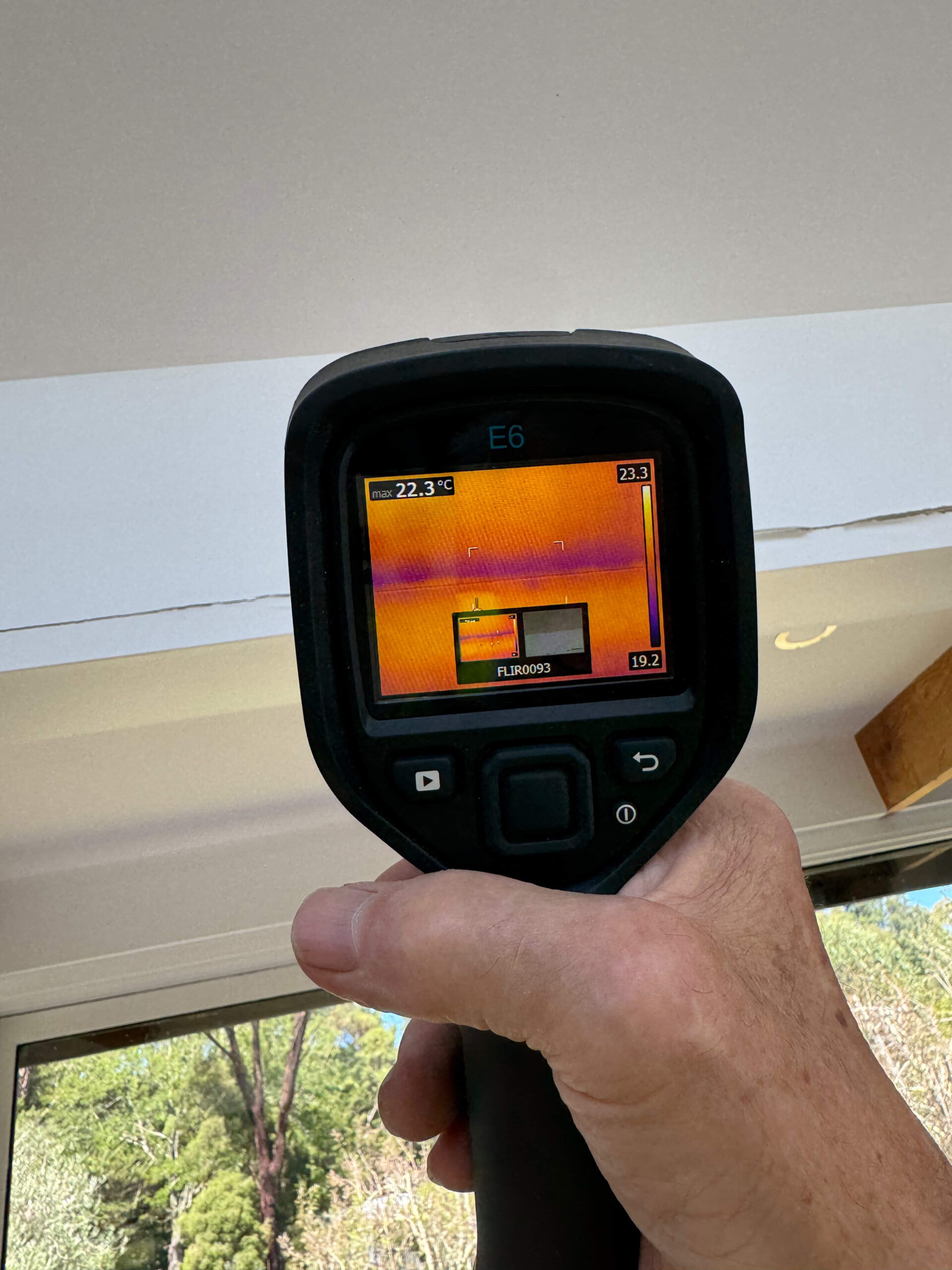
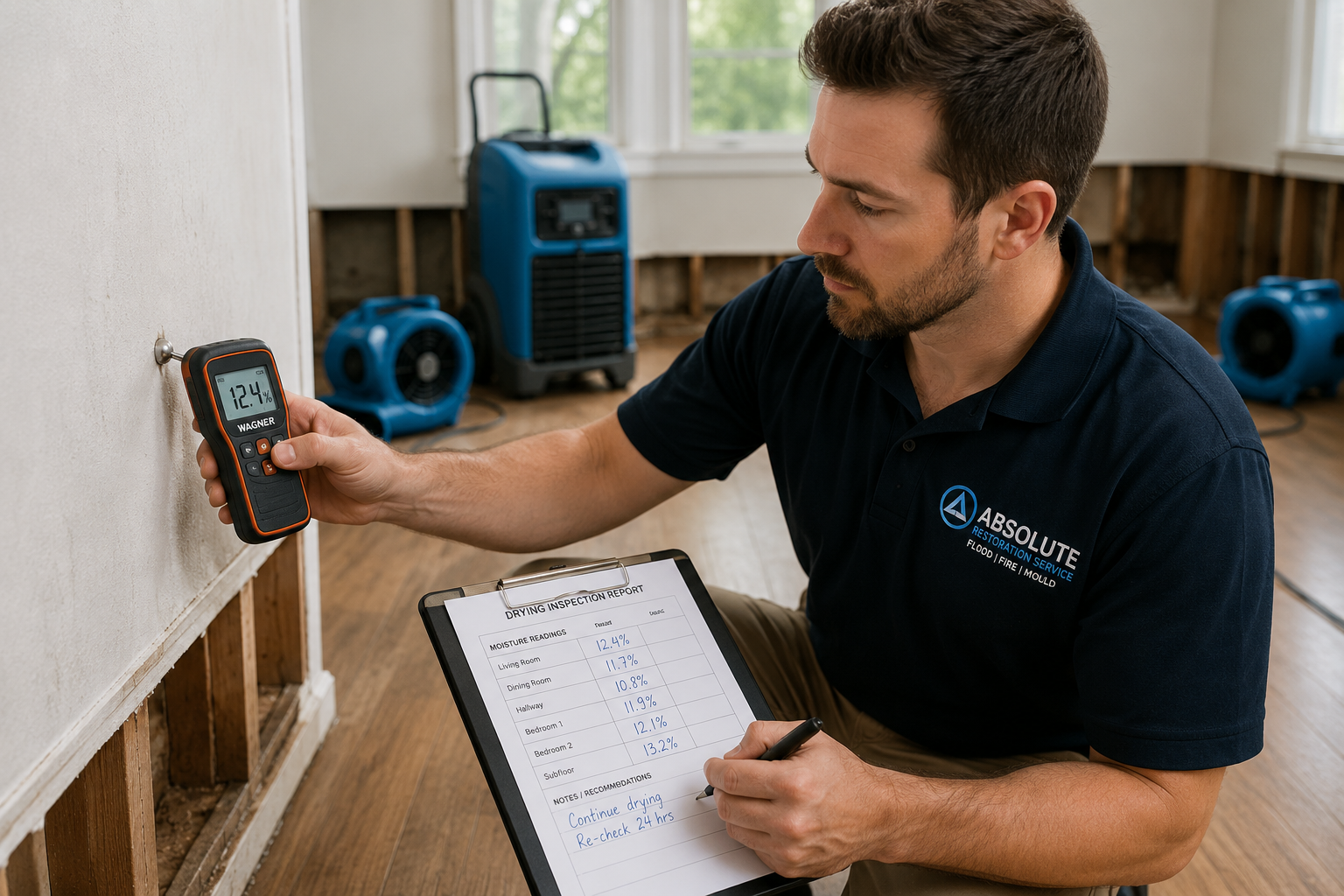
Every project begins with a detailed inspection of the affected areas. Our technicians use thermal imaging cameras, digital moisture meters, hygrometers and moisture mapping procedures to identify visible and concealed moisture.
The assessment may identify:
- Moisture inside wall and ceiling cavities
- Wet plasterboard and insulation
- Subfloor moisture
- Concrete slab moisture
- Saturated timber flooring or framing
- Moisture beneath cabinetry
- Roof leak and ceiling damage
- Water migration into adjoining rooms
Accurate moisture mapping allows us to develop an appropriate drying strategy while helping minimise unnecessary demolition.
2. Commercial Water Extraction
Standing water and excess moisture are removed using commercial extraction equipment suitable for carpets, hard flooring and affected structural surfaces.
Rapid extraction helps reduce:
- Secondary building damage
- Flooring deterioration
- Moisture migration
- Drying times
- Mould growth risk
- Unnecessary material removal
3. Controlled Structural Drying
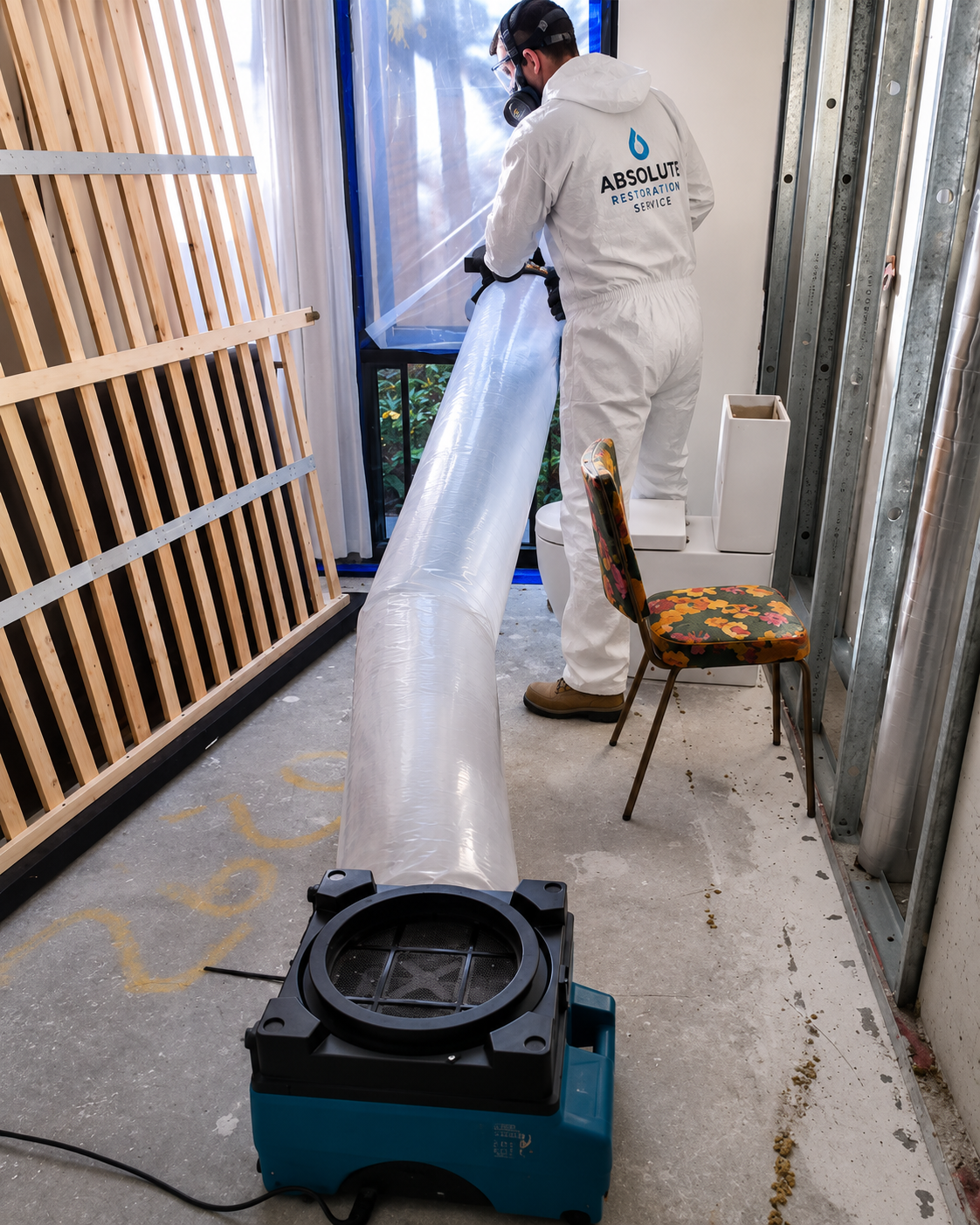
Following extraction, industrial dehumidifiers and high-capacity air movers are strategically positioned to remove moisture from walls, floors, ceilings and retained structural materials.
Professional drying may be required for:
- Timber flooring and framing
- Plasterboard and wall cavities
- Concrete slabs
- Cabinetry and joinery
- Subfloor spaces
- Ceiling cavities
- Insulation and retained materials
Equipment remains in operation until affected materials reach appropriate drying targets. Placement and operating conditions are adjusted as required throughout the drying process.
4. Moisture Monitoring and Drying Verification
Professional restoration does not end when drying equipment is installed. Moisture levels and environmental conditions must be monitored as affected materials release trapped water.
During the drying process, our technicians may:
- Record digital moisture readings
- Monitor relative humidity and temperature
- Assess drying conditions
- Adjust dehumidifiers and air movers
- Update moisture maps and drying logs
- Confirm progress against established drying targets
Regular monitoring helps confirm that the drying system remains effective and that concealed moisture is not being overlooked.
5. Final Moisture Verification
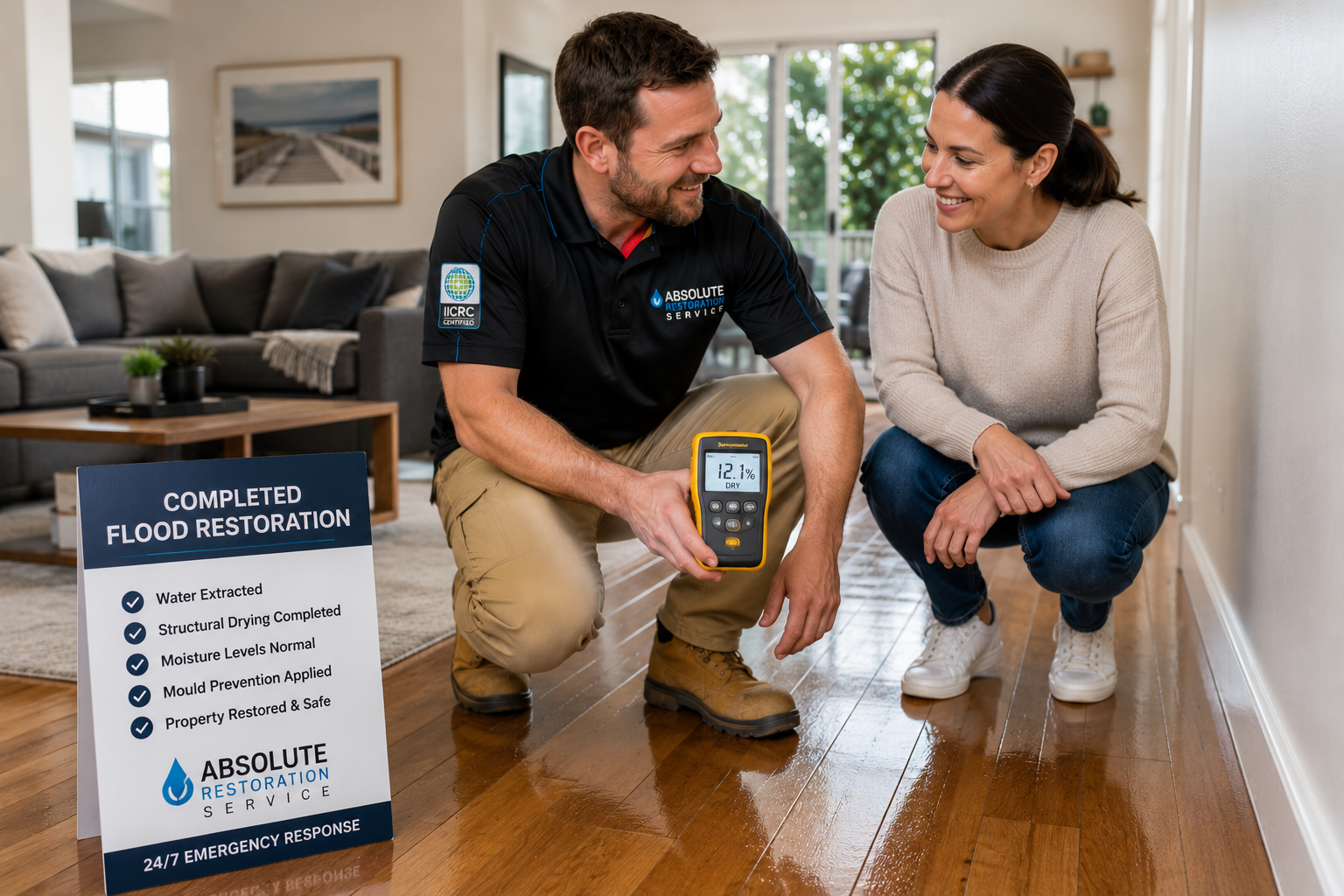
Before drying equipment is removed, a final inspection is completed to verify that affected materials have returned to acceptable moisture levels.
Final verification may include:
- Digital moisture meter readings
- Thermal imaging inspection
- Moisture mapping verification
- Visual inspection of affected materials
- Final drying and restoration documentation
This process provides greater confidence that the property is suitably dry and ready for repair, reinstatement or reoccupation.
Professional Structural Drying Melbourne
Removing visible water is only the first stage of restoration. Water readily penetrates porous building materials and may remain concealed long after exposed surfaces appear dry.
Controlled structural drying may be needed to remove moisture from:
- Plasterboard and wall cavities
- Ceiling cavities
- Timber framing
- Timber and floating flooring
- Concrete slabs
- Subfloor areas
- Insulation
- Cabinetry and joinery
Effective drying helps reduce the likelihood of secondary mould growth, timber decay, structural movement, flooring damage, damp odours and unnecessary reconstruction.
Learn more about Structural Drying Melbourne.
Wet Carpet Drying and Water Extraction
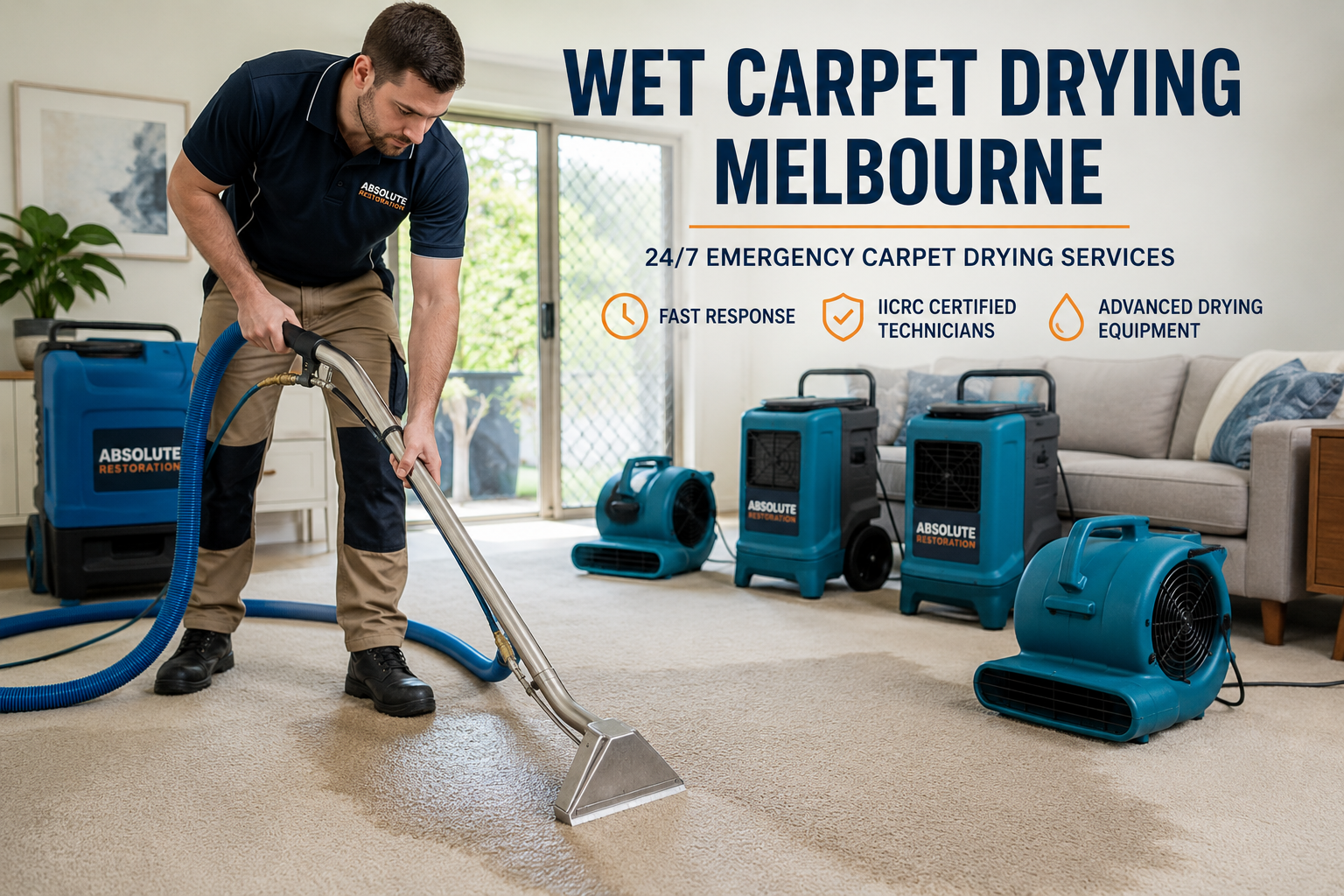
Wet carpet requires prompt professional attention. Moisture trapped inside carpet, underlay and the flooring substrate can create conditions suitable for mould growth, bacterial contamination and persistent odours.
Our wet carpet assessment and drying service may include:
- Commercial water extraction
- Carpet lifting where appropriate
- Underlay condition assessment
- Subfloor and structural floor drying
- Industrial air movement
- Commercial dehumidification
- Moisture monitoring
- Odour management
- Replacement recommendations where restoration is unsuitable
Whether carpet can be restored depends on the water category, contamination level, length of exposure and condition of the carpet and underlay.
View our Wet Carpet Drying Melbourne service.
Commercial and Strata Water Damage Restoration
Water damage can severely disrupt businesses, apartment buildings, medical facilities, schools and managed properties. Absolute Restoration Service works with property stakeholders to stabilise affected areas and minimise operational disruption.
We Work With:
- Property and strata managers
- Facility managers
- Builders and building consultants
- Insurance companies and loss adjusters
- Commercial property owners
- Owners corporations
Properties We Assist Include:
- Offices and retail premises
- Warehouses and industrial facilities
- Medical centres
- Schools and childcare centres
- Hotels and accommodation facilities
- Apartment complexes
- Strata-managed buildings
Our objective is to safely restore the affected area while reducing business interruption, secondary damage and long-term repair costs.
Water Damage Insurance Documentation
Many restoration projects form part of an insurance claim. To support property owners, builders, insurers and strata managers, we provide clear documentation of the affected areas and drying process.
Documentation may include:
- Site and damage photographs
- Initial moisture assessment reports
- Thermal imaging records
- Moisture maps
- Equipment placement records
- Progressive drying logs
- Final moisture readings
- Restoration and repair recommendations
Accurate records assist the assessment process and demonstrate that recognised water damage restoration procedures have been followed.
Why Choose Absolute Restoration Service?
- IICRC-certified water damage restoration technicians
- 24/7 emergency response throughout Melbourne
- Commercial water extraction equipment
- Advanced thermal imaging and moisture mapping
- Industrial dehumidification and structural drying
- Insurance-ready reports and drying documentation
- Residential, commercial and strata restoration
- Flood, storm and burst pipe response
- HEPA air filtration where contamination risks are identified
- 4.9-star rating from more than 769 verified HiPages reviews
Related Restoration Services
- Flood Damage Restoration Melbourne
- Emergency Flood Cleanup Melbourne
- Structural Drying Melbourne
- Wet Carpet Drying Melbourne
- Mould Removal Melbourne
- Mould Inspection Melbourne
- Fire and Smoke Damage Restoration Melbourne
- Subfloor Ventilation Melbourne
Helpful Industry Resources
- Institute of Inspection, Cleaning and Restoration Certification
- Restoration Industry Association
- National Construction Code
- Victoria State Emergency Service
- Better Health Channel – Mould and Your Health
Frequently Asked Questions
How quickly should water damage be treated?
Water damage should be assessed and treated as quickly as possible. Moisture can rapidly spread through carpet, plasterboard, insulation, timber framing and flooring systems. Prompt extraction and controlled drying help reduce secondary damage and mould growth.
Can hidden moisture cause mould?
Yes. Moisture trapped behind walls, beneath flooring, inside ceilings, insulation and subfloors can support mould growth. Thermal imaging, moisture mapping and structural drying help identify and remove concealed moisture.
Can carpet be saved after water damage?
Some carpets can be restored when extraction and drying begin promptly. The outcome depends on the water category, length of exposure, contamination level and condition of the carpet, underlay and flooring substrate.
Is water damage always visible?
No. Water commonly migrates behind walls, beneath flooring, inside ceiling cavities, around cabinetry and into concrete slabs. Professional moisture detection equipment is often required to locate the full extent of the damage.
How long does structural drying take?
Drying times depend on the volume of water, affected materials, environmental conditions and extent of moisture migration. Many projects require several days of controlled drying with regular moisture monitoring.
Do you assist with insurance claims?
Yes. We can provide photographs, moisture reports, drying logs, equipment records, thermal imaging information and restoration recommendations to support insurance assessments.
What water damage restoration equipment do you use?
Our equipment may include commercial extraction units, industrial dehumidifiers, high-capacity air movers, thermal imaging cameras, digital moisture meters, hygrometers and HEPA air filtration systems.
Do you provide emergency water damage restoration?
Yes. Absolute Restoration Service provides 24/7 emergency water damage restoration services throughout metropolitan Melbourne.
Can water damage affect indoor air quality?
Yes. Damp materials and high humidity can contribute to musty odours, microbial growth and reduced indoor air quality. Professional drying and moisture control help restore cleaner and drier indoor conditions.
Why choose Absolute Restoration Service?
Our team combines IICRC-certified restoration knowledge with professional extraction, thermal imaging, moisture mapping, structural drying and detailed restoration documentation.
Book a Professional Water Damage Inspection
Visible water may disappear while concealed moisture remains trapped inside walls, ceilings, flooring, insulation, cabinetry and structural materials. Left untreated, this moisture may contribute to mould growth, timber decay, structural movement and costly repairs.
Absolute Restoration Service provides emergency water extraction, detailed moisture assessment, structural drying, moisture monitoring and final verification for residential, commercial and strata properties throughout metropolitan Melbourne.
Whether the damage was caused by a burst pipe, roof leak, storm, appliance overflow or hidden water intrusion, our technicians can assess the affected areas and develop an appropriate restoration plan.
Call 1300 114 842 for immediate 24/7 emergency assistance.
Request a Water Damage Inspection
24/7 Emergency Response • Water Extraction • Structural Drying • Thermal Imaging • Moisture Mapping • Mould Prevention • Melbourne-Wide Service