Emergency Flood Cleanup Melbourne
Urgent water extraction, moisture assessment and structural drying for flood-affected homes, businesses and strata properties across Melbourne.
Floodwater can move beneath flooring, into wall cavities and through porous building materials. Absolute Restoration Service provides 24/7 telephone assistance and restoration attendance subject to location, site safety and technician availability.
Call 1300 114 842 for urgent assistance. If there is immediate danger, structural instability, fire, suspected gas or contact between water and live electricity, leave the area and call 000 or the relevant emergency authority first.
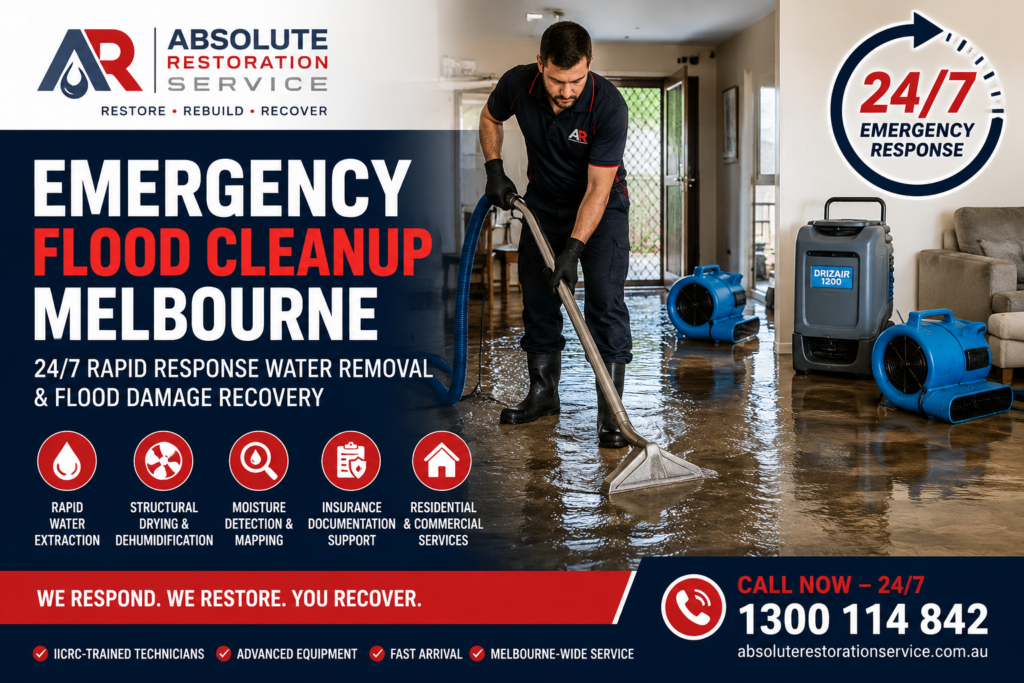
Emergency flood cleanup may include extraction, moisture mapping, drying and monitored restoration.
What to Do After Property Flooding
- Protect people first: keep occupants away from unstable ceilings, contaminated water and wet electrical areas.
- Stop the source only if safe: shut off a known water supply if this can be done without entering a hazardous area.
- Contact the appropriate authority: use emergency services, the SES, utility provider, plumber or building manager where required.
- Avoid contaminated water: sewage, drain overflows, stormwater and outdoor floodwater may contain biological or chemical hazards.
- Document from a safe location: photographs and basic incident details can assist initial triage and insurance communication.
- Call ARS: describe the suburb, source, affected rooms, approximate time of loss and whether the water is still entering.
Emergency Flood Cleanup Services
- Standing-water extraction
- Moisture inspection and mapping
- Thermal imaging as a supporting assessment tool
- Carpet, underlay and floor-system assessment
- Structural drying and dehumidification
- Air movement and environmental monitoring
- Controlled removal of unsalvageable materials where agreed
- Cleaning and decontamination appropriate to the water source
- Drying records, photographs and reporting where included
- Mould assessment or remediation when required
ARS provides restoration response across metropolitan Melbourne, subject to access and availability.
Common Sources of Flood and Water Damage
Burst or Leaking Pipes
Pipe failures can release water into floors, ceilings, cabinetry and wall systems. A plumber may need to repair or isolate the source before restoration work proceeds.
Storm and Rainwater Entry
Roof damage, overflowing gutters, failed drainage and surface-water entry can affect multiple building levels and concealed materials. Temporary building protection may require a roofer, builder or emergency authority.
Appliance and Hot-Water Failures
Washing machines, dishwashers, refrigerators and hot-water units can release substantial water. The affected materials and duration of exposure influence the restoration scope.
Sewage and Drain Overflows
Sewage and drain water require restricted access, suitable protective equipment, removal of affected porous materials where necessary and cleaning controls appropriate to the contamination.
External Floodwater
Water entering from roads, waterways or surrounding ground should be treated as potentially contaminated. Electrical, structural, chemical and biological hazards must be considered before entry.
Our Flood Restoration Process
1. Emergency Triage
We collect incident details, confirm whether emergency authorities or essential trades are required and identify immediate access or contamination concerns.
2. Site Assessment
Technicians inspect accessible affected areas, the apparent water source, building materials and safety conditions. The initial scope may change if concealed damage is discovered.
3. Water Extraction
Where safe and appropriate, commercial extraction equipment removes standing water and moisture from suitable floor coverings or surfaces.
4. Moisture Mapping
Moisture meters, psychrometric readings and thermal imaging where useful help identify affected materials and establish drying priorities. Thermal images do not measure moisture by themselves and are interpreted with other evidence.
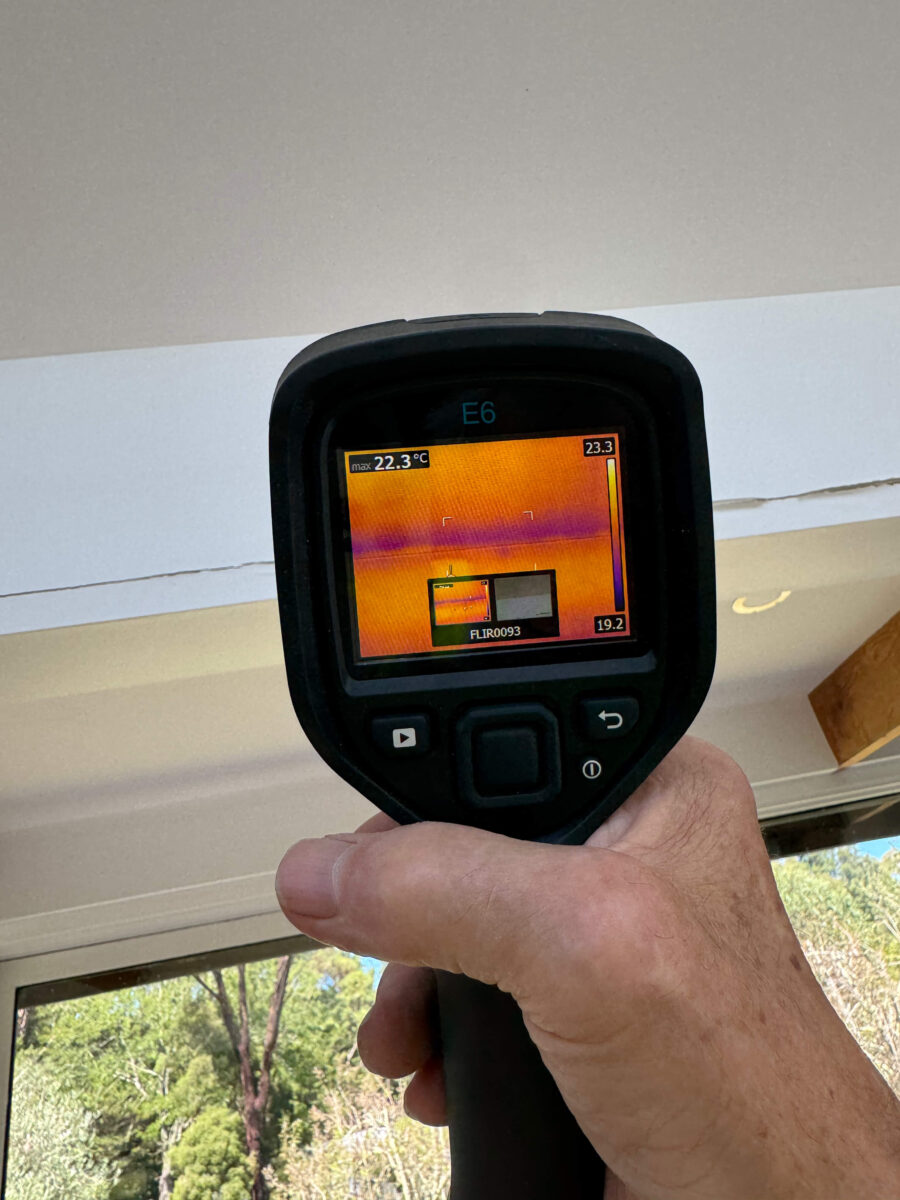
Moisture mapping combines suitable instruments, site observations and repeat readings.
5. Structural Drying
Air movers, dehumidifiers and other drying methods are selected for the materials, building conditions and contamination category. Equipment placement may be adjusted as readings change.
6. Monitoring and Handover
Accessible materials are monitored against the agreed drying goals. On completion, ARS provides recommendations and project records where included in the scope. Building repairs and reinstatement may require separate licensed trades.
Clean Water and Contaminated Water
The source, exposure time and materials contacted affect how water should be managed. Water from a sanitary source can deteriorate after contacting building materials or remaining stagnant. Sewage, drain overflows and external floodwater require more protective controls and may make porous materials unsuitable for restoration.
ARS assesses the actual site rather than relying only on a simple label. Do not attempt to vacuum sewage or outdoor floodwater with domestic equipment.
Why Prompt Drying Matters
Water can migrate beyond the visible wet area. Delayed assessment may increase swelling, staining, corrosion, delamination, odour, microbial growth and the amount of material requiring removal. Timing is important, but no contractor can guarantee that every wet material will be salvageable.
Residential, Commercial and Strata Response
We assist houses, apartments, offices, retail premises, warehouses, hospitality venues, schools, managed properties and other facilities. Commercial and strata projects may require staged access, occupant communication, work-area isolation and coordination with insurers, managers and licensed trades.
Insurance Documentation
Where agreed, ARS can provide photographs, moisture readings, drying logs and restoration recommendations to support claim assessment. The insurer determines policy coverage and claim approval; restoration documentation does not guarantee reimbursement.
Why Choose Absolute Restoration Service?
- 24/7 telephone assistance for urgent incidents
- IICRC-trained restoration technicians
- Commercial extraction, drying and HEPA equipment
- Moisture mapping and monitored drying
- Experience across residential, commercial and strata properties
- Contaminated-water controls where required
- Clear scopes and project documentation where agreed
- Melbourne service coverage subject to availability
Related Restoration Services
- Flood Damage Restoration Melbourne
- Water Damage Restoration Melbourne
- Structural Drying Melbourne
- Mould Removal Melbourne
- Fire and Smoke Damage Restoration Melbourne
- Melbourne Service Coverage
Frequently Asked Questions
How quickly can ARS attend?
Call 1300 114 842 at any time for urgent triage. Attendance depends on your location, site safety, road conditions, project requirements and technician availability.
Should I enter a flooded room to turn off electricity?
No. Do not enter standing water or touch a switchboard, appliance or electrical item in a wet area. Leave the area and contact emergency services or the electricity distributor when there is immediate danger.
Can carpets and timber floors be saved?
Sometimes. The water source, exposure time, material condition, installation and contamination determine whether drying is appropriate. ARS assesses each system before recommending restoration or removal.
Can flooding cause mould?
Persistently damp materials can support microbial growth. Prompt extraction and monitored drying reduce risk, but existing contamination or concealed moisture may require separate assessment.
Do you clean up sewage flooding?
ARS can assess sewage and drain overflows. These incidents require controlled access, appropriate protective equipment and contamination-specific removal and cleaning procedures.
Can you help with insurance documentation?
Yes, where included in the scope. ARS can provide photographs, moisture records, drying logs and recommendations, but the insurer decides coverage and claim outcomes.
Need Emergency Flood Cleanup?
Call 1300 114 842 for urgent flood-cleanup assistance or contact ARS online for a non-urgent inspection request.