Bathroom Mould Removal Melbourne
Professional bathroom mould assessment and remediation by IICRC-trained restoration technicians.
Bathroom mould often returns because the visible growth is only one part of the problem. Persistent steam, condensation, ineffective exhaust ventilation, plumbing leaks or moisture concealed behind tiles and wall linings can continue supporting contamination after surface cleaning.
Absolute Restoration Service provides professional bathroom mould removal across Melbourne for homes, apartments, rental properties, strata buildings and commercial facilities. We investigate the moisture conditions, define the affected area and complete controlled remediation suited to the inspection findings.
Call 1300 114 842 or request a mould inspection.
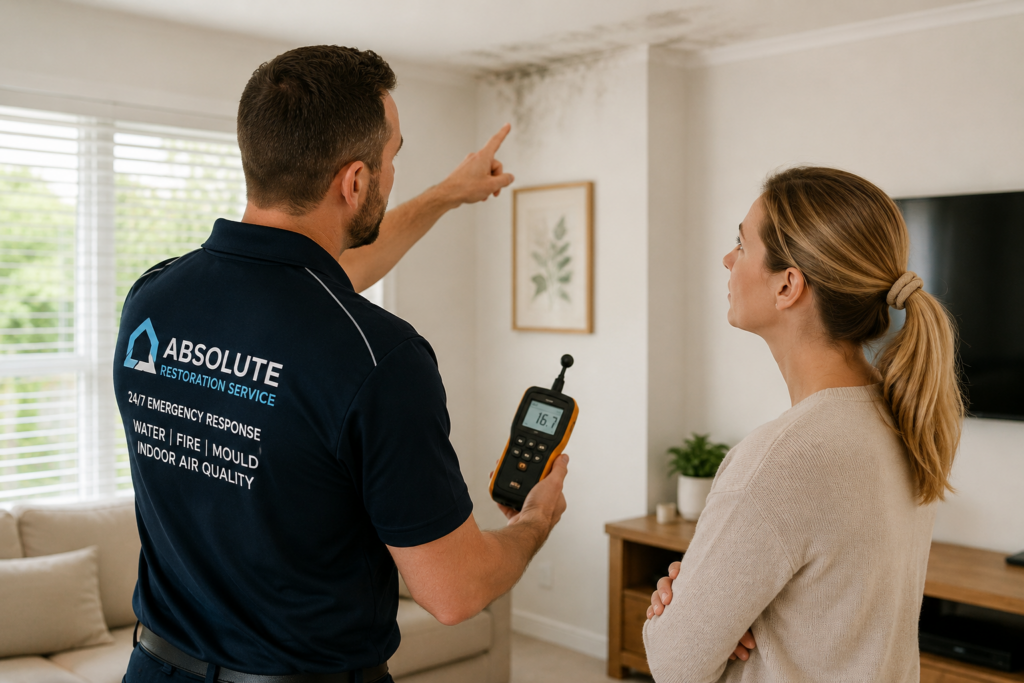
Professional bathroom mould and moisture inspection in a Melbourne home.
IICRC-Trained Technicians | Melbourne-Wide Service | Homes, Apartments, Strata and Commercial Properties
Why Mould Develops in Melbourne Bathrooms
Bathrooms regularly produce warm, moisture-laden air. When that moisture cannot leave the room efficiently, it condenses on cooler ceilings, walls, windows, grout and silicone. Porous paints, plasterboard, timber and accumulated surface residues can then support mould growth.
Common contributing conditions include:
- Undersized, blocked or ineffective exhaust fans
- Exhaust systems that discharge into the ceiling cavity rather than outdoors
- Insufficient make-up air beneath the bathroom door
- Condensation remaining on walls and ceilings after showering
- Leaking taps, shower fittings, pipes or waterproofing systems
- Water intrusion behind tiles, grout and silicone joints
- Roof or ceiling leaks affecting upper-level bathrooms
- Cold external walls and poorly insulated ceiling surfaces
- Limited natural ventilation in apartments and internal bathrooms
Cleaning the visible mould without addressing these conditions frequently leads to recurrence. A professional assessment helps distinguish a surface-condensation issue from concealed water damage or a larger building-moisture problem.
Signs Your Bathroom Needs Professional Mould Remediation
- Mould repeatedly returns after cleaning
- Black, green or grey spotting is spreading across the ceiling or walls
- Paint is peeling, bubbling or staining
- Grout and silicone remain discoloured
- A persistent musty odour remains after the room dries
- The exhaust fan does not clear steam effectively
- Moisture readings remain elevated near the shower, bath or ceiling
- Adjacent rooms, wardrobes or ceiling cavities show dampness or mould
- The bathroom has experienced a plumbing, roof or waterproofing leak
Small isolated marks caused by day-to-day condensation may be manageable with cleaning and better ventilation. Recurring, extensive or concealed contamination should be assessed before materials are disturbed.
Our Bathroom Mould Removal Process
1. Initial Inspection and Moisture Investigation
We review the visible growth, room layout, exhaust system, condensation patterns and any history of leaks. Moisture meters, humidity measurements and thermal imaging may be used where appropriate to identify affected materials and likely moisture pathways.
2. Remediation Scope and Safety Controls
The technician explains which surfaces or materials require cleaning, removal or further investigation. Containment and access controls are selected according to the extent and location of contamination.
3. HEPA-Filtered Air Management
Where required, professional HEPA air-filtration equipment helps control airborne particulates during remediation. Work methods are selected to reduce unnecessary disturbance and cross-contamination.
4. Detailed Cleaning and Material Assessment
Affected non-porous and semi-porous surfaces are cleaned using professional remediation procedures. Materials that are damaged, deteriorated or contaminated beyond practical cleaning may require removal as part of the agreed scope.
5. Moisture-Control Recommendations
After remediation, we provide practical recommendations addressing ventilation, condensation, maintenance, plumbing or building defects identified during the inspection. Remediation cannot prevent recurrence if the moisture source remains unresolved.
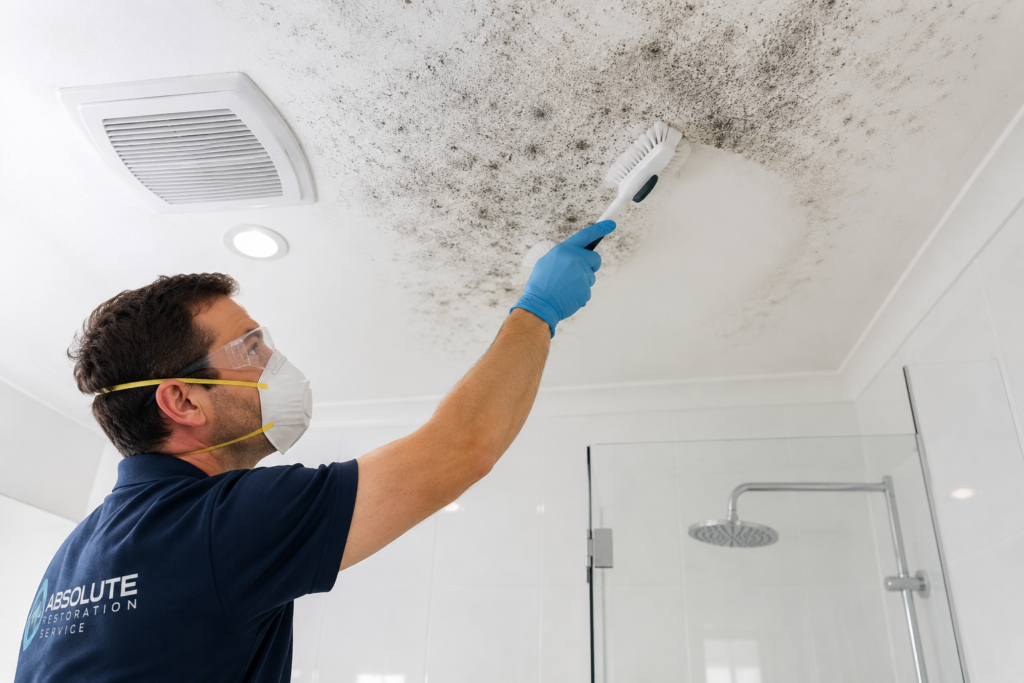
Controlled bathroom ceiling mould remediation using appropriate PPE and professional work practices.
Bathroom Surfaces and Materials We Assess
- Painted ceilings and walls
- Plasterboard, cornices and ceiling cavities
- Tile grout and silicone joints
- Shower recesses, baths and vanities
- Window frames and condensation-affected surfaces
- Cabinetry and bathroom storage
- Timber framing and subfloor areas where accessible
- Insulation and wall linings affected by leaks
- Exhaust fans, ducts and ventilation pathways
The correct treatment depends on the material, the extent of contamination and whether moisture has penetrated behind the visible surface.
Bathroom Ventilation and Condensation Control
An exhaust fan must do more than make noise—it needs adequate capacity, a clear duct path, outdoor discharge and sufficient replacement air entering the room. Running the fan during bathing and for an appropriate period afterwards can help remove residual moisture, but it will not correct a leak or defective waterproofing.
Where recurring mould is connected to broader airflow or humidity problems, explore our indoor air quality services and ventilation solutions.
Why Choose Absolute Restoration Service?
- More than 20 years of restoration and remediation experience
- IICRC-trained restoration technicians
- Professional moisture-detection and HEPA-filtration equipment
- Experience with homes, rentals, apartments, strata and commercial buildings
- Clear findings and practical moisture-control recommendations
- Related capability in water damage, structural drying and indoor air quality
- Service across metropolitan Melbourne and selected regional locations
Related Mould and Moisture Services
- Mould Removal Melbourne
- Ceiling Mould Removal Melbourne
- Tile and Grout Mould Removal
- Black Mould Removal Melbourne
- Mould Testing Melbourne
- Water Damage Restoration Melbourne
- Structural Drying Melbourne
- Melbourne Restoration Service Areas
Bathroom Mould Removal FAQs
Why does bathroom mould keep returning after cleaning?
Recurring mould usually indicates that condensation, inadequate ventilation, a leak or concealed dampness is continuing to provide moisture. Surface cleaning alone does not correct the underlying condition.
Can bathroom mould spread beyond the bathroom?
Yes. When moisture or contamination extends into ceiling cavities, wall linings, cabinetry or adjoining rooms, the affected area can be larger than the visible bathroom surface.
Do you inspect bathroom exhaust ventilation?
Yes. We consider fan performance, ducting, outdoor discharge, replacement airflow and condensation patterns as part of the moisture investigation where relevant.
Do tiles, grout and silicone always need replacement?
Not always. The appropriate treatment depends on material condition, contamination, staining and whether moisture has penetrated behind the surface. Damaged or deteriorated materials may require replacement.
Do you service apartments, rentals and strata properties?
Yes. We assist homeowners, renters, landlords, property managers and owners corporations. Access requirements, shared plumbing and building-management considerations are incorporated into the scope.
Which Melbourne areas do you service?
We attend suburbs across inner, northern, eastern, western and bayside Melbourne. Check the ARS service-area directory or call to confirm your location.
Book a Bathroom Mould Inspection
Early assessment can identify whether the issue is surface condensation, ineffective ventilation, a plumbing leak or concealed water damage before contamination spreads into additional materials.