Ceiling Mould Removal Melbourne
Professional ceiling mould assessment, moisture investigation and controlled remediation by IICRC-trained restoration technicians.
Ceiling mould is often a symptom of a larger moisture problem. Roof leaks, bathroom condensation, plumbing failures, wet insulation, poorly ducted exhaust fans and incomplete drying after water damage can all affect ceilings and concealed roof spaces.
Absolute Restoration Service provides ceiling mould removal across Melbourne for homes, apartments, rental properties, strata buildings and commercial facilities. We investigate the moisture pathway, assess visible and potentially concealed affected materials and complete a project-specific remediation scope.
Call 1300 114 842 or request a mould inspection.
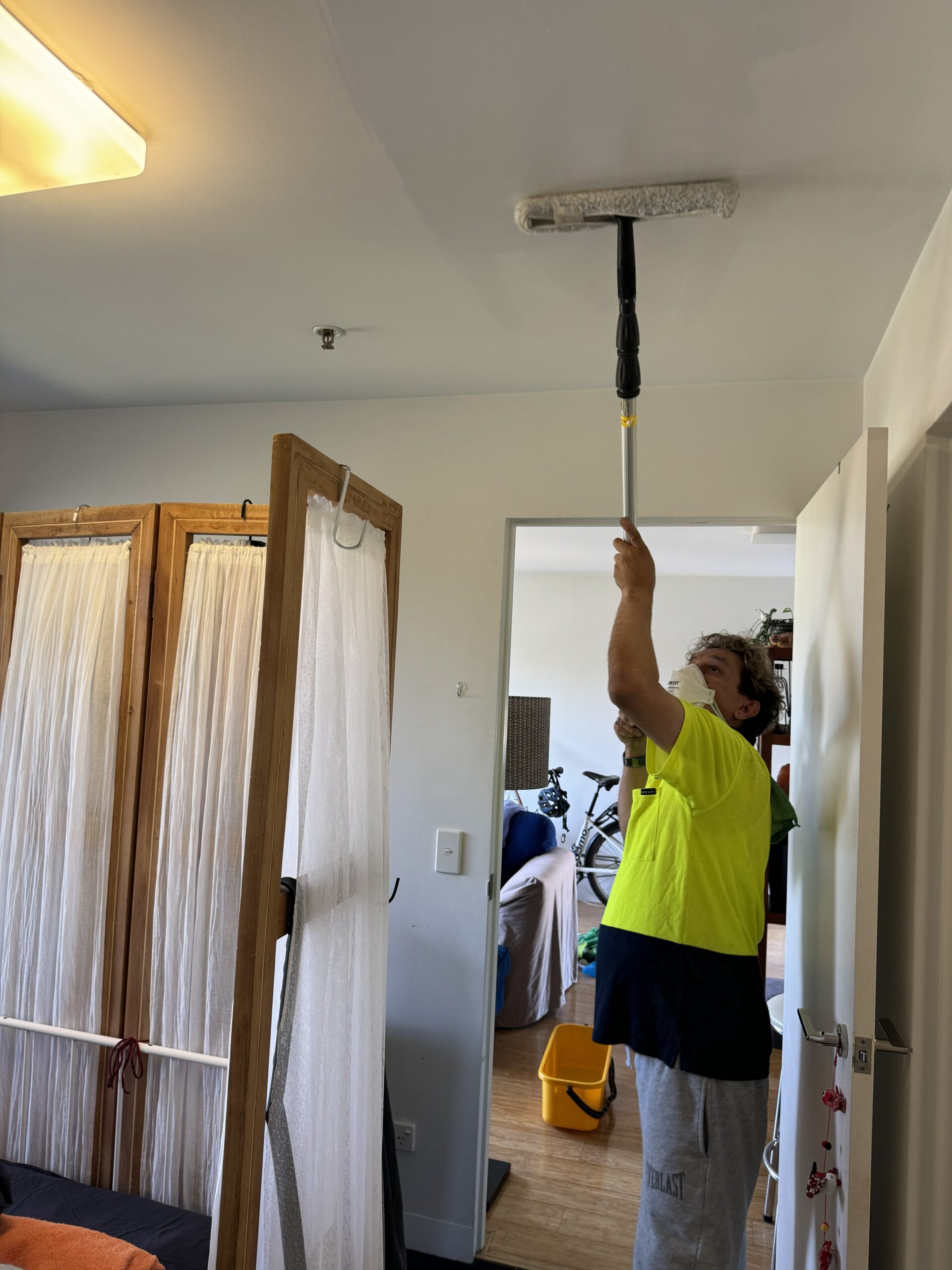
Professional ceiling mould remediation addressing visible contamination and moisture-related damage.
IICRC-Trained Technicians | Moisture Detection | HEPA-Filtered Remediation | Melbourne-Wide Service
Why Mould Develops on Ceilings
Warm humid air rises and can condense on cooler ceiling surfaces. When coatings, plasterboard, dust or timber remain damp, they can support mould growth. A roof-space or ceiling-cavity issue may also wet the rear face of the plasterboard before staining becomes visible inside the room.
Common causes include:
- Roof leaks, damaged flashing and stormwater entry
- Leaking plumbing or air-conditioning condensate lines
- Bathroom and laundry steam
- Exhaust fans that discharge into the roof cavity
- Inadequate ventilation or replacement airflow
- Cold surfaces caused by missing or displaced insulation
- High indoor humidity and recurring condensation
- Wet insulation retaining moisture against plasterboard
- Previous water damage that was not completely dried
- Moisture movement from subfloors or other damp building areas
Cleaning or repainting the visible ceiling does not correct a leak, wet insulation or ventilation defect. The moisture source should be investigated before cosmetic repairs are completed.
Signs You May Need Professional Ceiling Mould Removal
- Dark, green, grey or black spotting on ceilings or cornices
- Mould returning after cleaning or repainting
- Water stains or discolouration after rain
- Peeling, bubbling or flaking paint
- Soft, swollen or sagging plasterboard
- Musty odours near the ceiling or roof access
- Condensation collecting above showers or cooking areas
- Mould around exhaust fans, vents and skylights
- Visible dampness or mould in the roof cavity
Sagging, structurally damaged or actively leaking ceilings should be isolated and assessed promptly. Electrical hazards and structural repairs must be handled by the appropriate licensed trades.
Hidden Ceiling and Roof-Space Contamination
Visible mould may represent only part of the affected area. Moisture and contamination can extend to the rear of plasterboard, insulation, roof framing, bulkheads, wall junctions, ductwork and stored materials within a roof cavity.
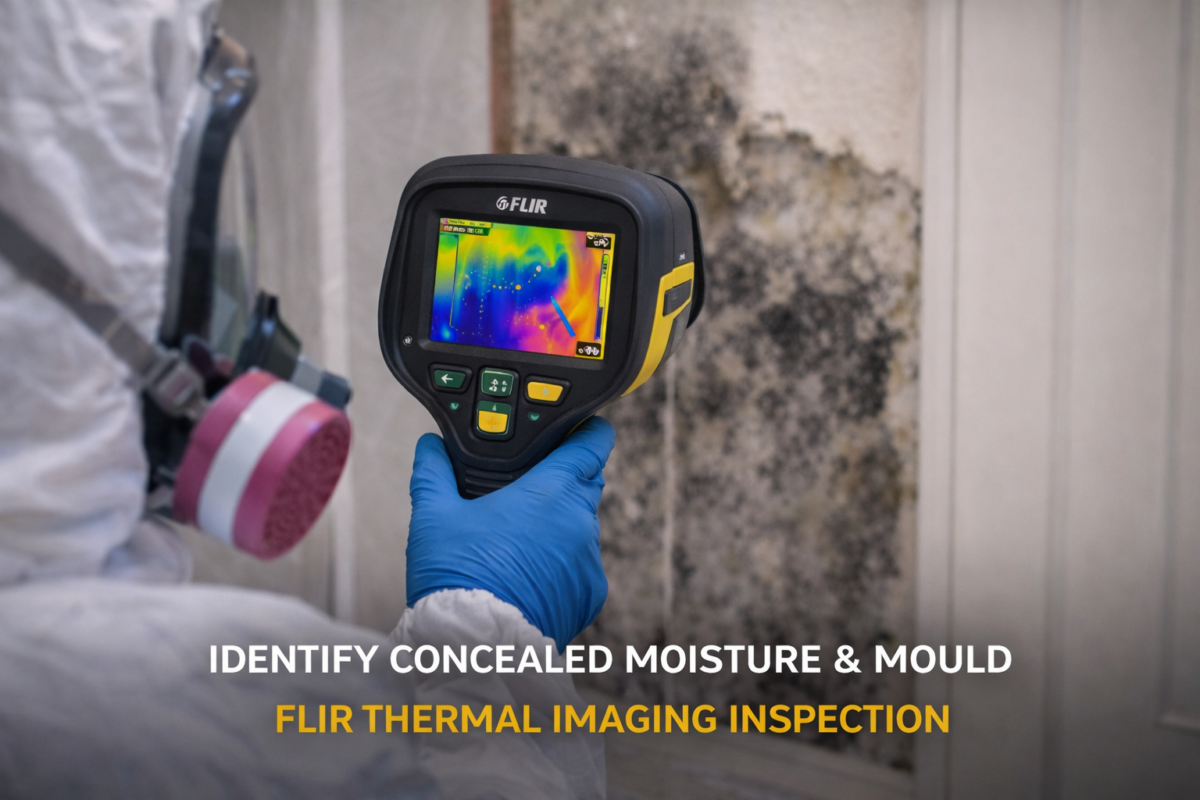
Thermal imaging and moisture measurements can help identify concealed ceiling and roof-space moisture pathways.
Thermal imaging can identify temperature patterns consistent with moisture, air leakage or missing insulation, but it does not see mould through a wall and should be interpreted alongside moisture measurements and building evidence.
Our Ceiling Mould Removal Process
1. Inspection and Moisture Investigation
We review the mould pattern, room use, ventilation, leak history and roof-space conditions where safely accessible. Moisture meters, humidity readings and thermal imaging may be used where appropriate.
2. Remediation Scope
The technician defines the affected work area and explains which ceiling surfaces, insulation or other materials may be cleaned, dried, removed or investigated further.
3. Containment and HEPA Air Management
Where required, work-area containment and HEPA-filtered air equipment help reduce the movement of particulates during remediation and material removal.
4. Detailed Cleaning or Controlled Removal
Suitable retained surfaces are cleaned using professional remediation procedures. Water-damaged, deteriorated or heavily contaminated porous materials may require controlled removal as part of the agreed scope.
5. Structural Drying
Wet ceiling or roof-space materials may require air movement, dehumidification and monitored drying after the water source has been stopped.
6. Final Review and Prevention Guidance
We review the completed work area and provide practical recommendations relating to leaks, insulation, exhaust ducting, ventilation, condensation and future moisture monitoring.
Ceiling Materials We Assess
- Painted plasterboard ceilings
- Cornices, bulkheads and ceiling junctions
- Wet or contaminated insulation
- Timber roof framing and battens
- Bathroom, laundry and kitchen ceilings
- Concrete apartment ceilings
- Acoustic tiles and suspended ceiling systems
- Ceiling cavities around ducts, pipes and electrical penetrations
The appropriate treatment depends on material condition, contamination, access and whether the underlying moisture source has been resolved.
Bathroom Ceiling Mould and Condensation
Bathrooms are a common location for ceiling mould because frequent steam raises humidity and condensation. Exhaust performance depends on fan capacity, clean ducting, outdoor discharge and adequate replacement air entering the room.
For bathroom-specific advice, visit Bathroom Mould Removal Melbourne.
Ceiling Mould After Roof Leaks or Water Damage
A ceiling may remain wet after the visible leak stops, especially when insulation retains moisture. Prompt moisture mapping and drying can help determine whether plasterboard, insulation and framing can be retained or require removal.
For active water incidents, visit Water Damage Restoration Melbourne and Structural Drying Melbourne.
Why Choose Absolute Restoration Service?
- More than 20 years of restoration and remediation experience
- IICRC-trained restoration technicians
- Professional moisture meters, thermal imaging and drying equipment
- Containment and HEPA-filtered air management where appropriate
- Residential, rental, strata and commercial project experience
- Clear findings and practical moisture-control recommendations
- Service across metropolitan Melbourne and selected regional locations
Related Mould and Moisture Services
- Mould Removal Melbourne
- Black Mould Removal Melbourne
- Bathroom Mould Removal Melbourne
- Mould Testing Melbourne
- Water Damage Restoration Melbourne
- Structural Drying Melbourne
- Indoor Air Quality Services
- Melbourne Restoration Service Areas
Ceiling Mould Removal FAQs
Why does ceiling mould return after repainting?
Paint does not correct roof leaks, condensation, wet insulation or inadequate ventilation. If the moisture condition remains, mould and staining can return through the new coating.
Does all mouldy plasterboard need removal?
No. The decision depends on material condition, moisture exposure and contamination. Soft, deteriorated or extensively contaminated plasterboard may require controlled removal.
Can thermal imaging detect mould inside the ceiling?
No. Thermal imaging shows temperature patterns that may indicate moisture, missing insulation or air leakage. Findings must be interpreted with moisture readings and inspection evidence.
Can you inspect the roof cavity?
Where access is safe and practical, roof-space conditions may be assessed. Restricted access, electrical hazards, structural concerns or specialist roofing issues may require another qualified trade.
Do you remove bathroom ceiling mould?
Yes. We assess bathroom condensation, exhaust performance, ceiling materials and potential concealed moisture before recommending remediation.
Do you service apartments, strata and commercial buildings?
Yes. We assist homeowners, renters, property managers, owners corporations and commercial clients throughout Melbourne.
Book a Ceiling Mould Inspection
Early assessment can help identify leaks, condensation or concealed ceiling moisture before damage spreads to insulation, framing and adjoining rooms.