Free Mould Consultation Melbourne
Speak with Absolute Restoration Service about visible mould, musty odours, condensation or recurring moisture before deciding what type of inspection is appropriate.
The initial telephone consultation is free. It helps our team understand the property, concern and likely next step. A site inspection, testing, report, travel or specialist assessment is not automatically free and will be explained and quoted before booking.
Call 1300 114 842 or request an initial mould consultation online.
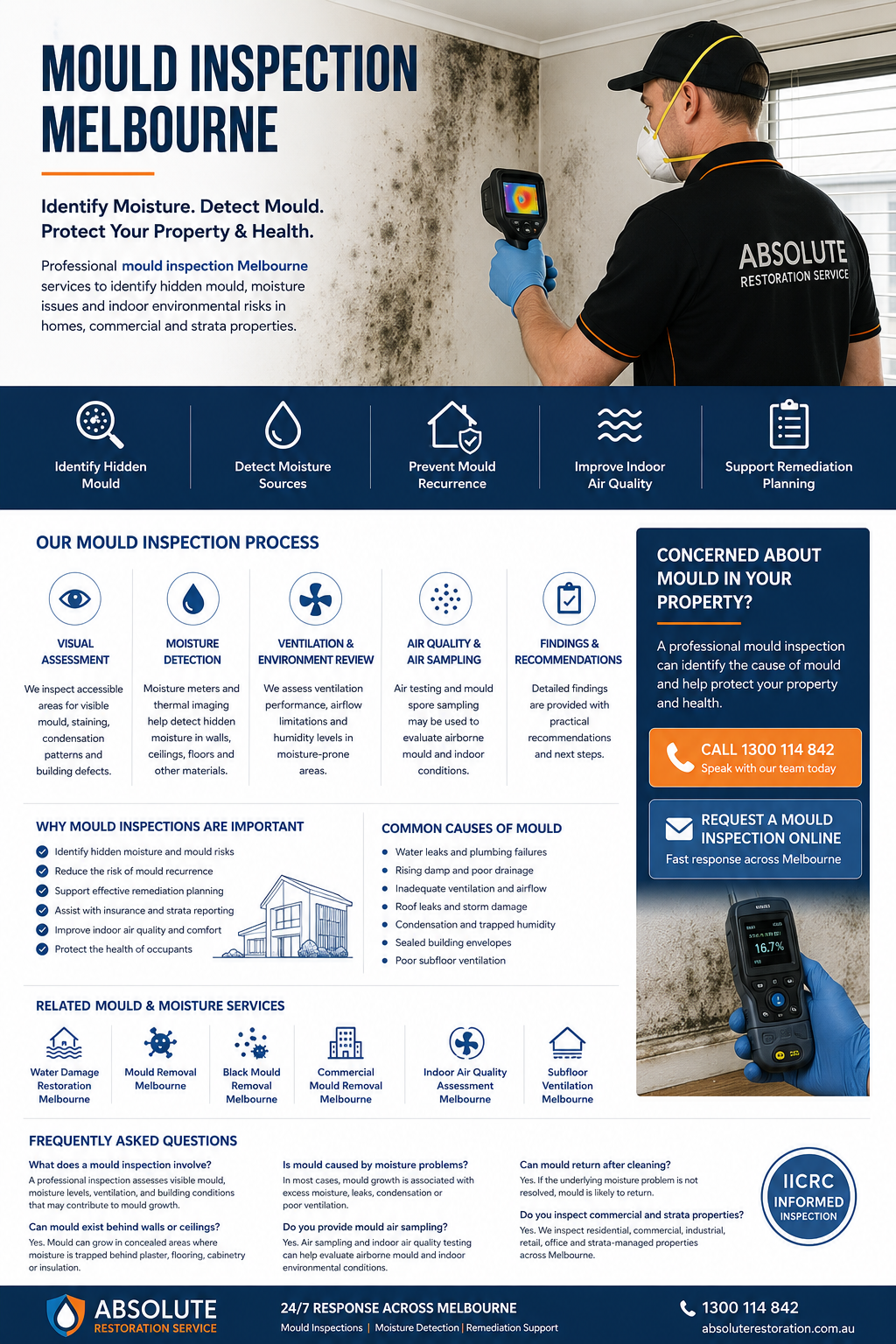
What the Free Initial Consultation Covers
- Your property type and Melbourne suburb
- Where visible mould, staining or odours have appeared
- Known leaks, flooding, condensation or ventilation concerns
- How long the issue has been noticed and whether it is recurring
- Rooms, materials and occupants affected
- Whether a landlord, owners corporation, insurer or builder is involved
- The difference between an inspection, testing and remediation
- A recommended next step based on the information available
A phone discussion cannot confirm concealed mould, diagnose a building defect or replace an on-site assessment. Photographs may help with triage but do not establish the full cause or extent.
When an On-Site Mould Inspection May Be Recommended
- Visible growth is extensive, recurring or appears in several rooms
- A musty odour remains without a clear visible source
- Mould followed flooding, a roof leak or plumbing failure
- Condensation repeatedly affects windows, walls or ceilings
- Moisture may be present behind finishes or beneath flooring
- A rental, strata, insurance or pre-purchase matter requires documentation
- Previous cleaning did not address the underlying cause
- Remediation planning requires a clearer scope
Visit our main Mould Inspection Melbourne page for the full inspection service.
What a Professional Mould Inspection Can Include
Property History and Visual Assessment
The technician reviews available history, affected rooms, building materials, ventilation and visible conditions. Restricted access and concealed areas limit what can be observed.
Moisture Investigation
Suitable moisture meters, environmental readings and site evidence help identify damp materials or likely moisture pathways. Plumbing, roofing, drainage or waterproofing faults may require appropriately licensed trades.
Thermal Imaging
Thermal imaging can highlight temperature patterns associated with missing insulation, air leakage or possible dampness. It does not directly detect mould or measure moisture and should be interpreted with other evidence.
Scope and Recommendations
Findings may support recommendations for source repair, drying, ventilation, additional investigation, sampling, mould remediation or independent assessment. The documentation supplied depends on the service booked.
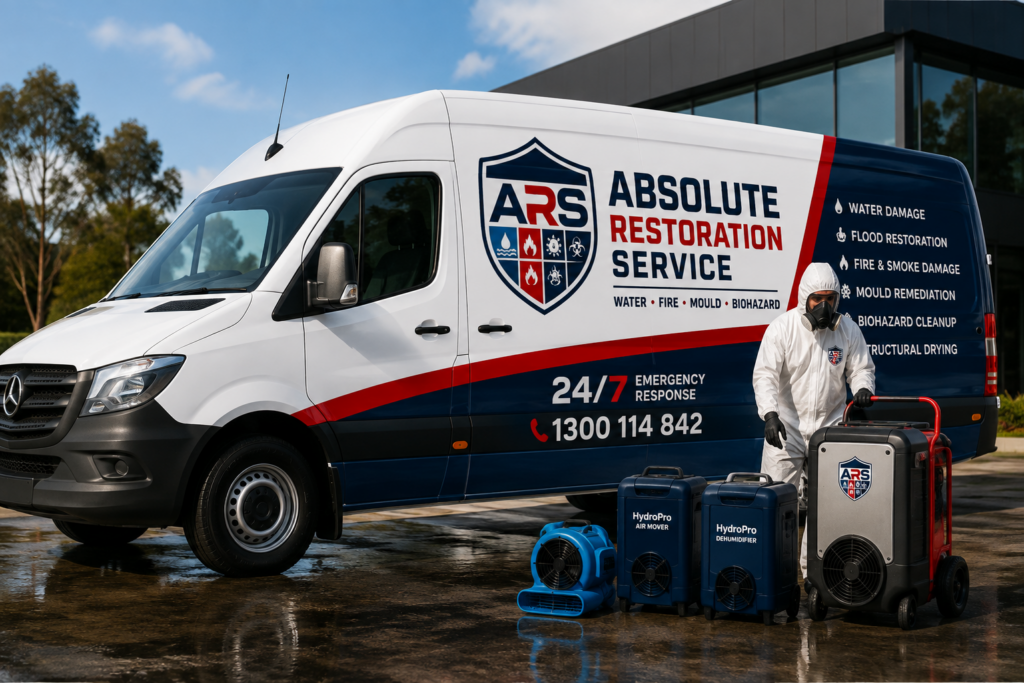
ARS provides mould and moisture assessments across metropolitan Melbourne, subject to access and availability.
Inspection, Testing and Remediation Are Different
Mould Inspection
An inspection assesses visible conditions, moisture indicators, property history and accessible materials to help identify the likely extent and cause.
Mould Testing
Sampling is not automatically required for every visible mould issue. It may be considered when the project has a defined question, documentation requirement or verification objective. Results apply to the samples and methods used.
Mould Remediation
Remediation focuses on controlled physical removal and cleaning of contamination, together with addressing contributing moisture. It is not simply applying a surface spray or paint.
Common Causes of Mould and Dampness
- Roof, plumbing or building-envelope leaks
- Flooding or incomplete structural drying
- Bathroom, laundry or kitchen moisture
- Condensation on cold or poorly insulated surfaces
- Inadequate local exhaust or outdoor-air ventilation
- Ground moisture, subfloor dampness or drainage problems
- Failed waterproofing or balcony defects
- Furniture or stored items restricting airflow at cold walls
Ventilation equipment and mould cleaning cannot repair an active leak or failed building element. The cause should be corrected by the relevant qualified professional.
What Happens If Mould Is Found?
The next step depends on the contamination, affected materials, moisture source, access and property use. Recommendations may include:
- Repairing the moisture source
- Drying wet building materials
- Establishing containment and HEPA air management
- Removing unsalvageable porous materials
- HEPA vacuuming and detailed surface cleaning
- Improving local exhaust or ventilation where appropriate
- Post-remediation review or independent verification for selected projects
Health and Safety
Do not disturb extensive mould, sewage-affected materials, damaged asbestos-containing materials or unstable building elements. People with health concerns should seek advice from an appropriate healthcare professional; a restoration inspection does not diagnose medical conditions.
Related Mould and Moisture Services
- Mould Inspection Melbourne
- Mould Testing Melbourne
- Mould Removal Melbourne
- Black Mould Removal Melbourne
- Moisture Investigation Melbourne
- Indoor Air Quality Assessment Melbourne
- Subfloor Ventilation Melbourne
Frequently Asked Questions
Is the mould consultation free?
The initial telephone consultation is free. On-site inspections, testing, reports, travel and specialist assessments may involve a fee, which will be explained before booking.
Can you confirm mould from photographs?
Photographs can assist initial triage but cannot reliably establish the material, concealed extent, moisture source or full remediation scope. An on-site inspection may be recommended.
Do I always need mould testing?
No. Testing should answer a defined project question. Visible mould and moisture may be assessed without sampling, while documentation or verification needs can make testing appropriate.
Can thermal imaging see mould behind walls?
No. Thermal imaging shows surface-temperature patterns and does not directly detect mould. The patterns are interpreted with moisture readings, observations and building information.
How long does a mould inspection take?
Timing depends on property size, access, affected areas, history and the documentation required. The expected scope and duration will be discussed before attendance.
Can mould return after removal?
Yes. Recurrence is possible if moisture remains available or affected materials were not adequately addressed. Source correction and appropriate remediation are both important.
Request Your Free Initial Mould Consultation
Call 1300 114 842 or contact ARS online. Please describe the property, suburb, visible signs, odours and any known moisture event.