Black Mould Removal Melbourne
Professional mould assessment, moisture investigation and controlled remediation by IICRC-trained restoration technicians.
Dark or black-coloured mould is a visible sign that moisture is affecting a surface or building material. The colour alone cannot identify the mould species, determine whether it produces mycotoxins or establish the extent of hidden contamination. What matters first is identifying the moisture pathway, assessing affected materials and preventing unnecessary disturbance.
Absolute Restoration Service provides black mould removal and remediation across Melbourne for homes, apartments, rental properties, strata buildings and commercial facilities. Our technicians investigate visible and concealed moisture, develop a project-specific scope and use containment, HEPA-filtered air management and detailed cleaning where appropriate.
Call 1300 114 842 or request a mould inspection.
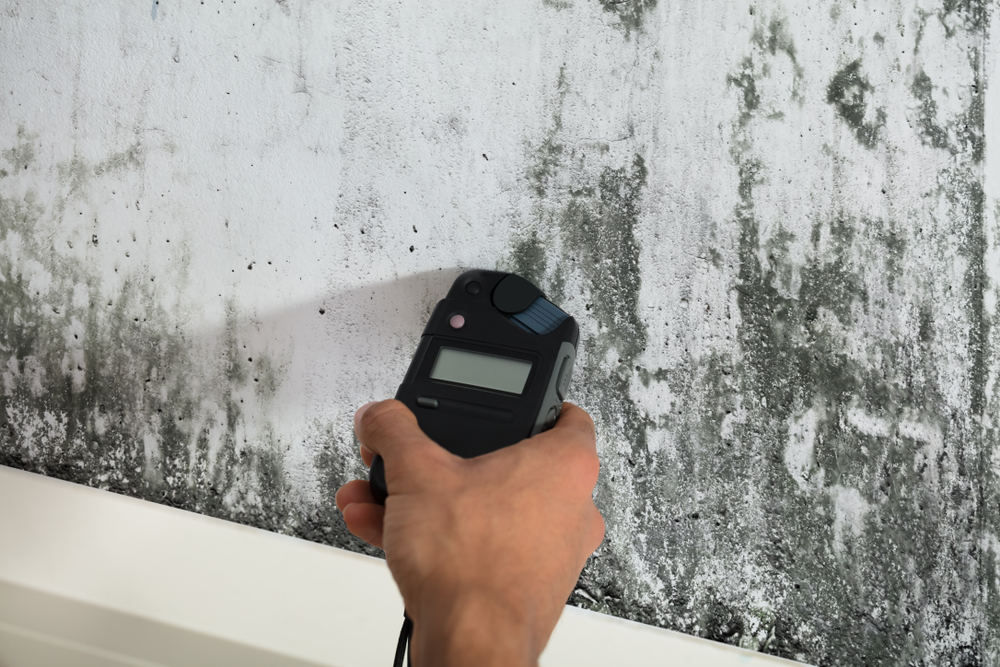
Moisture investigation helps determine the building conditions supporting visible black mould growth.
IICRC-Trained Technicians | Moisture Investigation | HEPA-Filtered Remediation | Melbourne-Wide Service
What Is Commonly Called Black Mould?
“Black mould” is a general description used for mould that appears dark green, brown, grey or black. Many different mould genera can have a dark appearance, and visual inspection alone cannot provide reliable species identification.
Regardless of colour, visible mould indicates that moisture and suitable growth conditions have been present. The practical priorities are to:
- Identify and control the moisture source
- Define the visible and potentially concealed affected area
- Assess whether materials can be cleaned or require removal
- Control airborne particulates during remediation
- Dry affected building materials where required
- Provide recommendations that reduce the likelihood of recurrence
Common Signs of Black Mould and Moisture Damage
- Dark spotting or staining on walls, ceilings or window surrounds
- Musty or damp odours
- Mould returning soon after surface cleaning
- Peeling paint, bubbling coatings or deteriorating plaster
- Water marks, discolouration or swollen building materials
- Condensation on windows and cold external walls
- Damp carpet, flooring or cabinetry
- Visible mould inside wardrobes, bathrooms or subfloors
- A history of leaks, flooding or prolonged high humidity
The visible growth may be smaller than the moisture-affected area. Mould can develop behind wall linings, beneath flooring, inside roof spaces, around plumbing penetrations and within poorly ventilated subfloors.
What Causes Black Mould Growth?
Mould requires moisture. Common building and environmental causes include:
- Roof, plumbing and appliance leaks
- Flooding or incomplete structural drying
- Condensation caused by cold surfaces and high humidity
- Inadequate bathroom, kitchen or whole-building ventilation
- Water entry through balconies, windows or external walls
- Rising damp and subfloor ground moisture
- Blocked drainage or stormwater problems
- Wet insulation, plasterboard, carpet or timber
- Furniture positioned against damp external walls
Successful remediation depends on addressing the relevant moisture condition. Cleaning mould while materials remain damp commonly results in regrowth.
Our Black Mould Removal Process
1. Inspection and Moisture Mapping
We review the property history, visible growth, odours, condensation and any known leaks or water incidents. Moisture meters, humidity measurements and thermal imaging may be used where appropriate to identify affected materials and moisture pathways.
2. Remediation Scope
The technician defines the affected work area and explains which materials may be cleaned, dried, removed or investigated further. The scope considers material type, condition, access, occupancy and the extent of contamination.
3. Containment and HEPA Air Management
Where required, containment barriers and HEPA-filtered air equipment are used to help reduce the movement of airborne particulates into unaffected areas during remediation.
4. Detailed Remediation
Affected surfaces and materials are addressed using professional remediation procedures. Damaged porous materials that cannot be effectively cleaned may require controlled removal as part of the agreed scope.
5. Drying and Moisture Control
Water-damaged materials may require extraction, dehumidification, air movement and monitored structural drying. Building defects or plumbing repairs are referred to the appropriate trade where necessary.
6. Final Assessment and Recommendations
We review the completed work area and provide practical recommendations addressing moisture, ventilation and maintenance conditions. Independent post-remediation verification may be appropriate for selected higher-risk or complex projects.
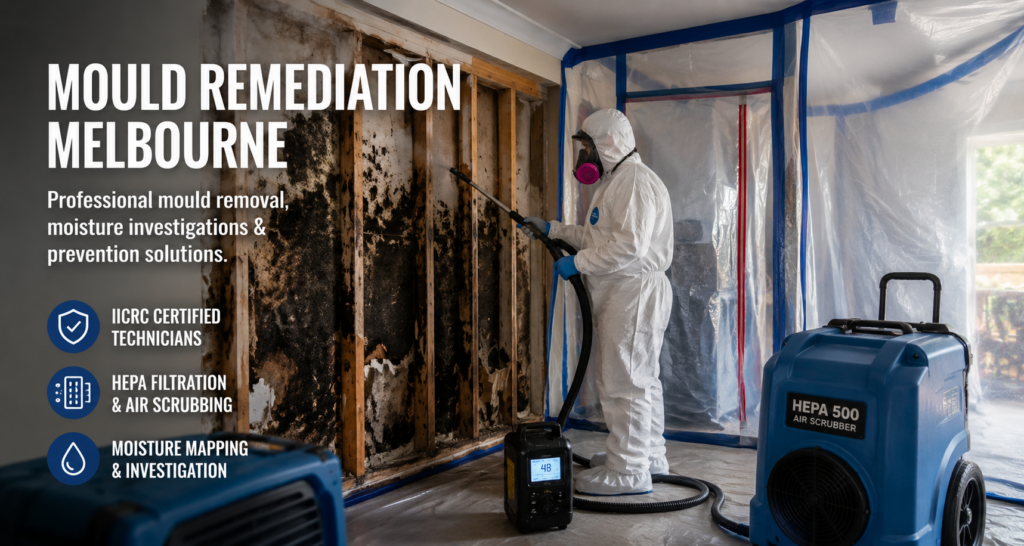
Controlled mould remediation using appropriate PPE, containment and HEPA-filtered air management.
Materials Commonly Affected by Black Mould
- Plasterboard and painted walls
- Ceilings, cornices and roof-space materials
- Timber framing, flooring and subfloor structures
- Carpet, underlay and soft furnishings
- Insulation and acoustic materials
- Cabinetry, wardrobes and stored contents
- Bathroom grout, silicone and wall linings
- Window frames and condensation-affected surfaces
- Concrete, masonry and basement finishes
Whether an item can be retained depends on its porosity, physical condition, contamination, moisture exposure and the agreed restoration objectives.
Is Black Mould a Health Hazard?
Indoor dampness and mould can be associated with irritation and respiratory or allergy symptoms in some occupants. Individual responses vary, and a website cannot diagnose a medical condition or determine health risk from mould colour alone.
If occupants are experiencing symptoms or have specific medical concerns, seek advice from an appropriately qualified healthcare professional. Our role is to assess building moisture and contamination conditions and complete restoration work within our professional scope.
Should Black Mould Be Tested?
Testing is not required for every project. Visible mould and moisture may already provide enough information to plan remediation. Sampling may be useful when the source is unclear, contamination is suspected but not visible, documentation is required or an independent assessor recommends it.
Learn more about mould testing and sampling in Melbourne.
Why Choose Absolute Restoration Service?
- More than 20 years of restoration and remediation experience
- IICRC-trained restoration technicians
- Professional moisture detection, thermal imaging and drying equipment
- Containment and HEPA-filtered air management where appropriate
- Residential, rental, strata and commercial project experience
- Clear findings and practical moisture-control recommendations
- Melbourne-wide service with selected regional attendance
Related Mould and Moisture Services
- Mould Removal Melbourne
- Mould Testing Melbourne
- Bathroom Mould Removal Melbourne
- Ceiling Mould Removal Melbourne
- Subfloor Mould Remediation Melbourne
- Water Damage Restoration Melbourne
- Structural Drying Melbourne
- Indoor Air Quality Services
- Melbourne Restoration Service Areas
Black Mould Removal FAQs
Can you identify mould species by its black colour?
No. Many mould types can appear dark, and colour alone cannot reliably identify the species or determine whether mycotoxins are present. Laboratory analysis is required when species identification is necessary.
Can I clean a small patch of black mould myself?
Small, isolated surface growth may be manageable when the moisture source is understood and the material is in good condition. Recurring, extensive, concealed or water-damage-related mould should be assessed before disturbance.
Will black mould return after remediation?
Mould can return if moisture, condensation, leaks or ventilation problems remain unresolved. Remediation and moisture control must work together.
How do you locate concealed mould?
We use the property history, visual inspection, moisture measurements and thermal imaging where appropriate. Selective access or independent testing may be recommended when evidence suggests concealed contamination.
Do all mould-affected materials need removal?
No. The decision depends on material porosity, condition, moisture exposure and contamination. Some surfaces can be remediated, while damaged porous materials may require controlled removal.
Do you service apartments, strata and commercial properties?
Yes. We assist homeowners, renters, landlords, owners corporations, property managers and commercial clients throughout Melbourne.
Book a Black Mould Inspection
Early assessment can identify moisture pathways and define the affected area before contamination spreads into additional rooms or concealed building materials.