MELBOURNE SUBFLOOR MOISTURE AND MOULD GUIDE
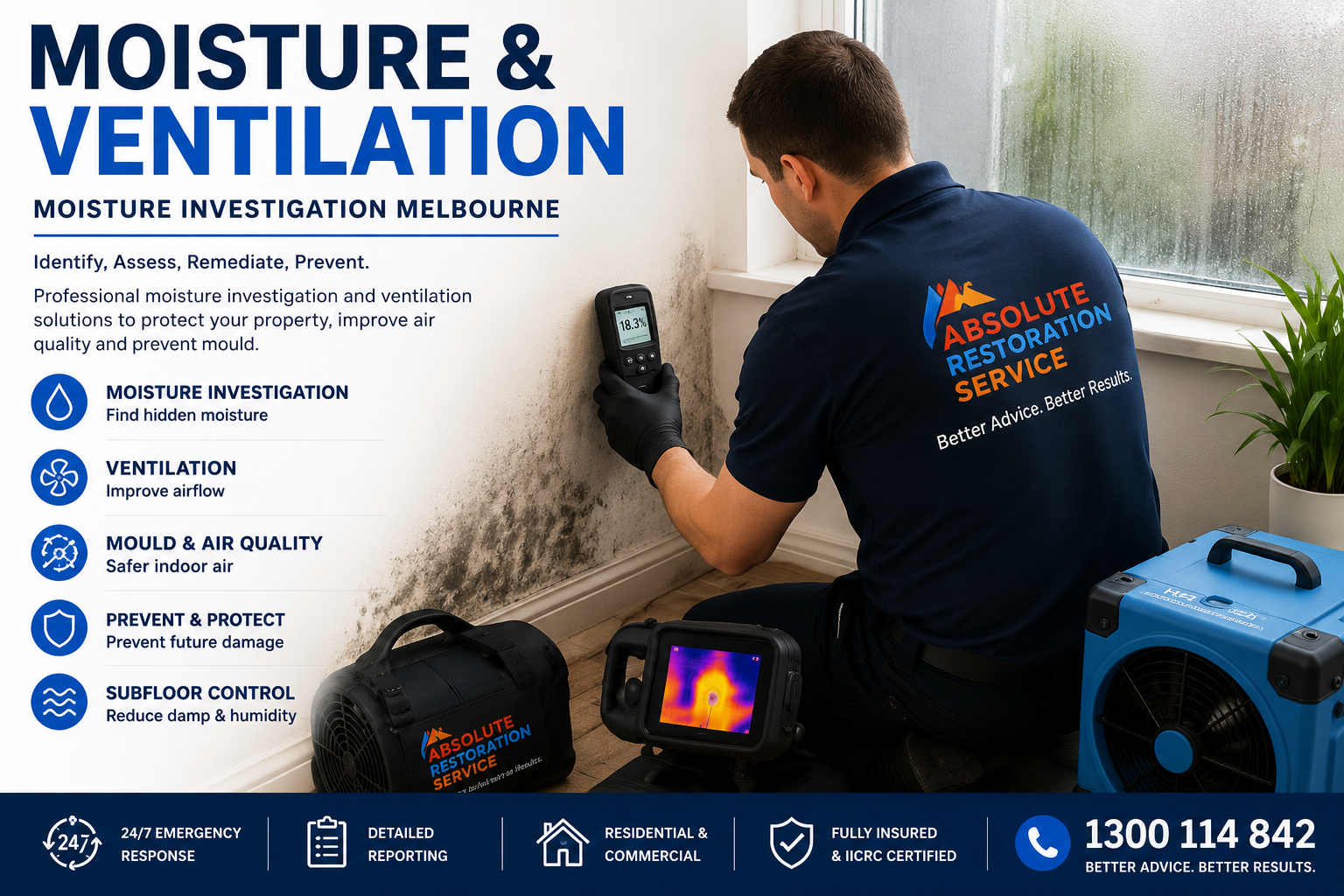
Subfloor mould can develop when timber, soil, masonry or stored materials remain damp beneath a suspended floor. Plumbing leaks, poor site drainage, groundwater, blocked vents and condensation can all contribute. Because the area is concealed and access may be restricted, the first step is a safe moisture and building-condition assessment.
Absolute Restoration Service provides subfloor mould investigation and controlled remediation across Melbourne. Our role is to assess accessible restoration conditions, define the affected area and complete the authorised cleaning and drying scope. Building-code compliance, structural adequacy and design certification remain with appropriately qualified building practitioners.
Call 1300 114 842 or visit our crawl-space and subfloor mould service.
Why Mould Develops Beneath Melbourne Homes
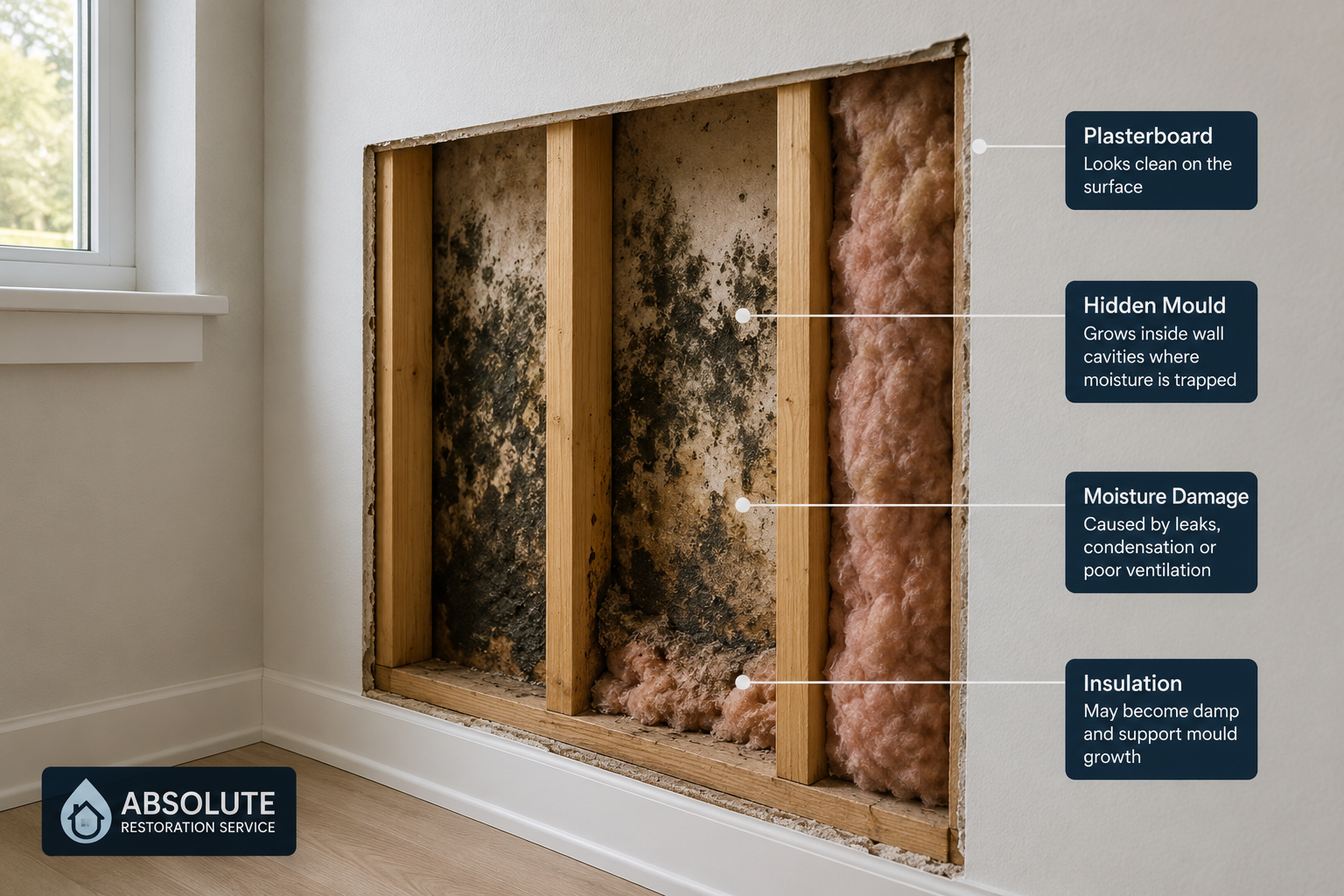
Suspended-floor spaces can remain cool, shaded and poorly ventilated. Moisture entering from the ground, drainage, plumbing or the building envelope may evaporate into the subfloor air and condense on colder materials. Timber and accumulated dust can then support mould growth when dampness persists.
Common contributors include:
- leaking water, waste or stormwater pipes;
- surface water draining toward the building;
- groundwater or persistently wet soil;
- blocked, inadequate or poorly positioned vents;
- extensions and landscaping that restrict cross-ventilation;
- missing or unsuitable ground moisture management;
- water entry after storms or flooding;
- wet insulation, stored contents or construction debris; and
- timber that was not adequately dried after an earlier incident.
Signs a Subfloor Assessment May Be Needed
- Persistent musty odour inside the home
- Visible growth on bearers, joists, boards or stored materials
- Damp soil, standing water or corroded metal components
- Soft, stained or elevated-moisture timber
- Recurring mould in rooms above the subfloor
- Flooring movement, cupping or deterioration
- Condensation on subfloor surfaces, ducts or pipes
- A history of leaks, drainage problems or flooding
These signs do not establish the cause or full extent. Structural deterioration, termites and building defects require assessment by the relevant specialist.
Safe Access Comes First
Subfloors can contain electrical wiring, damaged flooring, sharp debris, vermin, sewage, asbestos-containing materials, restricted clearances and unstable ground. Do not enter when safe access has not been established.
Electrical, plumbing, drainage, structural, asbestos, pest and hazardous-material issues should be referred to appropriately licensed or qualified professionals. Restoration work begins only after the site is suitable for the agreed activities.
Subfloor Moisture Investigation
Technicians review the moisture history, visible conditions, access and ventilation openings. Moisture meters may be used on accessible timber or other materials, while temperature and relative-humidity observations can help describe the environment.
Thermal imaging may identify surface-temperature patterns requiring closer investigation. It does not see through floors, prove mould is present or identify a leak source by itself.
Our Subfloor Mould Remediation Process
- Access and hazard review: Confirm the work area can be entered and identify exclusions requiring another specialist.
- Moisture assessment: Document accessible dampness, visible growth, drainage, ventilation and affected materials.
- Source-control planning: Coordinate plumbing, drainage, roofing or building repairs with the relevant trade.
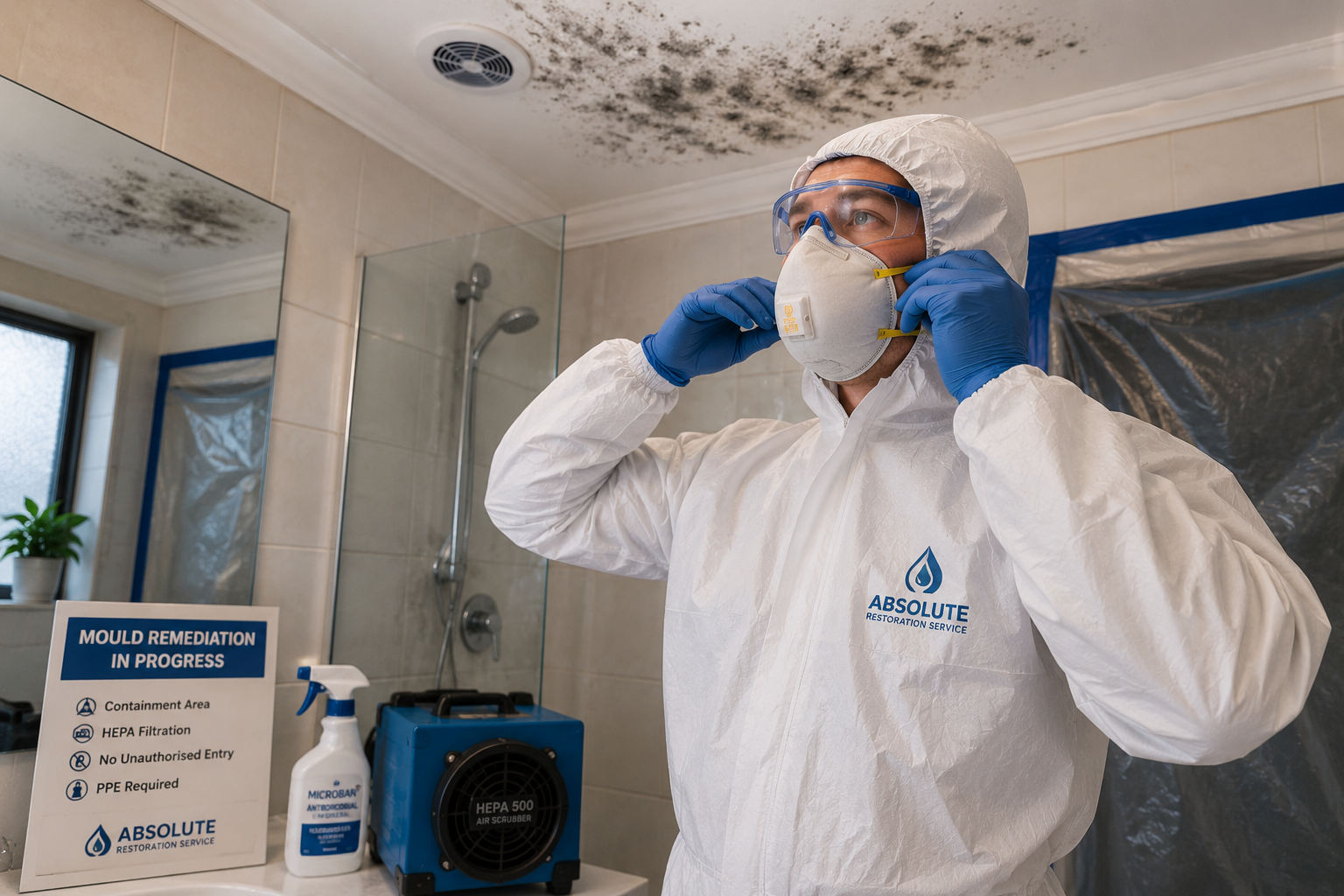
- Work-area controls: Establish suitable restricted access, containment, PPE and HEPA-filtered air management.
- Material decisions: Remove unsalvageable contaminated porous materials where authorised.
- Detailed cleaning: HEPA vacuum and clean accessible retained surfaces using methods appropriate to the material.
- Controlled drying: Establish drying only where suitable and manage airflow so it does not spread contamination.
- Handover: Document completed restoration work and recommend repairs, ventilation review or further assessment.
Our IICRC-trained technicians adapt the process to the property. No responsible contractor can guarantee that mould will never return if moisture sources remain or new water entry occurs.
HEPA Cleaning and Air Management
HEPA-filtered equipment may support particulate management during remediation. It does not replace removal of unsalvageable affected material or detailed surface cleaning. Equipment positioning and operating mode depend on the access, containment and relationship between the subfloor and occupied rooms.
Uncontrolled fans should not be directed across established mould because they may redistribute particles. Air movement for structural drying should follow assessment and appropriate work-area controls.
Subfloor Structural Drying
After a leak or flood, timber and other materials may require controlled drying. Equipment selection depends on material condition, water category, access, temperature, electrical capacity and whether contamination controls are needed.
Drying is monitored using appropriate readings rather than a promised number of days. Damaged timber or structural concerns may need evaluation by a builder, engineer or other qualified practitioner.
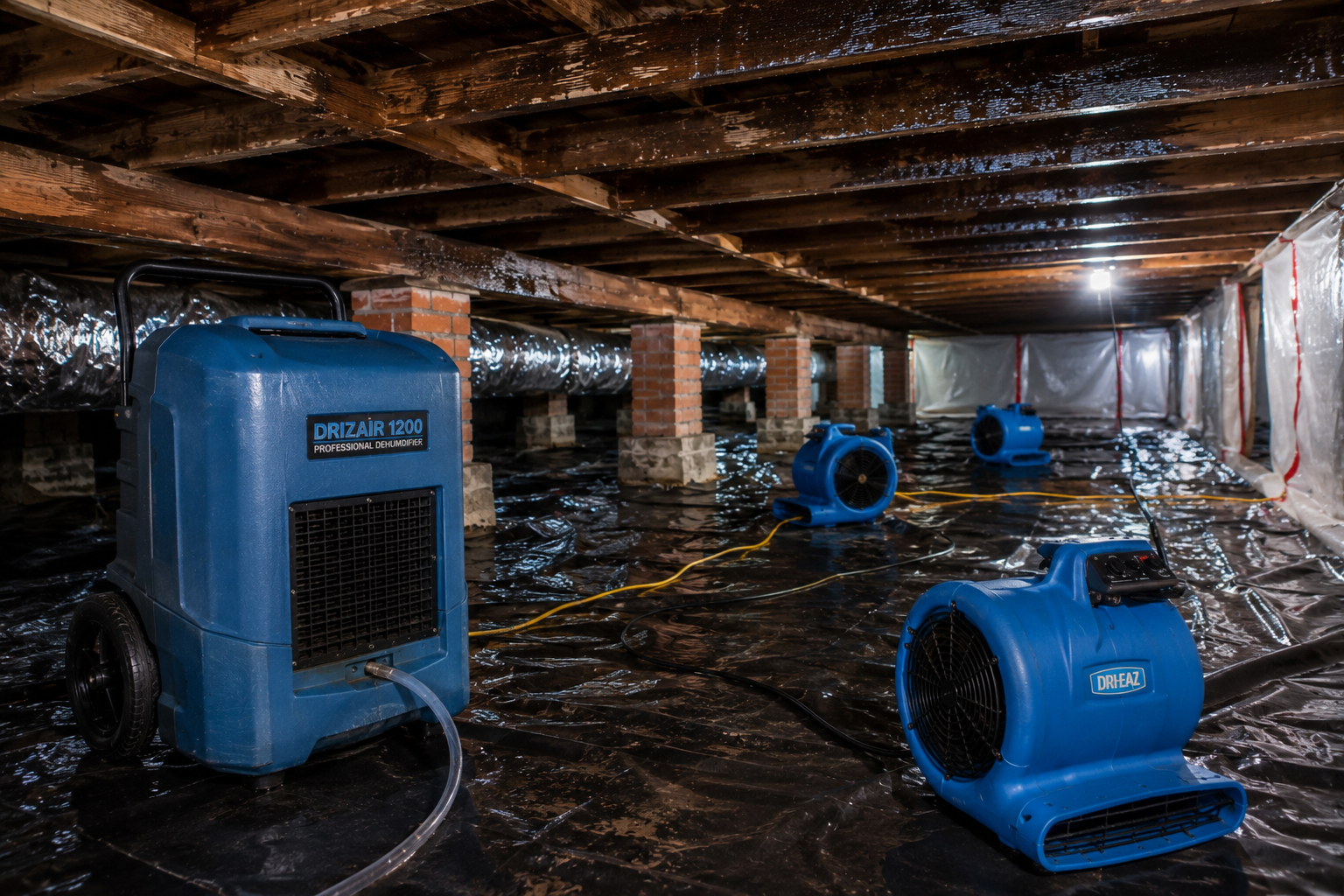
Commercial dehumidifiers and high-velocity air movers are used beneath a suspended timber floor to remove excess moisture, dry structural timber and help reduce the risk of mould growth following water damage.
Ventilation and Moisture Control
Ventilation can help manage subfloor humidity when it is correctly designed and the moisture load is suitable. It is not a substitute for repairing leaks, improving drainage, removing standing water or addressing groundwater.
Passive vents, powered subfloor systems or other ventilation measures require property-specific design. Air paths, discharge locations, noise, electrical work, external conditions and the connection to occupied rooms all matter. Building and ventilation work should comply with applicable requirements and be designed or installed by the appropriate qualified practitioners.
About NCC Compliance
The National Construction Code contains requirements relevant to building design and construction, but mould remediation itself is not a simple product that can be advertised as universally “NCC compliant.” Existing buildings, alterations and ventilation solutions require individual assessment.
ARS can document accessible moisture conditions and the remediation work performed. We do not certify building-code compliance, structural adequacy or ventilation design. Those matters should be referred to an appropriately qualified building surveyor, designer, engineer or contractor.
Rental, Strata and Managed Properties
Subfloor projects may involve owners, tenants, rental providers, property managers, owners corporations and common property. Confirm access and authority before intrusive investigation. Shared drainage, services and structural elements can require coordination across multiple parties.
ARS does not determine property boundaries, tenancy responsibility, legal liability or insurance coverage.
Health and Testing Limitations
Visible mould colour does not identify a species or establish a health risk. ARS does not diagnose illness or determine whether a property has caused symptoms. Health concerns should be discussed with an appropriately qualified healthcare professional.
Sampling is not required for every subfloor project. When testing is justified, it should answer a defined question and be designed and interpreted by a suitably qualified professional or laboratory.
When to Request Professional Subfloor Assistance
Call Absolute Restoration Service on 1300 114 842 when a subfloor has persistent odour, damp timber, visible growth, water entry or recurring indoor mould. For non-urgent enquiries, use the ARS contact form.
Subfloor Mould Remediation FAQs
What causes mould beneath a suspended timber floor?
Common contributors include plumbing leaks, poor drainage, groundwater, inadequate ventilation, condensation, wet soil, blocked vents and timber that remained damp after water damage.
Can subfloor mould affect rooms above?
Air and odours may move between a subfloor and occupied rooms through gaps and service penetrations. The extent and significance require property-specific assessment.
Does adding ventilation remove existing mould?
No. Ventilation may help manage ongoing moisture when correctly designed, but it does not remove established contamination or repair leaks and drainage problems.
Can ARS certify that a subfloor is NCC compliant?
No. ARS documents accessible restoration conditions and completed remediation. NCC compliance and building-design questions should be assessed by an appropriately qualified building practitioner.
How is subfloor mould remediated?
The scope may include safe access, moisture investigation, containment, removal of unsalvageable materials, HEPA vacuuming, suitable surface cleaning, controlled drying and recommendations for source repairs.
When should I arrange a subfloor inspection?
Arrange an assessment when there is persistent musty odour, damp timber, visible growth, recurring indoor mould, flooding, plumbing leaks or evidence of inadequate drainage and ventilation.