When to Arrange a Mould Inspection
- Visible or recurring mould
- Persistent musty or damp odours
- Water staining, bubbling paint or damaged plaster
- Condensation on glazing, walls or ceilings
- A previous leak, flood or stormwater event
- Damp carpet, flooring, cabinetry or stored contents
- Suspected balcony, wet-area or roof moisture
- A requirement for rental, strata or remediation documentation
People with medical concerns should consult an appropriate healthcare professional. ARS assesses property conditions and does not diagnose illness or determine whether symptoms were caused by mould.
South Melbourne Building Considerations
Apartments, converted buildings, terraces and commercial properties can have different moisture pathways. Relevant conditions may include failed balcony or bathroom waterproofing, shared plumbing, roof leaks, façade water entry, condensation, limited extraction, subfloor moisture and earlier water damage.
In strata buildings, access may be required to private lots, common property or shared services. ARS documents accessible findings but does not determine ownership boundaries or liability.
Our Inspection Process
- Background review: we discuss the property, previous water events, repairs, affected areas and inspection purpose.
- Visual assessment: accessible mould, staining, material damage, condensation and ventilation conditions are documented.
- Moisture readings: suitable meters are used to compare materials and identify elevated readings or patterns.
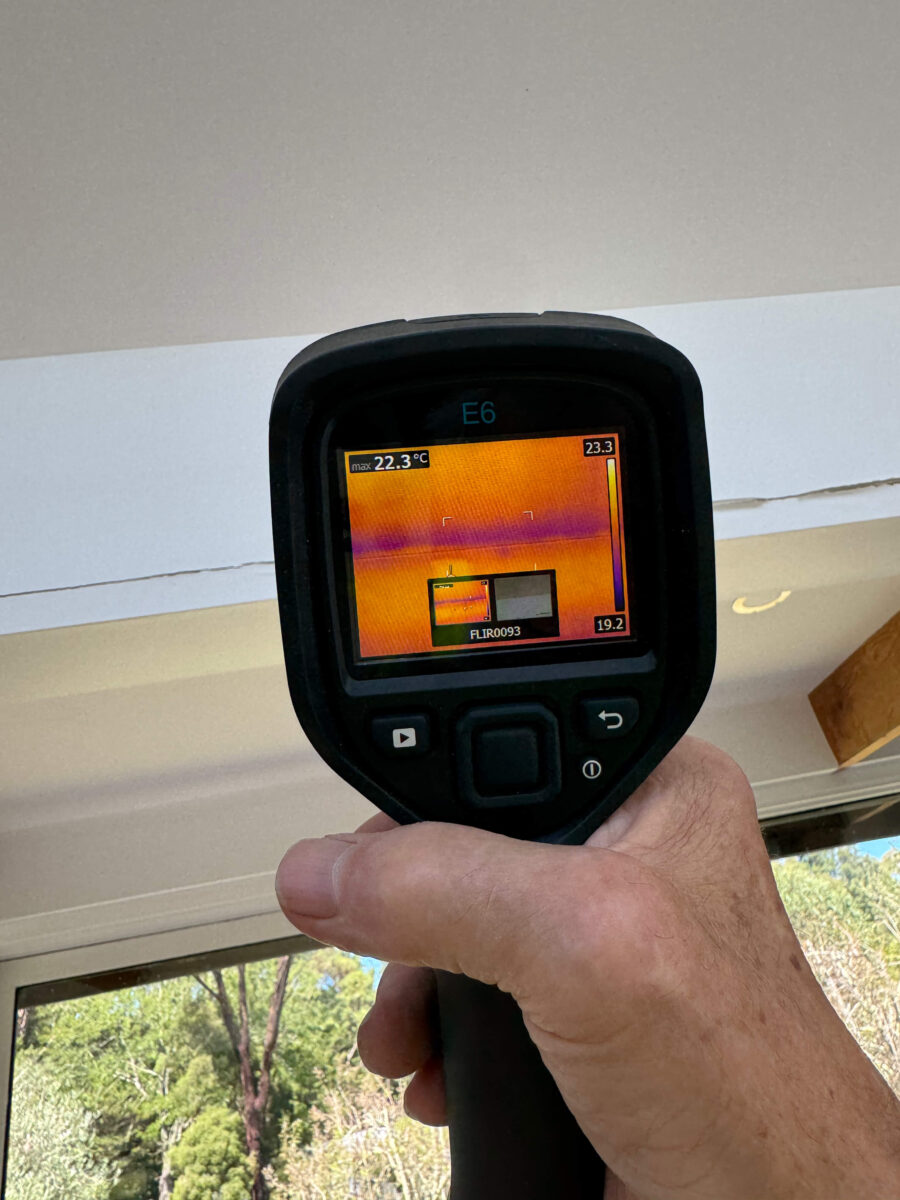
- Thermal imaging: surface-temperature patterns may be assessed and checked against other evidence.
- Extent review: affected materials and potential concealed pathways are considered within access limitations.
- Recommendations: next steps may include repairs, drying, remediation, monitoring, sampling or authorised invasive investigation.
- Reporting: findings and limitations are documented according to the agreed scope.
Thermal Imaging and Moisture Readings
A thermal camera records surface-temperature differences. Patterns can be influenced by evaporation, air movement, insulation, sunlight, heating, plumbing routes and other conditions. It does not see through walls and does not directly detect mould or water.
Suspected thermal anomalies are interpreted with moisture-meter readings, visible conditions and available building information. Locating or repairing plumbing, roofing, waterproofing or drainage defects may require an appropriately licensed trade.