MELBOURNE HOMEOWNER MOULD GUIDE
Mould advice is often reduced to a product, colour or fixed rule. In reality, property conditions matter: where the moisture came from, how long materials remained damp, whether growth is concealed and whether porous materials can be restored.
These common myths explain what household cleaning, ventilation, thermal imaging, testing and professional remediation can—and cannot—do. The central fact is consistent: durable mould control depends on addressing moisture.
For Melbourne mould and moisture assistance, call Absolute Restoration Service on 1300 114 842.
Myth 1: Bleach Permanently Kills Every Mould Problem
Fact: Cleaning results depend on the product, material, moisture source and extent of contamination. Bleach does not repair a leak or dry damp building materials. Porous materials may hold growth below the surface and can require different treatment or controlled removal.
Never mix bleach with ammonia, acids or other cleaning products. Follow the manufacturer’s label and consider whether safe access, PPE and ventilation are adequate.
Myth 2: If You Cannot See Mould, There Is No Problem
Fact: Mould and dampness may be concealed behind plasterboard, beneath flooring, above ceilings, inside cabinetry or within subfloors. Persistent odour, staining, material changes and a water-damage history can justify further investigation.
A musty smell does not prove the location, species or extent, and unnecessary destructive inspection can create electrical, structural, asbestos or contamination hazards.
Myth 3: Mould Only Grows in Dirty Homes
Fact: Mould growth is primarily enabled by moisture. Well-maintained properties can develop mould after plumbing leaks, roof water entry, flooding, condensation, failed waterproofing or damp subfloor conditions.
Dust and organic residues may provide nutrients, but housekeeping alone does not explain building leaks or wet concealed materials.
Myth 4: Painting Over Mould Solves the Problem
Fact: Paint can conceal visible growth without correcting the underlying dampness or affected material. Coatings may blister, stain or fail when applied over unsuitable substrates.
The source should be corrected and the surface properly assessed, prepared and dried before recoating. Replacement finishes should follow the product and installer requirements.
Myth 5: Thermal Imaging Can See Hidden Mould
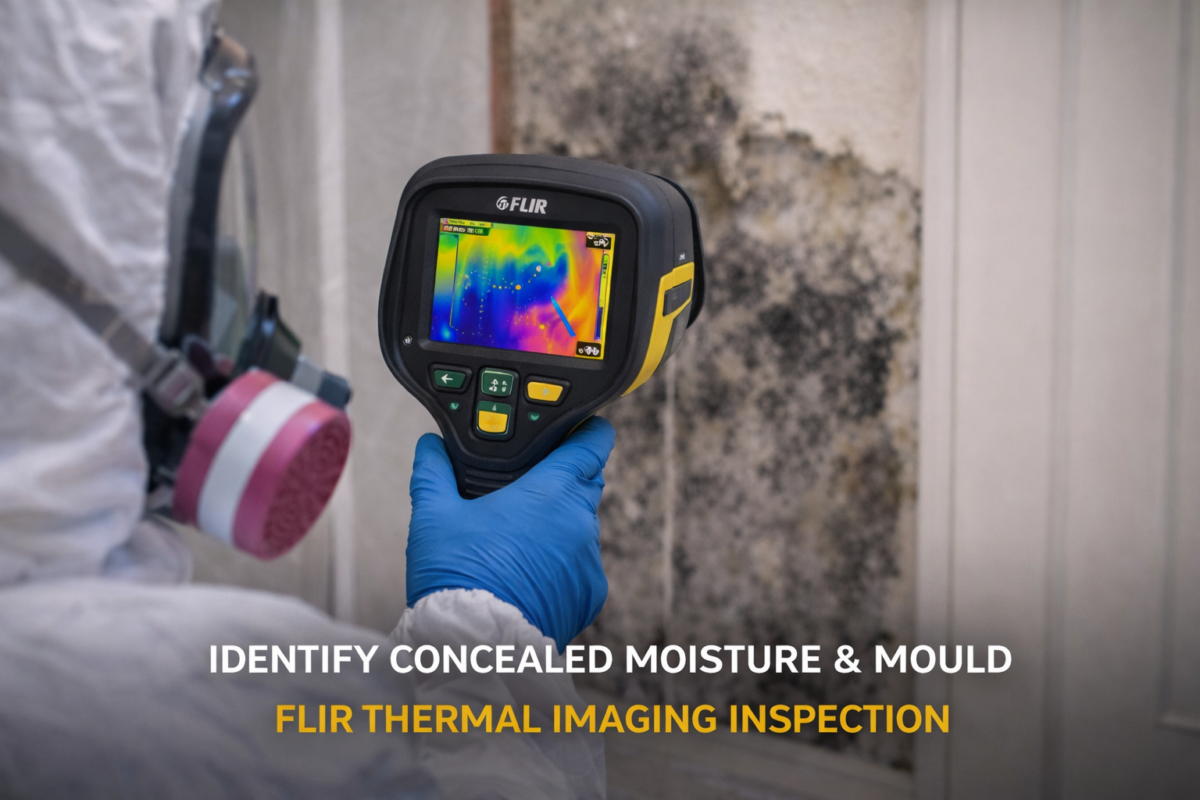
Fact: A thermal camera displays surface-temperature differences. Patterns may be influenced by evaporation, insulation, sunlight, heating, airflow and construction. The tool does not see through walls, measure moisture directly or identify mould.
Thermal findings require comparison with visual evidence, material moisture readings and the building history.
Myth 6: One Moisture Reading Diagnoses the Building
Fact: Readings must be interpreted for the meter, material, depth, surface condition and suitable reference area. Timber, plaster and masonry require different interpretation.
A single number does not prove the source, contamination extent or condition of inaccessible cavities.
Myth 7: Opening Windows Fixes Every Mould Problem
Fact: Ventilation may help remove moisture generated by showering, cooking and clothes drying when outdoor conditions are suitable. It cannot repair plumbing, roofing, drainage, waterproofing or groundwater problems.
Opening windows may also be less effective during cold, wet or very humid weather. Exhaust systems need suitable discharge and replacement-air paths.
Myth 8: Black Mould Is Automatically the Most Dangerous
Fact: Colour does not reliably identify species, toxins, exposure or health significance. Terms such as “black mould” and “toxic mould” are often used without laboratory or medical context.
Visible mould should be treated as evidence that conditions supported growth. The practical building response is to address moisture and affected materials. Health concerns belong with an appropriately qualified healthcare professional.
Myth 9: Mould Testing Is Always Required
Fact: Testing should answer a defined question and should change a project decision. If visible growth and a clear moisture source are present, source correction and remediation may be more useful than species identification.
Complex, disputed or sensitive projects may benefit from independent sampling. Property sampling is not a medical test and cannot diagnose illness.
Myth 10: Air Testing Can Certify a Property Is Completely Safe
Fact: Indoor and outdoor levels vary with weather, location, ventilation and sampling method. A single sample should not be presented as a universal guarantee about every room, cavity or occupant.
When post-remediation verification is required, an independent assessor should define the criteria and sampling plan.
Myth 11: HEPA Air Filtration Removes the Need for Remediation
Fact: HEPA-filtered equipment may support particulate management during controlled work. It does not replace source repair, removal of unsalvageable affected materials or detailed surface cleaning.
Equipment selection and placement depend on containment, room volume, access and contamination conditions.
Myth 12: Professional Remediation Guarantees Mould Never Returns
Fact: Remediation addresses the authorised affected area and moisture conditions within scope. Recurrence remains possible if the source persists, new water damage occurs, building repairs are incomplete or inaccessible areas remain affected.

What Professional Mould Remediation Actually Involves
- History and moisture assessment: Review leaks, condensation, flooding and recurring areas.
- Scope development: Define access, containment, material decisions and limitations.
- Source-control coordination: Refer plumbing, roofing, drainage or building repairs to the relevant trade.
- Controlled work: Establish suitable PPE, restricted access and HEPA-filtered air management.
- Material treatment: Remove unsalvageable porous materials where authorised and clean accessible retained surfaces.
- Drying: Establish appropriate drying and monitor accessible material conditions.
- Handover: Document completed work and recommendations for repair or independent verification.
Our IICRC-trained technicians adapt the process to the property. ARS does not diagnose illness, determine legal liability or certify that every inaccessible cavity is unaffected.
When DIY Cleaning May Not Be Appropriate
Seek professional advice when growth is extensive, recurring, concealed, associated with water damage, affecting porous materials or located where safe access and containment are required. Sewage, electrical, structural, fire and asbestos hazards require the appropriate specialists.
Mould Myths and Facts FAQs
Does bleach permanently remove mould?
Not necessarily. Cleaning results depend on the product, material and moisture source. Bleach does not correct dampness and may be unsuitable for porous materials or unsafe when mixed with other chemicals.
Can mould be present when it is not visible?
Yes. Mould and damp materials may be concealed behind walls, beneath flooring, above ceilings, inside cabinetry or within subfloors.
Is black mould always more dangerous than other mould?
Colour does not reliably identify species, toxins, exposure or health significance. Property decisions should focus on moisture and affected materials.
Does opening windows prevent all mould?
No. Ventilation may help manage indoor moisture when outdoor conditions are suitable, but it cannot repair leaks, failed waterproofing, groundwater or damp porous materials.
Is mould testing always required?
No. Testing should answer a defined question. Visible growth and a known moisture source can often support action without species identification.
Can professional remediation guarantee mould never returns?
No. Remediation addresses the authorised affected area, but recurrence remains possible if moisture sources persist, new water damage occurs or inaccessible areas remain affected.
Related ARS Guides and Services
Call 1300 114 842 for Melbourne property assistance.