MELBOURNE MOULD PREVENTION AND RECURRENCE GUIDE
Mould control is not a single spray or cleaning product. It is the ongoing process of controlling moisture, addressing affected materials, improving suitable ventilation and monitoring the property for recurring dampness.
When mould repeatedly returns after cleaning or repainting, the visible growth is often only part of the problem. A leak, condensation pattern, damp subfloor, wet porous material or concealed area may still require attention.
For a professional moisture and mould assessment in Melbourne, call 1300 114 842 or visit our mould removal Melbourne service page.
What Is Mould Control?
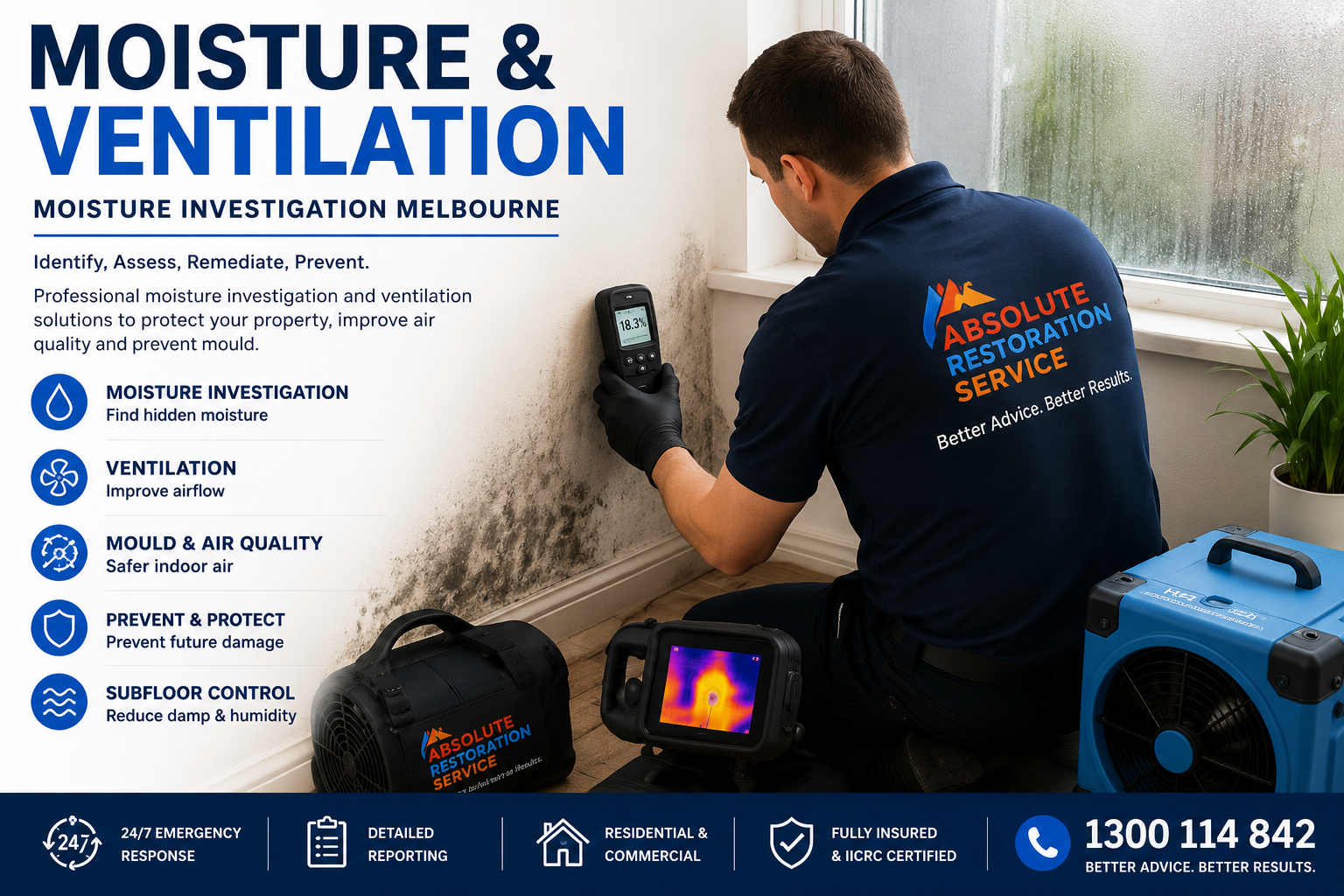
Mould control brings several actions together:
- identifying and correcting the source of moisture;
- drying affected materials where they can be restored;
- removing unsalvageable contaminated materials where authorised;
- cleaning accessible retained surfaces using appropriate methods;
- managing airflow and humidity for the building; and
- monitoring for recurrence after repairs and remediation.
The correct combination depends on the property. A bathroom affected by surface condensation requires a different response from a leaking roof, flooded apartment or damp subfloor.
Why Mould Keeps Returning
Recurring growth is evidence that conditions remain favourable. Common contributors include:
- unrepaired plumbing, roof, balcony or waterproofing leaks;
- condensation on cold walls, windows and ceilings;
- high indoor humidity and limited air exchange;
- clothes drying indoors without suitable moisture removal;
- wet carpet, underlay, plasterboard, timber or cabinetry;
- ground moisture and poorly ventilated subfloors;
- furniture positioned tightly against cold exterior walls; and
- surface cleaning that leaves affected porous materials or concealed growth in place.
Occupant activities can influence indoor humidity, but the cause should not be assumed without considering the building, maintenance history and moisture evidence.
Moisture Investigation Before Treatment
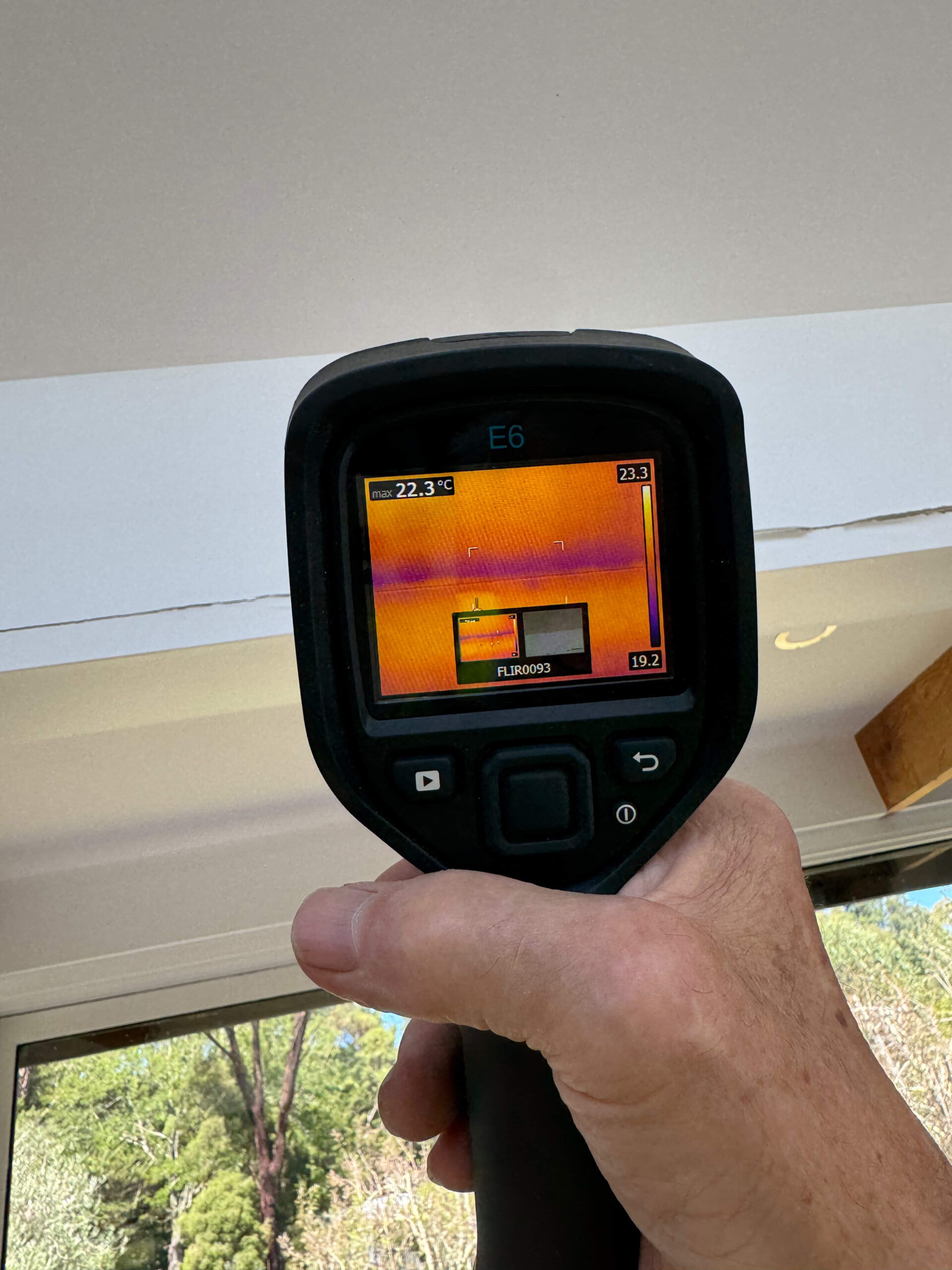
A practical mould-control plan starts with the moisture history and visible conditions. Technicians may use visual inspection, moisture meters and thermal imaging to assess accessible materials and define areas requiring further attention.
Thermal imaging is an investigative aid. It displays surface-temperature differences and does not see through walls, confirm mould or identify a leak source by itself. Moisture readings must also be interpreted for the material and instrument used.
If the source involves plumbing, roofing, electrical systems, drainage, waterproofing or structural defects, the appropriate licensed trade should complete the necessary repair.
Signs That Surface Cleaning Is Not Enough
- Mould returns repeatedly in the same location
- A musty odour remains after cleaning
- Paint bubbles, plaster softens or timber swells
- Growth appears inside wardrobes or behind furniture
- Carpet edges or skirting remain damp
- The property has a history of flooding or an unresolved leak
- Mould extends across porous materials or concealed cavities
Professional Mould-Control Process
- History and access review: Discuss recurring locations, known leaks, previous cleaning and property access.
- Moisture assessment: Inspect accessible materials and identify areas requiring source repair, drying or further investigation.
- Scope development: Define the work area, containment, material decisions, cleaning method and limitations.
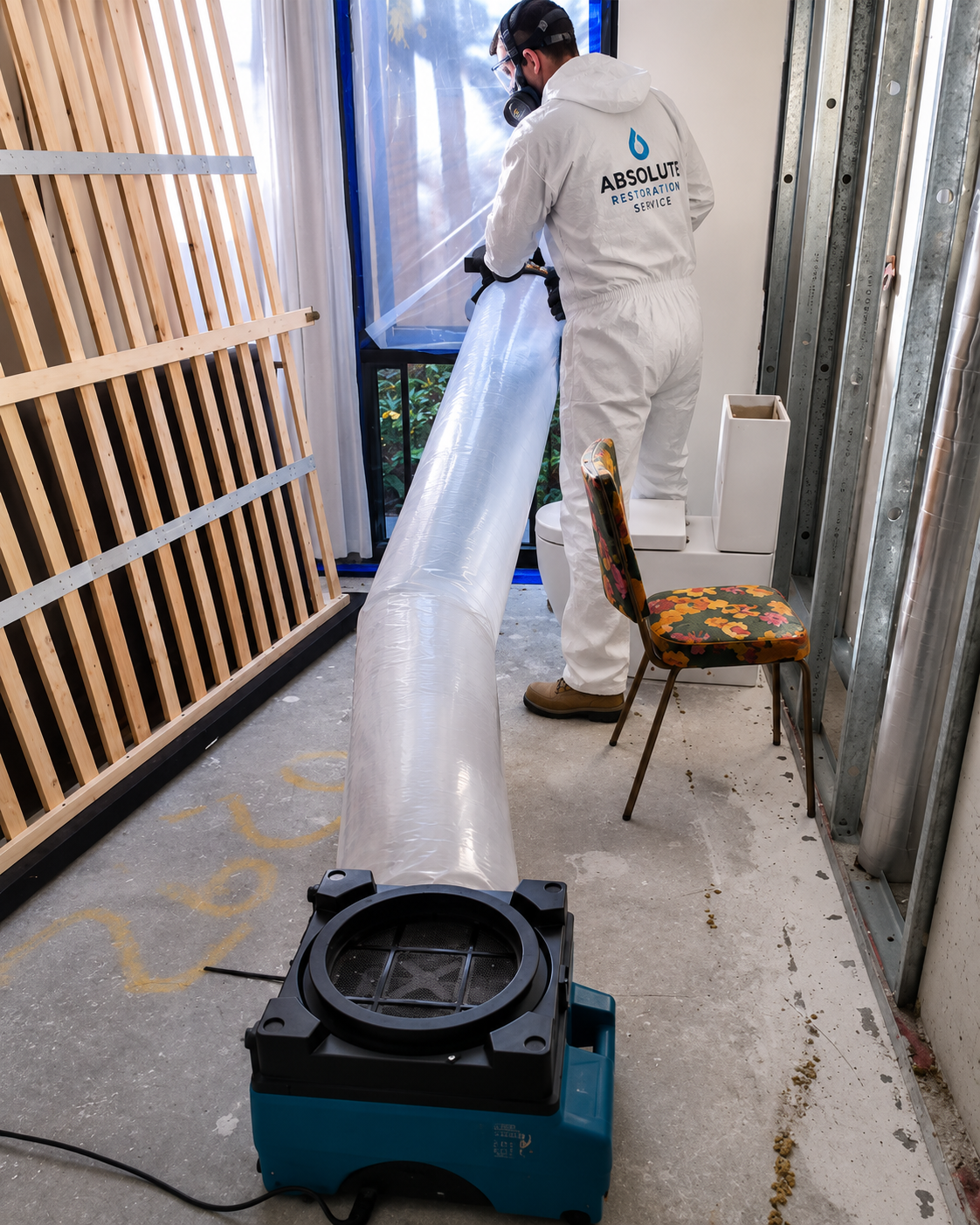
- Controlled remediation: Establish suitable access controls, HEPA-filtered air management and removal procedures where required.
- Detailed cleaning: HEPA vacuum and clean accessible retained surfaces using methods appropriate to the material.
- Drying and repairs: Coordinate structural drying and necessary building or plumbing repairs.
- Handover and monitoring: Document completed work and provide practical recommendations for recurrence monitoring.
Our IICRC-trained technicians adapt the process to the site. No responsible contractor can guarantee that mould will never return if new moisture develops or concealed areas remain inaccessible.
HEPA Filtration and Detailed Cleaning
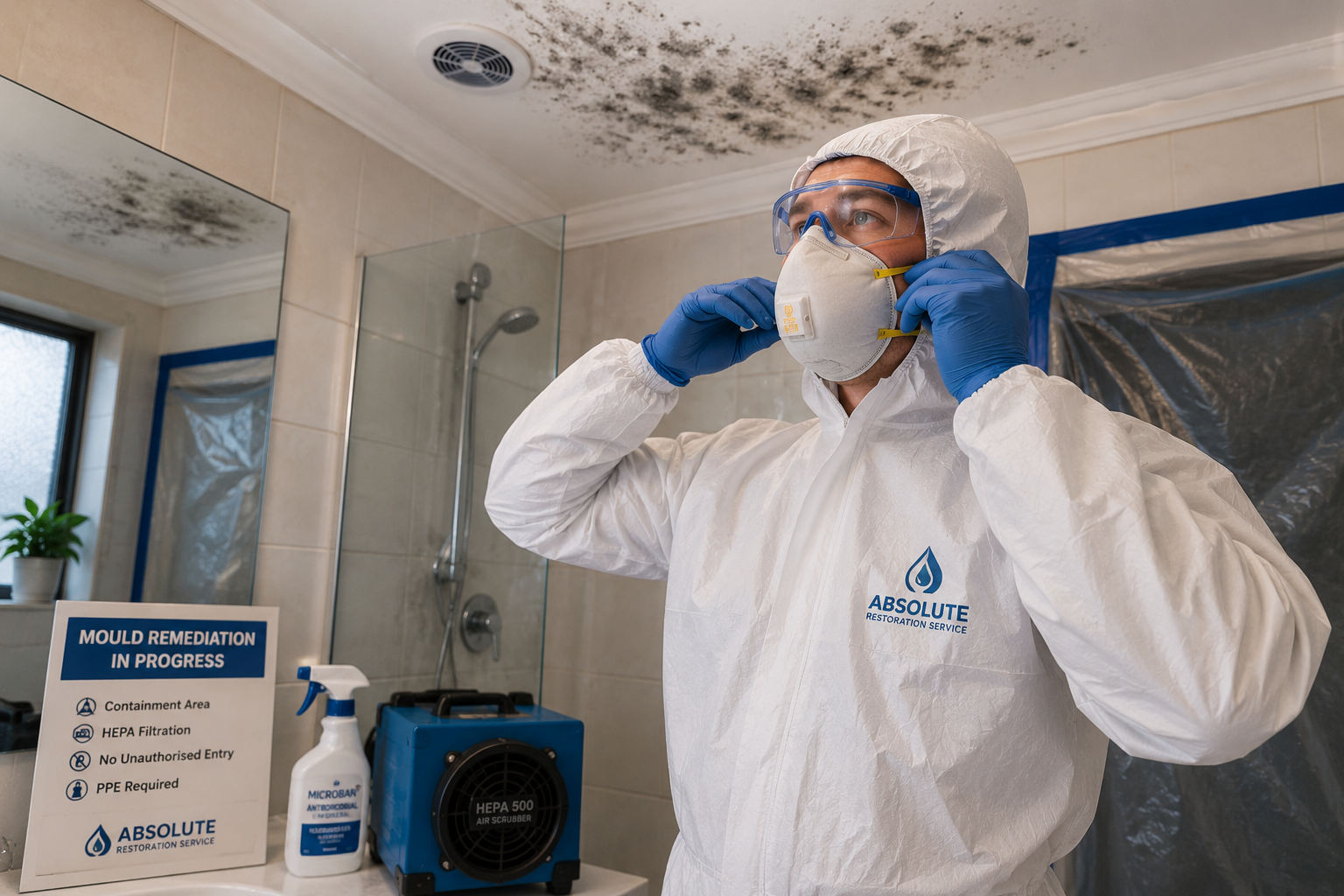
HEPA-filtered air scrubbers may support particulate management during controlled remediation. They do not replace source removal, material decisions or detailed surface cleaning. Equipment placement and operating mode depend on the containment, room volume, access and contamination conditions.
Accessible retained surfaces may require HEPA vacuuming and suitable cleaning. Unsalvageable porous materials can require controlled removal where authorised. Applying paint or a surface treatment over active growth does not correct moisture or contamination beneath the coating.
Ventilation, Humidity and Condensation
Ventilation can help remove moisture generated by showering, cooking, clothes drying and normal occupancy. Exhaust fans should discharge appropriately, and replacement air must be available for them to work effectively. Opening windows may help when outdoor conditions are suitable, but it is not a universal solution.
A simple hygrometer can help occupants observe indoor relative humidity trends. Prolonged elevated humidity and regular condensation deserve attention, but one reading does not diagnose the cause. Climate, room temperature, outdoor conditions and sensor location all affect the result.
Mechanical ventilation or an energy-recovery ventilation system may be appropriate for some properties, but selection should follow an assessment of the building and moisture sources.
Practical Steps to Reduce Mould Recurrence
- Repair leaks and building water entry promptly.
- Use bathroom and kitchen exhaust systems during moisture-producing activities.
- Allow suitable airflow around wardrobes and large furniture.
- Dry wet materials promptly after spills or leaks.
- Keep gutters, drainage and subfloor ventilation maintained.
- Investigate recurring condensation rather than repeatedly wiping it away.
- Avoid installing new finishes over materials that have not been assessed as suitable.
- Retain restoration and repair records for future reference.
Rental, Strata and Commercial Properties
Mould control in managed properties can require coordination between occupants, owners, property managers, owners corporations and trades. Report leaks and recurring dampness through the appropriate maintenance channel and confirm authority before intrusive inspection or remediation.
ARS documents observable conditions and completed restoration work. We do not determine tenancy responsibility, property boundaries, legal liability, regulatory compliance or insurance coverage.
Can Small Areas Be Cleaned by the Occupant?
A small area associated with brief surface condensation may sometimes be manageable after the source is corrected, provided the person can work safely and the material is suitable. Do not disturb extensive growth, sewage-affected materials, contaminated insulation or concealed areas without appropriate controls.
Professional advice is appropriate when mould is recurring, extensive, hidden, associated with water damage, affecting porous materials or located where safe access is difficult.
Health and Testing Considerations
Visible mould colour does not identify a species or establish a health risk. ARS does not diagnose illness or determine whether a property has caused symptoms. Anyone with health concerns should seek advice from an appropriately qualified healthcare professional.
Sampling is not automatically required for every project. When testing is justified, it should answer a clear question and be designed and interpreted by a suitably qualified professional or laboratory.
When to Request Professional Mould Control
Call Absolute Restoration Service on 1300 114 842 when mould keeps returning, moisture is concealed, water damage affects porous materials or the project requires containment and documentation. For non-urgent enquiries, use the ARS contact form.
Mould Control FAQs
What is mould control?
Mould control combines moisture-source correction, appropriate remediation, drying, ventilation and ongoing monitoring to reduce the conditions that allow mould to return.
Why does mould keep returning after cleaning?
Recurring mould commonly indicates unresolved moisture, condensation, damp porous materials, concealed growth or cleaning that addressed only the visible surface.
Does ventilation prevent all mould growth?
No. Ventilation may help manage indoor humidity and condensation, but it cannot correct active leaks, failed waterproofing, groundwater or contaminated building materials.
Can I paint over mould to stop it returning?
Painting over mould does not correct moisture or contamination beneath the coating. The source and affected material should be assessed before suitable preparation and recoating.
How can I monitor conditions after mould remediation?
Monitor for recurring odour, staining, condensation and dampness. Hygrometers can help track indoor relative humidity, while recurring or concealed moisture may require professional investigation.
When should I call a mould-remediation professional?
Seek professional advice when mould is extensive, recurring, concealed, associated with water damage, affecting porous materials or located where safe access and containment are required.