
BUILDING MOISTURE AND INDOOR ENVIRONMENT GUIDE
Mould growth inside a building is fundamentally a moisture problem. Spores are widely present in the environment, but growth needs suitable moisture, material and conditions. The source may be obvious—such as a burst pipe—or less visible, including condensation on cold surfaces, damp subfloors or water trapped beneath flooring.
Understanding how water enters, moves and remains in a building is more useful than repeatedly treating visible spots. This guide explains the main moisture mechanisms, how ventilation fits into the picture and which investigation tools can support a property assessment.
For Melbourne moisture investigation or mould remediation, call 1300 114 842 or use the ARS contact form.
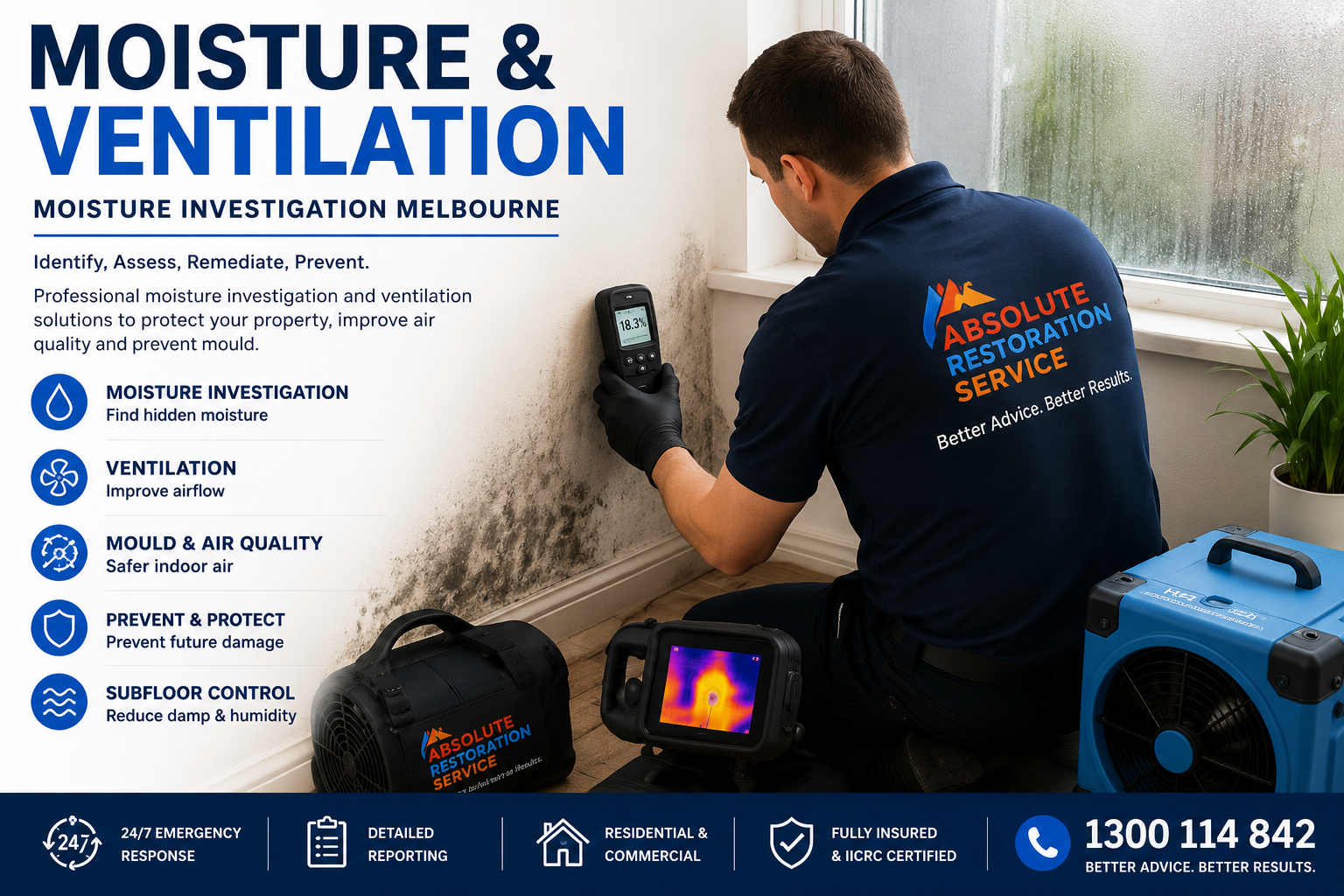
The Conditions That Support Mould Growth
Four broad factors influence indoor growth:
- Moisture: liquid water, damp materials, high surface humidity or condensation;
- Material: paper-faced plasterboard, timber, carpet backing, dust and other organic residues;
- Temperature: conditions that support growth and affect evaporation or condensation; and
- Time: the period materials remain damp before source control and drying.
Moisture is normally the factor that can be changed most effectively. Removing visible growth without correcting dampness leaves the main enabling condition in place.
Bulk Water: Leaks, Flooding and Water Entry
Bulk water enters through plumbing failures, overflowing fixtures, appliances, roofs, balconies, windows, storms, groundwater and drainage problems. It may move further than the visible stain through joints, wall cavities, insulation, flooring systems and porous materials.
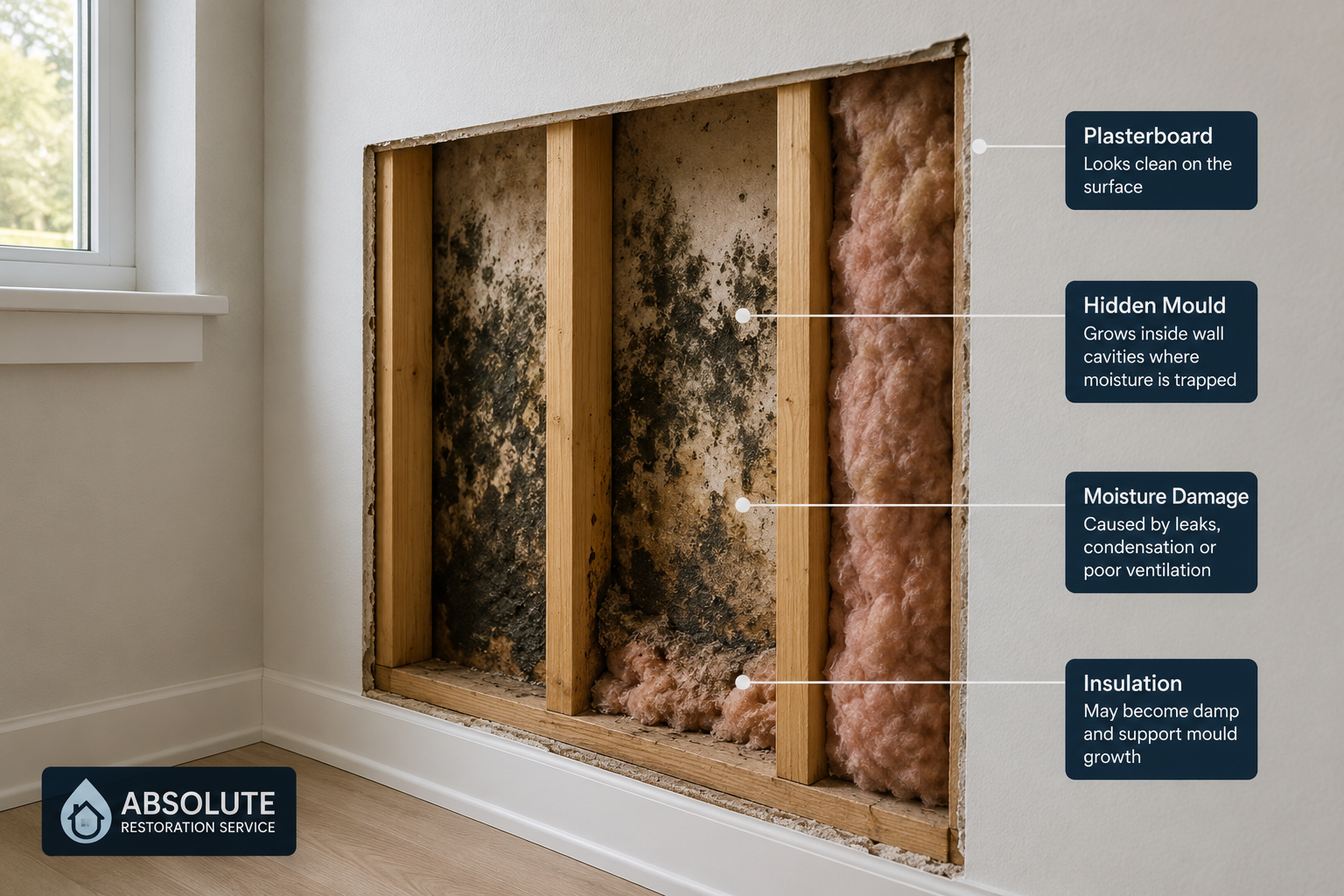
A dry surface does not confirm that deeper layers are dry. Moisture assessment and controlled drying may be required before finishes are replaced.
Condensation and Surface Temperature
Air can hold different amounts of water vapour depending on temperature. When moisture-laden indoor air contacts a sufficiently cold surface, the air near that surface may reach high relative humidity or form condensation. Windows, exterior walls, ceiling corners, metal frames and poorly insulated junctions are common locations.
The dew point is the temperature at which air becomes saturated under the measured conditions. It changes as indoor temperature and humidity change, so condensation risk is dynamic rather than fixed.
Thermal Bridging and Insulation
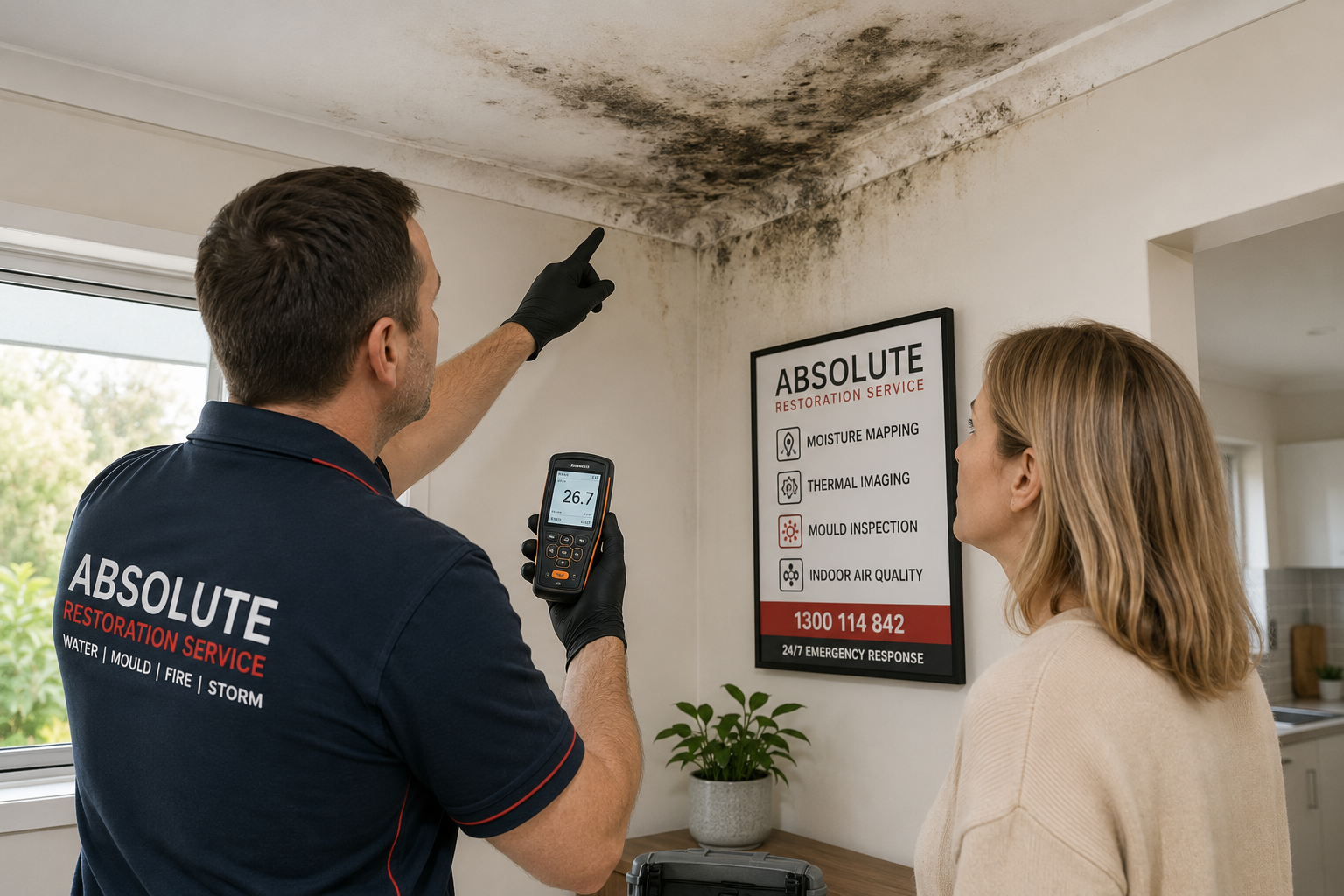
A thermal bridge is a building element that transfers heat more readily than the surrounding construction. Framing, lintels, slab edges and poorly insulated junctions can create colder internal surface areas. If indoor moisture is elevated, these locations may experience higher surface humidity and recurring growth.
Thermal bridging is only one possible contributor. A similar stain may result from a leak, missing insulation, air leakage or another building defect. Assessment should consider the pattern, weather history, moisture readings and construction.
Indoor Moisture Generation
Showering, cooking, clothes drying, unflued heating and normal occupancy release water vapour indoors. The significance depends on room volume, ventilation, temperature, outdoor conditions and how long the moisture remains.
Occupant activities can influence humidity, but they should not be used to assume responsibility without considering the building, maintenance and water-entry evidence.
Ventilation: Important but Not a Universal Cure
Ventilation can remove moisture generated indoors and reduce condensation when correctly designed and operated. Bathroom and kitchen exhaust systems should discharge appropriately, have a suitable air path and operate long enough for the space.
Opening windows may help when outdoor conditions are suitable, but it may be less effective during cold, wet or very humid weather. Ventilation cannot repair a leaking pipe, failed waterproofing, roof water entry, groundwater or wet porous material.
Ground Moisture and Subfloor Conditions
Damp soil, poor drainage, blocked vents and groundwater can increase moisture beneath suspended floors. Air and odour may move from a subfloor into occupied rooms through gaps and service penetrations. Subfloor ventilation may form part of the solution, but it must be considered together with drainage, source control and existing contamination.
For detailed guidance, see our subfloor mould remediation article.
Hidden Moisture Behind Walls and Beneath Floors
Insulation, plasterboard cavities, floating floors, underlay, cabinetry and skirting interfaces can conceal dampness. Water may remain after exposed surfaces appear dry, particularly where finishes restrict evaporation.
Moisture Investigation Tools and Their Limits
Moisture meters
Moisture meters help compare accessible materials and track project conditions. Readings must be interpreted for the meter, material, depth and suitable reference location.
Thermal imaging
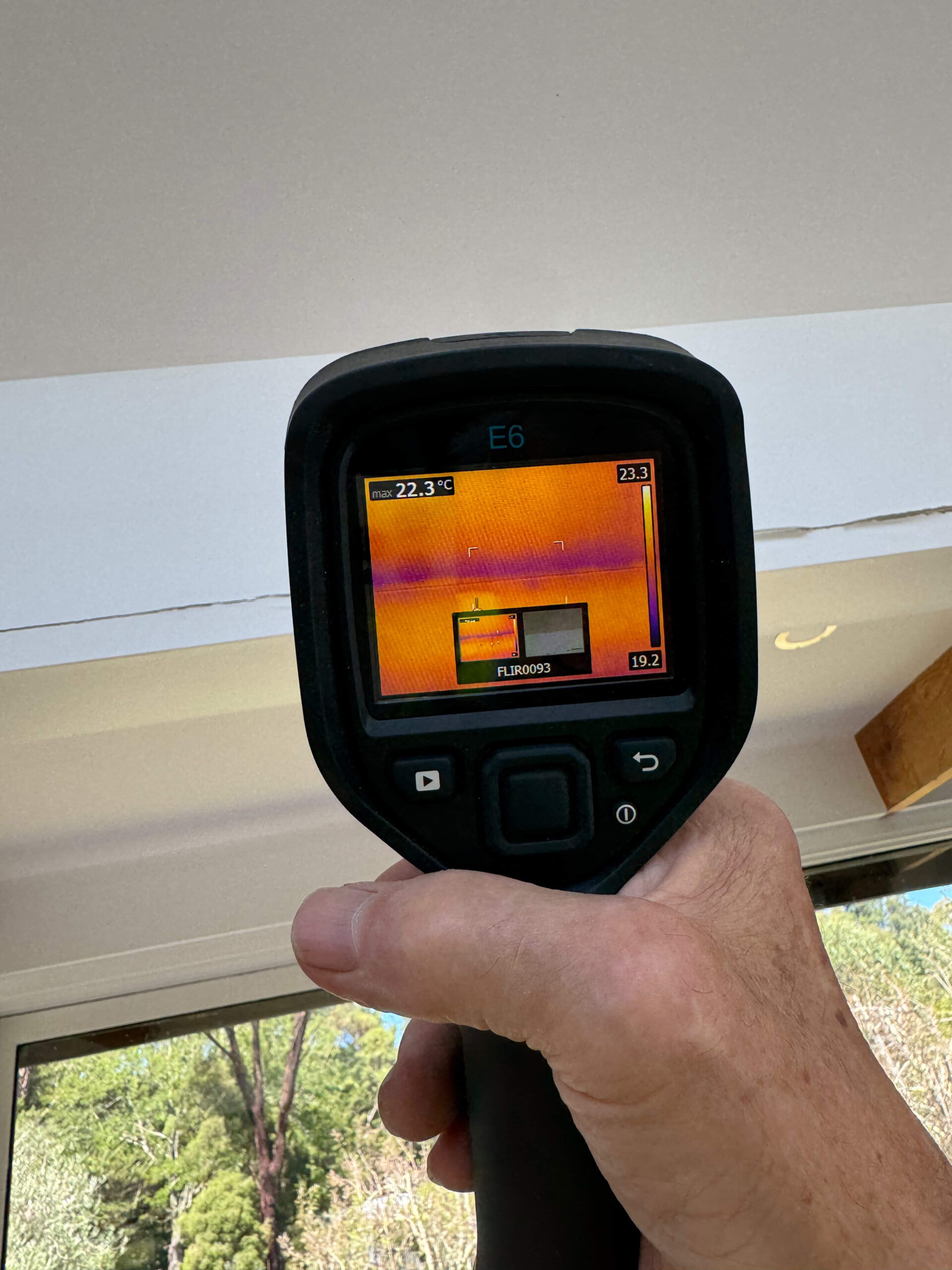
Thermal cameras show surface-temperature patterns. They may direct attention to an area requiring closer moisture assessment, but they do not see through walls, measure moisture directly or identify mould.
Temperature and relative-humidity monitoring
These readings describe air conditions at a particular place and time. Sensor location, outdoor weather, room use and heating or cooling influence the result. A single reading does not diagnose the building.
Indoor Air Quality: What Mould Observations Mean
Dampness and mould are relevant to indoor environmental quality, but no single humidity, carbon-dioxide or airborne-particle reading proves that hidden mould exists. Odour and occupant observations can support an investigation but do not identify the source or species.
ARS does not diagnose illness or determine individual exposure. Health concerns should be discussed with an appropriately qualified healthcare professional.
When Is Mould Sampling Useful?
Sampling is not automatically required when visible growth and a clear moisture problem are already present. Testing is most useful when it answers a defined question and results will change the decision or verification process.
Complex, disputed or sensitive projects may benefit from an independent assessor or laboratory. Sampling methods and results should be interpreted in the context of the building.
A Practical Prevention Hierarchy
- Control active sources: Repair plumbing, roofing, drainage and building water entry through the relevant licensed trade.
- Remove accessible water: Extract standing water where safe and appropriate.
- Dry affected materials: Use an assessment-led drying plan for porous and concealed materials.
- Address contaminated material: Remediate affected areas rather than painting over visible growth.
- Manage indoor moisture: Use suitable exhaust ventilation and consider occupancy-generated humidity.
- Reduce cold-surface risk: Investigate insulation, thermal bridging and airflow where condensation recurs.
- Monitor: Watch for recurring staining, odour, dampness and condensation after repairs.
For post-remediation actions, see our mould control Melbourne guide.
When Professional Investigation Is Appropriate
Seek professional advice when mould is recurring, extensive, concealed, associated with water damage, affecting porous materials or located where safe access is difficult. Immediate electrical, structural, sewage or fire hazards should be addressed by emergency services or the relevant licensed professional first.
Absolute Restoration Service uses IICRC-trained technicians and professional investigation equipment. Our findings relate to accessible restoration conditions; building design, structural adequacy and compliance questions belong with appropriately qualified building practitioners.
Mould Growth Causes FAQs
What is the main cause of indoor mould growth?
Persistent moisture is the main enabling condition. Sources include leaks, flooding, condensation, groundwater, damp materials and indoor humidity that remains elevated.
Can poor ventilation cause mould?
Poor ventilation can allow moisture generated indoors to accumulate and contribute to condensation. It is one factor and does not explain active leaks, failed waterproofing or drainage problems.
Why does mould grow on cold exterior walls?
Cold surfaces can bring nearby air closer to its dew point, increasing surface humidity or condensation. Thermal bridging, insulation, airflow and indoor moisture generation can all contribute.
Does a high humidity reading prove mould is present?
No. A humidity reading describes conditions at one location and time. It does not confirm mould, identify a moisture source or show conditions inside concealed materials.
Can thermal imaging identify mould?
No. Thermal imaging shows surface-temperature patterns that may guide closer moisture investigation. It cannot see through walls or identify mould.
What is the best way to prevent mould growth?
Prioritise source repair, prompt drying, suitable ventilation, condensation management and appropriate remediation of affected materials. The correct measures depend on the property.
Related ARS Services and Guides
- Moisture investigation Melbourne
- Mould removal Melbourne
- Mould control Melbourne guide
- Water damage restoration Melbourne
Call 1300 114 842 to discuss a Melbourne property assessment.