
MELBOURNE HIDDEN MOULD AND MOISTURE GUIDE
Hidden mould can develop behind walls, beneath flooring, above ceilings, inside cabinetry and within damp subfloors. It is often discovered after a leak, flood, condensation problem or persistent musty odour—but odour and staining alone do not reveal the full source or extent.
A useful investigation follows evidence. It begins with the property history, visible conditions and moisture patterns before any intrusive opening is considered. Thermal imaging, moisture meters and borescopes can support that process, but each tool has limits.
For professional moisture investigation and mould remediation in Melbourne, call 1300 114 842 or use the ARS contact form.
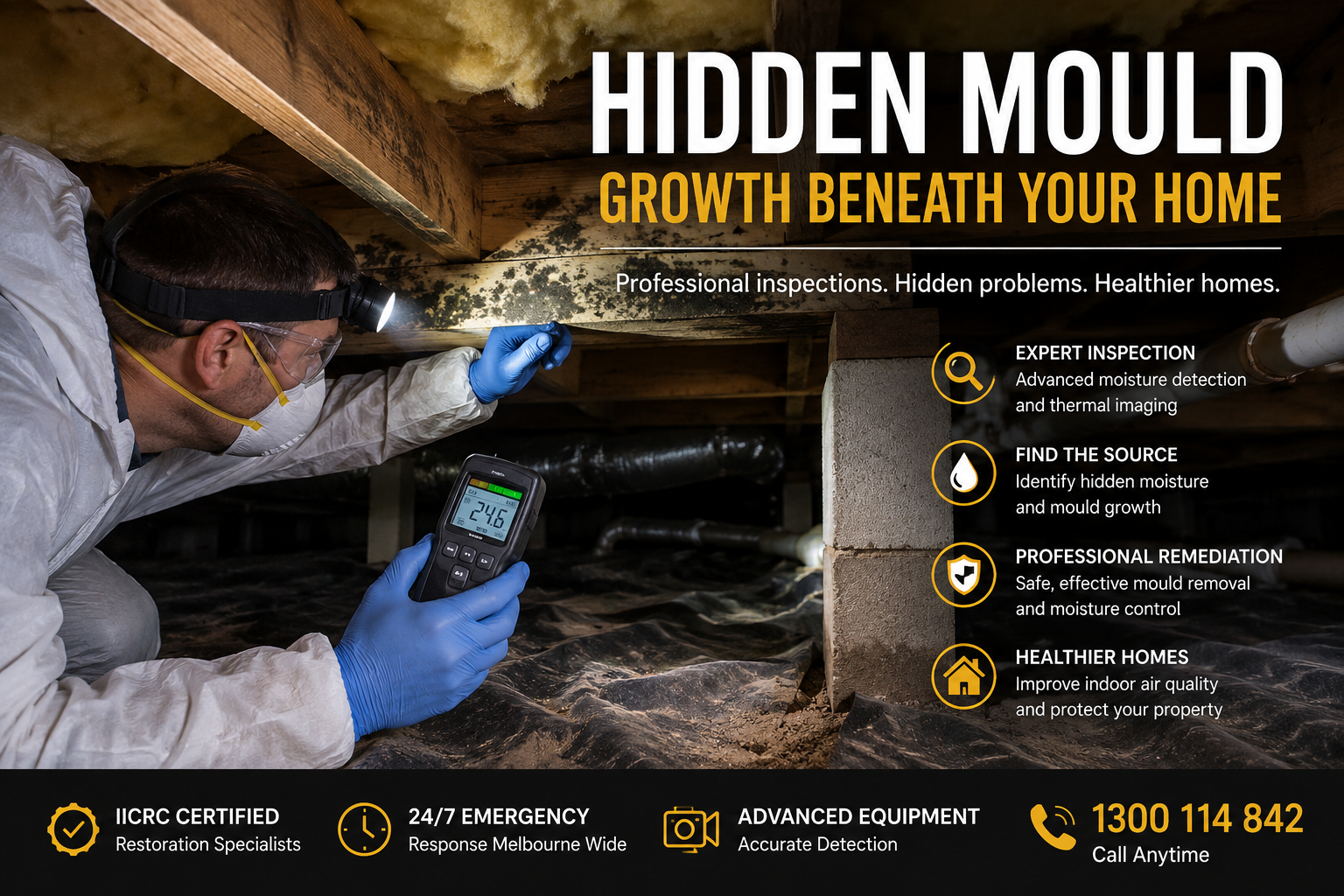
Where Hidden Mould Commonly Develops
- Behind plasterboard after plumbing or roof leaks
- Beneath floating timber, vinyl, carpet and underlay
- Inside vanity units, kitchen cabinetry and wardrobe backs
- Above ceilings beneath roof, balcony or bathroom water entry
- Within insulation and wall cavities
- Around window reveals and cold exterior walls affected by condensation
- Under baths, showers and other wet-area finishes
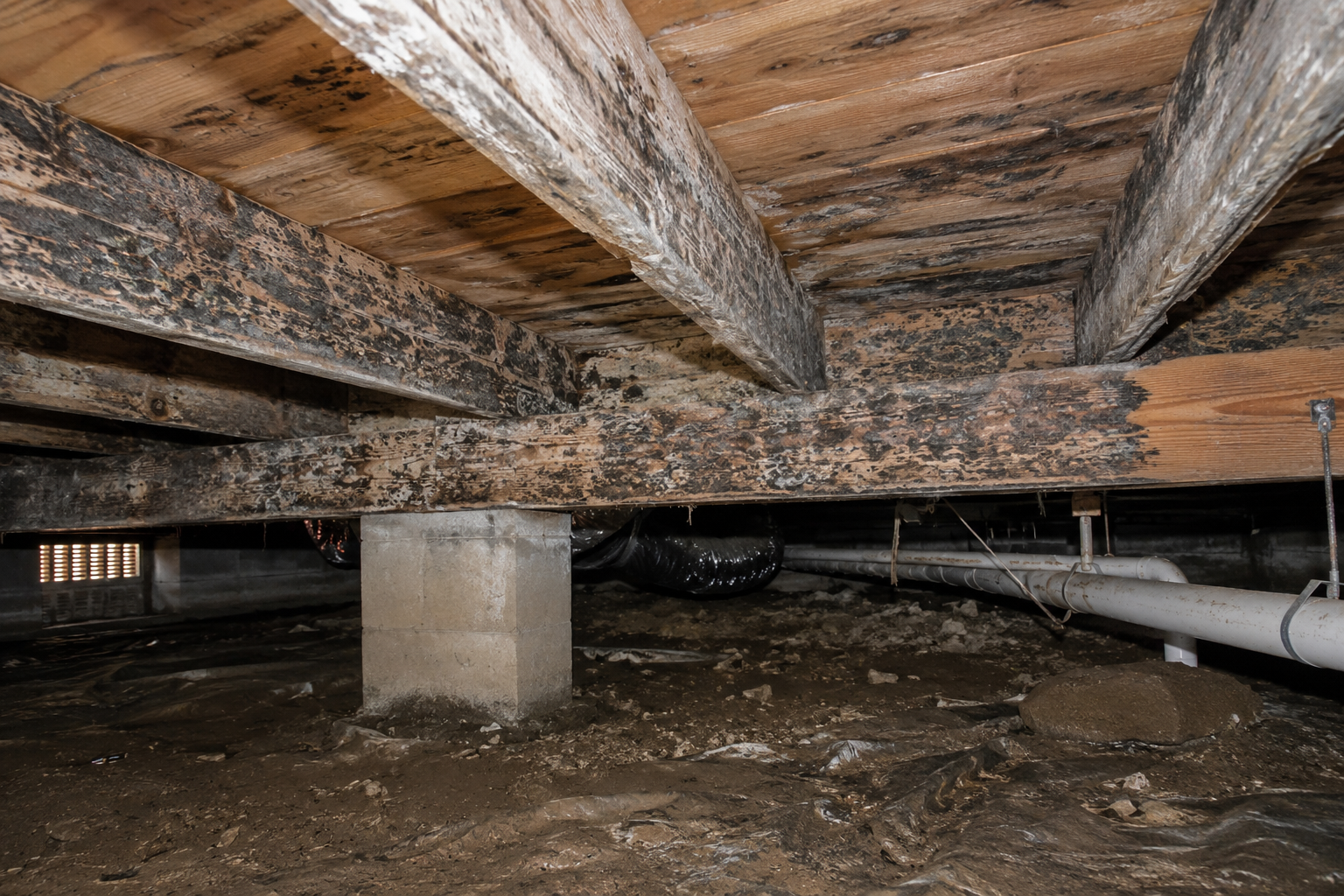
- On damp subfloor timber, stored materials and crawl-space surfaces
These locations are not automatically contaminated. The likelihood depends on moisture, time, material condition, ventilation and previous repairs.
Signs That May Justify Further Investigation
- Persistent musty or earthy odour
- Recurring mould after cleaning or repainting
- Water staining, bubbling coatings or softened plasterboard
- Swollen skirting, cabinetry or flooring
- Flooring that cups, lifts or separates
- Localised condensation or dampness
- A known leak or flood that affected concealed materials
- Visible growth near service penetrations or wall-to-floor junctions
None of these signs proves hidden mould is present. They help identify where a systematic investigation may be useful.
How Hidden Mould Is Investigated
- Review the history: Identify leaks, floods, condensation, repairs, odours and previous cleaning.
- Inspect accessible areas: Document staining, material changes, ventilation and likely water pathways.
- Map moisture: Use suitable meters to compare suspect materials with reference locations.
- Use thermal imaging where appropriate: Identify temperature patterns that need closer checking.
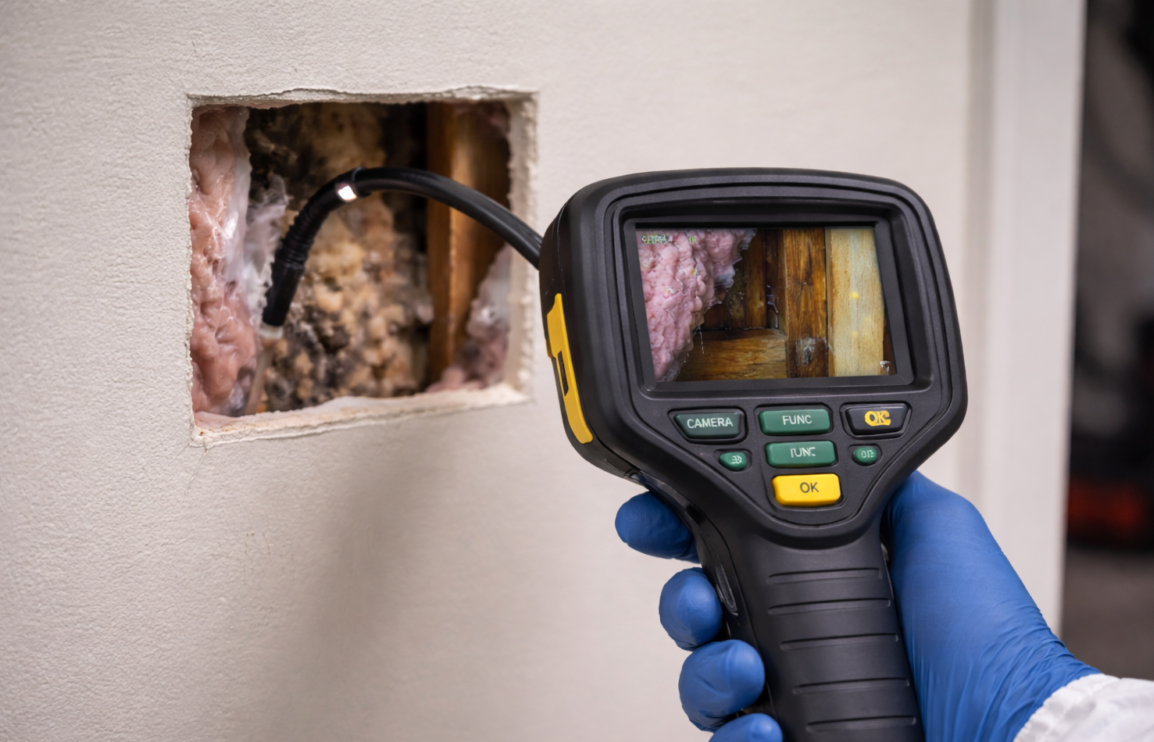
- Consider limited cavity inspection: A borescope or authorised opening may be appropriate after hazards are reviewed.
- Define the next step: Recommend source repair, drying, remediation, specialist inspection or monitoring.
An investigation is not a guarantee that every concealed cavity has been assessed. Access, wall construction and safety constraints must be documented.
What Thermal Imaging Can—and Cannot—Do
Thermal imaging displays surface-temperature differences. Damp areas may appear different because evaporation changes surface temperature, but similar patterns can also result from insulation, airflow, sunlight, heating, air conditioning and building geometry.
A thermal camera does not:
- see through walls or flooring;
- identify mould species;
- measure moisture directly;
- prove the source of a leak; or
- replace confirmatory moisture readings and building investigation.
Its value is in directing attention to areas that may require further assessment.
Moisture Meters and Material Readings
Moisture meters help compare accessible materials and track changes during a project. Readings must be interpreted for the meter, material, depth, surface condition and suitable reference area. A number that is meaningful for timber may not have the same meaning for plaster or masonry.
Borescopes and Intrusive Inspection
A borescope can provide a limited view through a small authorised opening, but it cannot show every part of a cavity. Before drilling or opening building materials, consider electrical wiring, plumbing, structural elements, asbestos-containing materials and the possibility of disturbing contamination.
Intrusive inspection requires authority from the appropriate owner or manager and may need a builder, electrician, plumber, hygienist or other specialist.
Does a Musty Smell Confirm Hidden Mould?
No. A persistent musty smell can be associated with damp materials, microbial activity, wet contents, drainage or other sources. Odour can justify further investigation, but it does not identify the source, location, species or extent.
Masking the odour with fragrance, ozone or fogging does not correct wet materials or concealed contamination. Source control and material assessment come first.
What Happens When Hidden Mould Is Found?
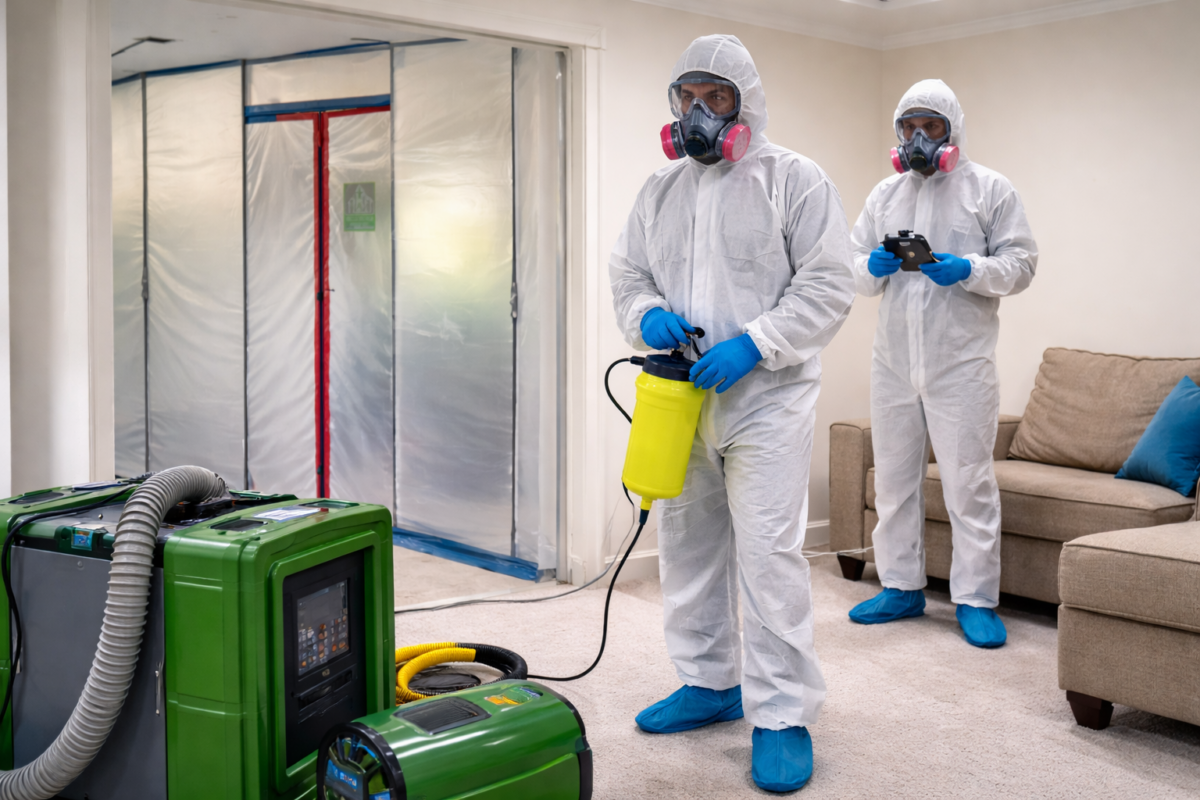
The remediation scope depends on the affected material, access and moisture source. Work may include:
- repair of plumbing, roofing, drainage or building water entry by the relevant trade;
- controlled exposure of concealed areas where authorised;
- restricted access, containment and suitable PPE;
- removal of unsalvageable contaminated porous materials;
- HEPA-filtered air management;
- detailed HEPA vacuuming and surface cleaning;
- structural drying where appropriate; and
- documentation and recommendations for repair or verification.
Our IICRC-trained technicians adapt controls to the property. Restoration cannot guarantee that every inaccessible cavity is unaffected or that mould will never return if new moisture develops.
Is Mould Testing Always Required?
No. Testing should answer a defined question. If visible mould and a clear moisture source are already present, the priority may be source correction and remediation rather than identifying a species.
Independent sampling can be appropriate for complex, disputed or sensitive projects, or when post-remediation verification criteria have been established. The sampling plan and results should be designed and interpreted by a suitably qualified professional or laboratory.
Health and Exposure Limitations
Visible colour does not identify a mould species or establish individual exposure. ARS does not diagnose illness or determine whether a property caused symptoms. Anyone with health concerns should seek advice from an appropriately qualified healthcare professional.
Rental, Strata and Commercial Properties
Hidden-mould investigations in managed properties may require approval from owners, rental providers, property managers, building managers or owners corporations. Shared services, common property and neighbouring lots can influence access and the sequence of repairs.
ARS documents observable restoration conditions. We do not determine property boundaries, legal liability, tenancy responsibility, regulatory compliance or insurance coverage.
Reducing the Risk of Hidden Mould
- Repair leaks and building water entry promptly.
- Investigate recurring stains, odours and flooring changes.
- Dry porous materials after water damage rather than relying on surface appearance.
- Use suitable bathroom and kitchen exhaust ventilation.
- Maintain gutters, drainage and subfloor ventilation.
- Allow airflow around large furniture on cold exterior walls.
- Do not install new finishes over damp substrates.
- Keep restoration and repair records for future reference.
When to Request a Hidden-Mould Investigation
Call Absolute Restoration Service on 1300 114 842 when moisture or mould may be concealed behind walls, beneath flooring, above ceilings or inside subfloors. Immediate electrical, structural, sewage or fire hazards should be addressed by emergency services or the appropriate licensed professional first.
Hidden Mould FAQs
Where does hidden mould commonly grow?
Hidden mould may occur behind plasterboard, beneath flooring, inside cabinetry, above ceilings, around wet areas, within insulation and in damp subfloors or crawl spaces.
Can thermal imaging detect hidden mould?
No. Thermal imaging shows surface-temperature patterns that may indicate areas requiring moisture investigation. It does not see through walls or identify mould.
Does a musty smell prove hidden mould is present?
No. A musty odour can justify further investigation, but odour alone does not confirm the source, location or extent of mould.
Should I cut open a wall to look for mould?
Do not open building materials without considering electrical wiring, plumbing, structural elements, asbestos and contamination controls. Intrusive inspection should be authorised and planned.
Is mould testing always required?
No. Testing should answer a defined question. Moisture history and visible building conditions may be more useful for many projects, while complex cases may benefit from independent sampling.
What happens if hidden mould is found?
The next steps may include source repair, controlled exposure, removal of unsalvageable materials, HEPA cleaning, structural drying and documentation of the completed scope.