Melbourne Home Water Damage Guide
How Water Damage Affects Your Home
Water damage can affect far more than the visible puddle. Moisture may migrate into plasterboard, insulation, timber, flooring systems, cabinetry and concealed wall cavities. If the source is not controlled and affected materials are not properly assessed, secondary damage can continue after exposed surfaces appear dry.
The correct response depends on the water source, contamination category, affected materials, accessibility and the time elapsed before intervention. Immediate electrical, structural, fire or sewage hazards must be addressed by the appropriate emergency service or licensed professional before restoration begins.
For professional water-damage assistance throughout Melbourne, call Absolute Restoration Service on 1300 114 842 or visit our Melbourne water damage restoration service.
Visible Water Is Only Part of the Damage
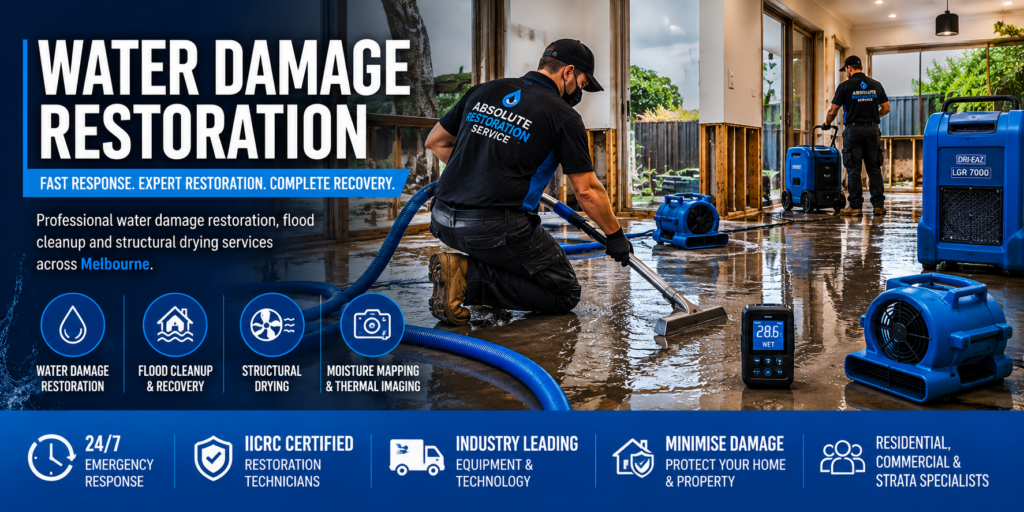
Water follows gravity, construction gaps and capillary pathways. It can travel beneath skirting boards, through flooring joints, down wall cavities and into adjoining rooms. A visible stain or wet patch may therefore represent only part of the affected area.
A surface may also feel dry while deeper layers remain damp. Floating floors, carpet underlay, insulation, cabinetry and paper-faced plasterboard can slow evaporation or conceal retained moisture. A professional inspection helps determine which accessible materials require drying, removal or further investigation.
How the Water Source Changes the Restoration Response
A clean-water supply leak discovered and addressed promptly requires a different response from sewage, stormwater or water that has remained in contact with contaminants. The source, contamination level and elapsed time can influence personal protective equipment, containment, cleaning methods and whether affected materials can be restored.
Contaminated water should not be treated as an ordinary household spill. Avoid direct contact, prevent children and pets from entering the area and do not introduce uncontrolled air movement that could spread contaminants. Sewage incidents may require specialist biohazard remediation services.
Common Water Damage Effects on Building Materials
1. Damage to Plasterboard and Insulation
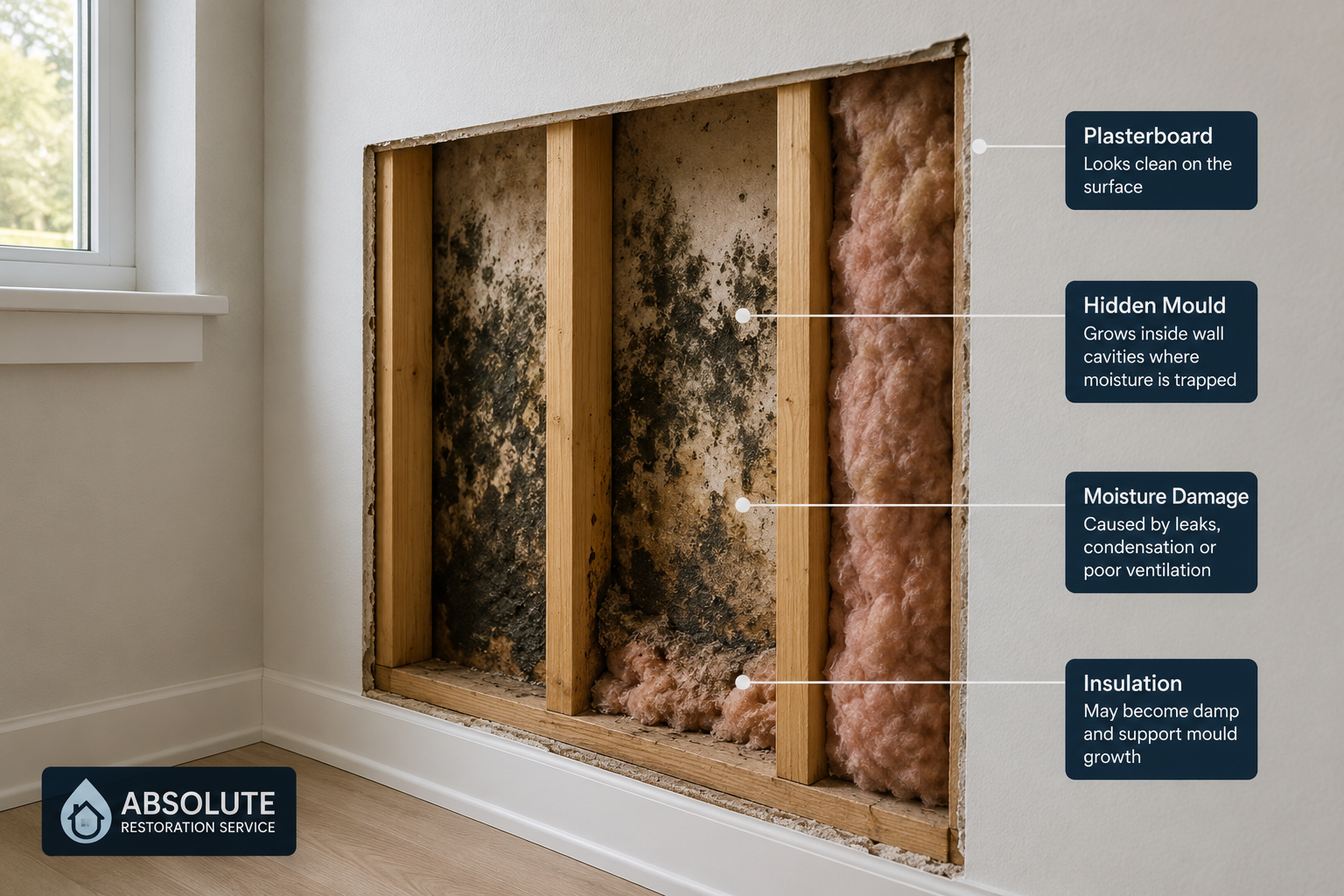
Plasterboard can absorb water through its paper facing and gypsum core. It may soften, swell, stain, sag or lose its structural integrity. Insulation can retain moisture inside a wall or ceiling cavity and may be difficult to assess without authorised access.
Not every wet wall requires complete removal. However, damaged, contaminated or persistently damp materials may be unsuitable for restoration. Electrical wiring, plumbing, structural components and possible asbestos-containing materials must be considered before opening a wall or ceiling cavity.
2. Timber and Structural Components
Timber can absorb moisture, change dimension and support microbial growth when damp conditions persist. Timber flooring may cup, crown, gap or lift, while framing, bearers, joists and subfloor timbers can retain moisture beyond the visible surface.
Restoration technicians can document accessible moisture conditions and monitor drying progress. Suspected structural deterioration, movement or loss of load-bearing capacity should be referred to an appropriately qualified builder or structural engineer.
3. Carpet and Underlay
Carpet may sometimes be restored following a limited clean-water event, but the condition of the underlay, subfloor and adjoining materials must also be considered. Contaminated water, prolonged saturation, odours or deterioration may make removal necessary.
Drying only the upper carpet surface can leave moisture trapped underneath. Professional extraction and assessment can help determine whether the carpet, underlay and substrate are responding appropriately.
4. Floating, Laminate and Timber Flooring
Water can enter through joints and become trapped beneath floating floors. Laminate boards may swell at the edges, while engineered and solid timber products can distort as their moisture content changes.
Removing visible water does not confirm that the substrate is dry. Depending on the flooring system, controlled investigation may be required to assess the underlay, concrete slab, timber substrate or concealed floor cavity.
5. Cabinetry and Built-In Joinery
Kitchen cabinets, bathroom vanities and wardrobes often contain particleboard, MDF or laminated materials that can absorb water through exposed edges and service penetrations. Swelling, delamination, staining and odours can occur even when the exterior finish initially appears unaffected.
Toe-kick areas and enclosed spaces behind cabinetry can also restrict airflow. Inspection may be required to determine whether water has travelled beneath or behind the units.
6. Electrical and Safety Hazards
Water near switchboards, power outlets, appliances, ceiling fixtures or damaged electrical wiring can present a serious safety risk. Do not enter standing water or operate affected electrical equipment when an electrical hazard may be present.
A licensed electrician should assess electrical concerns. Restoration activities should begin only after the area has been made safe for technicians and occupants.
7. Mould and Indoor Environmental Conditions
Persistent moisture can create conditions that support mould growth on plasterboard paper, timber, dust, carpet, furnishings and other organic materials. Visible mould, musty odours or recurring dampness can indicate that the underlying moisture source has not been fully resolved.
Simply painting over staining or applying a surface spray does not correct concealed moisture. Where mould growth is suspected, further assessment may be required. Learn more about our professional mould inspection services and Melbourne mould remediation services.
Signs of Hidden Water Damage
Water damage is not always immediately visible. Warning signs can include:
- Musty or damp odours
- Discolouration on walls, ceilings or skirting boards
- Bubbling, peeling or flaking paint
- Soft, swollen or distorted plasterboard
- Warped, lifting or cupped flooring
- Swollen cabinetry or damaged kickboards
- Condensation or unusually high indoor humidity
- Recurring mould growth after surface cleaning
- Damp carpet or underlay around room edges
These signs do not identify the source by themselves. A leaking pipe, roof defect, failed waterproofing system, appliance leak, stormwater entry or subfloor moisture problem may require investigation by the relevant licensed trade.
Why Moisture Testing Matters
Professional moisture assessment helps identify the extent of accessible water migration and establishes reference readings for the drying process. Depending on the building materials and site conditions, technicians may use moisture meters, thermal imaging and humidity measurements alongside a physical inspection.
Thermal imaging does not directly detect moisture and should not be relied upon as the only assessment method. Temperature patterns must be interpreted and, where appropriate, checked using additional moisture-testing equipment.
Documented readings also help technicians monitor whether affected materials are progressing toward an appropriate drying condition. This reduces reliance on appearance or touch alone.
The Professional Water-Damage Restoration Process
The exact scope will depend on the incident, but a professional response may include:
- Safety assessment: identifying electrical, structural, contamination and access hazards.
- Source control: arranging for the leak or water-entry source to be isolated by the appropriate trade.
- Moisture inspection: assessing accessible materials and mapping the apparent extent of water migration.
- Water extraction: removing standing or recoverable water where it is safe and appropriate.
- Material assessment: identifying items that may be dried, cleaned, monitored or removed.
- Cleaning and containment: applying suitable controls based on the water source and contamination conditions.
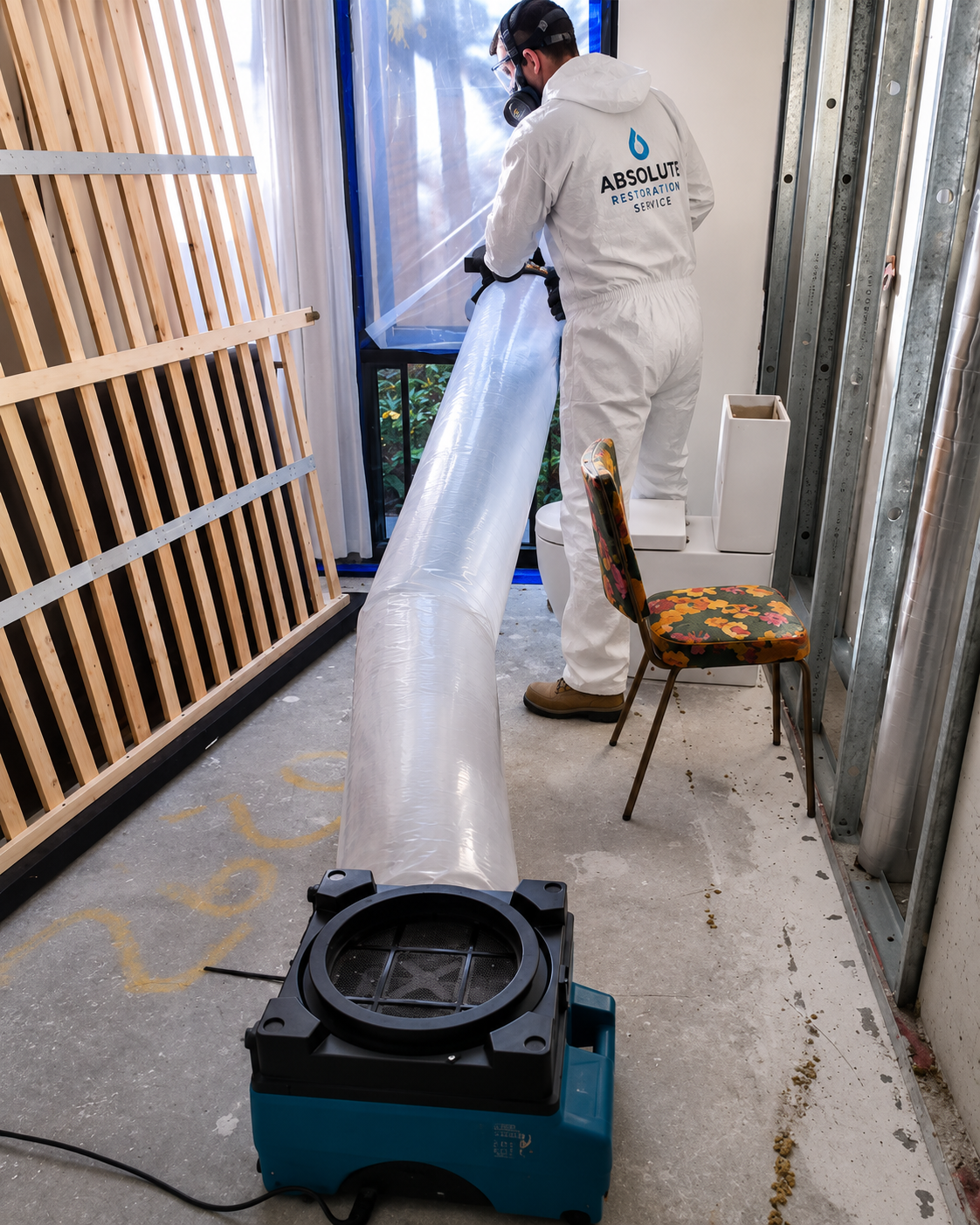
- Structural drying: using appropriately positioned commercial drying equipment where required.
- Monitoring: recording moisture and environmental conditions during the drying period.
- Completion review: documenting the condition of accessible affected materials at the conclusion of the restoration stage.
For major flooding, stormwater entry or widespread water migration, visit our flood damage restoration page.
What to Do After Discovering Water Damage
- Keep people and pets away from unsafe or contaminated areas.
- Do not enter standing water when electrical hazards may be present.
- Stop the source only if it is safe and within your capability.
- Contact the appropriate plumber, electrician, roofer or emergency service where required.
- Photograph visible damage for your records before moving items.
- Avoid disturbing suspected asbestos-containing materials.
- Do not use household fans where sewage, mould or other contamination may be present.
- Arrange a professional assessment as early as practical.
Water Damage Restoration Across Melbourne
Absolute Restoration Service assists residential and commercial clients throughout Greater Melbourne with water extraction, moisture assessment, structural drying and associated restoration services. Our response is adapted to the water source, affected materials and site conditions rather than relying on a single treatment method.
Early intervention can help limit water migration, reduce avoidable material deterioration and provide clearer information about the restoration scope.
Frequently Asked Questions
Can water damage continue after the surface looks dry?
Yes. Moisture can remain beneath flooring, inside wall cavities, behind cabinetry and within porous materials after exposed surfaces appear dry. Moisture testing may be required to assess concealed or retained dampness.
Does every wet wall need to be removed?
No. The decision depends on the water source, contamination, material condition, accessibility and whether the assembly can be effectively dried. Damaged or contaminated materials may require removal.
How long does structural drying take?
Drying time varies according to the amount of water, affected materials, building construction, environmental conditions and how quickly restoration begins. Progress should be determined through monitoring rather than a fixed number of days.
Can I use household fans to dry the area?
Household fans may be unsuitable when contaminated water, mould or electrical hazards are present. Uncontrolled airflow can spread contamination. Obtain professional advice before introducing air movement.
Will water damage always cause mould?
Not every water event results in mould growth. However, prolonged dampness increases the risk. Prompt source control, assessment and appropriate drying can help reduce that risk.
Need Water-Damage Assistance in Melbourne?
If your property has been affected by a burst pipe, appliance leak, stormwater entry, flooding or another water event, Absolute Restoration Service can assess the accessible damage and recommend an appropriate restoration response.
Call ARS 24/7 on 1300 114 842 or contact our restoration team online.
3. Hidden Moisture in Walls and Flooring
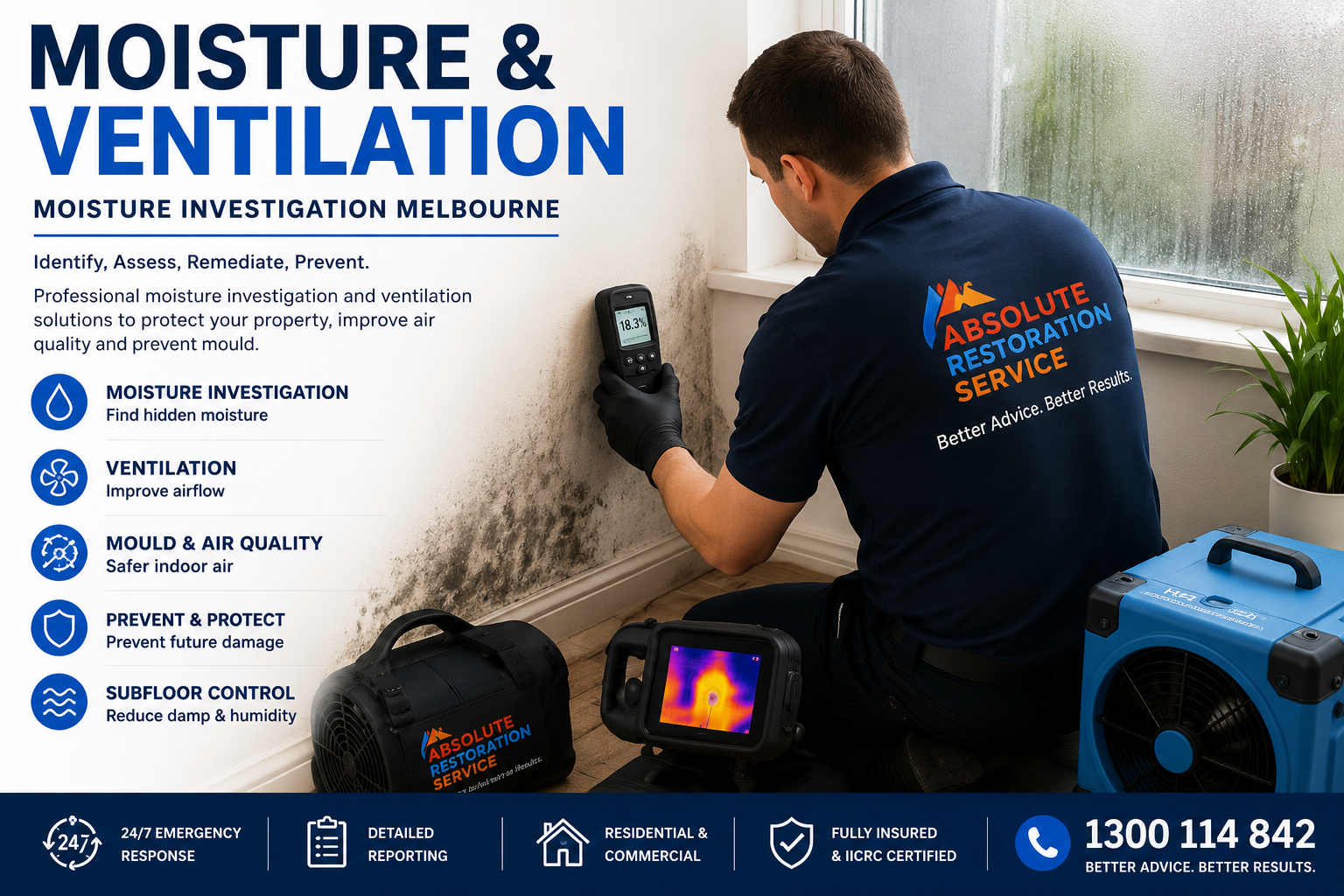
Moisture can remain behind walls, beneath floating floors, inside underlay and at the junction between a floor finish and concrete slab. Thermal imaging may highlight surface-temperature patterns requiring closer checking, while moisture meters provide material-specific information.
Thermal imaging does not see through walls, measure moisture directly or identify mould. No non-destructive inspection can guarantee that every concealed cavity has been assessed.
4. Flooring, Joinery and Interior Finishes
Carpet, underlay, timber, laminate, vinyl, adhesives, cabinetry and skirting respond differently to water. Salvageability depends on contamination, duration, construction, physical condition and whether the materials can be accessed and dried.
Replacement finishes should not be installed until the substrate has been assessed and accepted as suitable for the selected system.
5. Mould Growth After Water Damage
Persistent dampness can support mould growth on suitable materials. There is no single timetable for every property; moisture, temperature, material, ventilation and pre-existing conditions all influence development.
Surface cleaning does not address wet cavities or contamination beneath flooring. If mould has developed, the work may require containment, removal of unsalvageable porous materials, HEPA-filtered air management, detailed cleaning and drying.
6. Electrical and Immediate Safety Hazards
Water around wiring, outlets, switchboards, appliances and electrical equipment can create serious hazards. Do not enter or touch affected items when electrical safety is uncertain. Contact emergency services, the electricity provider or a licensed electrician as appropriate.
Other immediate hazards include unstable ceilings, structural damage, sewage, fire residues, gas and slippery or contaminated surfaces.
7. Odour and Indoor Environmental Quality
Damp materials, contamination and microbial growth may contribute to persistent odours. Odour alone does not identify the source, mould species or health significance. Fragrance, fogging and ozone do not replace source correction, material assessment or detailed cleaning.
ARS does not diagnose illness or determine whether a property caused symptoms. Health concerns should be discussed with an appropriately qualified healthcare professional.
8. Damage to Contents and Belongings
Furniture, documents, textiles, electronics and stored belongings may be affected directly or by moisture migration. Priorities depend on material, contamination, value, handling risks and whether specialist conservation is required.
Photograph visible conditions before moving contents where it is safe to do so. Do not handle sewage-contaminated or electrically affected items without appropriate advice.
Professional Water-Damage Restoration Process
- Safety and source review: Identify active water and immediate hazards.
- Inspection and moisture mapping: Document visible conditions and accessible affected materials.
- Water extraction: Remove accessible standing water where safe and authorised.
- Material assessment: Decide what may be restored and what requires controlled removal.
- Drying setup: Establish appropriate dehumidification and airflow.
- Monitoring: Review accessible moisture conditions and equipment operation.
- Cleaning and handover: Complete authorised cleaning and document recommendations for repair.
Our IICRC-trained technicians adapt the process to the property and agreed scope.
What to Do Immediately After Water Damage
- Do not enter when electrical, structural, sewage, fire or gas hazards may be present.
- Stop the water source only when safe and within your ability.
- Contact the appropriate emergency service or licensed trade for urgent hazards and repairs.
- Photograph visible conditions where safe.
- Notify the owner, property manager, owners corporation or insurer as required.
- Move unaffected contents away from the wet area if this can be done safely.
- Arrange moisture assessment when porous or concealed materials may be involved.
Insurance and Documentation
Insurance coverage depends on the policy, cause, exclusions, maintenance history and reporting requirements. Sudden accidental water damage may be treated differently from gradual leakage or maintenance issues.
ARS may provide photographs, accessible moisture readings, equipment records and work notes within the agreed scope. We do not determine policy coverage, liability or guarantee claim acceptance.
Restoration Limitations
Water restoration cannot guarantee that every concealed cavity is unaffected or that future damage will not occur. Outcomes depend on source control, access, material condition, authorised scope, drying conditions and completion of required repairs.
Building defects, structural adequacy, plumbing, electrical systems and code compliance should be assessed by the relevant qualified practitioners.
Water Damage FAQs
What materials are commonly affected by household water damage?
Water may affect plasterboard, insulation, timber, carpet, underlay, floating floors, cabinetry, skirting, contents and the interfaces between floor finishes and substrates.
Can water damage remain hidden after surfaces look dry?
Yes. Moisture may remain inside wall cavities, insulation, flooring systems and porous materials. Assessment tools help identify accessible areas requiring further investigation.
Can water damage lead to mould?
Yes. Persistent dampness can create conditions that support mould growth. The timing varies with moisture, material, temperature, ventilation and existing conditions.
Is water near electrical equipment dangerous?
Potentially. Do not enter or touch affected electrical equipment when water may have reached wiring, outlets or appliances. Contact the appropriate emergency service or licensed electrician.
Should damaged flooring be replaced immediately?
Replacement should wait until the substrate and surrounding materials have been assessed and are suitable for the proposed flooring system.
When should I call a water-damage restoration company?
Seek professional help when water affects porous materials, multiple rooms, ceilings, walls or flooring, remains concealed, involves contamination, or creates electrical, structural or mould concerns.
Related ARS Guides and Services
- Water damage restoration Melbourne
- Can water damage cause mould?
- Moisture investigation Melbourne
- Structural drying Melbourne
Call 1300 114 842 for Melbourne property assistance.