Rising Damp & Moisture Control Melbourne | Causes, Risks & Effective Solutions
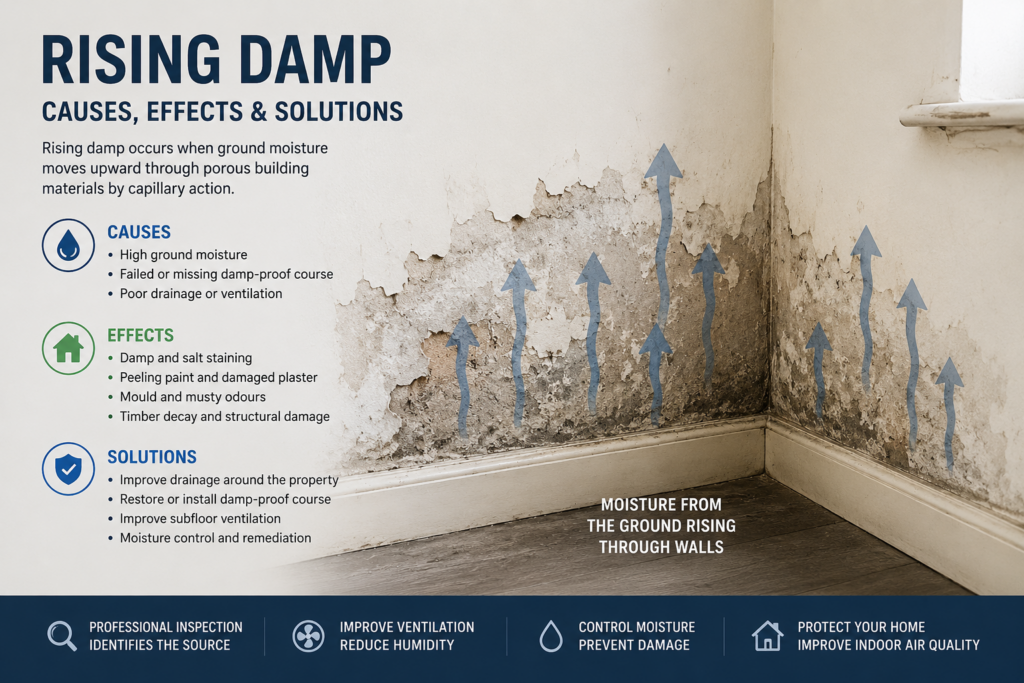
Rising damp occurs when ground moisture travels upward through porous building materials, leading to mould growth, damaged plaster, peeling paint, and poor indoor air quality. Early moisture investigation and effective ventilation help protect your property.
Professional rising damp inspections, moisture investigations, and subfloor ventilation solutions across Melbourne to reduce moisture, prevent mould growth, and protect your property.
What Is Rising Damp?
Rising damp occurs when moisture from the ground travels upward through masonry, concrete, or other porous building materials by capillary action.
If left untreated, rising damp can lead to:
- Mould growth
- Peeling paint
- Salt staining (efflorescence)
- Timber decay
- Damage to plaster and finishes
- Poor indoor air quality
- Expensive structural repairs
Early identification and moisture control help prevent long-term damage.
Common Causes of Rising Damp
Several factors can contribute to rising damp in Melbourne properties, including:
- Failed or damaged damp-proof courses
- High ground moisture
- Poor site drainage
- Clay soils
- Sloping blocks
- Blocked subfloor vents
- Inadequate underfloor ventilation
- Plumbing leaks beneath the building
Older homes with suspended timber floors are particularly vulnerable.
Why Subfloor Ventilation Matters
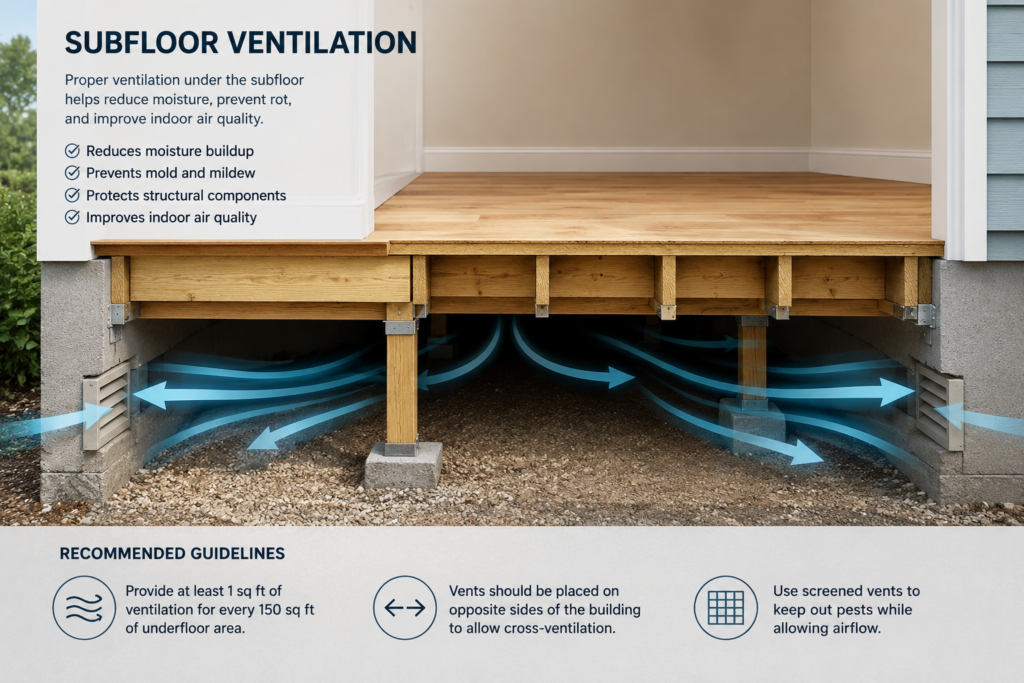
A professionally designed subfloor ventilation system promotes airflow beneath the home, helping prevent moisture buildup, timber decay, mold growth, and poor indoor air quality.
Poor airflow beneath a building allows moisture to accumulate within the subfloor.
As humidity rises, damp air can migrate into wall cavities and living areas, creating ideal conditions for mould growth and condensation.
Effective subfloor ventilation helps to:
- Remove excess moisture
- Lower humidity levels
- Improve airflow
- Reduce mould risk
- Protect structural timbers
- Improve indoor air quality
Where natural ventilation is inadequate, mechanical subfloor ventilation systems may provide a long-term solution.
Understanding NCC Dampness & Ventilation Requirements
The National Construction Code (NCC) requires buildings to manage moisture and provide adequate ventilation to minimise dampness, condensation, and unhealthy indoor conditions.
Good moisture management helps:
- Protect building materials
- Reduce mould growth
- Improve indoor air quality
- Extend the life of the building
Where natural airflow is insufficient, mechanical ventilation may be recommended to improve subfloor moisture control and support NCC performance objectives.
Our Rising Damp Assessment
Absolute Restoration Service provides comprehensive moisture investigations throughout Melbourne.
Our assessments include:
- Moisture mapping
- Thermal imaging
- Rising damp inspections
- Subfloor inspections
- Ventilation assessment
- Humidity testing
- Mould risk assessment
- Recommendations for remediation and moisture control
Every property is different, so we provide practical recommendations based on the source of the moisture problem.
Related Services
If rising damp has already caused mould or water damage, we can also assist with:
- Mould Removal Melbourne
- Subfloor Ventilation Melbourne
- Water Damage Restoration Melbourne
- Indoor Air Quality Assessments
- Mould Inspections Melbourne
Areas We Service
We provide rising damp inspections throughout metropolitan Melbourne, including:
- Greensborough
- Diamond Creek
- Montmorency
- Eltham
- Doncaster
- Heidelberg
- Preston
- Bulleen
- Melbourne CBD
- Greater Melbourne
External Link: Industry Resources
Learn more about mould, indoor air quality, environmental health and moisture management from trusted Australian government organisations.
National Health and Medical Research Council (NHMRC) – Evidence-based information on environmental health, indoor air quality and reducing exposure to indoor environmental hazards.
National Construction Code (NCC) – Official information on Australian building performance requirements, ventilation, moisture management and condensation control to help maintain healthy buildings.
Frequently Asked Questions
What causes rising damp?
Rising damp occurs when groundwater moves upward through porous building materials. It is commonly associated with damaged damp-proof courses, poor drainage, high ground moisture, and inadequate subfloor ventilation.
Can rising damp cause mould?
Yes. Persistent moisture creates ideal conditions for mould growth. If moisture is not controlled, mould may continue to spread throughout the building.
Is rising damp common in Melbourne?
Yes. Melbourne’s older homes, clay soils, seasonal rainfall, and suspended timber floors make rising damp a common issue across many suburbs.
Does poor subfloor ventilation make rising damp worse?
Yes. Limited airflow traps moisture beneath the building, increasing humidity and allowing damp air to migrate into walls and living spaces.
Does rising damp always require damp-proofing?
Not always. Many properties also require improvements to drainage, ventilation, and moisture management. A professional inspection identifies the most effective solution.
How do you inspect for rising damp?
We assess moisture levels using professional moisture meters, thermal imaging, visual inspections, and subfloor assessments to identify the source of moisture and recommend practical solutions.
Book a Rising Damp Inspection
Absolute Restoration Service provides professional water damage restoration, fire and smoke damage restoration, mould remediation, and indoor air quality solutions across Melbourne and Victoria. Rated 4.9/5 from 769 reviews on HiPages.
Rising damp and excess moisture rarely improve without intervention. Early assessment can help prevent mould growth, structural deterioration, and costly repairs.
Absolute Restoration Service provides professional rising damp inspections, moisture investigations, subfloor ventilation assessments, and mould risk assessments throughout Melbourne.
Call 1300 114 842 to book a same-day moisture inspection or contact us online to arrange an assessment.