Mould Remediation Process Melbourne

Professional mould remediation is a controlled process for managing mould-affected materials, limiting cross-contamination and addressing the moisture conditions associated with growth.

Absolute Restoration Service develops practical remediation scopes for homes, rentals, strata buildings and commercial properties across Melbourne. The required method depends on the affected materials, extent, access, moisture source and project objectives.

For service enquiries, call 1300 114 842 or visit our mould removal Melbourne service page.

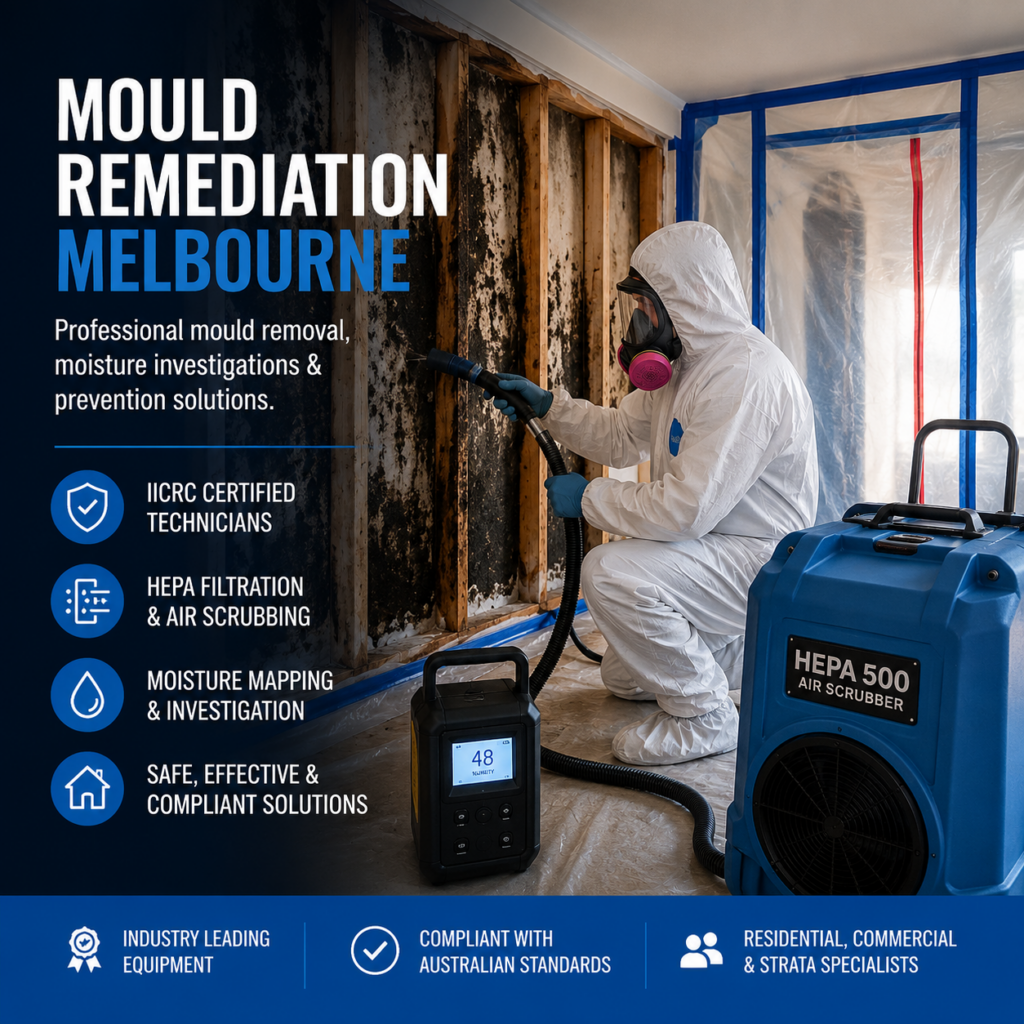
Controlled mould remediation work performed by Absolute Restoration Service in Melbourne
Containment, suitable PPE, source control and detailed cleaning form part of a project-specific remediation plan.

Mould Removal and Mould Remediation

The terms are often used interchangeably, but remediation describes more than wiping or treating a visible surface. A suitable scope considers the moisture source, affected materials, work-area controls, removal or cleaning methods, waste handling, detailed cleaning and completion criteria.

No responsible contractor can promise to remove every naturally occurring mould spore from a building. The objective is to return affected areas to an appropriate condition within the agreed scope while correcting, or coordinating correction of, the conditions that allowed growth.

Why Surface Cleaning May Not Be Enough

Painting over staining, applying a household product or cleaning only the visible face of a material may leave affected porous materials, dust and concealed moisture unaddressed. Disturbing dry contamination without suitable controls may also spread particles beyond the work area.

The correct response depends on evidence. A small area of surface growth caused by condensation may require a different approach from mould following a long-term plumbing leak, flood, roof failure or hidden wet building materials.

Before Remediation Begins

  1. Define the history: review known leaks, flooding, repairs, recurring growth and previous treatment.
  2. Assess accessible conditions: document visible mould, material damage, odours, moisture readings and relevant ventilation conditions.
  3. Address the source: arrange appropriate plumbing, roofing, waterproofing, drainage or building repairs where required.
  4. Set the scope: identify work areas, affected materials, contents, access controls, exclusions and completion criteria.
  5. Plan verification: decide before work whether visual assessment, moisture criteria or independent post-remediation verification will apply.

Typical Mould Remediation Stages

  1. Site preparation: protect unaffected finishes and establish safe access to the work area.
  2. Containment: use barriers and pressure-management measures where appropriate to the project risk.
  3. Air management: HEPA-filtered equipment may support particle control during suitable projects.
  4. Material decisions: determine which materials can be cleaned and which require controlled removal.
  5. Remediation: remove affected porous materials where necessary and clean suitable remaining surfaces using project-appropriate methods.
  6. Detailed cleaning: address settled dust and residues within the defined work area.
  7. Drying and monitoring: confirm that affected materials meet the agreed moisture criteria where drying forms part of the scope.
  8. Review and handover: document completed work, limitations and any repair or verification requirements.
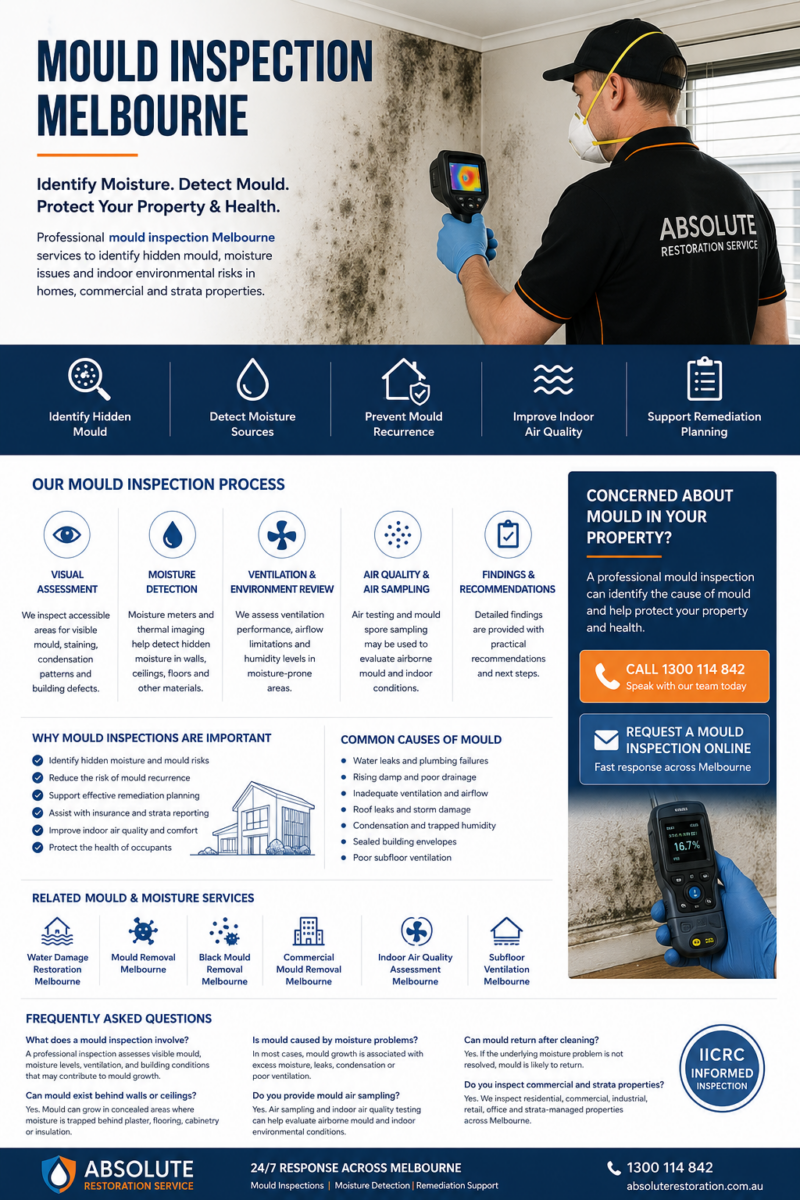
Mould and moisture assessment supporting a Melbourne remediation scope
Assessment helps define affected materials, moisture conditions and practical controls.
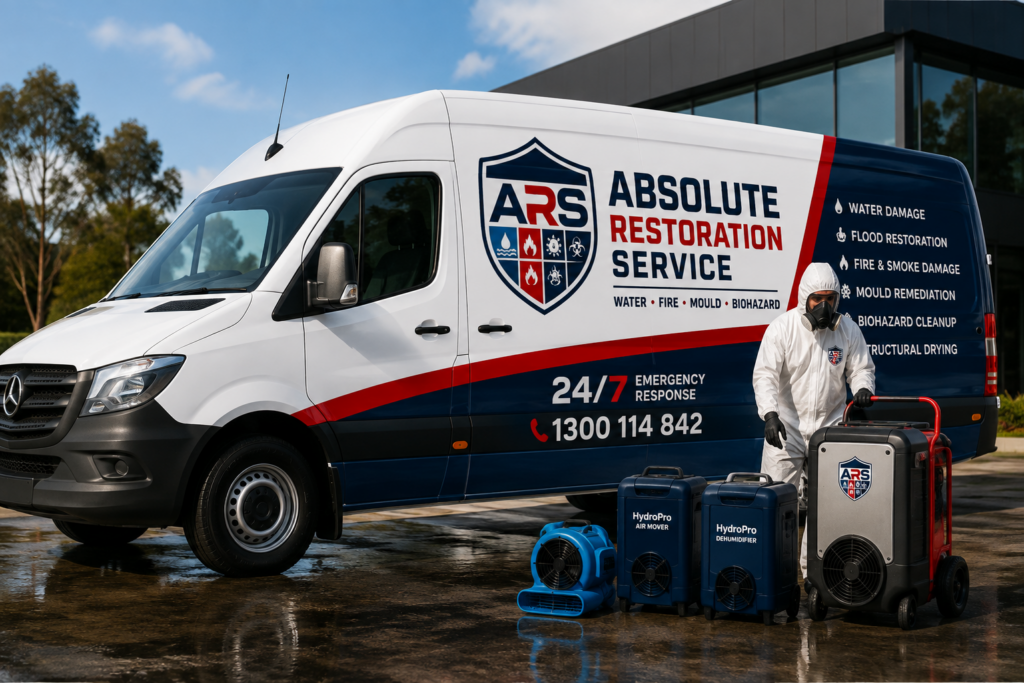
Absolute Restoration Service corporate van supporting mould remediation across Melbourne
ARS supports residential, rental, strata and commercial remediation projects across Melbourne.

Containment and Cross-Contamination Control

Containment should match the size, location and risk of the work. It may include critical barriers, controlled access, protective floor paths and HEPA-filtered pressure management. The plan must also consider occupants, pets, adjoining rooms, shared corridors, HVAC systems, fire-safety requirements and emergency access.

Containment is a work control, not proof that a building is airtight or that no particles can move. Its condition and performance should be monitored throughout relevant work.

Cleaning Versus Removal of Materials

Hard, non-porous materials may often be cleaned when structurally sound and accessible. Semi-porous and porous materials require case-by-case assessment. Plasterboard, insulation, ceiling tiles, carpet underlay and badly deteriorated composite products may require removal when contamination cannot be adequately addressed.

Decisions should consider material condition, contamination, access, heritage or financial value, occupant requirements and the ability to confirm an acceptable outcome.

Moisture Source Repair and Structural Drying

Remediation will not provide a durable outcome if active moisture remains. ARS can assess accessible moisture patterns and provide water damage restoration and structural drying. Defect confirmation and repair may require a licensed plumber, roofer, waterproofing contractor, electrician, engineer or other appropriate specialist.

Thermal imaging may assist an investigation, but it records surface-temperature patterns and does not directly detect mould or water. Suspected anomalies require confirmation with readings, observations and building information.

Post-Remediation Review

Completion criteria should be agreed before work starts. A project review may consider visible cleanliness, absence of debris and unresolved odours, material condition, moisture targets and completion of the defined scope.

Where independent post-remediation verification or sampling is required, it should be performed by an appropriately qualified party independent of the remediation contractor. A limited sample cannot represent every room, cavity or surface.

Scope Limitations

Remediation applies only to the agreed and accessible work areas. Concealed cavities, inaccessible services, retained contents, unidentified defects and conditions outside the scope may affect the result. Destructive investigation is not undertaken without authorisation.

ARS provides property restoration services and does not diagnose illness, give medical advice, determine legal liability or certify building defects. People with health concerns should consult an appropriate healthcare professional.

Related ARS Services

Discuss a Melbourne Mould Remediation Scope

Call 1300 114 842 or contact Absolute Restoration Service online. Include the property type, affected areas, known moisture event, repair status and purpose of the work.
Mould Remediation Melbourne FAQs

What is the difference between mould removal and mould remediation?

Mould removal commonly describes physically removing mould-affected contamination. Remediation is the broader controlled process of addressing affected materials, limiting cross-contamination, cleaning the work area and considering the moisture conditions associated with growth.

Does mould remediation fix the water leak?

Not usually. Plumbing, roofing, waterproofing, drainage or structural defects generally require an appropriately licensed trade. Remediation planning should coordinate source repair with drying and treatment of affected materials.

Can every mould-affected material be cleaned?

No. Whether a material can be cleaned depends on its composition, condition, contamination, value and access. Some porous or deteriorated materials may require controlled removal.

Is air sampling required after remediation?

Not automatically. Verification should be defined before work begins. Where independent post-remediation verification or sampling is required, it should be completed by an appropriately qualified party independent of the remediation contractor.

How long does mould remediation take?

Timeframes depend on the affected area, materials, moisture source, access, drying requirements, repair coordination and verification scope. A site assessment is required before a practical program can be proposed.

Can occupants remain in the property during remediation?

That depends on the work area, containment, access, occupant circumstances and project risk assessment. Appropriate arrangements should be agreed before work starts.