
To prevent mould in wardrobes, control the moisture that supports growth rather than relying on fragrance, paint or repeated surface wiping. Wardrobes and closets often have restricted airflow, stored fabrics and colder wall surfaces. These conditions can allow condensation or concealed dampness to persist.
This guide explains practical checks for Melbourne homes, how to protect clothing and stored items, and when recurring wardrobe mould may need professional moisture investigation.
Why Mould Develops in Wardrobes
Mould needs suitable moisture, temperature and material conditions. A wardrobe against an external wall may have a colder internal surface than the surrounding room. When humid air reaches that surface, condensation can form behind clothing, shelving or cabinetry.
Overpacked storage restricts air movement and can hide early staining. Damp clothing, footwear or towels add moisture directly. Roof, plumbing or external-water-entry faults can also affect a wall or ceiling beside the wardrobe.
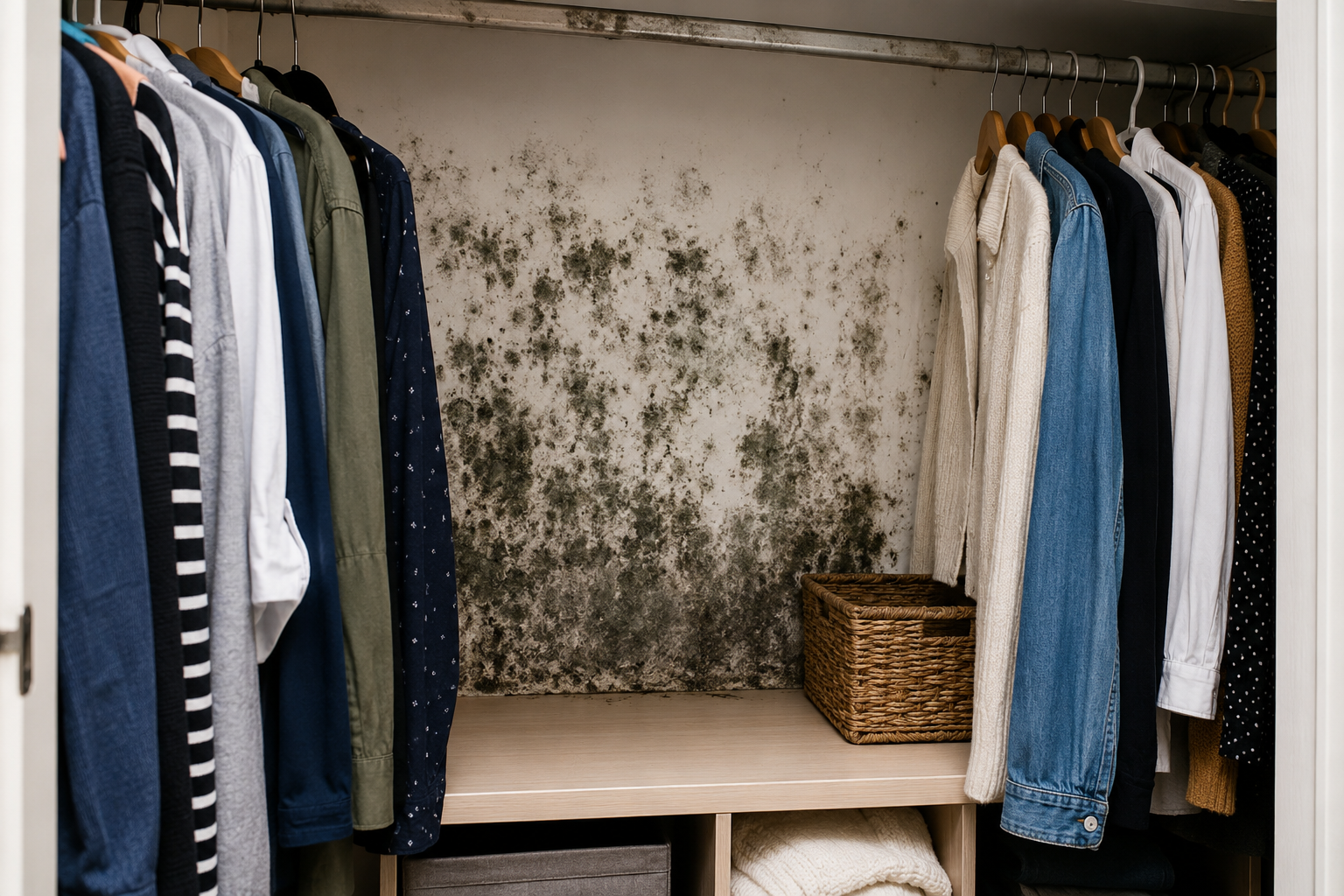
Signs That Need Closer Investigation
Visible spotting is one sign, but wardrobe moisture problems can develop before growth becomes obvious. Check for:
- a persistent musty odour in clothing or the wardrobe;
- condensation on the rear wall, doors or nearby window;
- staining, peeling paint, swollen cabinetry or damaged skirting;
- mould on shoes, leather, fabric, cardboard or stored luggage;
- cold or damp surfaces behind tightly packed contents;
- recurring growth after cleaning; and
- water marks following rain, plumbing problems or a previous water event.
Colour does not reliably identify a mould species or health significance. The useful building question is why the surface or material became damp and whether moisture remains concealed.
Immediate Steps for Clothing and Stored Items
Move clean, dry items away from the affected surface without spreading visible debris through the property. Do not shake contaminated fabrics indoors. Bag visibly affected items before transport and seek appropriate textile-cleaning advice for valuable or delicate materials.
Do not return contents until the wardrobe and surrounding materials have been assessed and are suitably dry. Cardboard, unfinished timber, fabric and other porous items may require different decisions depending on the extent and duration of impact.

Seven Practical Prevention Measures
- Store only dry items. Allow clothing, towels, shoes and sports equipment to dry completely before placing them in an enclosed wardrobe.
- Avoid overpacking. Leave space between contents, walls and doors so air can circulate.
- Open doors periodically. This can improve air exchange, particularly in rarely used rooms, but it is not a substitute for source repair.
- Use room ventilation. Operate bathroom, laundry and kitchen exhaust systems appropriately to reduce moisture transfer through the home.
- Manage indoor humidity. Review clothes drying, unflued heating, occupancy and seasonal condensation. A dehumidifier may assist in suitable circumstances but should not mask a building fault.
- Keep surfaces inspectable. Clean dust and organic debris, then check rear panels, corners, skirting and nearby walls for moisture or staining.
- Investigate recurring dampness. Repeated mould is evidence that the moisture condition or affected material has not been fully addressed.
Condensation, External Walls and Airflow
Wardrobes built against external walls are common problem locations because stored items reduce heat and air movement at the surface. The wall can become cold enough for local condensation even when the centre of the room feels comfortable.
Small changes—such as leaving a gap behind freestanding furniture and reducing stored volume—may help airflow. Persistent condensation should also prompt a review of insulation, thermal bridging, heating patterns, room ventilation and indoor moisture generation. Our guide to mould growth causes, condensation and ventilation explains these factors in more detail.
Leaks and Concealed Moisture
A localised patch, damaged skirting or staining that worsens after rain may indicate water entry rather than general humidity. Plumbing services, roof drainage, window seals and the exterior wall should be considered according to the location.
Do not open a wall or dismantle built-in cabinetry without considering electrical wiring, plumbing, structure, asbestos and contamination controls. Source repairs should be completed by appropriately licensed or qualified trades.
How Moisture Investigation Helps
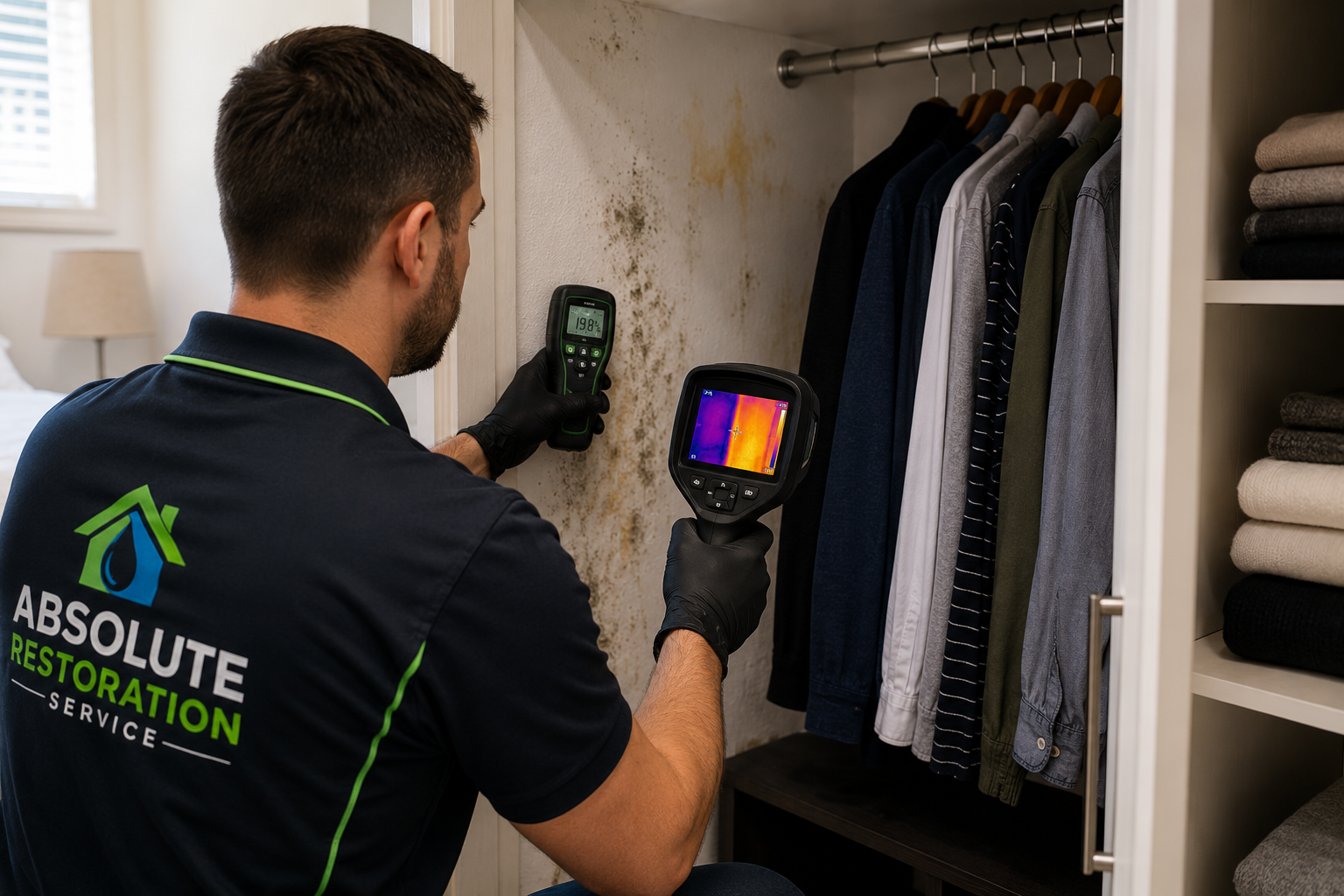
Professional investigation begins with the building and moisture history. Technicians inspect accessible materials, compare moisture readings with suitable reference areas and may use thermal imaging to identify surface-temperature patterns requiring closer checking.
Thermal imaging does not see through walls, measure moisture directly or identify mould. Findings need comparison with visual evidence, material readings and construction details. In some cases, targeted invasive inspection by an authorised professional may be required.
Cleaning Is Not the Same as Source Control
Wiping or coating a visible area can improve appearance without correcting condensation, a leak or damp porous material. Paint applied before the substrate is suitable may stain, blister or fail. Fragrance products and moisture absorbers also do not establish why growth occurred.
Where only a small washable surface is affected, the appropriate method still depends on the material and site conditions. Avoid dry brushing, sanding or aggressive disturbance that can spread debris. Extensive, recurring or concealed growth requires a controlled response.
When Professional Wardrobe Mould Help May Be Appropriate
Arrange further assessment when mould repeatedly returns, covers a significant area, affects plasterboard or cabinetry, follows water damage, produces a persistent odour or appears to extend behind a built-in wardrobe. Electrical, structural, plumbing, asbestos or access hazards should be referred to the relevant professionals.
Absolute Restoration Service provides moisture investigation and mould removal in Melbourne. Our IICRC-trained technicians document accessible conditions, establish work-area controls where required and tailor remediation to the affected materials and agreed scope.
Call 1300 114 842 or contact ARS to discuss recurring wardrobe mould or suspected concealed moisture.
Frequently Asked Questions
Why does mould grow inside wardrobes?
Restricted airflow, cold walls, indoor humidity, damp contents or a concealed leak can allow materials to remain moist enough for growth.
How can I prevent mould in a wardrobe?
Store only dry items, avoid overpacking, improve air movement and investigate condensation, leaks or damp materials.
Should I leave wardrobe doors open?
Opening doors periodically may improve airflow, but it will not repair a leak or persistent condensation problem.
Can a dehumidifier stop wardrobe mould?
It may help manage indoor humidity, but it does not correct water entry, plumbing faults or damp wall cavities.
Can mould grow behind a built-in wardrobe?
Yes. Cold surfaces, limited airflow and concealed moisture can support growth behind cabinetry.
When should wardrobe mould be professionally assessed?
Consider assessment when growth is recurring, extensive, concealed, associated with water damage or affecting porous materials.