
Musty Smell in Your Room? Hidden Mould Could Be the Cause
Poor indoor air conditions may contribute to discomfort and irritation, particularly in enclosed living environments where ventilation is limited.
A persistent musty smell inside your home is often one of the first signs of hidden moisture or mould growth. Even when mould is not visible, damp building materials, concealed water damage and inadequate ventilation can create stale, earthy odours that affect indoor air quality and make the home less comfortable.
Many Melbourne homeowners ask how to get rid of a mould smell. While air fresheners and household cleaners may temporarily mask the odour, they will not eliminate the underlying cause. To remove a musty smell properly, the source of excess moisture must be identified and corrected.
Absolute Restoration Service provides professional mould inspections, moisture investigations, indoor air quality assessments and mould remediation throughout Melbourne. Our IICRC-trained technicians use professional moisture detection equipment to locate hidden moisture, identify mould contamination and recommend practical long-term solutions.
Why Does My Room Smell Musty?
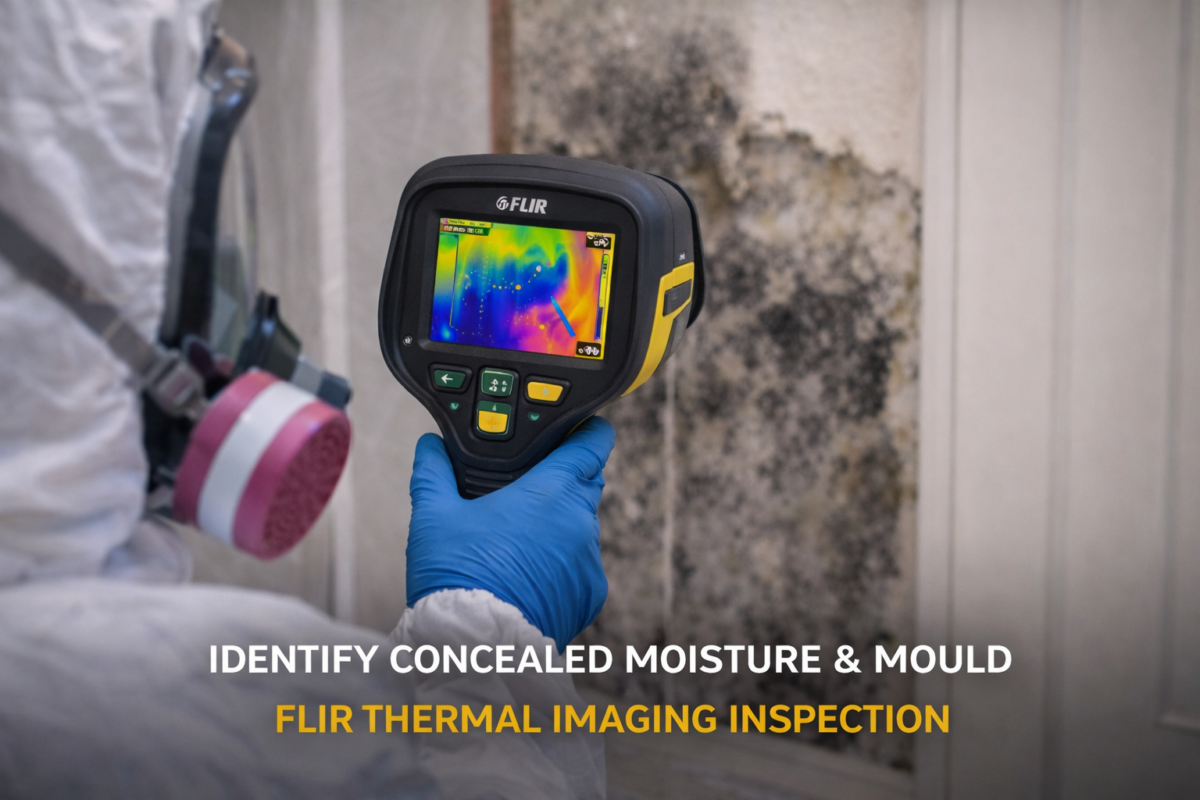
FLIR thermal imaging used during inspection to identify concealed moisture and mould risk areas within building structures.
A musty smell is usually caused by excess moisture trapped somewhere within the building. When walls, ceilings, flooring or insulation remain damp for extended periods, mould can begin to grow and release microbial volatile organic compounds, creating the characteristic earthy odour associated with mould contamination.
Common locations where musty odours may originate include:
- Wall cavities
- Ceiling spaces
- Roof voids
- Carpets and underlay
- Wardrobes and cupboards
- Subfloor areas
- Water-damaged plasterboard
- Wet insulation
- Timber framing
If the smell persists despite cleaning or airing out the room, hidden moisture or concealed mould growth may be the underlying cause.
Signs Hidden Mould May Be Present
Hidden mould often develops behind walls, beneath flooring and inside roof or ceiling cavities where moisture can remain undetected.
Common warning signs include:
- Persistent musty or earthy odours
- Odours that become stronger after rain or during humid weather
- Condensation on windows
- Peeling paint or bubbling plaster
- Water stains on walls or ceilings
- Mould returning after cleaning
- Damp carpets or flooring
- Allergy or asthma symptoms that worsen indoors
- Elevated indoor humidity
Professional moisture investigations can help locate concealed mould and moisture before more extensive building damage develops.
Related: Professional Mould Inspection Melbourne
Common Causes of Musty Odours
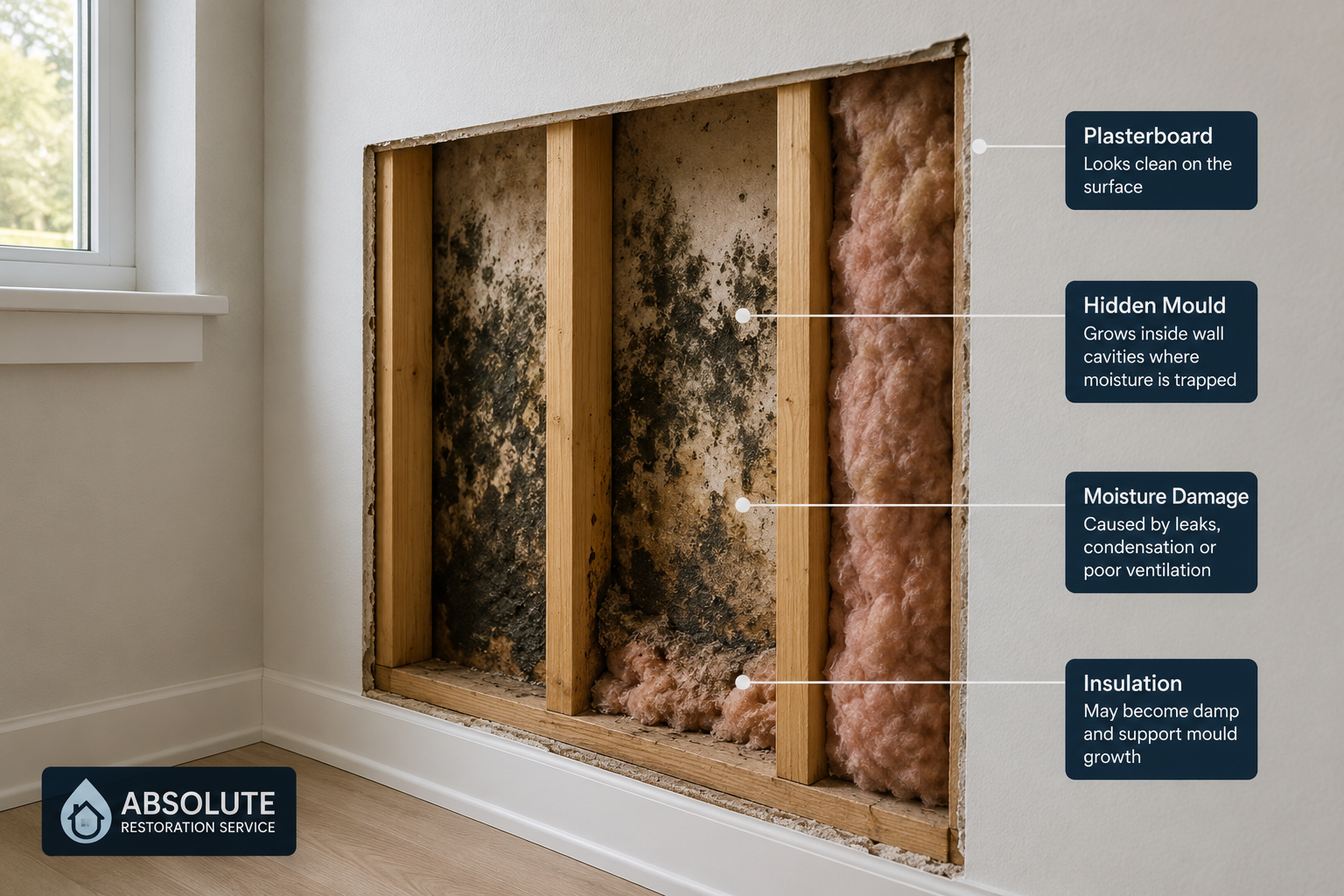
Hidden mould can develop inside wall cavities where moisture remains trapped, often without any visible signs on the painted surface.
Hidden Mould Growth
Hidden mould commonly develops behind plasterboard, beneath flooring and inside ceiling cavities where moisture cannot easily evaporate. A musty smell may become noticeable long before visible mould appears.
Water Damage

Professional flood restoration Melbourne services including emergency water extraction, structural drying, moisture mapping and flood damage recovery available 24/7.
Roof leaks, burst pipes, overflowing appliances and flooding can leave moisture trapped inside building materials. Unless these materials are properly dried, mould may begin to develop and create ongoing odours.
Related: Water Damage Restoration Melbourne
Poor Ventilation
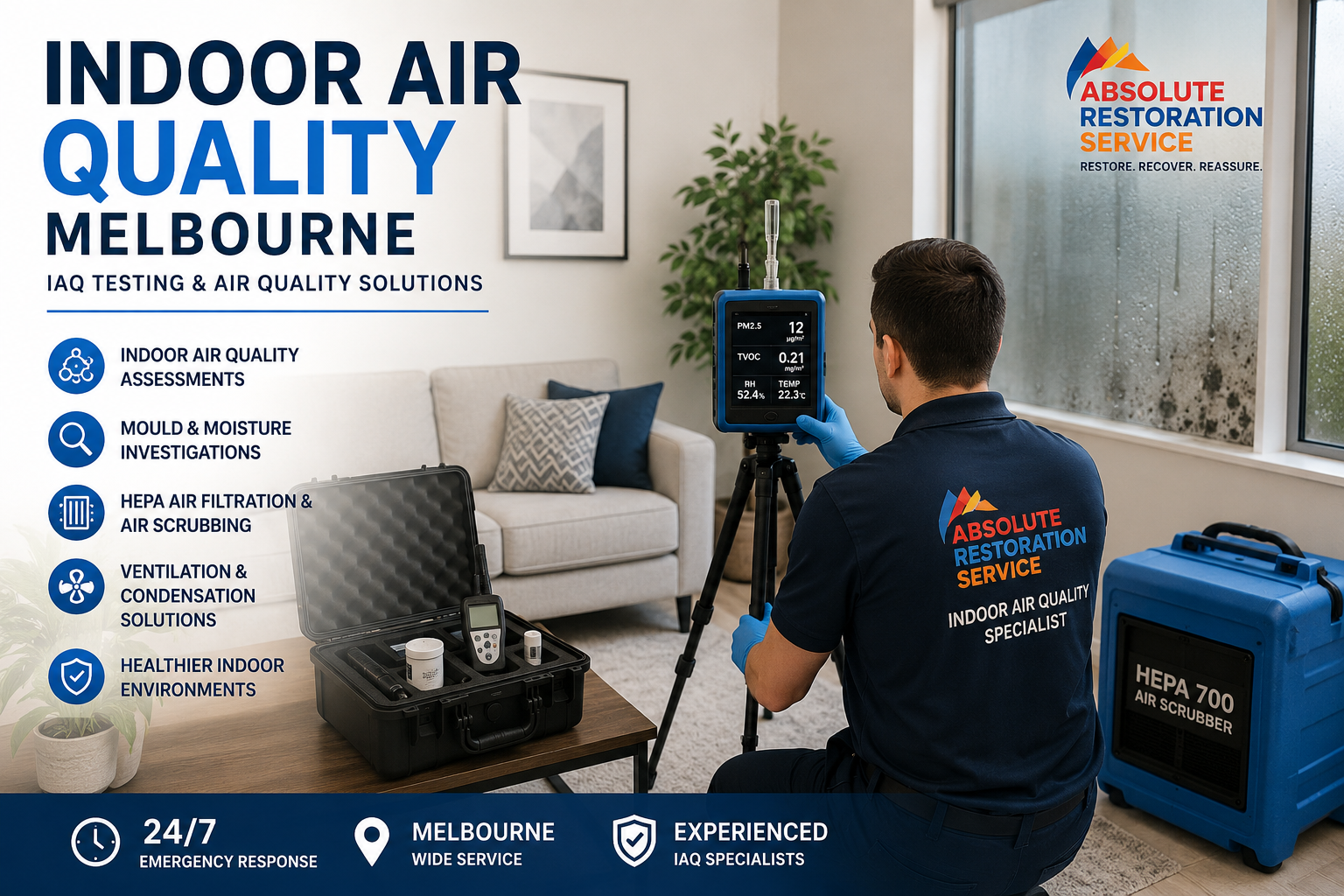
Professional indoor air quality assessments, mould investigations, HEPA air filtration and ventilation solutions for healthier indoor environments across Melbourne.
Bathrooms, laundries, kitchens and bedrooms with limited ventilation often experience elevated humidity and condensation that encourage mould growth.
Modern homes with improved insulation and double-glazed windows may also experience reduced natural air exchange, allowing excess moisture to accumulate indoors.
High Indoor Humidity
Everyday activities such as showering, cooking and drying clothes indoors release moisture into the air. Without adequate ventilation, humidity may remain elevated and create favourable conditions for mould growth.
Subfloor Moisture
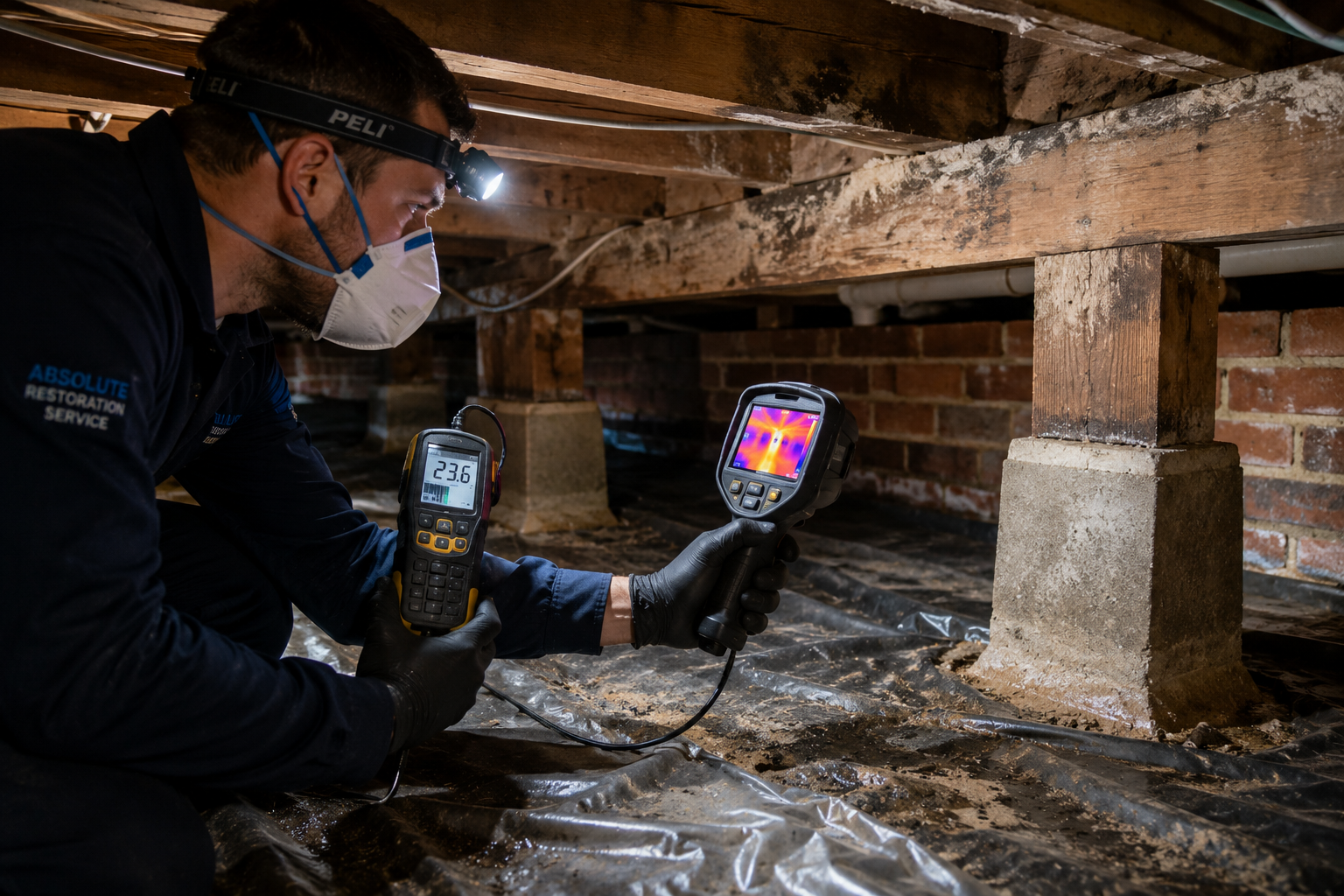
Professional subfloor moisture investigations identify hidden water intrusion, assess dampness levels and help prevent mould growth before structural damage occurs.
Older Melbourne homes with suspended timber floors can be particularly vulnerable to damp subfloor conditions. Moisture beneath the home may migrate into the living spaces above, carrying musty odours and increasing the risk of mould growth.
Related: Subfloor Ventilation Melbourne
How to Get Rid of a Musty Smell
Removing a musty smell requires treating both the odour and the underlying source of moisture.
Improve Ventilation
- Open windows when weather conditions allow.
- Operate bathroom and kitchen exhaust fans.
- Increase airflow inside wardrobes and cupboards.
- Improve roof and subfloor ventilation where required.
Reduce Indoor Humidity
- Use a dehumidifier in damp rooms.
- Avoid drying clothes indoors without adequate ventilation.
- Operate reverse-cycle air conditioning in dry mode.
- Monitor and maintain appropriate indoor humidity levels.
Repair Moisture Problems
- Repair roof leaks promptly.
- Fix leaking plumbing and appliances.
- Address rising damp.
- Improve external drainage around the property.
- Professionally dry water-damaged building materials.
Remove Existing Mould
Small areas of surface mould may sometimes be cleaned successfully. However, mould that repeatedly returns often indicates hidden moisture requiring professional investigation and remediation.
When Should You Arrange a Professional Mould Inspection?
A professional mould inspection is recommended when:
- Musty odours continue to return.
- There has been recent flooding or water damage.
- Mould is visible in several rooms.
- The source of moisture cannot be identified.
- Hidden mould is suspected.
- Occupants experience ongoing allergy or respiratory symptoms indoors.
- DIY cleaning has not resolved the problem.
Early intervention can help reduce the risk of more extensive mould contamination and costly building repairs.
Our Professional Mould Investigation Process
Moisture Investigation
We use thermal imaging cameras, moisture meters and humidity testing to help identify hidden water intrusion and elevated moisture levels.
Comprehensive Mould Inspection
Our technicians inspect ceilings, walls, roof cavities, subfloors and other concealed areas where mould commonly develops.
Professional Mould Remediation
Where contamination is confirmed, mould remediation is completed using industry-recognised procedures and in accordance with the principles of the ANSI/IICRC S520 Standard for Professional Mould Remediation.
Structural Drying
Commercial air movers and dehumidifiers may be used to remove trapped moisture and reduce the likelihood of mould returning.
Indoor Air Quality Assessment
Where appropriate, we assess ventilation performance, humidity levels and indoor environmental conditions that may be contributing to mould growth.
Why Choose Absolute Restoration Service?
- IICRC-trained mould remediation specialists
- Advanced moisture mapping and thermal imaging
- Water damage restoration expertise
- HEPA air filtration and containment systems
- Indoor air quality assessments
- Residential, commercial and strata experience
- Melbourne-wide service coverage
- Trusted by clients with more than 769 verified HiPages reviews
Frequently Asked Questions
Why does my room smell musty even though I cannot see mould?
Hidden mould may develop inside walls, ceilings, roof spaces and subfloors where it cannot be seen. A persistent musty smell is often one of the earliest signs of concealed moisture or mould growth.
Can water damage cause a mould smell?
Yes. Water damage can leave moisture trapped inside building materials. Without proper drying, mould may develop and create persistent musty odours.
Will air fresheners permanently remove a mould smell?
No. Air fresheners only mask the odour temporarily. The underlying moisture problem and any mould contamination must be identified and addressed.
When should I arrange a professional mould inspection?
If musty odours continue to return, mould develops after water damage or you cannot identify the source of moisture, a professional mould inspection is recommended.
Independent Health Information
For independent government-backed information about mould, dampness and indoor air quality, visit the Victorian Better Health Channel – Mould and Your Health.
Still Smelling Mould in Your Home?
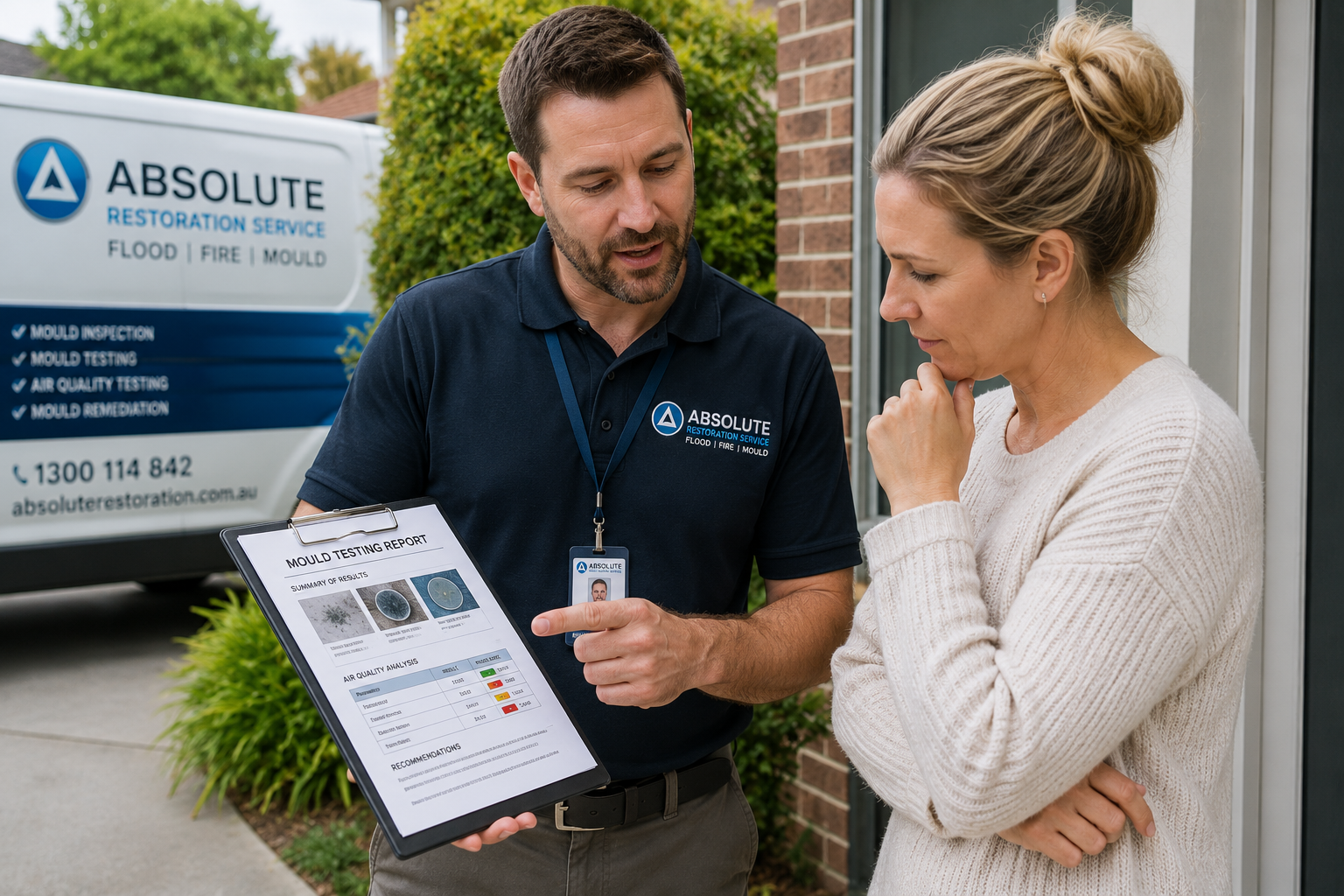
An Absolute Restoration Service technician explains mould testing and indoor air quality results to a homeowner, providing clear recommendations for remediation and long-term moisture control.
A recurring musty smell may indicate hidden moisture or concealed mould growth that will not disappear until the underlying cause is addressed. Early professional investigation can identify leaks, moisture intrusion and mould contamination before the problem becomes more extensive.
Absolute Restoration Service provides professional mould inspections, moisture investigations, indoor air quality assessments and mould remediation throughout Melbourne. Using moisture detection equipment, thermal imaging and industry-recognised remediation procedures, our experienced technicians locate the source of the odour and recommend practical long-term solutions.
Our Services Include
- Professional mould inspections
- Moisture investigations
- Thermal imaging and moisture mapping
- Indoor air quality assessments
- HEPA air filtration and containment
- Professional mould remediation
- Water damage restoration
- 24/7 emergency response throughout Melbourne
Call 1300 114 842 today or contact our team online to arrange a professional mould inspection or request a no-obligation quote.