Bathroom Ceiling Mould Assessment and Remediation
Bathroom ceiling mould commonly develops where persistent humidity, condensation and inadequate ventilation create damp surface conditions. Absolute Restoration Service provides professional assessment and mould removal for homes, apartments and rental properties across Melbourne.
1300 114 842 to discuss the visible area, property history and access requirements.
Professional Bathroom Ceiling Mould Removal Across Melbourne
Our IICRC-trained technicians assess accessible ceiling materials, moisture evidence, ventilation conditions and the likely extent before developing a scope. Work may involve controlled cleaning, authorised material removal, HEPA-filtered air management and drying.
ARS does not treat every ceiling as the same job. Painted plasterboard, cornices, insulation, timber, tile and sealants respond differently to moisture and contamination.
When to Arrange a Professional Assessment
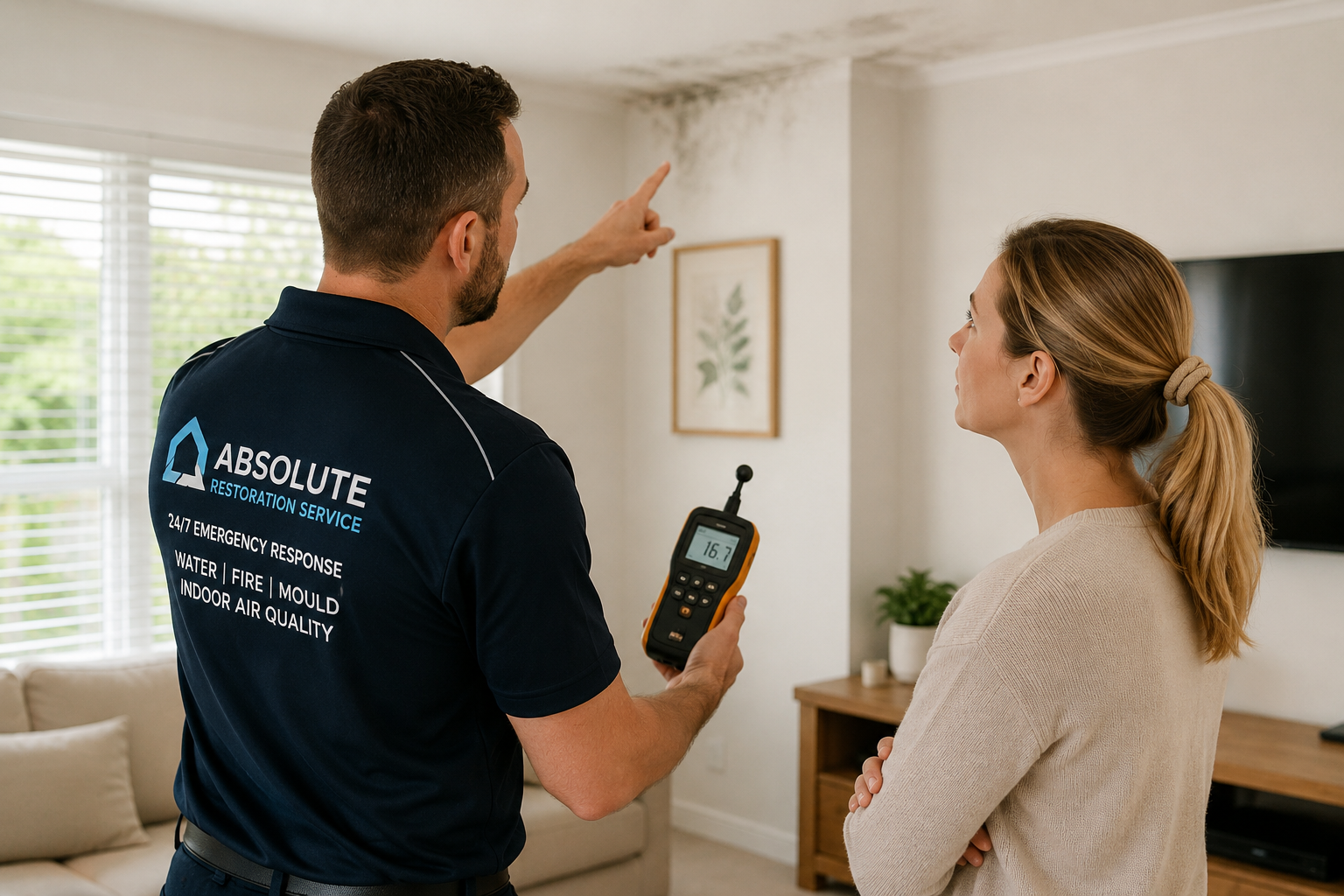
Professional assessment may be appropriate when:
- growth repeatedly returns after surface cleaning;
- the affected area is extensive or difficult to access;
- plasterboard is soft, swollen, cracked, sagging or peeling;
- staining changes after rain or plumbing use;
- a musty odour persists above the ceiling or in adjacent rooms;
- water damage, failed waterproofing or a roof leak is suspected;
- the area involves electrical fittings, asbestos concerns or other hazards; or
- the extent behind the coating or ceiling is unclear.
Do not cut, sand or dry-brush affected ceiling material. Roof, electrical, plumbing, structural, waterproofing and asbestos work should be handled by the appropriately licensed or qualified professionals.
Bathroom Ceiling Mould Causes We Investigate
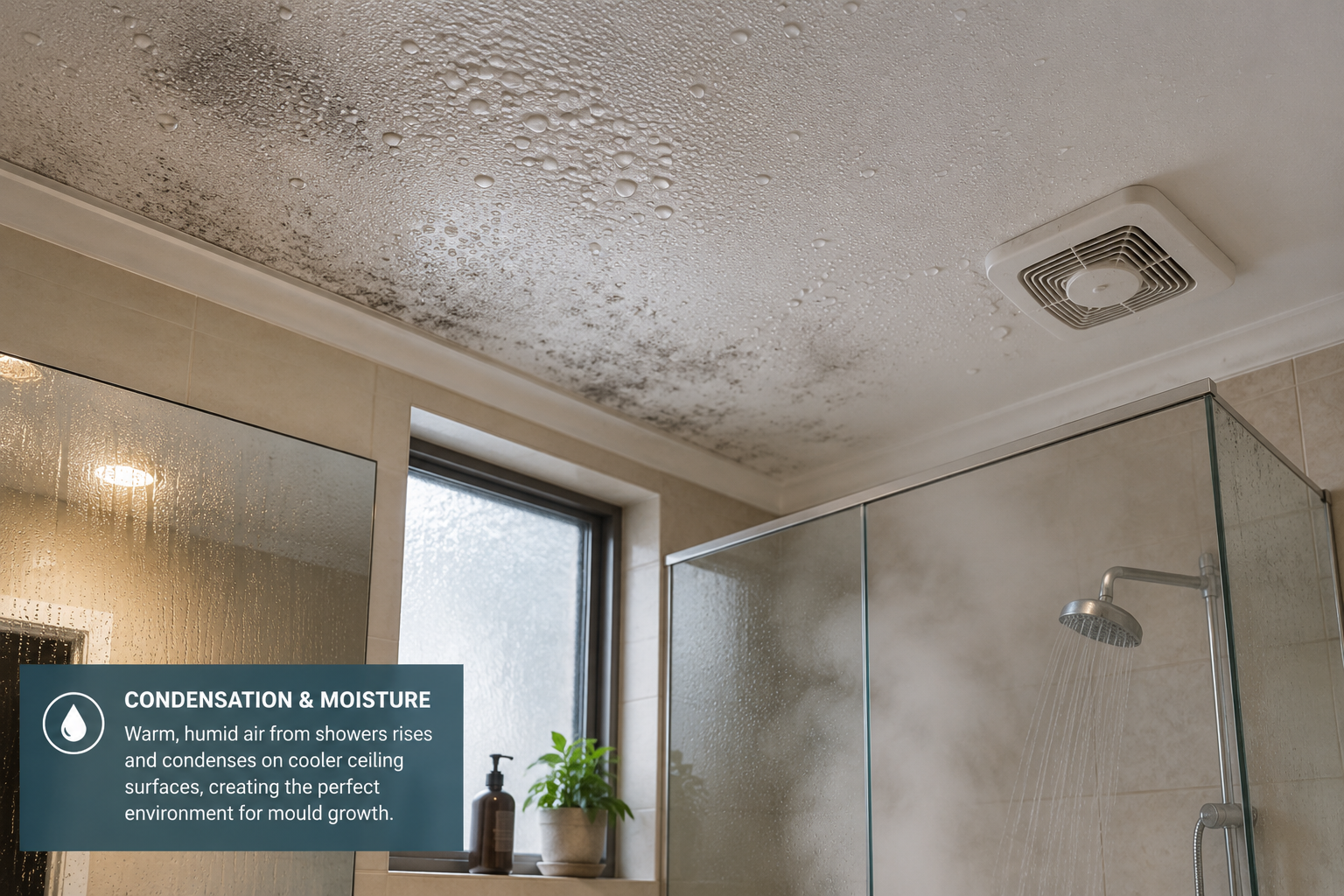
Showering releases water vapour. If humid air remains in the room and contacts a colder ceiling, condensation can form. Exhaust-fan capacity, placement, maintenance, discharge and replacement-air paths all influence performance.
Other possible sources include damaged roof coverings, flashing, plumbing leaks, failed shower seals, waterproofing defects or wet ceiling insulation. Investigation should follow the location and pattern rather than assuming ventilation is the only cause.
Moisture Investigation and Scope Development
Technicians review the moisture history, visible growth, staining, ceiling condition and bathroom use. Moisture meters can compare accessible materials with suitable reference areas, while thermal imaging may highlight surface-temperature patterns requiring closer checking.
Thermal imaging does not see through ceilings, measure moisture directly or identify mould. Where the source is outside our scope, ARS may recommend a plumber, roofer, builder, electrician, waterproofing contractor or independent environmental assessor.
Our Bathroom Ceiling Mould Remediation Process
- Initial review: Record the property history, affected area, access and known hazards.
- Moisture assessment: Inspect accessible materials and distinguish likely condensation from active water entry.
- Source coordination: Confirm that active leaks or relevant building defects are referred for repair.
- Work-area controls: Establish restricted access, containment and HEPA-filtered air management where required.
- Material decisions: Identify surfaces suitable for controlled cleaning and porous materials requiring authorised removal.
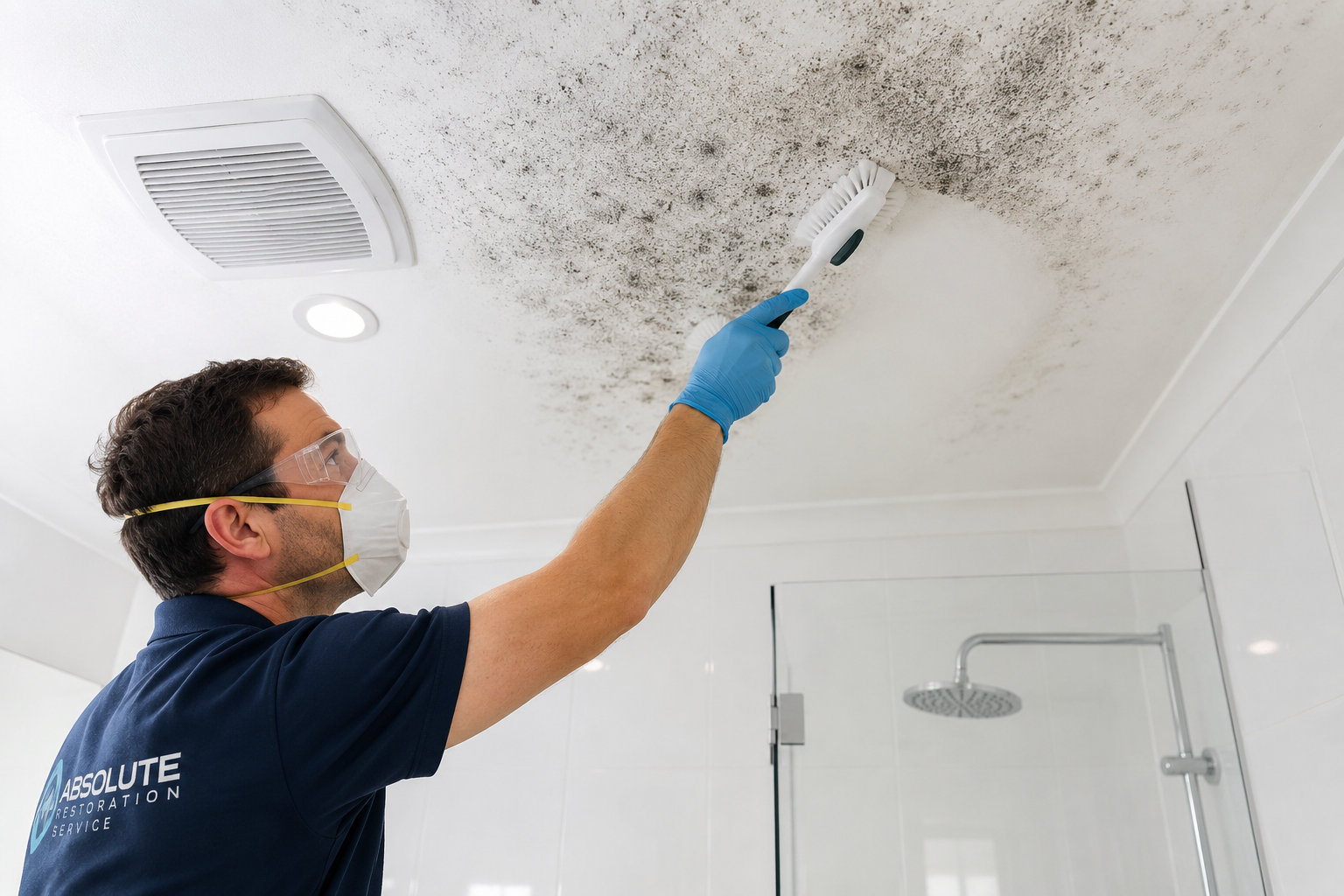
- Detailed cleaning: HEPA vacuum and clean accessible retained surfaces using material-appropriate methods.
- Drying and monitoring: Use suitable equipment where required and document accessible moisture conditions.
- Handover: Record the completed scope and outstanding repairs, coatings or independent verification.
The sequence is adapted to the bathroom and may change when concealed damage becomes visible. Reinstatement and painting occur only after the substrate has been assessed as suitable.
Cleaning, Removal and Ceiling Materials
A sound washable coating with a limited affected area may be suitable for controlled cleaning. Damaged plasterboard, insulation and other porous materials may require removal where contamination or moisture has penetrated them.
Bleach, fragrance products or paint do not repair condensation or a leak. Never mix cleaning chemicals. Coatings may stain, blister or fail if applied before the source is corrected and the substrate is cleaned, prepared and dry.
For limited homeowner cleaning guidance, see our bathroom ceiling mould cleaning and prevention guide.
Ventilation and Recurrence Prevention
Ventilation should remove shower moisture effectively and discharge to an appropriate location. Fan maintenance, operating time and replacement-air paths matter, but ventilation alone cannot repair a roof leak, plumbing fault or waterproofing defect.
Recurrence prevention may include source repairs, exhaust improvements, insulation or heating review, reduced indoor moisture generation and monitoring of previously affected areas. ARS explains the restoration recommendations; licensed trades complete repairs within their expertise.
Residential and Commercial Bathroom Mould Services
ARS assists homeowners, landlords, property managers, owners corporations, builders, workplaces and insurers with bathroom mould projects across Melbourne. Commercial work may require access staging, occupant coordination, after-hours planning and documentation for multiple stakeholders.
Service availability, response timing and scope depend on the property, hazards and authorisation. We do not promise that every project can be completed in one visit or guarantee that mould will never return.
Request a Bathroom Ceiling Mould Assessment
For recurring, extensive or suspected concealed bathroom ceiling mould, call 1300 114 842 or contact Absolute Restoration Service. Photos, the discovery date, recent leaks and information about the exhaust system can help with initial triage.
For the wider service overview, visit mould removal Melbourne or explore moisture investigation where the source remains unclear.
Frequently Asked Questions
What causes mould on a bathroom ceiling?
Common contributors include shower humidity, condensation, limited exhaust ventilation, leaks, waterproofing defects and damp porous materials.
What does professional removal include?
The scope may include moisture investigation, work-area controls, authorised material removal, cleaning, HEPA air management, drying and handover.
Will mould return after remediation?
It may return if condensation, leaks or affected areas outside the authorised scope remain.
Does thermal imaging find hidden mould?
No. It shows surface-temperature patterns that can guide closer moisture investigation.
Can ARS remove mould from plasterboard ceilings?
ARS assesses the material and extent before recommending controlled cleaning or authorised removal.
Do you service bathrooms across Melbourne?
Yes, subject to access, scope and service availability.