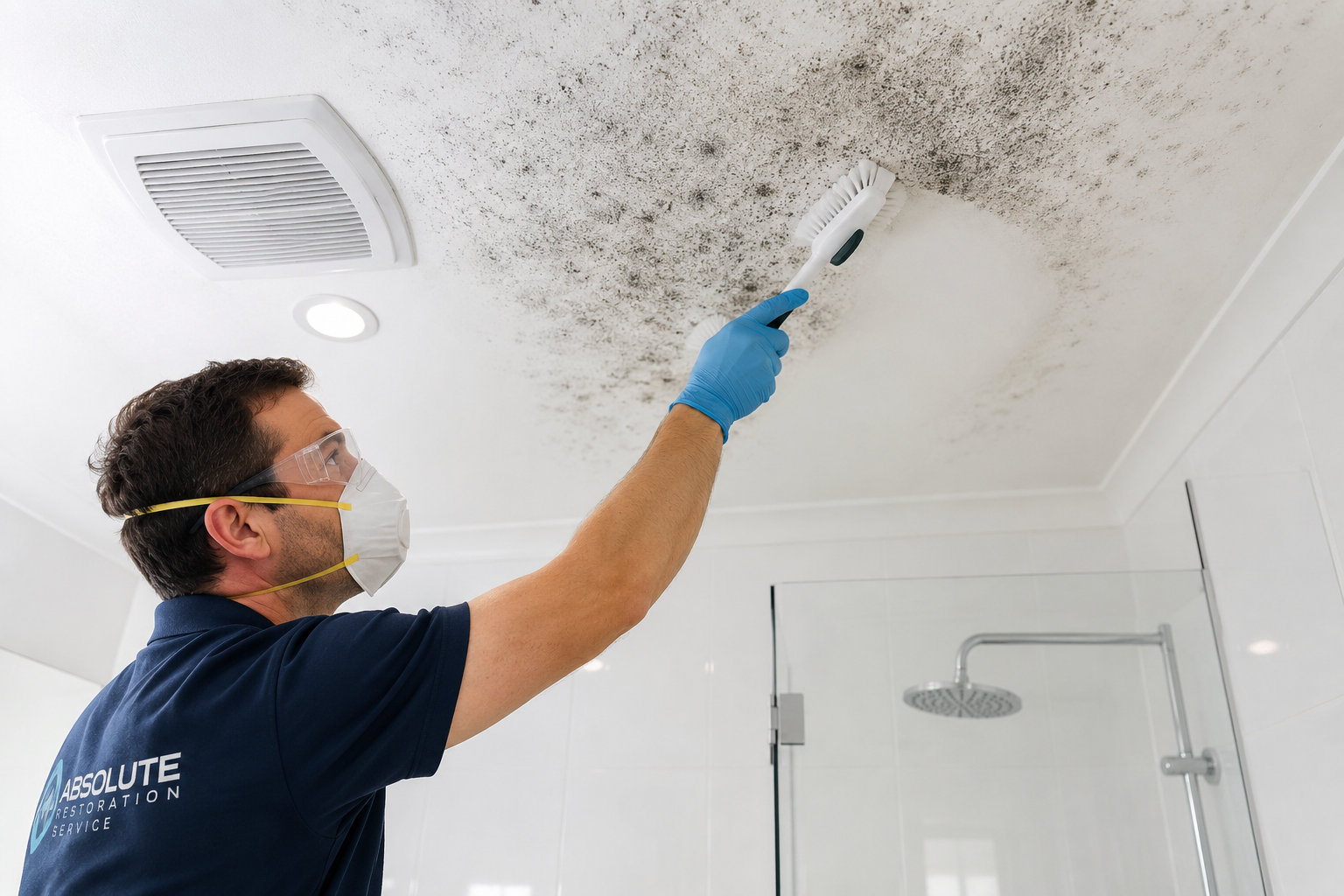
Bathroom ceiling mould is evidence that the surface or material has remained damp long enough to support growth. Cleaning may improve a small accessible area, but a lasting response depends on identifying condensation, ventilation limitations, leaks or affected porous materials.
This Melbourne homeowner guide explains what to check before cleaning, where limited surface cleaning may be reasonable, when to stop and how to reduce the conditions that allow bathroom mould to return.
Why Bathroom Ceiling Mould Develops
Showers and baths release warm water vapour. When humid air contacts a colder ceiling, wall or window, condensation can form. Repeated wetting may affect paint, plasterboard, cornices, silicone and grout.
An exhaust fan may be absent, obstructed, undersized, poorly located or discharged incorrectly. The room may also lack a suitable replacement-air path while the fan operates.
Ventilation is not the only possibility. Roof leaks, plumbing faults, failed seals, waterproofing defects or wet ceiling insulation can produce similar staining and growth.
Checks to Complete Before Cleaning
First determine whether the issue appears limited to a small sound surface or may extend into damaged material. Review:
- the approximate affected area and whether it is increasing;
- whether the ceiling is soft, swollen, cracked, sagging or peeling;
- recent roof, plumbing, shower or water-damage events;
- whether staining changes after rain or bathroom use;
- how the exhaust fan operates and where it discharges;
- whether condensation remains after showering; and
- electrical fittings, access height and other hazards.
Do not work near unsafe electrical fittings, unstable ceilings or suspected asbestos-containing material. Roof, plumbing, electrical, structural and waterproofing problems should be referred to appropriately licensed or qualified professionals.
When Not to Treat It as a Simple Cleaning Job
Do not disturb growth that is extensive, repeatedly returns, is associated with sewage or contaminated water, affects soft or damaged plasterboard, may be concealed above the ceiling or cannot be accessed safely. Occupants should not cut, sand or dry-brush affected material.
Persistent musty odour, widespread spotting or a ceiling that remains damp after normal bathroom use may justify professional moisture investigation. The aim is to define accessible affected areas and determine which source repairs or specialist referrals are required.
Cleaning a Small Accessible Surface
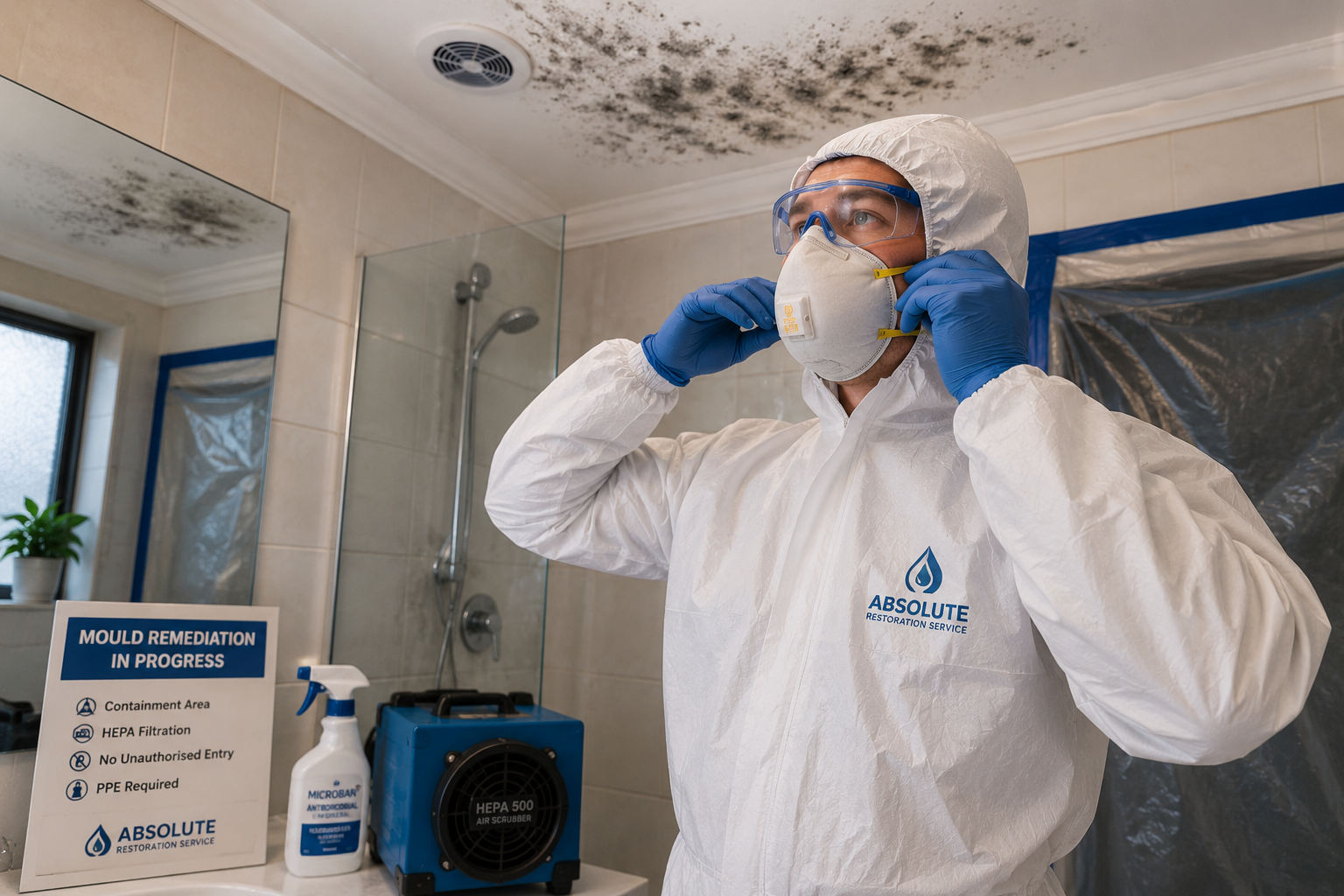
A small area on a sound, washable surface may be suitable for careful cleaning after the moisture source and hazards have been considered. Restrict access, ventilate the room appropriately and use gloves, eye protection and respiratory protection suited to the task and product instructions.
Use a product compatible with the coating and follow its label. Apply it to a cloth where appropriate rather than creating spray mist, wipe the surface without aggressive abrasion, collect debris and allow the area to dry.
Never mix cleaning chemicals. Combining bleach with acids, ammonia or other products can release dangerous gases. Stop if the coating fails, the substrate is soft, the area is larger than expected or growth appears to extend into the ceiling.
Why Bleach or Paint Does Not Correct the Cause
A cleaning product may change the appearance of surface growth but cannot repair an exhaust problem, roof leak, plumbing fault or damp ceiling cavity. Porous plasterboard and insulation may require different material decisions from a sealed washable coating.
Painting over staining can conceal the symptom while moisture remains. Coatings may blister, stain or fail when applied to an unsuitable substrate. Source repair, assessment, cleaning, preparation and drying should occur before a compatible coating is applied according to product requirements.
Dry the Bathroom and Review Ventilation
After cleaning, keep the area dry and observe how the room performs during normal use. An exhaust fan should move moist air effectively and discharge to an appropriate location. Clean the grille and follow manufacturer maintenance instructions.
Allow replacement air to enter while the fan operates, leave the fan running for an appropriate period after showering and remove standing water from wet surfaces. Open windows only when outdoor conditions make this useful; an open window does not repair a building defect.
Preventing Bathroom Ceiling Mould
- Operate effective exhaust ventilation during and after showering.
- Keep fan grilles, vents and replacement-air paths clear.
- Repair plumbing, roofing, sealant and waterproofing faults.
- Dry wet surfaces and avoid leaving damp towels in the room.
- Use heating and insulation strategies that reduce cold-surface condensation.
- Inspect recurring staining rather than repeatedly coating over it.
Prevention needs to match the cause. Our technical guide to mould growth, condensation and ventilation explains how surface temperature, indoor humidity and building conditions interact.
How Professional Bathroom Mould Remediation Works
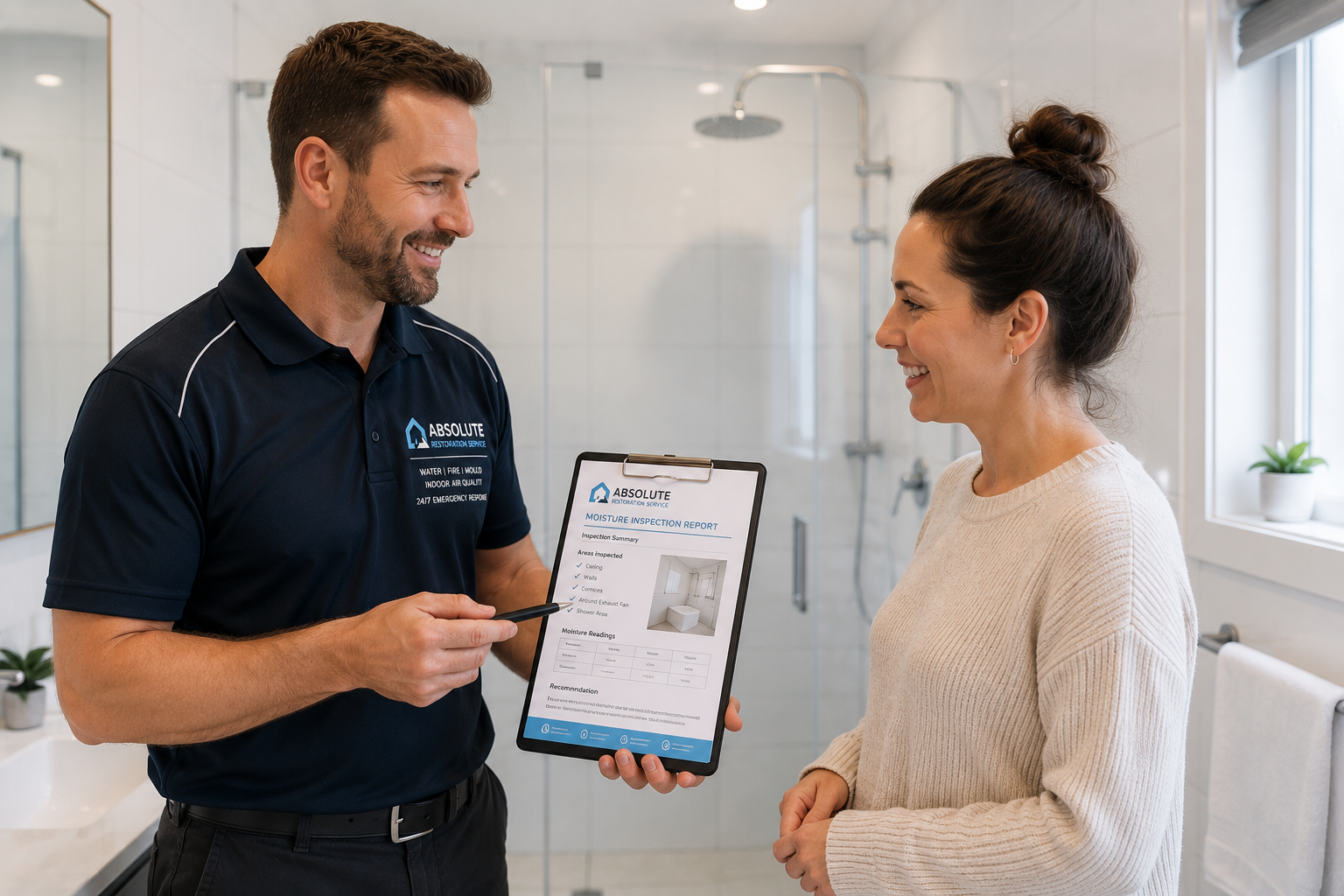
The appropriate scope depends on the water source, affected area, material condition and site hazards. Absolute Restoration Service may document the moisture history, inspect accessible materials, perform moisture mapping and use thermal imaging to identify surface-temperature patterns requiring closer checking.
Where remediation is authorised, the work may include restricted access, containment, HEPA-filtered air management, removal of unsalvageable affected materials, detailed cleaning and controlled drying. Thermal imaging does not see through walls or identify mould by itself, and remediation cannot substitute for plumbing, roofing or building repairs.
Our IICRC-trained technicians provide bathroom mould removal in Melbourne based on the documented conditions and agreed scope. Call 1300 114 842 or contact ARS to discuss recurring ceiling mould, water damage or concealed moisture.
Frequently Asked Questions
What causes mould on a bathroom ceiling?
Common contributors include shower humidity, condensation, limited exhaust ventilation, roof or plumbing leaks and damp porous materials.
Can I clean a small area myself?
A small, accessible area on a sound washable surface may be suitable for careful cleaning after hazards and the moisture source are considered.
Will bleach permanently remove bathroom ceiling mould?
No product provides a permanent result if condensation, a leak or damp material remains. Never mix cleaning chemicals.
Why does bathroom ceiling mould keep returning?
Recurring growth generally means the moisture condition or affected material has not been fully addressed.
Can I paint over mould?
Painting can conceal staining without correcting moisture. The substrate should be assessed, cleaned, prepared and dried first.
When should bathroom mould be professionally assessed?
Consider assessment when growth is extensive, recurring, concealed, difficult to access or associated with water damage.