CASE STUDY: WATER DAMAGE, HIDDEN MOULD AND STRUCTURAL DRYING
A Melbourne apartment continued to have a persistent musty odour after a water leak. Although the visible water had been removed, the flooring system and concrete substrate had not been fully assessed. Absolute Restoration Service was asked to investigate the remaining moisture, identify affected materials and complete an authorised restoration scope.
The case demonstrates why apartment water damage cannot always be resolved with surface cleaning or replacement finishes. Moisture can remain beneath timber flooring and within porous building materials after the original leak appears to be finished.
Call 1300 114 842 for apartment water-damage assistance or visit our water damage restoration Melbourne service page.
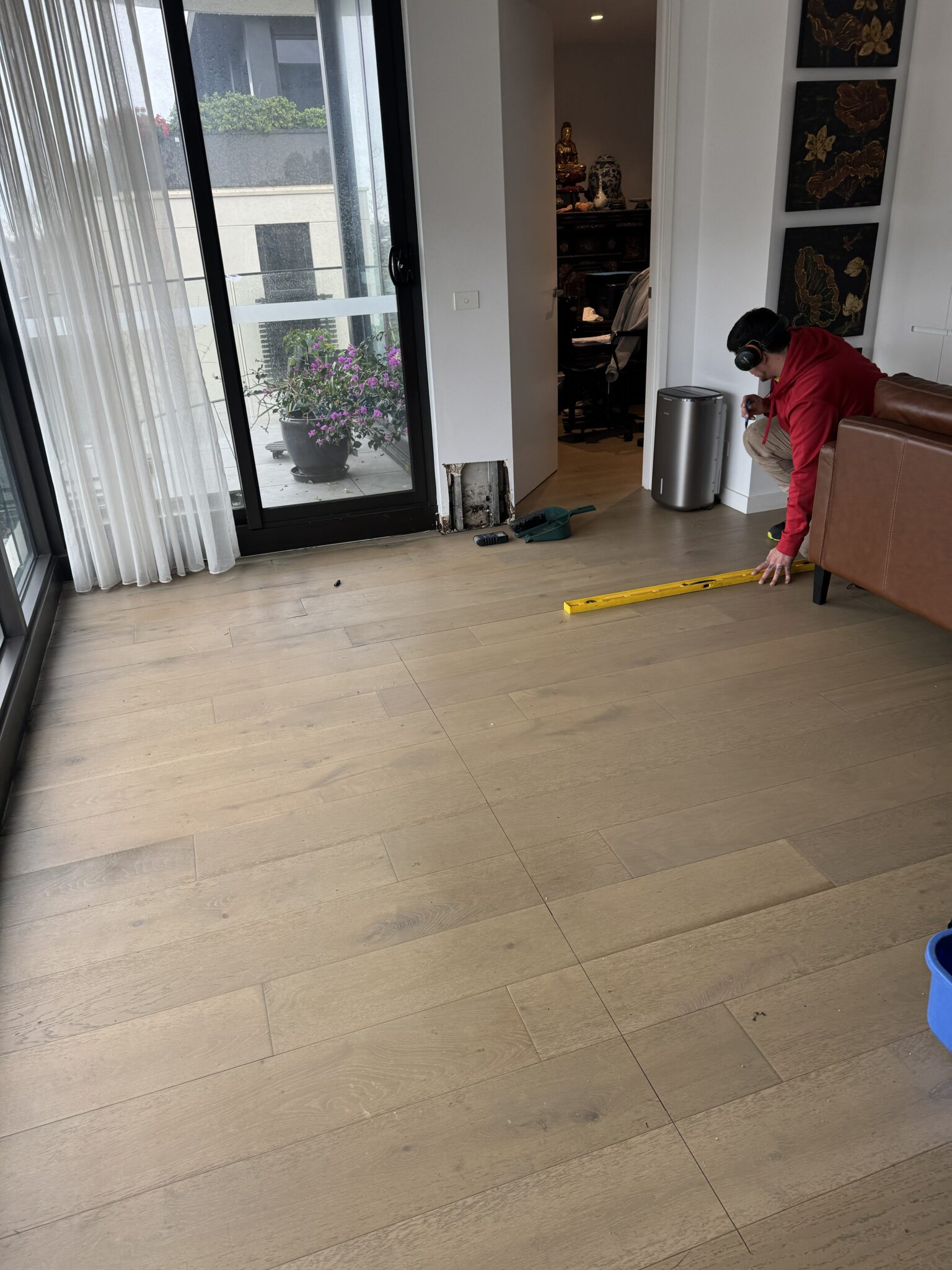
Apartment Water Leak Restoration Melbourne: Project Overview
The property presented with three connected concerns:
- a continuing musty odour after the reported leak;
- elevated moisture readings in timber flooring and the concrete below; and
- suspected hidden mould growth beneath the floor finish.
Before work began, access, the known leak history and the authorised scope were reviewed. Immediate electrical, structural or active-water hazards must always be addressed before restoration technicians enter an affected area. Plumbing and building-source repairs remain the responsibility of the relevant licensed trade.
Initial Moisture Investigation
Technicians visually assessed accessible areas and used professional moisture meters to compare suspect materials with suitable reference areas. Thermal imaging may help identify temperature patterns associated with evaporation or dampness, but it does not see through building materials or confirm the cause of moisture on its own.
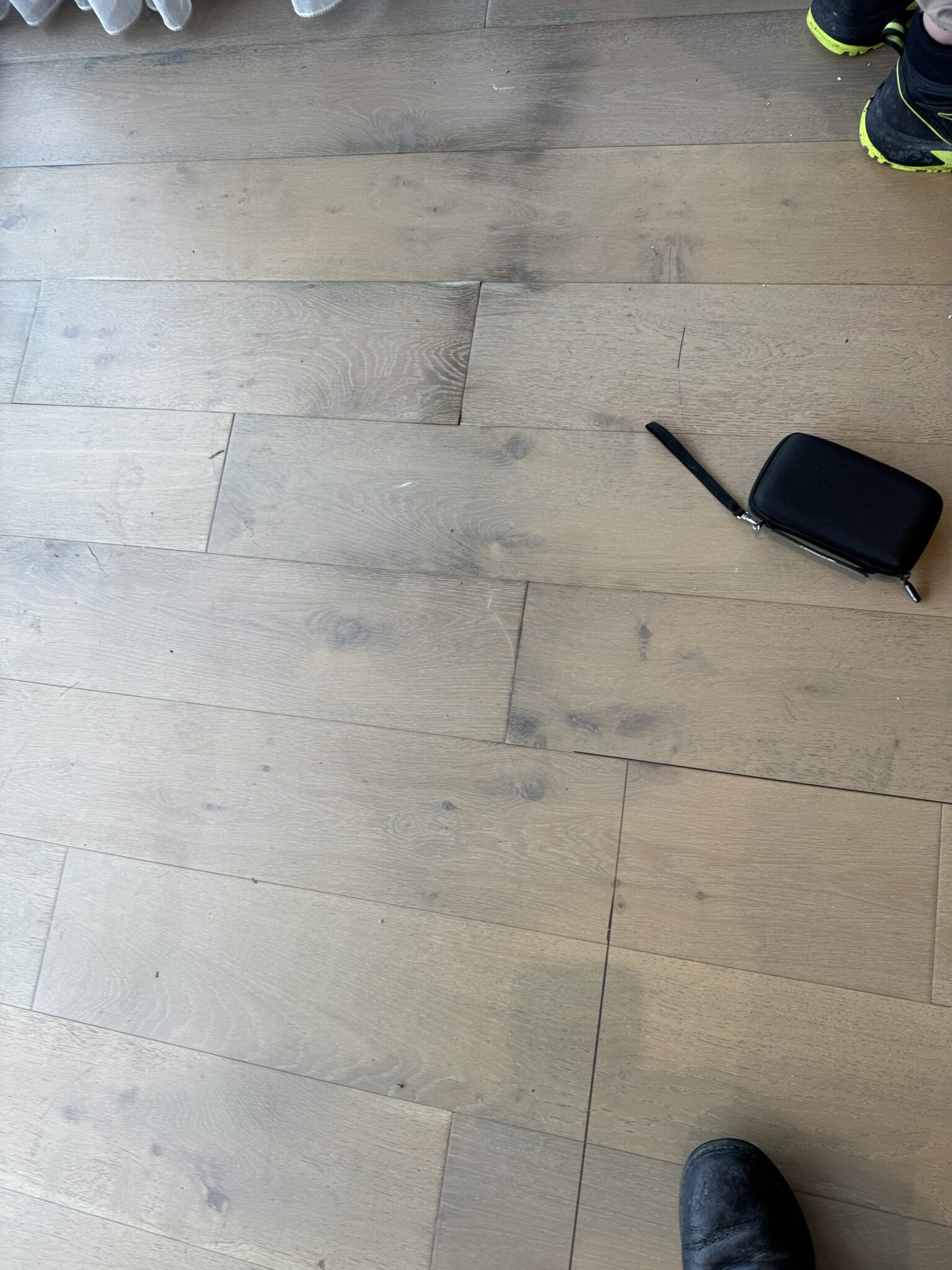
In this apartment, readings above 30% were recorded in sections of timber associated with the water event. A numerical reading should never be interpreted in isolation: meter type, material, depth, surface condition and comparison readings all influence the result. Here, the readings supported further investigation beneath the finished floor.
Why Moisture Can Remain Beneath Apartment Flooring
Water can migrate through flooring joints, skirting edges, penetrations and transitions between rooms. Timber, underlay, adhesives and concrete respond differently to moisture. A surface may feel dry while deeper layers remain damp, particularly where coverings slow evaporation.
Apartment construction can make this more complex. Shared walls, service risers, neighbouring lots and common-property elements may influence access and source control. Restoration findings describe the accessible work area; they do not determine ownership boundaries, legal responsibility or insurance coverage.
Hidden Mould Beneath the Timber Floor
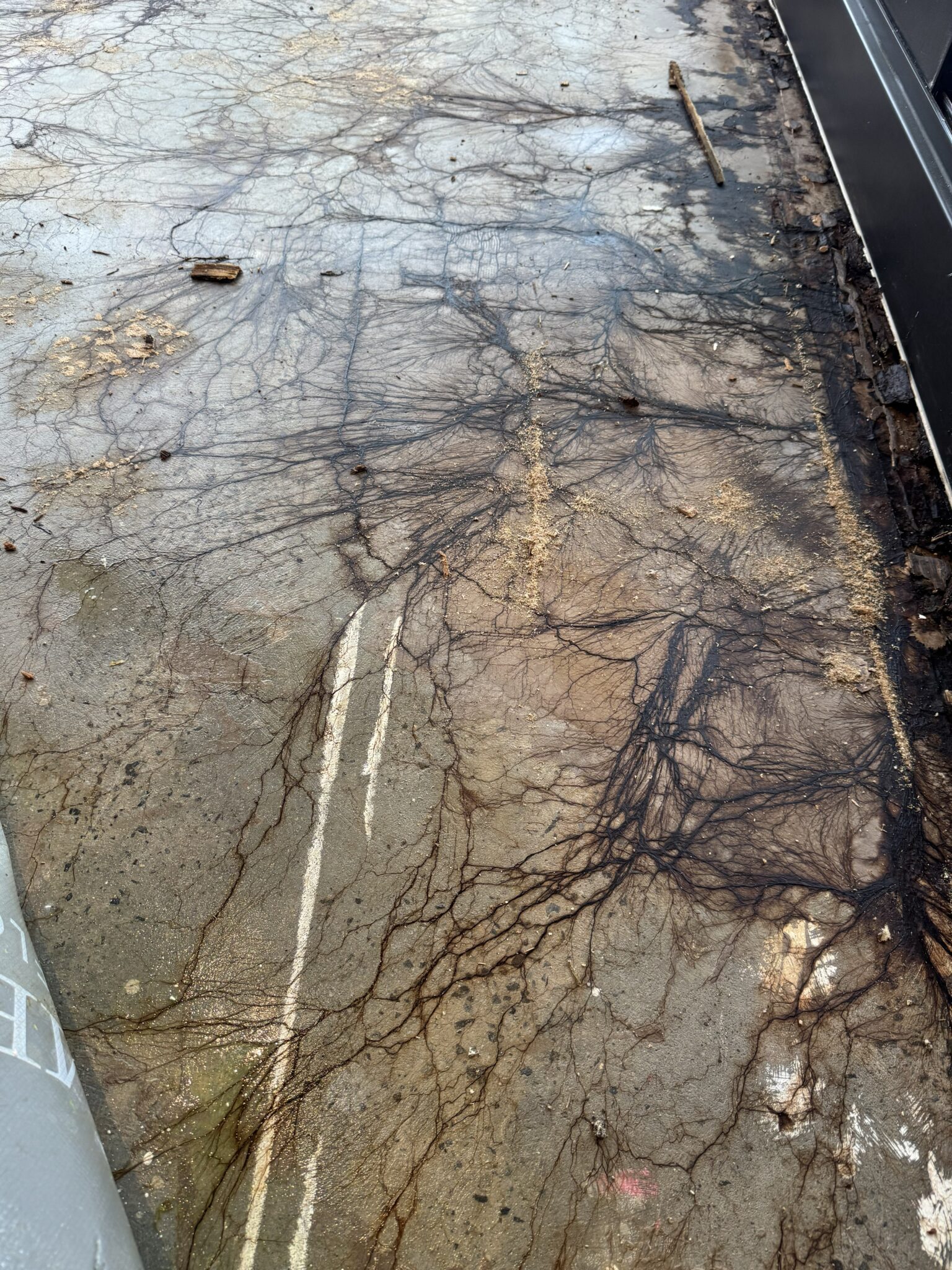
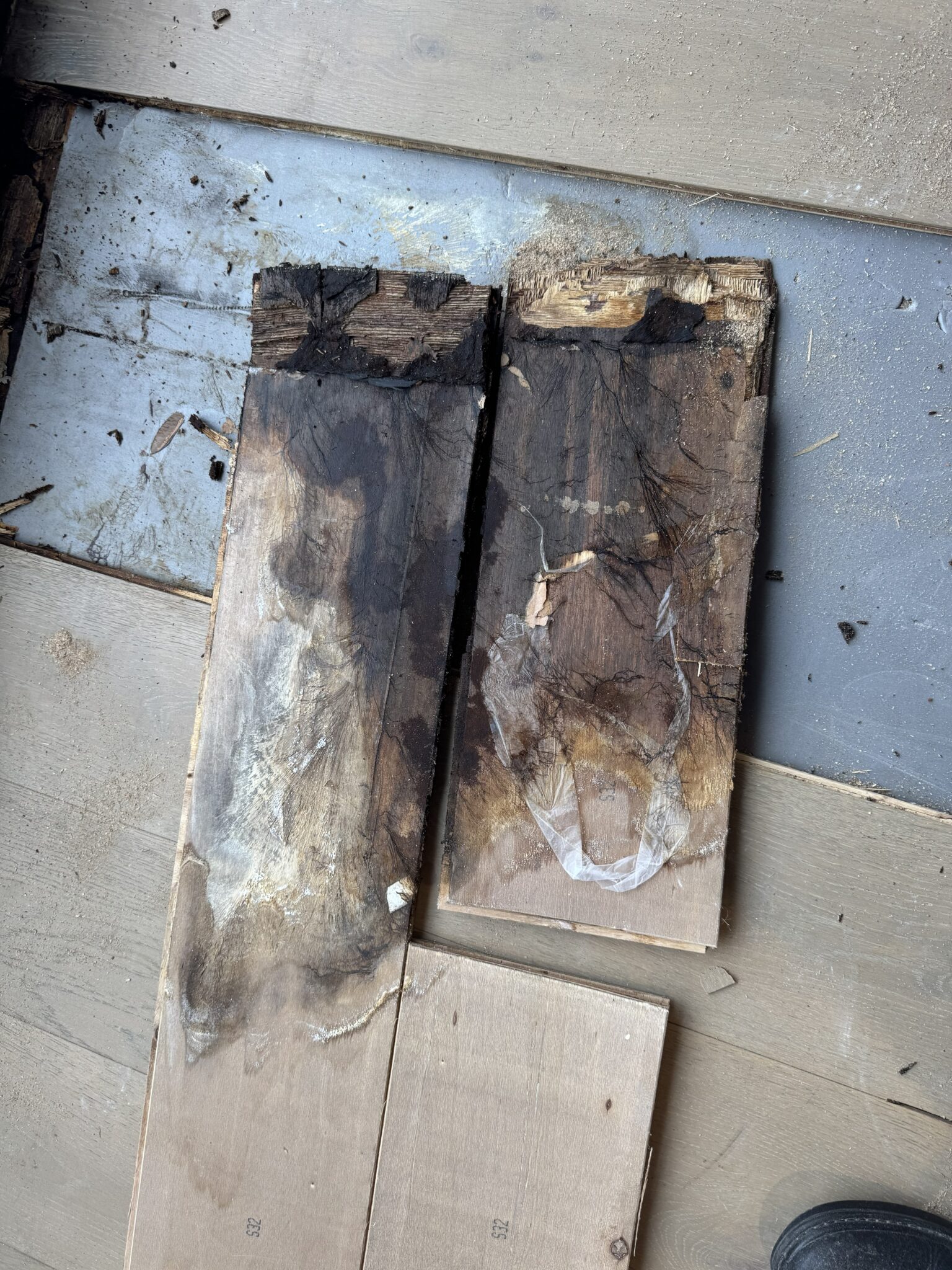
Once authorised flooring sections were carefully exposed, mould growth was identified on water-affected materials. This finding was consistent with the moisture history and persistent odour. Visible mould colour alone does not identify a species or establish a health risk, and a restoration contractor should not make medical conclusions from appearance.
The practical priority was to control the work area, remove unsalvageable affected material where authorised, clean accessible retained surfaces and correct the moisture condition.
Controlled Removal and Mould Remediation
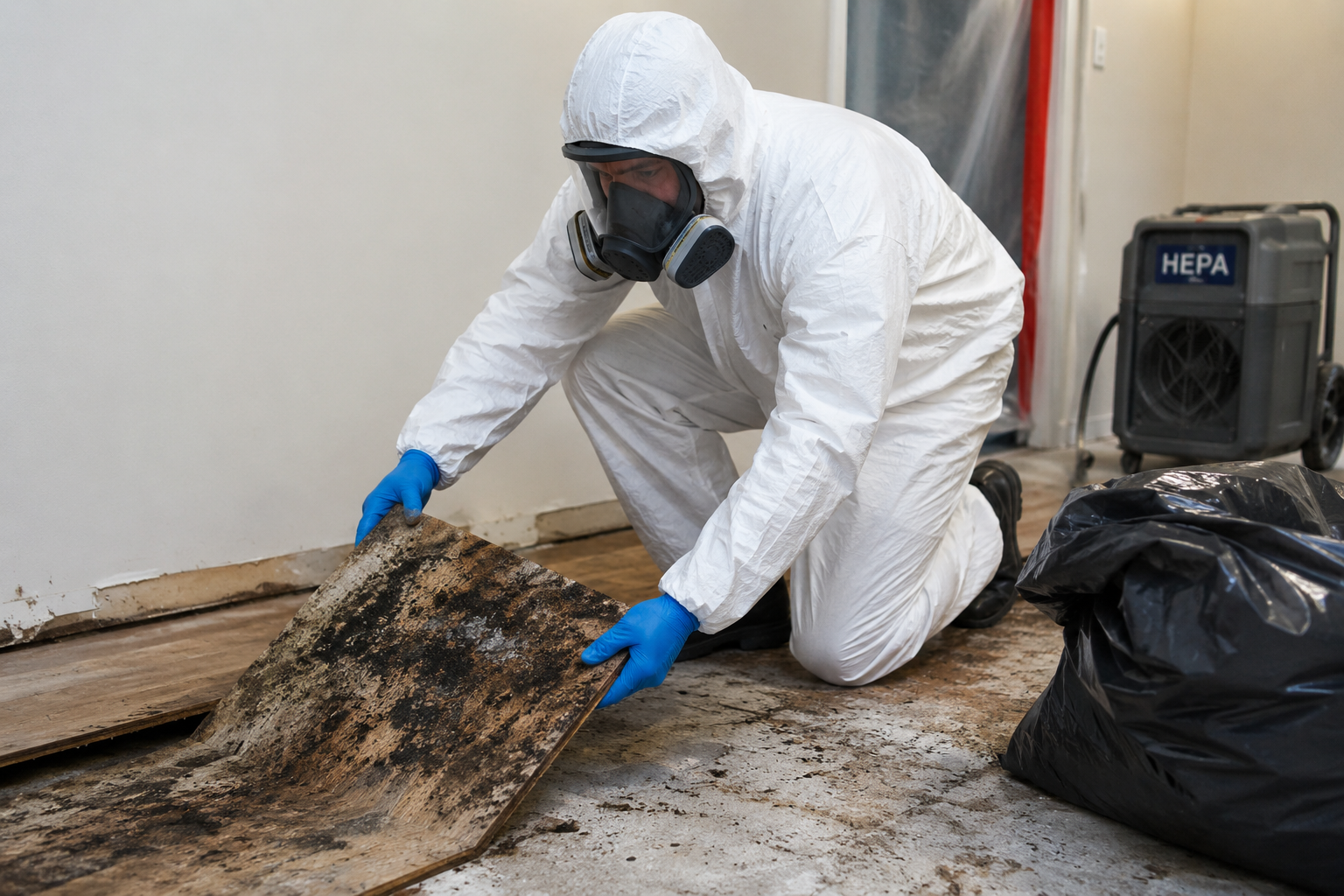
The work area was managed using controls suited to the observed conditions and agreed scope. These may include restricted access, physical containment, personal protective equipment, HEPA-filtered air management and controlled waste handling.
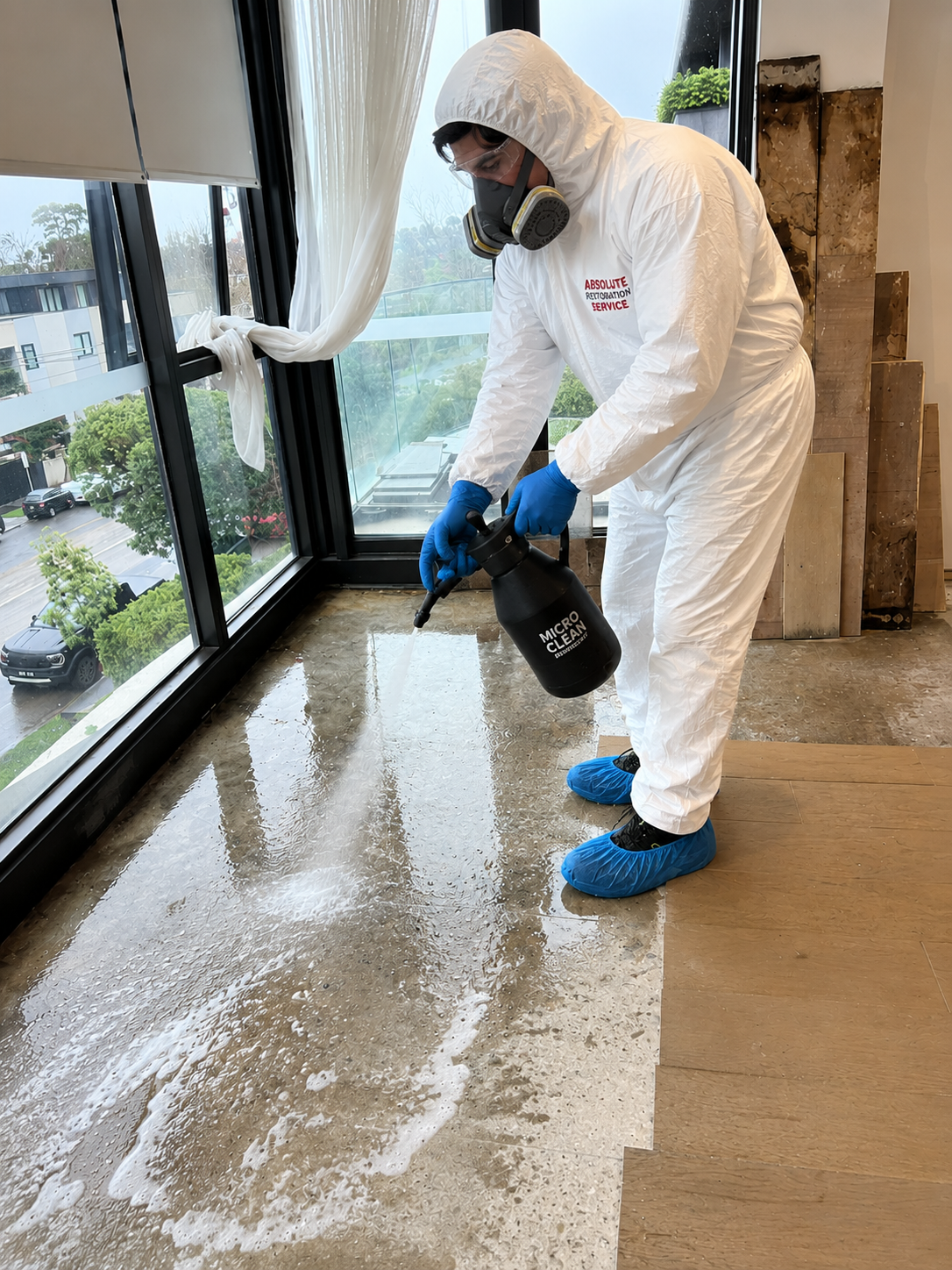
Affected porous materials that could not be reliably restored were removed where authorised. Accessible retained hard surfaces were then HEPA vacuumed and cleaned using methods appropriate to the material. Work was guided by recognised water-restoration and mould-remediation principles, including relevant ANSI/IICRC guidance, while remaining specific to the site.
HEPA Filtration and Air Management
HEPA-filtered air equipment supported particulate control during the authorised remediation work. Equipment selection, placement and operating mode depend on containment design, room volume, access and the contamination conditions. Air filtration is one part of remediation and does not replace source removal or detailed surface cleaning.
Structural Drying of the Apartment
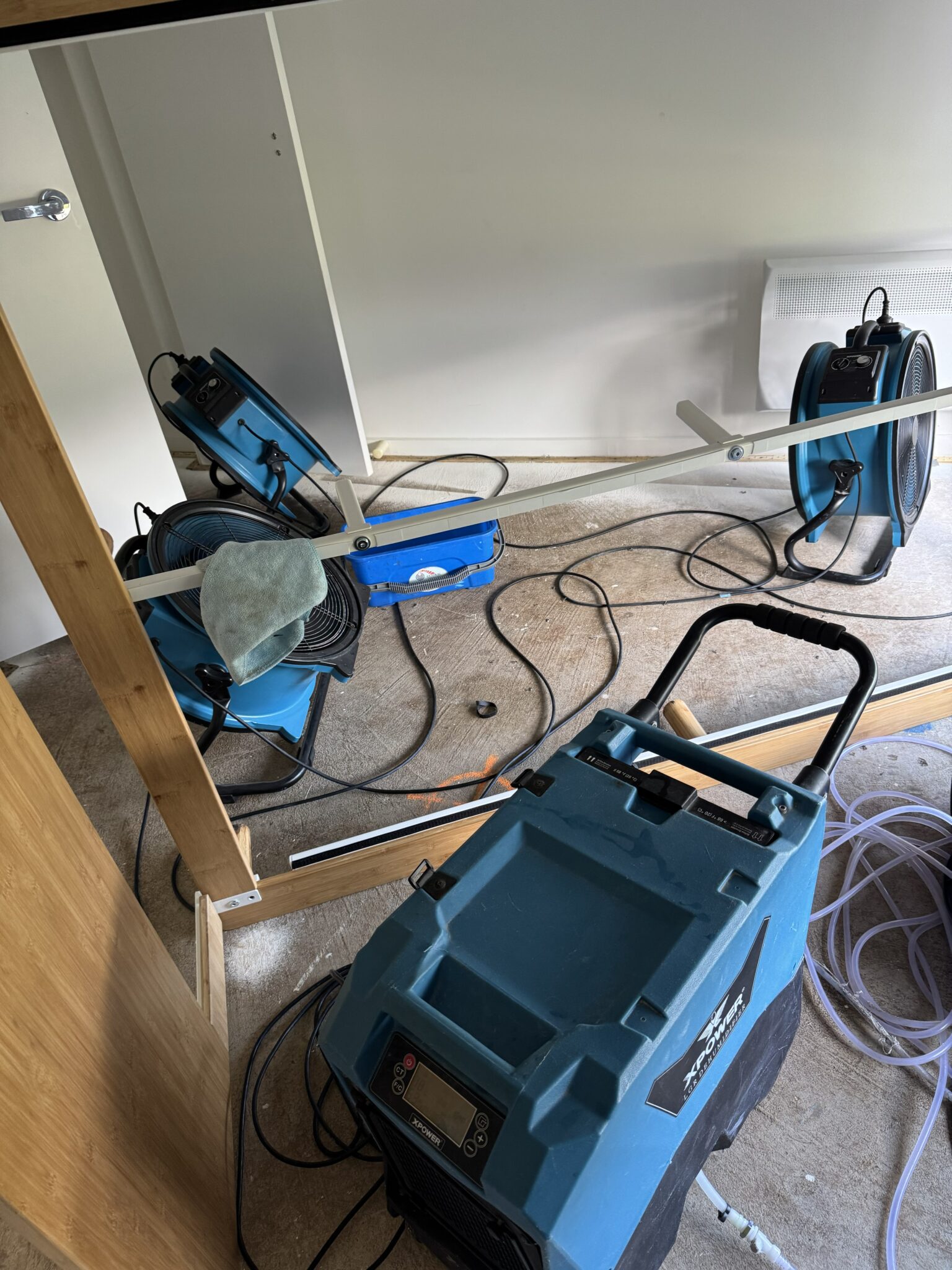
After affected materials were exposed and the cleaning scope completed, commercial drying equipment was established where appropriate. Dehumidifiers remove moisture from the air, while air movers increase evaporation across suitable surfaces. Equipment operation must be planned around electrical capacity, occupant access, temperature and the materials being dried.
Moisture conditions were reviewed during the project rather than relying on a fixed number of drying days. The purpose of monitoring is to determine whether accessible materials are progressing toward suitable project criteria and whether the drying strategy needs adjustment.
Why Replacement Flooring Must Wait
Installing replacement flooring before the substrate is suitable can trap moisture beneath the new finish. This may contribute to adhesive failure, movement, staining, odour or renewed microbial growth. The flooring installer should confirm that the substrate meets the requirements of the selected flooring and adhesive system before installation.
A restoration moisture assessment supports that decision but does not replace the flooring manufacturer’s instructions or the installer’s acceptance of the substrate.
Case-Study Outcome
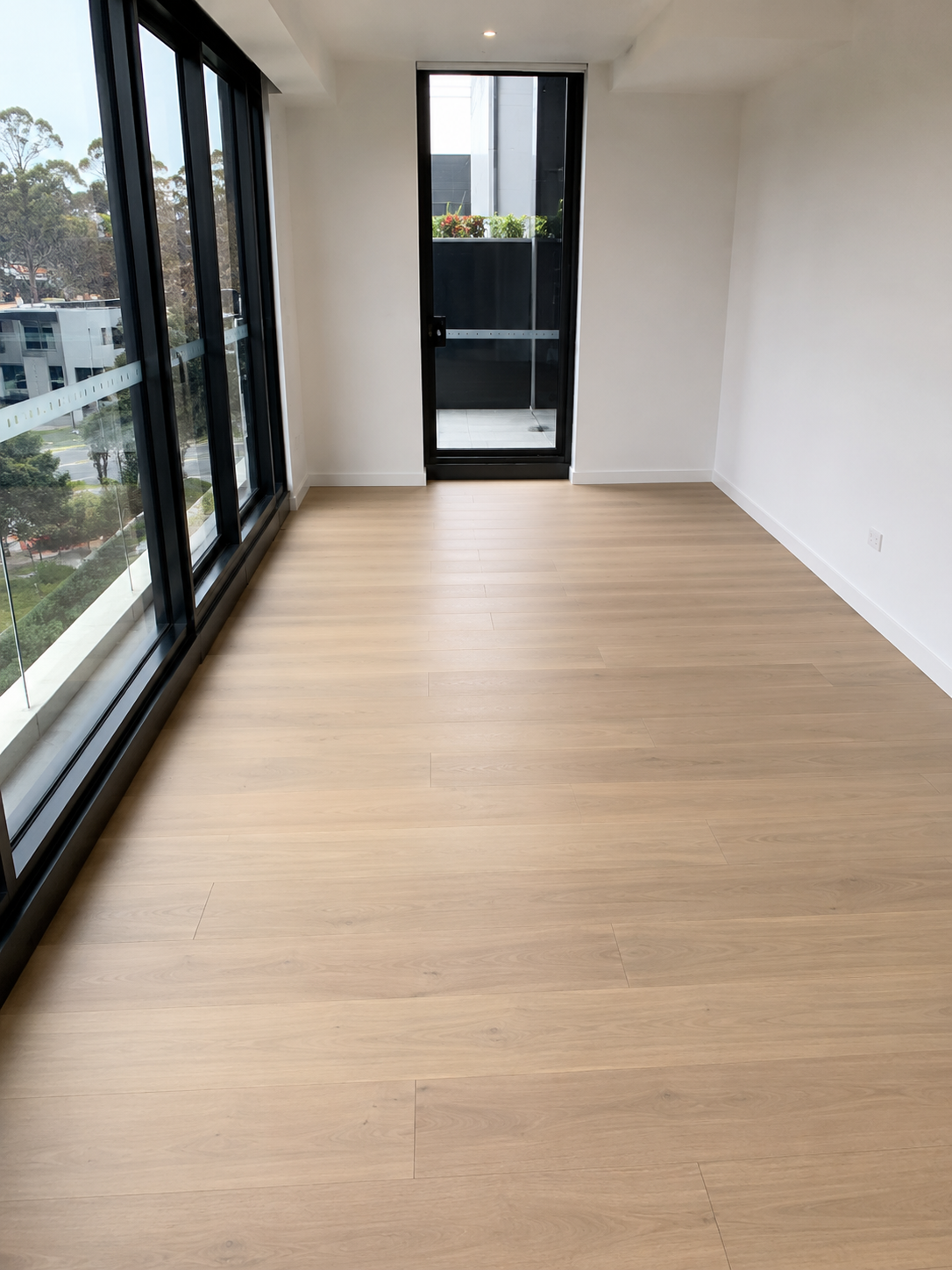
The authorised scope addressed accessible affected flooring, hidden mould contamination, detailed cleaning and structural drying. Project information and recommendations were provided for the next stage of repair and flooring replacement.
Outcomes are specific to each property. Restoration cannot guarantee that every concealed cavity is unaffected or that a future leak will not occur. Long-term performance depends on source repair, suitable replacement work, ventilation, maintenance and prompt attention to any recurring moisture.
Lessons for Apartment Owners and Property Managers
- Investigate persistent odours after a leak rather than masking them.
- Do not assume a dry surface means the entire flooring system is dry.
- Coordinate source repairs with the appropriate licensed trade.
- Obtain authority before lifting flooring or opening shared building elements.
- Use moisture readings and project evidence to guide the restoration scope.
- Do not install replacement finishes until the substrate is suitable.
- Document access, readings, equipment and completed work.
When to Request Professional Assistance
Contact a restoration professional when water has migrated beneath flooring, affected multiple rooms, remained unnoticed, involved contaminated water, or produced persistent odour or visible mould. Immediate electrical, structural, sewage or personal-safety hazards should be referred to the appropriate emergency service or licensed professional before entry.
For apartment assistance, call 1300 114 842 or use the Absolute Restoration Service contact form.
Apartment Water Leak FAQs
What can cause a musty odour after an apartment water leak?
A musty odour can be associated with moisture trapped beneath flooring, wet underlay, damp timber, affected adhesives or mould growth in concealed materials. The source should be investigated rather than masked.
Why are moisture readings important after a leak?
Moisture readings help define accessible affected materials, guide drying decisions and identify areas requiring further investigation. Readings must be interpreted for the material and meter used.
Can new flooring be installed immediately after water damage?
New flooring should not be installed until the substrate has been assessed and is suitable for the proposed flooring system. Premature installation can trap moisture and contribute to further damage.
Does surface cleaning remove hidden mould beneath flooring?
No. Surface cleaning cannot address contamination inside or beneath damaged flooring. Affected materials and concealed interfaces may need controlled exposure, removal and detailed cleaning.
What equipment is used for apartment structural drying?
Depending on the assessment, equipment may include water extractors, commercial dehumidifiers, air movers, HEPA air scrubbers, moisture meters and thermal imaging cameras.
Who should coordinate restoration in an apartment building?
The owner, property manager or owners corporation may need to coordinate access, source repairs and restoration, depending on the affected property and building arrangements. ARS documents restoration conditions but does not determine liability.