Clandestine Remediation Melbourne
Confidential property assessment and controlled decontamination for suspected methamphetamine, clandestine drug-laboratory and hydroponic grow-house contamination.
Drug-related property contamination can be difficult to assess visually. Residues may remain on walls, ceilings, floors, cabinetry, ventilation components, contents and other surfaces after drug manufacture, storage or use has ended. Former hydroponic grow houses may also have extensive humidity, mould, water damage, electrical alterations and chemical residues.
Absolute Restoration Service provides clandestine remediation and meth-contaminated property cleanup across Melbourne and selected Victorian locations. Remediation is based on a defined assessment and testing scope, with controlled cleaning, material removal and documentation appropriate to the findings.
Call 1300 114 842 for confidential assistance or request an assessment.
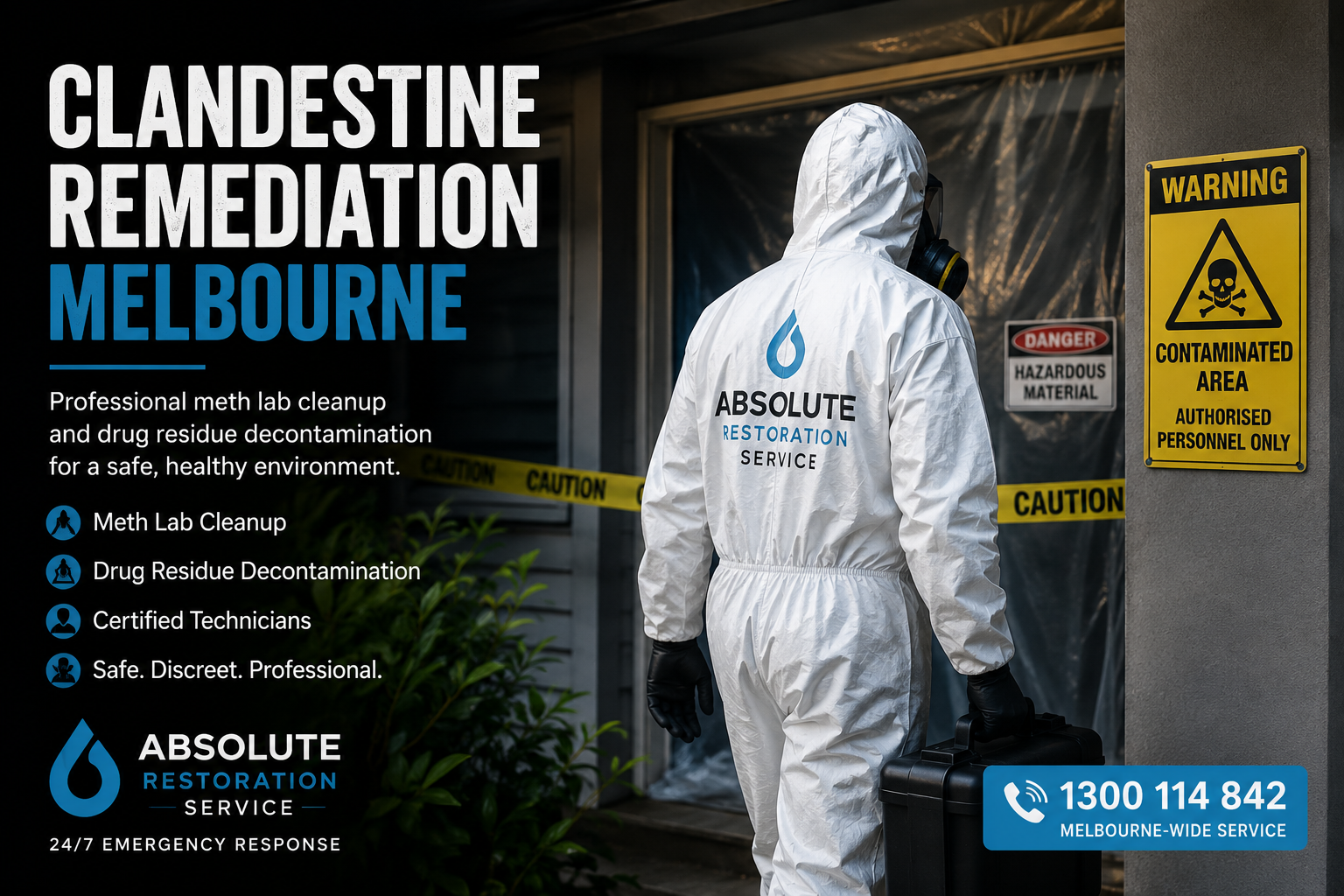
Controlled clandestine remediation and meth-contaminated property cleanup by Absolute Restoration Service.
Confidential Service | Controlled Decontamination | Independent Testing Pathway | Melbourne and Selected Victorian Locations
What Is Clandestine Property Contamination?
A clandestine drug laboratory is an unauthorised location used to manufacture or process illicit drugs. Contamination can also arise through repeated drug use, storage, handling or associated activities. The likely contaminants, distribution and remediation needs vary significantly between properties.
Potentially affected locations include:
- Homes, apartments and rental properties
- Garages, sheds and detached structures
- Commercial and industrial premises
- Hotels, short-stay accommodation and managed properties
- Vehicles, caravans and transport assets
- Hydroponic grow houses
- Storage areas and contaminated contents
Suspected criminal activity, chemicals, drug-manufacturing equipment or unknown substances should not be handled. Contact police or emergency services where an immediate hazard or active illegal activity is present. Remediation begins only after the property is released and access is authorised.
Why Professional Drug Residue Testing Matters
Visual inspection cannot determine the concentration or distribution of methamphetamine residue. Testing helps establish whether contamination is present, identify affected areas and define a defensible remediation scope.
Where impartial clearance is required, sampling and post-remediation verification should be completed by an appropriately qualified independent assessor or testing provider. ARS completes remediation against the agreed scope; we do not represent our own cleaning work as independent clearance.
Learn more about Drug Residue Testing Melbourne.
Signs That a Property May Require Assessment
- Police or council notification of suspected drug activity
- Laboratory equipment, chemical containers or unusual staining
- Persistent chemical or solvent-like odours
- Heavy surface residues or unexplained deposits
- Unusual ventilation alterations or sealed windows
- Extensive moisture, mould or condensation associated with a grow operation
- Electrical alterations, damaged walls or removed fittings
- A disclosure from a former occupant, agent or authority
- A preliminary screening result indicating further investigation
These signs do not confirm contamination. Testing and professional assessment are required to determine the appropriate next step.
Our Clandestine Remediation Process
1. Authorised Site Access and Information Review
We confirm that the property has been released by any controlling authority and review available reports, testing results, property history and client objectives.
2. Assessment and Remediation Scope
The contamination data, affected rooms, surfaces, contents and building materials are used to prepare a project-specific scope. Additional independent testing may be recommended where information is incomplete.
3. Work-Area Controls and PPE
Access controls, containment, personal protective equipment and HEPA-filtered air management are selected according to the work and risk assessment.
4. Contents and Material Decisions
Items and building materials are assessed for cleaning, removal or specialist referral. Decisions consider porosity, condition, contamination data, replacement value and the client’s instructions.
5. Detailed Decontamination
Affected retained surfaces are cleaned using the specified sequence, products and methods. Work may include repeated detailed cleaning, controlled removal of unsuitable materials and management of ventilation components or concealed areas within the agreed scope.
6. Waste and Project Documentation
Removed materials and waste are packaged and managed according to applicable project requirements. ARS documents the remediation activities completed.
7. Independent Post-Remediation Verification
Where required, an independent testing provider completes verification sampling and reporting. Any remaining areas identified in that report can then be addressed through an agreed supplementary scope.
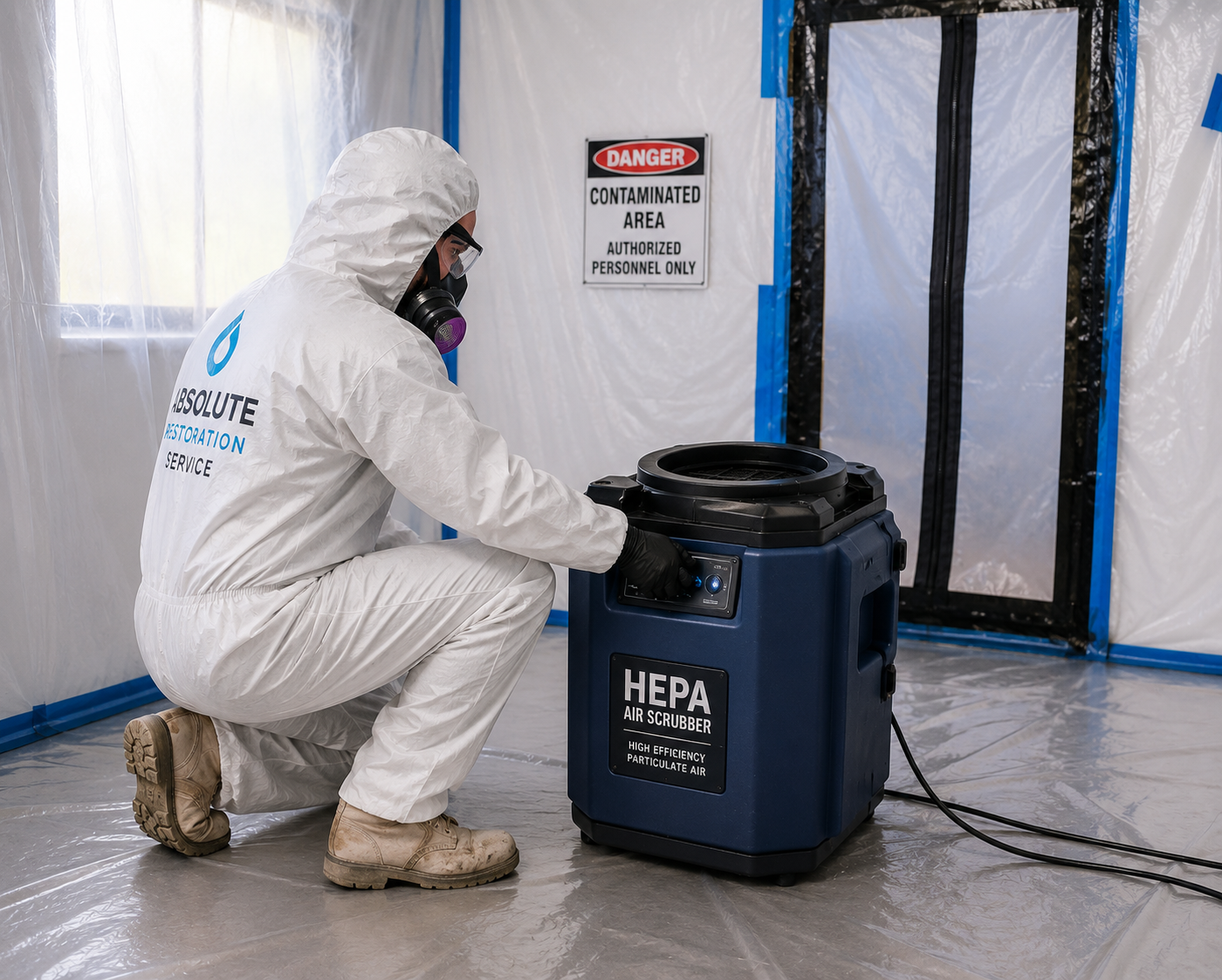
HEPA-filtered air management and controlled access during property decontamination.
Hydroponic Grow-House Remediation
Grow houses can leave a different combination of problems, including high humidity, mould, wet plasterboard and insulation, altered ventilation, water damage, odours, chemical residues and unsafe electrical modifications.
The restoration scope may include mould remediation, moisture investigation, structural drying, removal of damaged porous materials and detailed environmental cleaning. Electrical, plumbing and structural repairs must be completed by appropriately qualified trades.
Vehicle and Caravan Drug Contamination
Vehicles and caravans may be affected through manufacture, storage, transport or repeated use. Interior linings, seats, carpet, ventilation systems, hard surfaces and stored contents may require assessment. The feasibility of remediation depends on testing results, material construction, access and value.
Victorian Environmental and Property Responsibilities
Legal, regulatory, disclosure and notification responsibilities vary with the contamination, property and authority involved. EPA Victoria explains that people who manage or control contaminated land have duties to minimise risks of harm so far as reasonably practicable. Property owners and managers should obtain advice from the relevant authority, environmental professional, insurer or legal adviser when obligations are unclear.
See EPA Victoria’s duty-to-manage guidance.
Why Choose Absolute Restoration Service?
- More than 20 years of restoration and remediation experience
- Confidential communication and controlled access
- Project-specific decontamination based on assessment data
- Experience with homes, rentals, commercial sites, vehicles and grow houses
- Capability across mould, water damage, structural drying and biohazard remediation
- Clear separation between remediation work and independent verification
- Melbourne service with selected regional Victorian attendance
Related Testing and Remediation Services
- Drug Residue Testing Melbourne
- Biohazard Remediation Melbourne
- Mould Removal Melbourne
- Water Damage Restoration Melbourne
- Structural Drying Melbourne
- Indoor Air Quality Services
- Restoration Services Melbourne
Clandestine Remediation FAQs
Can you tell if a property is meth-contaminated by looking at it?
No. Visual evidence may justify further investigation, but laboratory-supported testing is required to determine whether residue is present and define affected areas.
Should testing be completed before remediation?
Yes, where drug residue contamination is suspected. A clear assessment and sampling scope provides the information needed to plan proportionate remediation.
Who completes clearance testing after remediation?
Where verification is required, it should be completed by an appropriately qualified independent assessor or testing provider rather than relying solely on the remediation contractor.
Do all walls, ceilings and contents need removal?
No. Material decisions depend on testing results, porosity, condition, access and the remediation scope. Some surfaces may be cleaned, while others may require removal.
Can you remediate a former hydroponic grow house?
Yes. The property may require a combined scope addressing mould, moisture, water damage, contaminated materials and environmental cleaning, with specialist trades handling electrical or structural repairs.
Do you provide confidential service?
Yes. ARS communicates through the authorised client contact and restricts project information to what is needed to assess and complete the work.
Request a Confidential Property Assessment
Do not handle suspected drug-manufacturing chemicals, equipment or unknown residues. Once the site is released and access is authorised, contact ARS to discuss testing information and the appropriate remediation pathway.