Drug Residue Testing Melbourne
Property inspections, documented surface sampling and laboratory-supported analysis for suspected methamphetamine and illicit-drug residue across Melbourne.
Drug residue may not be visible or identifiable by odour alone. Absolute Restoration Service helps homeowners, landlords, buyers, property managers, strata representatives, insurers and commercial clients assess suspected contamination and determine an appropriate next step.
For a confidential initial discussion, call 1300 114 842 or request a property assessment online. Do not enter a property that remains under police control or presents immediate chemical, fire, electrical or structural hazards.
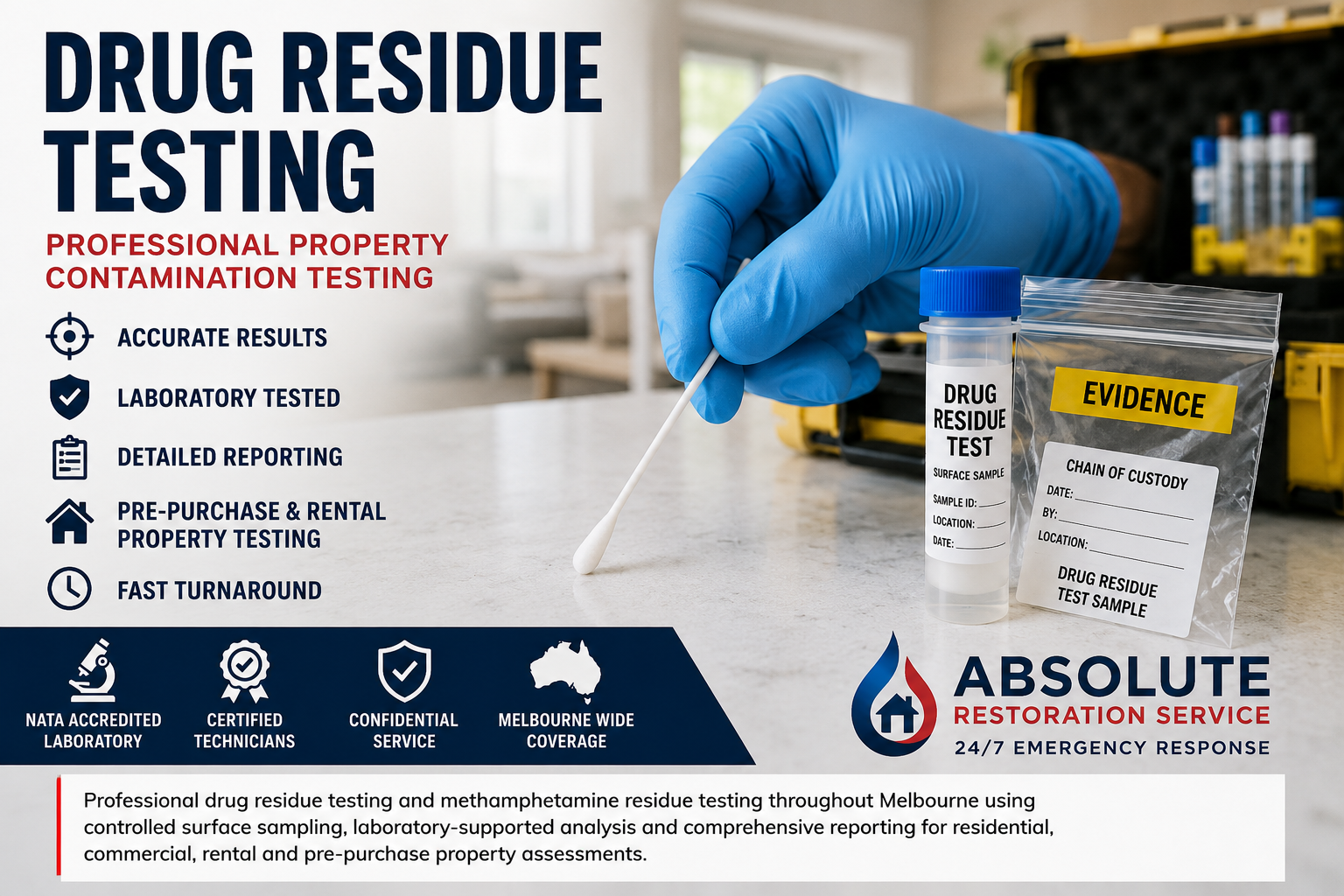
Controlled surface sampling can support a documented assessment of suspected property contamination.
When Should a Property Be Tested?
Testing may be considered when credible information or site evidence indicates possible manufacture, storage or repeated use of illicit drugs. Examples include:
- A suspected former clandestine drug laboratory
- Police attendance, seizure or restricted access associated with drug activity
- A rental property following a tenancy that raised documented concerns
- Unusual chemical staining, equipment, modifications or persistent odours
- A hydroponic grow operation or related clandestine activity
- Pre-purchase due diligence where the property history warrants investigation
- An insurance, strata or property-management investigation
- Assessment after decontamination to determine whether further work is indicated
Suspicion alone does not establish contamination. The property history, intended purpose of testing and required decision should guide the sampling plan.
Screening, Laboratory Analysis and Verification
Initial Screening
Screening may help identify whether further investigation is warranted. Its limitations, sample coverage and intended use should be understood before decisions are made from the result.
Laboratory-Supported Testing
Documented samples can be submitted to an appropriate analytical laboratory. The report applies to the sampled locations and does not automatically describe every surface or concealed area in the property.
Post-Remediation Verification
Verification assesses completed work against the agreed project criteria. Where independence is required by a client, insurer, authority or project specification, the final inspection and sampling should be completed by an appropriately qualified independent party who did not perform the remediation.
Our Drug Residue Testing Process
1. Initial Consultation and Property History
We discuss the reason for testing, available police or tenancy information, previous cleaning, property use and the decisions the results need to support.
2. Site Inspection and Safety Review
After authorised access is confirmed, the technician reviews the layout, potential contamination pathways, visible conditions and access limitations. Suspected chemical hazards or an active laboratory require emergency-authority involvement rather than routine testing.
3. Sampling Plan
Locations are selected according to property history, room use, observed conditions and the agreed testing objective. Depending on the scope, samples may be taken from walls, ceilings, floors, cabinetry, doors, fixtures or ventilation components.
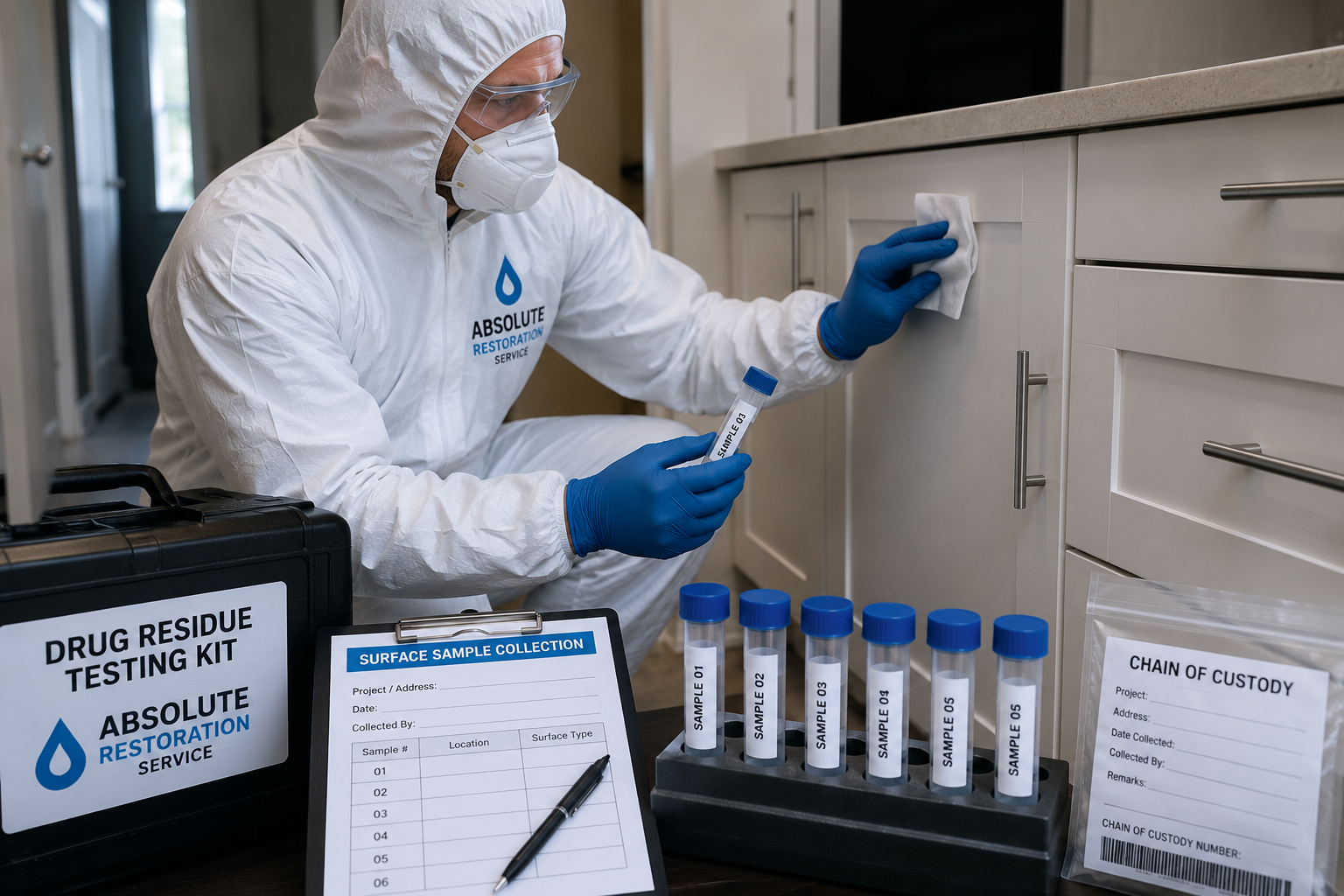
Sample locations, identifiers and handling details are documented according to the agreed assessment scope.
4. Controlled Sample Collection
Samples are collected using suitable materials and handling procedures, then labelled to maintain identification. Chain-of-custody documentation may be used where laboratory submission or project requirements call for it.
5. Laboratory Submission and Interpretation
Where included, samples are submitted for analytical testing. Results are considered in the context of the sampling plan, laboratory method, reporting limits, property history and applicable project requirements.
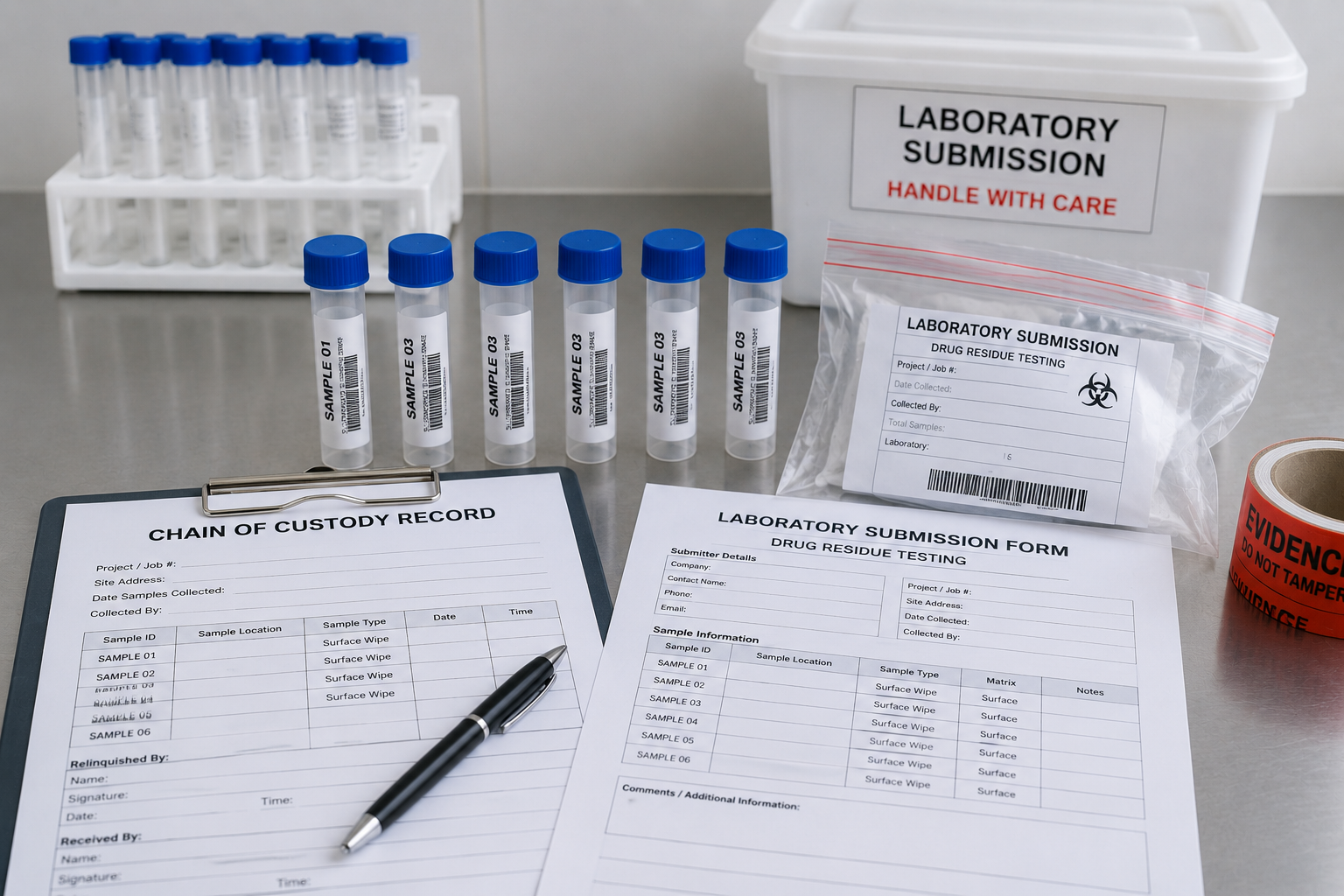
Labelled samples and supporting documentation prepared for laboratory submission.
6. Findings and Recommendations
The client receives findings appropriate to the agreed scope. Recommendations may include no further action within the limits of the assessment, targeted additional sampling, access restrictions, specialist remediation, removal of affected porous materials or independent verification.
Understanding the Limits of Testing
- A result describes the collected sample and cannot guarantee that every part of a property is unaffected.
- Composite samples can provide broad screening coverage but may not identify the contribution from each individual surface.
- Previous cleaning, renovations, coatings and material removal can influence the contamination pattern.
- Concealed cavities, insulation, contents and ventilation systems may require separate assessment.
- Applicable criteria can depend on jurisdiction, property use, client instructions and the purpose of the report.
ARS explains the proposed scope before sampling so the client can understand what the assessment can and cannot establish.
If Testing Identifies Contamination
A positive or elevated result does not by itself define the full remediation scope. Further delineation may be needed to identify affected rooms, materials and contamination pathways. A site-specific plan may include controlled access, removal of unsuitable porous materials, detailed surface cleaning, HEPA vacuuming, air management and disposal procedures.
Our clandestine remediation Melbourne service provides specialist decontamination where an agreed assessment indicates it is required.
Post-Remediation Assessment
After remediation is completed, the work area should be visually reviewed and assessed against the project scope. Representative surface sampling may then help determine whether the specified criteria have been met or whether additional cleaning is required.
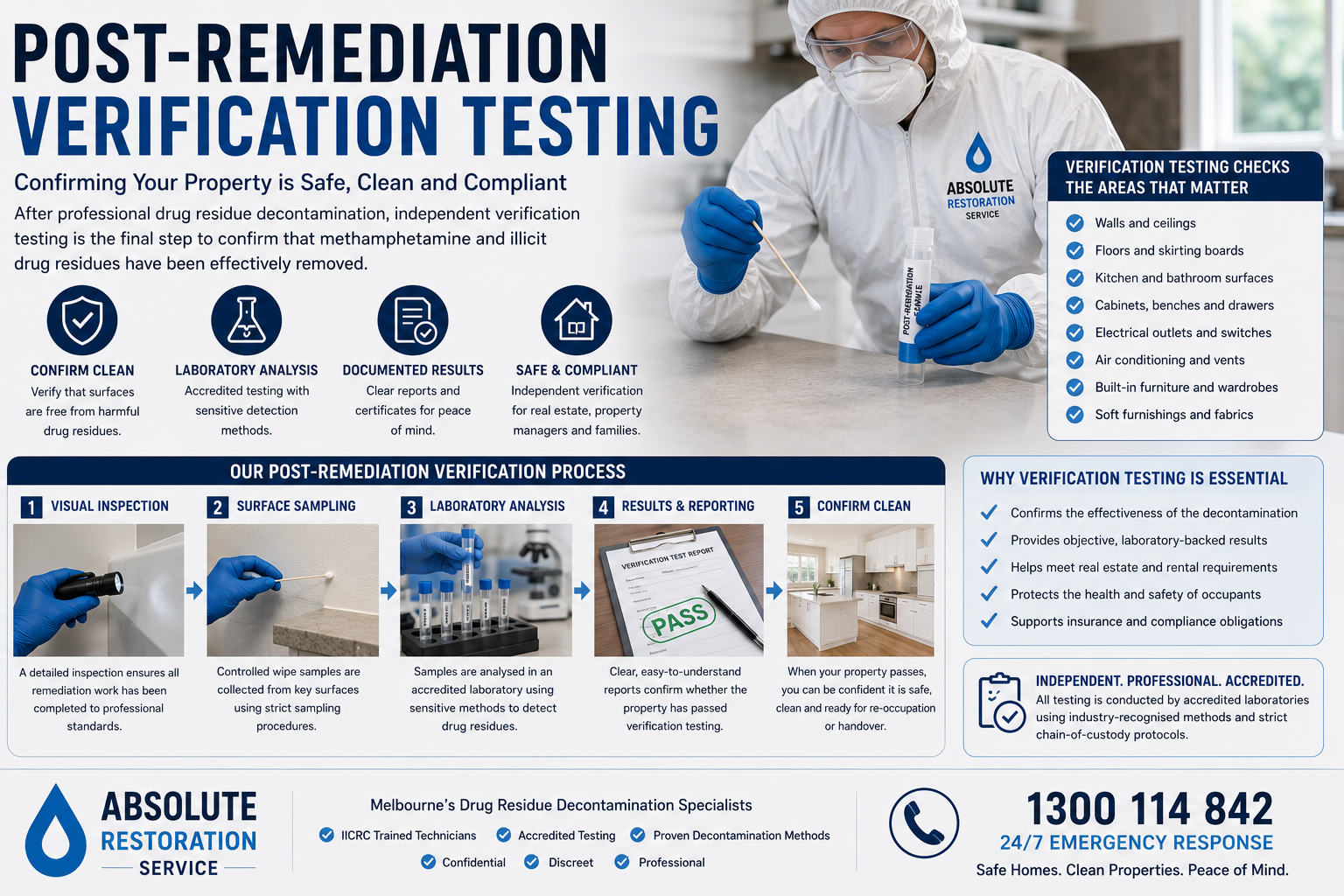
Verification requirements should be agreed before remediation begins, including whether an independent assessor is required.
Properties We Assess
- Houses, apartments and rental properties
- Rooming houses and short-term accommodation
- Strata and owners-corporation properties
- Commercial and industrial buildings
- Police-released or formerly restricted properties
- Vehicles, storage areas and associated structures where within scope
Professional and Discreet Service
Drug-contamination enquiries can involve sensitive personal, tenancy, insurance or legal circumstances. Information is handled through appropriate business processes and shared with authorised parties as required for the service or by law. Avoid sending unnecessary medical, financial or identifying information through the web form.
Related Services
- Clandestine Remediation Melbourne
- Biohazard Remediation Services
- Indoor Air Quality Assessment Melbourne
- Melbourne Service Coverage
Frequently Asked Questions
Can drug residue be detected by sight or smell?
Not reliably. A property may look clean while residues remain on sampled surfaces, and an odour does not identify the substance or concentration. Documented testing is needed to assess selected locations.
What is the difference between screening and laboratory testing?
Screening can indicate whether further investigation may be warranted. Laboratory analysis provides method-specific results for submitted samples. The suitable approach depends on the purpose, required confidence and project criteria.
How many samples will my property need?
That depends on property size, history, layout, suspected activities and the decisions the results must support. The proposed locations and sampling method should be agreed before collection.
How long will results take?
Site time and laboratory turnaround vary with the scope, sample count, analytical method and laboratory capacity. The expected timeframe will be discussed when the assessment is arranged.
Can ARS test rental and pre-purchase properties?
Yes, subject to authorised access and an agreed scope. Owners, buyers and managers should also obtain legal or contractual advice where results may affect a tenancy, sale or formal dispute.
Can contaminated surfaces simply be painted over?
Coating a surface does not demonstrate that residue has been removed. The material should be assessed and any required remediation completed before reinstatement or coating decisions are made.
Who should perform final clearance testing?
Where independent clearance is required, use an appropriately qualified assessor or testing provider who did not perform the remediation. Confirm this requirement with the relevant client, insurer, authority or project specification.
Arrange Drug Residue Testing in Melbourne
Call 1300 114 842 or contact Absolute Restoration Service to discuss authorised drug-residue testing, property assessment or remediation across Melbourne.