Mould remediation is a controlled process for addressing mould-affected materials and the moisture conditions supporting growth within an agreed scope. It is broader than wiping a visible surface or applying paint.
This guide explains the remediation process, how it differs from mould removal, the factors that influence cost and duration, what a written quote should include and what property owners can reasonably expect at handover.
Mould Removal Versus Mould Remediation
Mould removal describes removing affected material or contamination. Mould remediation includes the wider project: moisture investigation, scope development, work-area controls, material decisions, removal, detailed cleaning, drying and documentation.
Absolute removal of every mould spore from a normal indoor environment is not a realistic project objective. A remediation scope should instead define affected materials, correct or coordinate the moisture source and establish practical completion criteria.
When Mould Remediation May Be Required
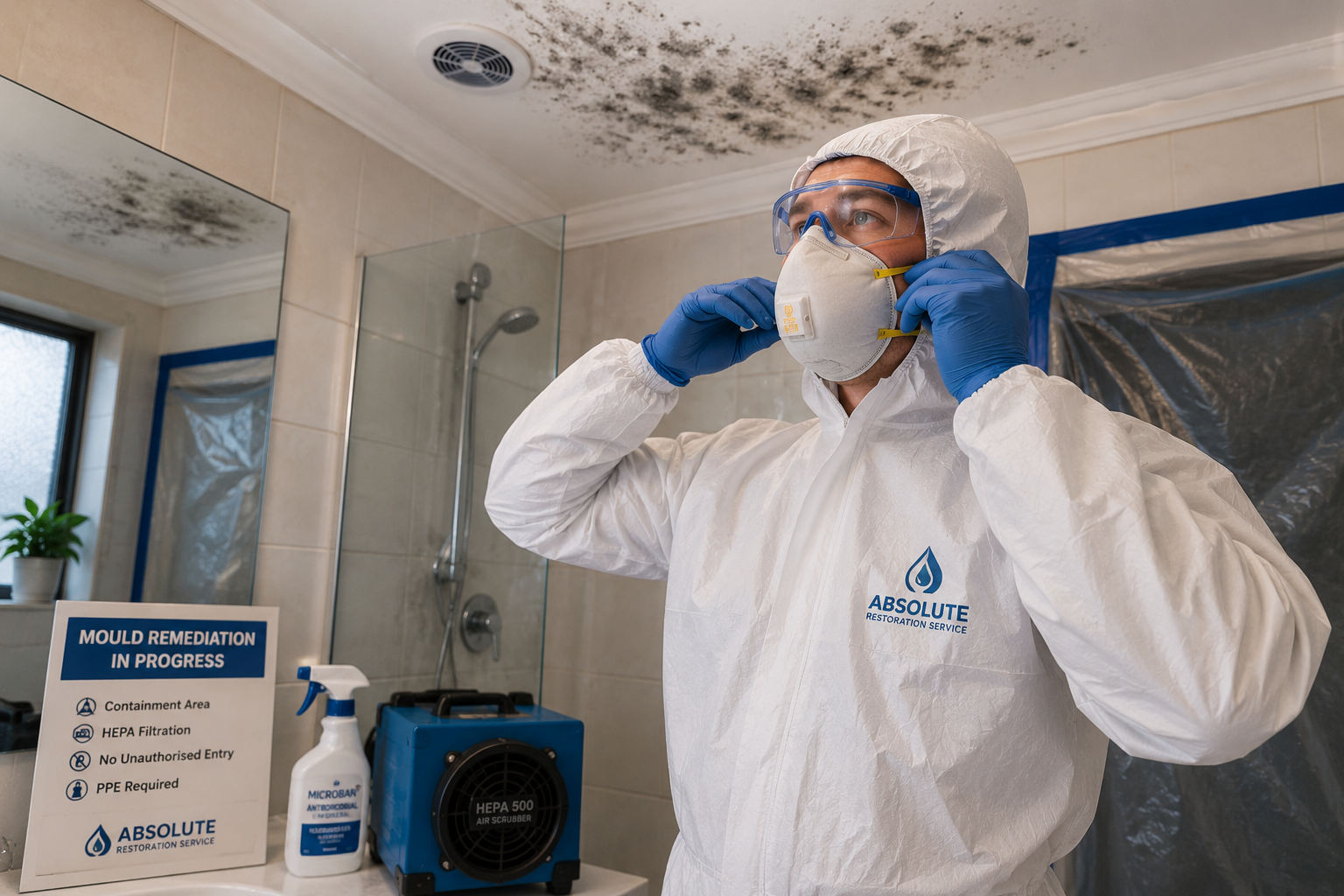
Professional remediation may be appropriate when growth is extensive, repeatedly returns, follows water damage, affects porous materials, may be concealed or cannot be accessed safely. A small area on a sound washable surface may require a different response from wet plasterboard, insulation, carpet or subfloor timber.
Electrical danger, structural instability, sewage, asbestos, active plumbing leaks and other hazards must be considered before work begins. Relevant source repairs should be completed by licensed or appropriately qualified professionals.
The Typical Mould Remediation Process
- Initial review: Record the moisture history, visible conditions, access, occupancy and known hazards.
- Moisture investigation: Assess accessible materials and define areas requiring closer checking.
- Scope development: Identify work areas, controls, retained materials and authorised removal.
- Source coordination: Confirm that leaks, drainage, roofing or building defects are referred for repair.
- Containment and access: Establish restricted access and containment where required.
- Material remediation: Remove authorised unsalvageable materials and clean retained surfaces.
- HEPA air management: Use HEPA-filtered equipment where appropriate to support particulate control.
- Drying and monitoring: Use suitable equipment and document accessible moisture conditions.
- Handover: Record the completed scope, limitations and outstanding repairs or verification.
How Moisture Investigation Supports the Scope
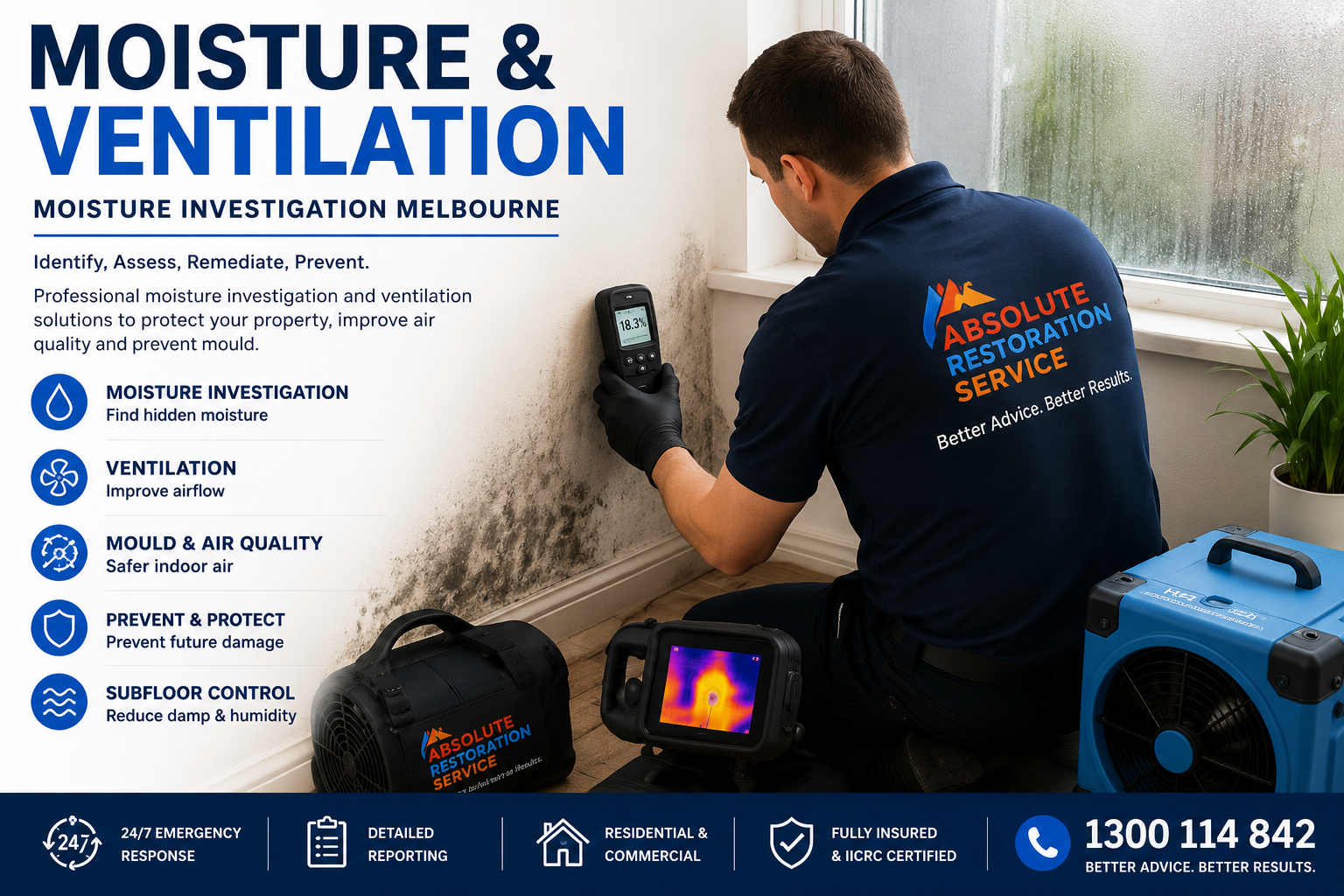
Technicians review the building history, water events, visible growth, odours and material condition. Moisture meters compare accessible materials with suitable reference areas.
Thermal imaging may show surface-temperature patterns influenced by evaporation, insulation, airflow, sunlight, heating and construction. It does not see through walls, measure moisture directly or identify mould.
No non-destructive inspection can confirm the condition of every inaccessible cavity. Targeted opening may require authorisation and checks for electrical, plumbing, structural and asbestos hazards.
How Much Does Mould Remediation Cost?
There is no responsible universal price for mould remediation because the same visible area can involve very different materials and concealed conditions. A small coated surface with a known condensation issue differs from contaminated plasterboard, insulation and framing after prolonged water entry.
Cost factors can include:
- the affected area and number of rooms;
- material porosity and condition;
- access, height and occupied-property constraints;
- containment and HEPA air-management requirements;
- authorised demolition, disposal and reinstatement preparation;
- water extraction or structural drying;
- specialist source repairs and hazardous-material assessment;
- contents handling and storage;
- after-hours or staged commercial access; and
- independent sampling or verification requirements.
A written site-specific scope is more useful than a price given only from a photograph. Quotes should distinguish remediation work from plumbing, roofing, electrical, building, painting and independent assessment costs.
What a Mould Remediation Quote Should Include
- the inspected and authorised work areas;
- assumptions and known limitations;
- containment, access and equipment;
- materials proposed for cleaning or removal;
- drying and monitoring where required;
- contents handling and disposal responsibilities;
- source repairs included or excluded;
- documentation and handover deliverables;
- independent verification responsibility; and
- variation procedures if concealed damage is discovered.
Comparing only the total price can be misleading when contractors have allowed for different areas, controls or reinstatement work.
How Long Does Mould Remediation Take?
Duration depends on the affected area, access, containment, demolition, source repairs, material drying and verification. Some projects can be completed as one work stage; others require investigation, repairs and drying before remediation or reinstatement continues.
A contractor should explain the proposed sequence and dependencies rather than promise a fixed completion time before the conditions are known.
What Happens During Handover?
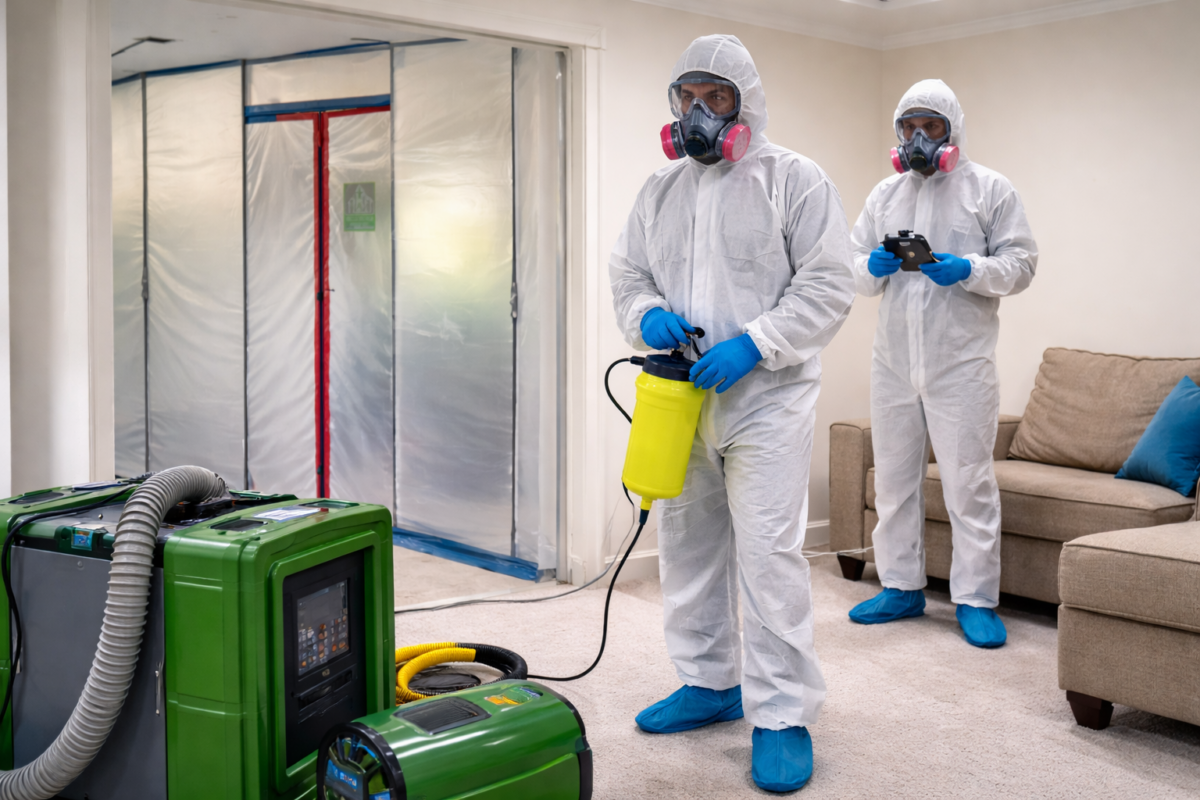
Handover may include photographs, moisture records, removed-material notes, completed work areas, limitations and recommendations for repairs or prevention. Where post-remediation verification is required, an independent assessor should define the criteria and sampling plan.
DIY Cleaning Versus Professional Remediation
A small accessible area on a sound washable surface may be suitable for careful cleaning after hazards and moisture are considered. Avoid dry brushing, sanding and aggressive disturbance. Never mix cleaning chemicals.
Professional assessment may be appropriate for extensive, recurring, concealed or water-damage-related growth, affected porous materials or unsafe access. Property remediation does not diagnose illness or determine whether a person should occupy a building; health questions belong with an appropriately qualified healthcare professional.
Does Insurance Cover Mould Remediation?
Coverage depends on the policy, cause of loss, exclusions, maintenance conditions, excess and insurer decision. Mould associated with a sudden insured water event may be considered differently from gradual dampness or maintenance problems, but only the insurer can determine coverage.
Document the conditions when safe, notify the insurer promptly and seek guidance before authorising non-urgent building work. ARS can provide restoration documentation but cannot promise claim acceptance.
What Remediation Cannot Guarantee
No contractor can responsibly guarantee that mould will never return or that every inaccessible cavity is unaffected. Recurrence remains possible if moisture persists, repairs are incomplete, new water damage occurs or areas outside the authorised scope remain affected.
Discuss a Mould Remediation Scope
Absolute Restoration Service provides mould remediation in Melbourne using IICRC-trained technicians, moisture investigation and controlled material work suited to the documented conditions.
Call 1300 114 842 or contact ARS to discuss the property, visible area, water history and outcome you need the scope to support.
Frequently Asked Questions
What is mould remediation?
It is a controlled process that may include moisture investigation, containment, material removal, detailed cleaning, drying and handover.
Is removal the same as remediation?
No. Removal is one task; remediation includes the wider investigation, controls, material decisions and documentation.
How much does mould remediation cost?
Cost depends on the affected area, materials, access, containment, disposal, drying, repairs and verification requirements.
How long does remediation take?
Duration depends on extent, access, source repairs, material work, drying and verification.
Can I carry out remediation myself?
A small accessible area may be suitable for careful cleaning. Extensive, recurring or concealed growth may require professional assessment.
Does insurance cover mould remediation?
Coverage depends on the policy, cause, exclusions and insurer decision.