Mould Removal Clifton Hill & Water Damage Restoration
Mould, plumbing leaks and concealed dampness can affect Clifton Hill terraces, weatherboard houses, converted buildings, apartments and commercial premises. Absolute Restoration Service provides professional mould removal in Clifton Hill, water damage restoration and flood cleanup, addressing both visible contamination and the underlying moisture source.
Our IICRC-certified technicians inspect affected areas, map moisture within building materials and develop a structured remediation or drying plan. Prompt assessment after a burst pipe, roof leak, appliance overflow or storm event can limit secondary damage and help prevent mould developing inside shared walls, flooring and ceiling cavities.
Local Mould and Moisture Risks in Clifton Hill
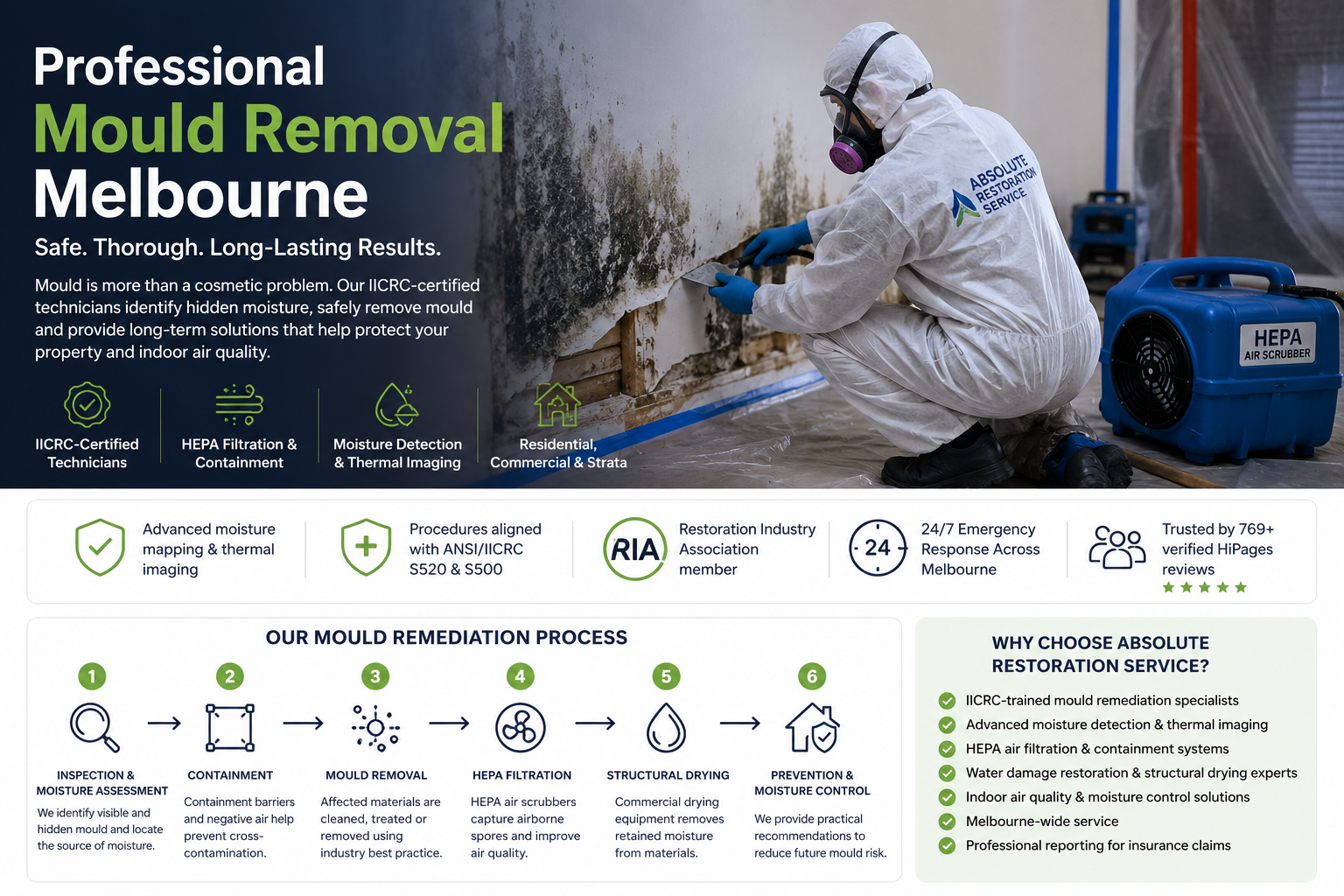
Clifton Hill includes older brick terraces, weatherboard houses, renovated homes, converted properties, apartment buildings, shops and offices. Ageing roofs, box gutters and plumbing can allow water into walls and ceilings, while attached buildings and narrow side access can make hidden leaks difficult to identify.
Bathrooms, laundries, bedrooms, wardrobes, shared walls, ceiling cavities and timber subfloors are common locations for dampness to remain unnoticed. Low-clearance subfloors and rooms with limited sunlight or airflow may dry slowly after leaks or periods of high humidity.
Professional Mould Removal Clifton Hill
Surface cleaning or painting over mould does not correct a concealed leak, condensation problem, damp subfloor or ventilation deficiency. Our professional mould removal service assesses the contamination and the building conditions supporting its growth.
Depending on the inspection findings, mould remediation may include:
- Visual inspection, moisture testing and thermal imaging
- Investigation of plumbing, roof leaks, condensation and ventilation
- Containment of affected work areas
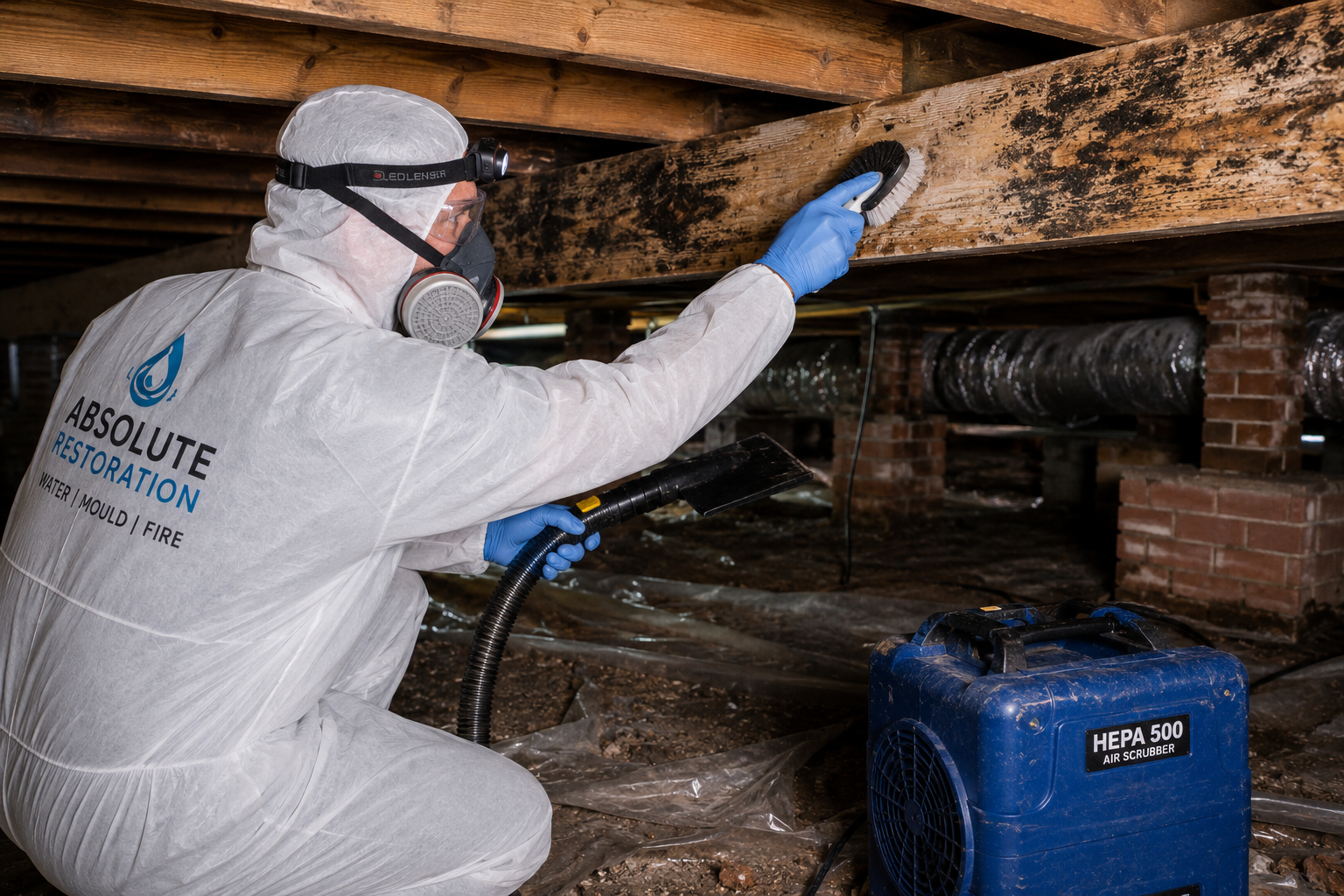
- HEPA-filtered air scrubbing and detailed surface cleaning
- Removal of porous materials that cannot be effectively restored
- Controlled drying and moisture-management recommendations
- Clear documentation and post-remediation guidance
Our technicians apply the principles of the ANSI/IICRC S520 Professional Mould Remediation Standard and consider relevant NCC dampness and weatherproofing requirements when assessing building-related moisture.
Water Damage Restoration Clifton Hill
Water may spread beyond the visibly wet area into plasterboard, insulation, carpet underlay, timber flooring, cabinetry and wall cavities. In attached houses and apartments, it can also move into neighbouring rooms or properties through shared building elements. Removing standing water is only the first step; moisture mapping and monitored drying establish the full extent of damage.
Our water damage restoration services assist Clifton Hill properties affected by:
- Burst pipes, ageing plumbing and failed flexible hoses
- Overflowing toilets, baths, sinks and appliances
- Roof leaks, box-gutter failures and rainwater intrusion
- Wet carpet, timber flooring and damp subfloor areas
- Sewage and other contaminated-water incidents
- Water affecting apartments, shops, offices or rental properties
Restoration may include water extraction, moisture mapping, dehumidification, air movement, controlled structural drying and progress monitoring. We can also provide job documentation for homeowners, landlords, property managers, owners corporations and insurance-related communication.
Our Clifton Hill Restoration Process
- Inspection and moisture assessment: We inspect affected areas and use professional instruments to identify visible and concealed moisture.
- Cause and scope: We determine the likely source, affected materials and extent of mould contamination or water damage.
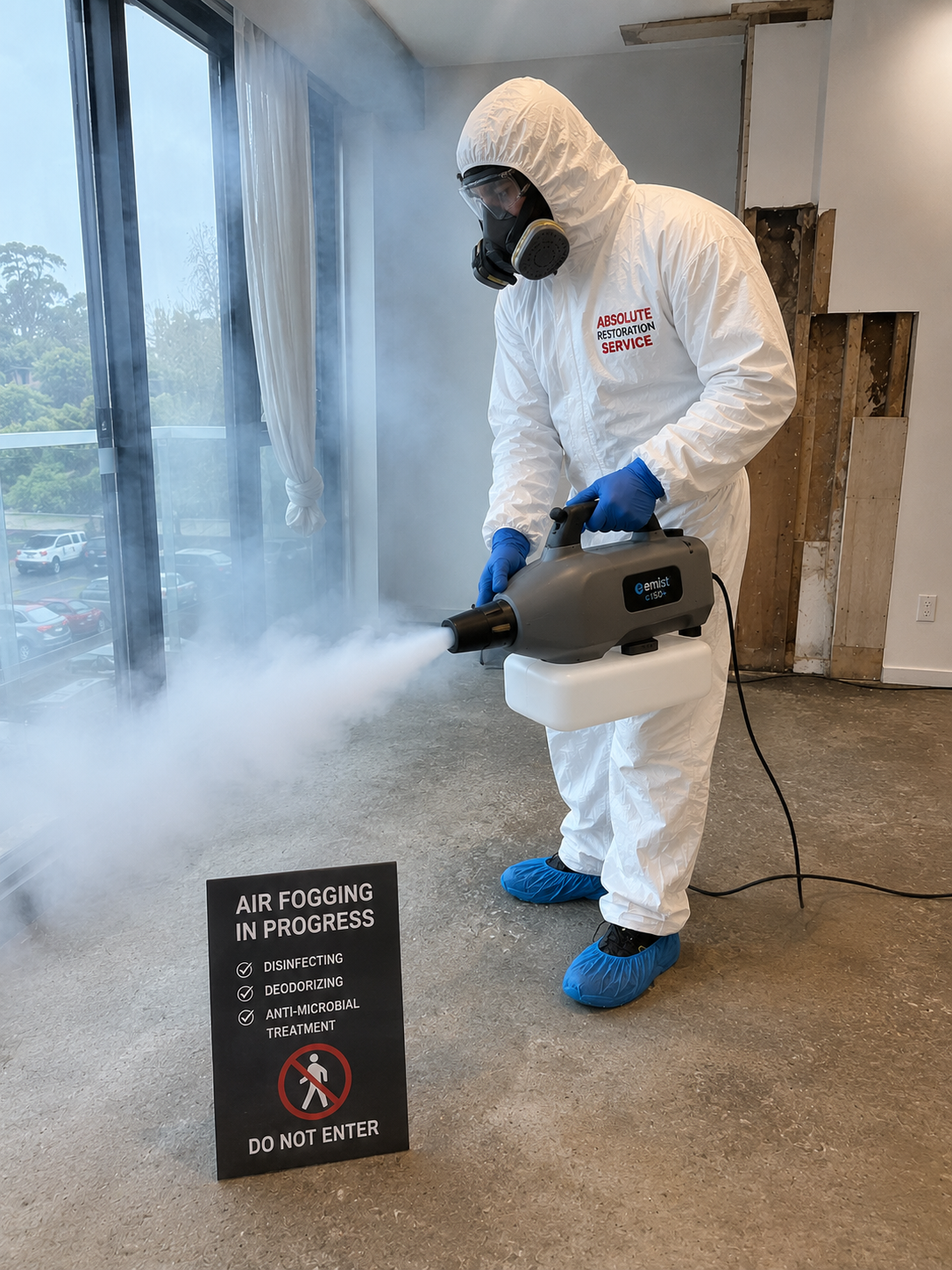
- Containment and protection: Appropriate controls are installed where mould or contaminated water could affect adjoining areas.
- Removal, cleaning and drying: Water is extracted, unsalvageable materials are removed where necessary, and affected areas are cleaned and dried under monitored conditions.
- Monitoring and completion: Moisture readings are reviewed and recommendations are provided to help reduce recurrence.
Signs Your Clifton Hill Property Needs an Inspection
- Visible mould, mildew or recurring dark spotting
- Persistent musty smells in bedrooms, wardrobes or subfloors
- Water stains, peeling paint or bubbling plaster
- Wet carpet, swollen skirting boards or damaged timber flooring
- Condensation on windows and cold external walls
- Damp subfloors or poorly ventilated rooms
- Mould returning after repeated household cleaning
- A recent leak, overflow, storm or sewage incident
Professional assessment can help determine whether the problem is confined to a surface or involves concealed moisture and a larger affected area.
Homes, Apartments, Rentals and Commercial Properties
Absolute Restoration Service assists Clifton Hill homeowners, tenants, landlords, property managers, owners corporations, builders and business operators. We work in terraces, houses, apartments, converted buildings, shops and offices, adapting the remediation plan to the structure, occupants and extent of damage.
Where persistent underfloor humidity or restricted airflow affects an older property, our team can also assess whether subfloor ventilation and moisture control should form part of the long-term strategy.
Why Choose Absolute Restoration Service?
- IICRC-certified technicians experienced in mould and water restoration
- Moisture investigation, remediation and structural drying from one team
- Experience with older homes, apartments and difficult-access areas
- Professional equipment for detection, HEPA filtration and drying
- Clear findings, practical recommendations and job documentation
- Fast response across Clifton Hill and surrounding inner-northern suburbs
Frequently Asked Questions
Can box-gutter leaks cause hidden mould?
Yes. Water entering around box gutters, flashings or roof junctions may remain concealed inside wall and ceiling systems. Moisture assessment helps determine how far the water has travelled.
How quickly should water damage be treated?
Water should be extracted and affected materials assessed as soon as it is safe. Delays may allow moisture to spread and increase the risk of deterioration, odours and mould growth.
How long does mould remediation take in Clifton Hill?
Many smaller projects can be completed within one to three days. Difficult access, extensive contamination, material removal and structural drying can extend the timeframe. The inspection determines the appropriate scope.
Can you inspect low-clearance subfloors?
Where safe access is available, our technicians can assess moisture, visible contamination, airflow and affected timber. Alternative investigation methods may be required where access is restricted.
Can mould return after professional remediation?
Yes. Mould can return if a leak, condensation, dampness or ventilation problem remains. Effective remediation combines contamination removal with moisture-source investigation and prevention recommendations.
Book a Free Mould Inspection in Clifton Hill
If your property has visible mould, musty odours, dampness or recent water damage, arrange an assessment with our IICRC-certified team. Same-day attendance may be available for urgent jobs.
Request Your Free Mould Inspection
Prefer to speak with a technician? Call 1300 114 842.