The benefits of professional mould removal extend beyond changing the appearance of a surface. A competent remediation response investigates moisture, defines the affected area, establishes appropriate controls and makes material decisions based on documented site conditions.
This Melbourne guide explains what professional mould remediation can add, where its limits lie and what homeowners, property managers and insurers should ask before authorising work.
Why Professional Mould Remediation Matters
Mould growth indicates that a material or surface has remained damp enough to support it. Cleaning visible spots without addressing condensation, a leak, wet building materials or restricted drying can allow the condition to continue.
Professional remediation connects the visible symptom to the building and moisture history. The aim is to define a practical scope, control disturbance and complete work that can be documented and reviewed.
1. Investigation of Moisture and Affected Areas
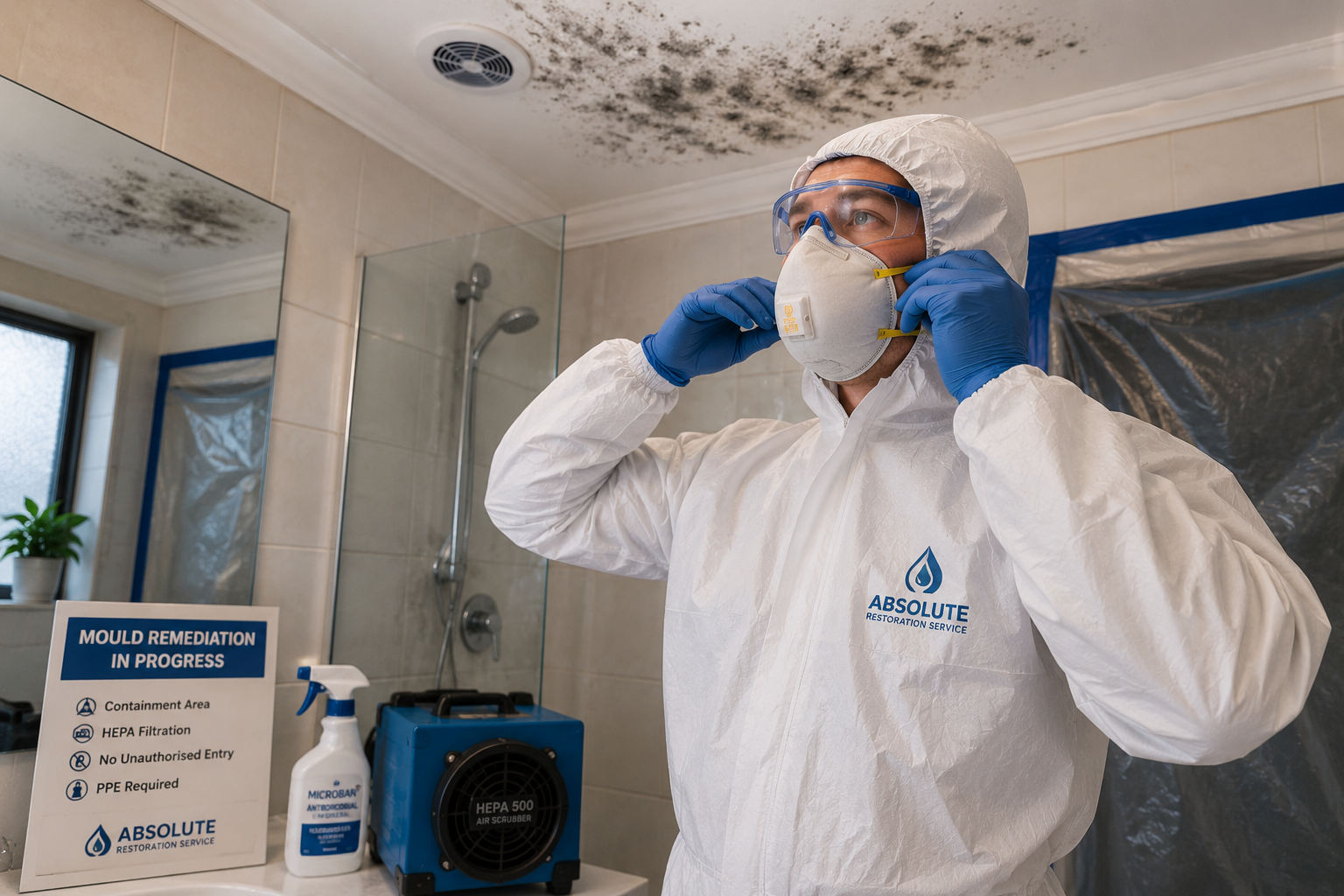
A remediation contractor should review when the problem began, any water events, previous repairs, occupancy patterns and the location of visible growth or odour. Accessible materials can then be inspected and compared using appropriate moisture instruments.
Thermal imaging may identify surface-temperature patterns associated with evaporation, insulation, airflow or construction differences. It does not see through walls, measure moisture directly or identify mould. Findings require comparison with visual evidence, material readings and building history.
Investigation reduces guesswork, but no non-destructive inspection can confirm that every concealed cavity has been assessed. Where justified and authorised, a plumber, roofer, builder, assessor or other qualified professional may need to investigate the source or inaccessible areas.
2. Controlled Disturbance and Work-Area Management
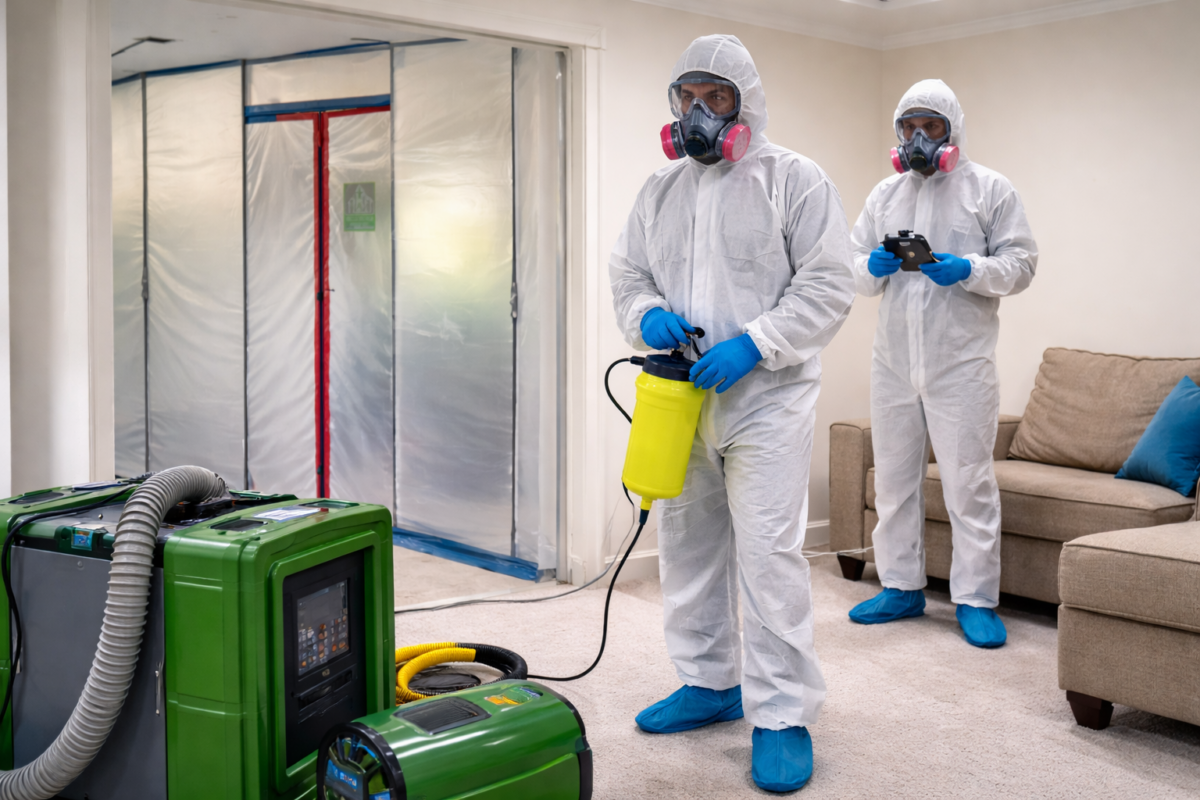
Removing damaged plasterboard, insulation, carpet or other porous material can release dust and debris. Professional work may use restricted access, containment, pressure management and HEPA-filtered air equipment according to the contamination, layout and scope.
Controls are not identical on every project. They should reflect the affected area, material type, access, occupancy and whether removal or detailed cleaning is required. Electrical, structural, asbestos, sewage and other hazards must be considered before work begins.
3. Material-Specific Remediation Decisions
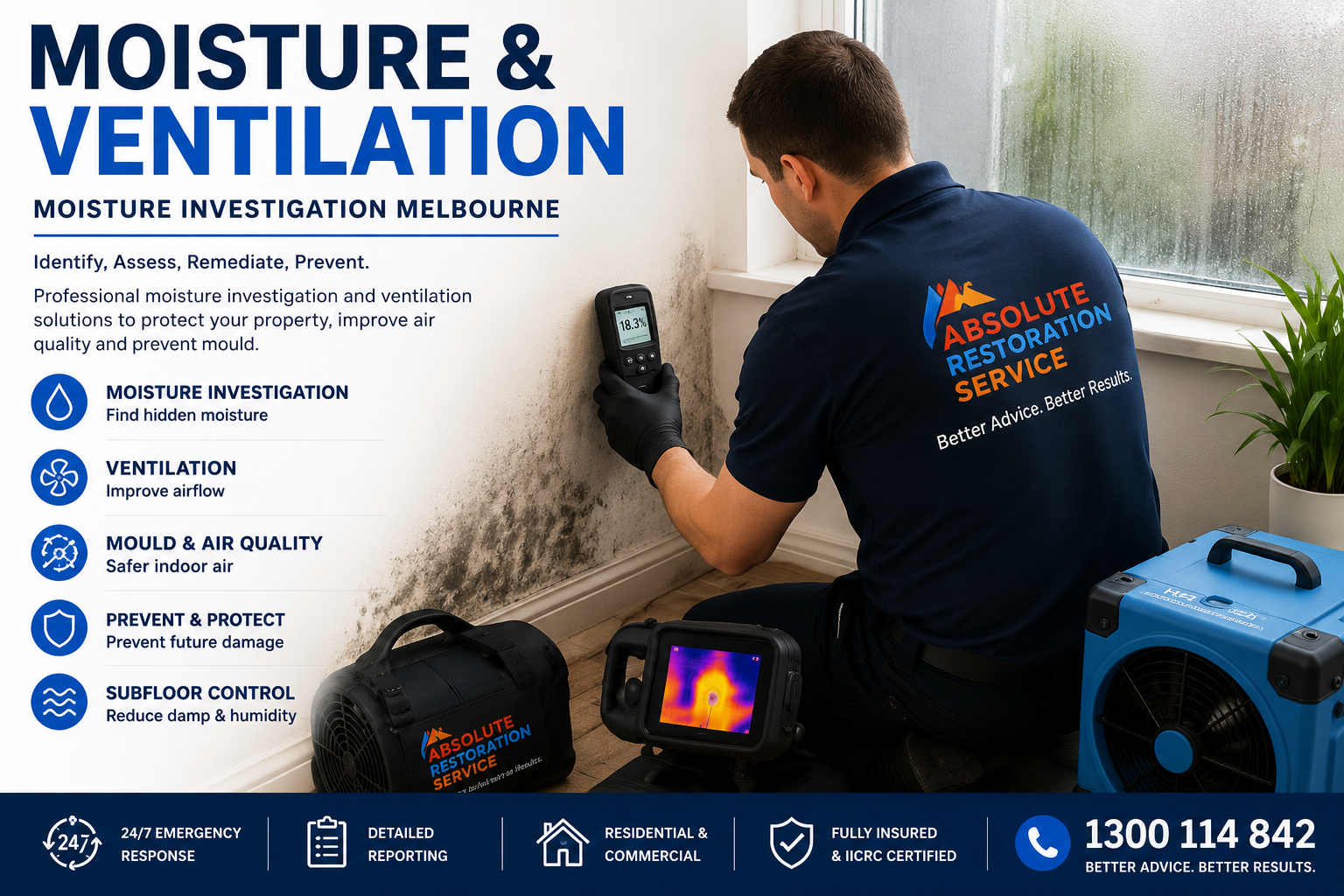
Not every affected material requires the same response. Sound non-porous and some semi-porous surfaces may be suitable for controlled cleaning. Damaged plasterboard, insulation, underlay and other porous materials may be difficult to restore when contamination or moisture has penetrated them.
Decisions consider porosity, condition, water source, duration, contamination, access and project objectives. A written scope should identify which materials are retained, cleaned, dried or authorised for removal.
4. Professional Equipment and Detailed Cleaning
HEPA-filtered vacuums, air scrubbers, dehumidifiers, air movers and moisture instruments each serve different purposes. Equipment selection and placement should follow the documented conditions rather than a standard package.
HEPA air filtration can support particulate control during remediation, but it does not replace source repair, material removal where required or detailed surface cleaning. Likewise, drying equipment should be monitored and adjusted according to accessible moisture conditions.
5. Documentation, Handover and Practical Prevention
A professional project can provide a clearer record of the initial conditions, authorised work, monitoring and completed scope. Handover information may identify outstanding source repairs, reinstatement requirements, maintenance steps or the need for independent verification.
Prevention advice should match the cause. Condensation may involve ventilation, insulation, heating and indoor moisture generation; roof or plumbing failures require the relevant trade; water damage may require extraction and structural drying. Generic advice such as opening windows or applying paint is not a complete answer for every building.
A Typical Professional Remediation Process
- Initial review: Record the moisture history, visible conditions, access and known hazards.
- Investigation: Assess accessible materials and define the affected area.
- Source coordination: Confirm that leaks or other active sources are addressed by the appropriate party.
- Work-area controls: Establish containment, restricted access and HEPA air management where required.
- Material work: Remove authorised unsalvageable materials and clean retained surfaces.
- Drying and monitoring: Use suitable equipment and monitor accessible materials.
- Handover: Document the completed scope and any outstanding repairs or verification.
What Professional Remediation Cannot Guarantee
No contractor can responsibly guarantee that mould will never return or that every inaccessible cavity is unaffected. Recurrence remains possible if moisture persists, repairs are incomplete, new water damage occurs or areas outside the authorised scope remain affected.
Property remediation also does not diagnose illness or determine whether a person should enter or occupy a building. Health questions should be discussed with an appropriately qualified healthcare professional.
Questions to Ask a Mould Remediation Contractor
- How will the moisture source and affected area be investigated?
- Which materials are proposed for cleaning, drying or removal, and why?
- What containment, access and HEPA air controls are included?
- Who is responsible for plumbing, roofing, building or asbestos work?
- How will drying and completed work be documented?
- Is independent post-remediation verification appropriate?
- Which items are excluded from the quoted scope?
Clear answers make it easier to compare scopes and understand the responsibilities of the owner, contractor and any independent assessor.
Professional Mould Remediation in Melbourne
Absolute Restoration Service provides mould removal in Melbourne, moisture investigation and water-damage restoration using IICRC-trained technicians. Each scope is adapted to the property, affected materials and documented conditions.
Call 1300 114 842 or contact ARS to discuss recurring, extensive or concealed mould and the appropriate next step.
Frequently Asked Questions
What are the main benefits of professional mould remediation?
They include documented moisture investigation, controlled work areas, material-specific decisions, HEPA-filtered air management, detailed cleaning and a defined handover.
Can I remove mould myself?
A small accessible area on a sound washable surface may be suitable for careful cleaning. Extensive, recurring or concealed growth may require professional assessment.
Will mould return after professional remediation?
It can return if moisture persists, repairs are incomplete, new water damage occurs or areas outside the scope remain affected.
Does thermal imaging detect hidden mould?
No. It shows surface-temperature patterns that may guide closer investigation.
Do all mould-affected materials need removal?
No. Decisions depend on porosity, condition, moisture exposure, contamination, access and project objectives.
How long does professional mould remediation take?
Duration depends on the affected area, materials, access, repairs, containment and drying requirements.