URGENT MOULD AND WATER-DAMAGE GUIDANCE FOR MELBOURNE PROPERTIES
Mould does not always require an emergency call-out, but some situations need prompt professional triage. Active water damage, sewage contamination, extensive growth, unsafe building conditions or contamination affecting essential occupied areas can require urgent action.
Absolute Restoration Service receives urgent mould and water-damage enquiries across Melbourne. Attendance and the work that can begin immediately depend on safety, access, technician availability, source control and the information provided during the initial call.
Call 1300 114 842 to discuss the property. If there is fire, electrical danger, structural instability, sewage exposure or a medical emergency, contact the appropriate emergency service or licensed professional first.
When Does Mould Require Urgent Attention?
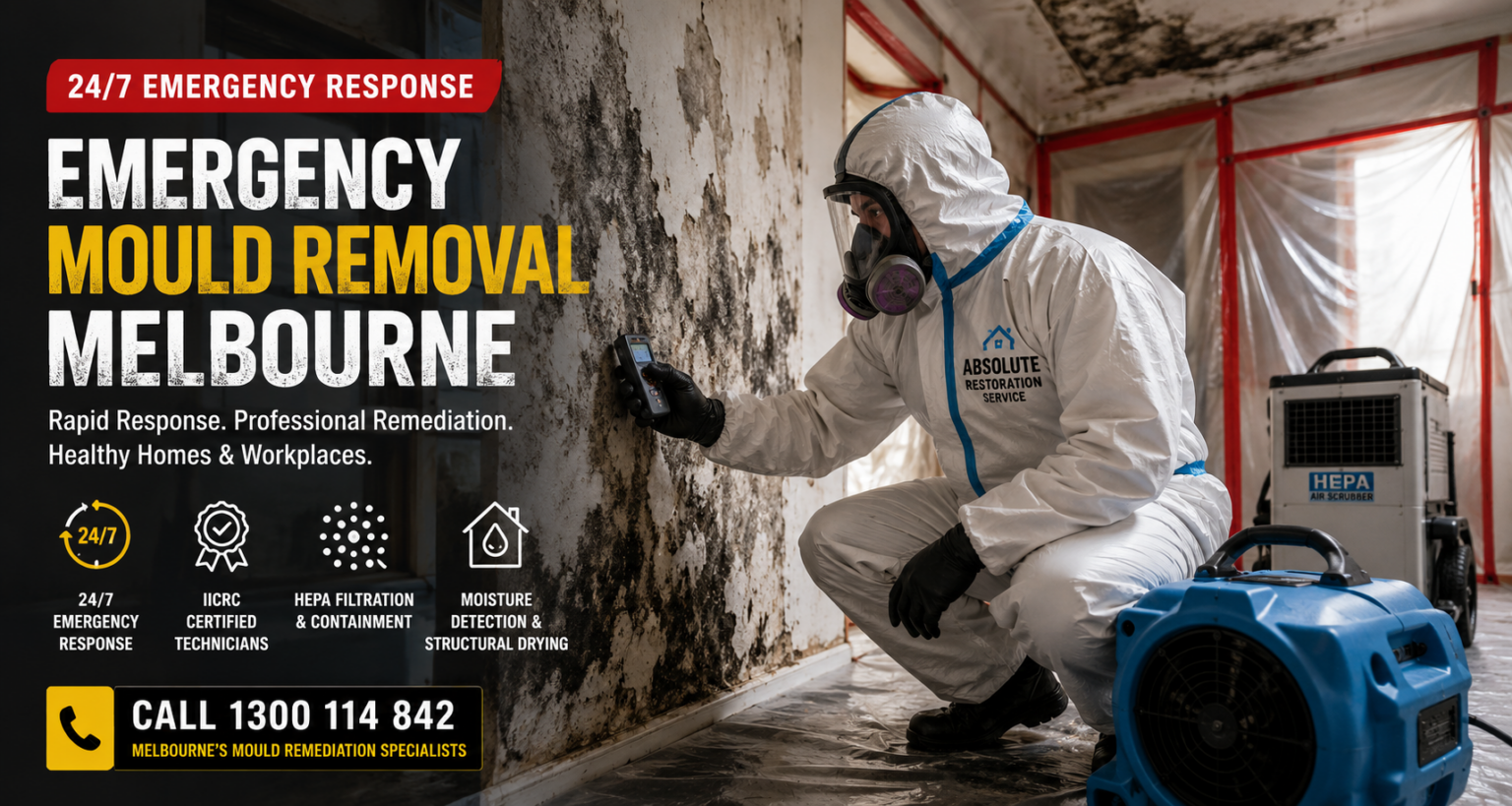
Prompt professional advice may be appropriate when:
- mould follows a burst pipe, flood, storm or active leak;
- sewage or other contaminated water is involved;
- growth is extensive, recurring or spreading across porous materials;
- mould is disturbed during demolition or renovation;
- an apartment, rental or commercial property needs immediate containment planning;
- essential rooms cannot be used safely because of water damage and contamination; or
- the source remains active and materials continue to get wetter.
Visible colour does not identify the mould species or establish a health risk. Urgency should be based on the overall property condition, hazards, moisture source and affected materials—not on labels such as “black mould” alone.
Situations for Emergency Services or Licensed Trades
A mould contractor is not the first responder for every hazard. Do not enter or remain in an area with suspected electrical danger, fire, structural instability, uncontrolled sewage, gas, hazardous chemicals or another immediate threat. Contact emergency services, the electricity provider, a licensed electrician, plumber, builder or other appropriate professional.
ARS can begin restoration after the site is suitable for access and the relevant source or hazard has been addressed.
What Happens During the Initial Call?
The initial conversation helps determine the safest next step and identify obvious hazards. Have the property address, property type, affected rooms and the time the water or mould was first noticed ready if available.
Information That Helps With Initial Triage
- the property address and type;
- when the water or mould was first noticed;
- whether the source is still active;
- the rooms and materials affected;
- whether sewage, stormwater or fire damage is involved;
- known electrical or structural hazards;
- occupancy, access and authorisation arrangements; and
- available photographs or reports.
Triage is not a remote diagnosis or guarantee of attendance time. It allows the team to identify obvious hazards, determine likely equipment needs and explain what information or source repairs may be required.
Urgent Mould and Moisture Assessment
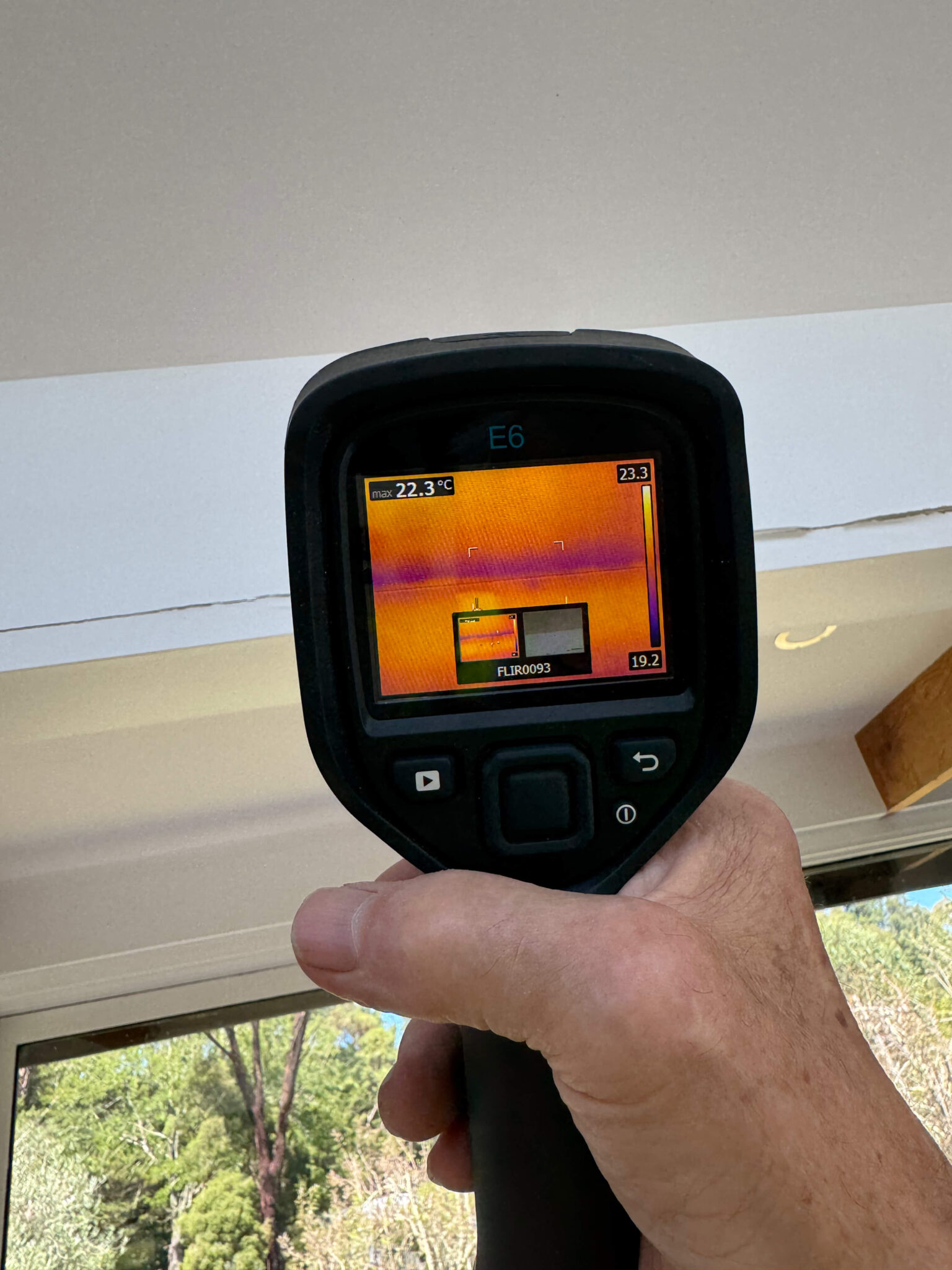
On site, technicians review visible conditions, the moisture history and accessible affected materials. Moisture meters and thermal imaging may support the investigation. Thermal imaging shows surface-temperature patterns; it does not see through walls, identify mould or prove the moisture source.
The assessment may identify the need for water extraction, structural drying, controlled material removal, containment, HEPA air management or further investigation by a plumber, builder, roofer or independent assessor.
Our Controlled Remediation Process
- Safety and source review: Confirm access conditions and whether the active source has been controlled.
- Moisture mapping: Assess accessible materials and define areas requiring further work.
- Work-area controls: Establish restricted access, containment and HEPA-filtered air management where appropriate.
- Material decisions: Identify materials suitable for restoration and those requiring authorised removal.
- Detailed cleaning: HEPA vacuum and clean accessible retained surfaces using methods suited to the material.
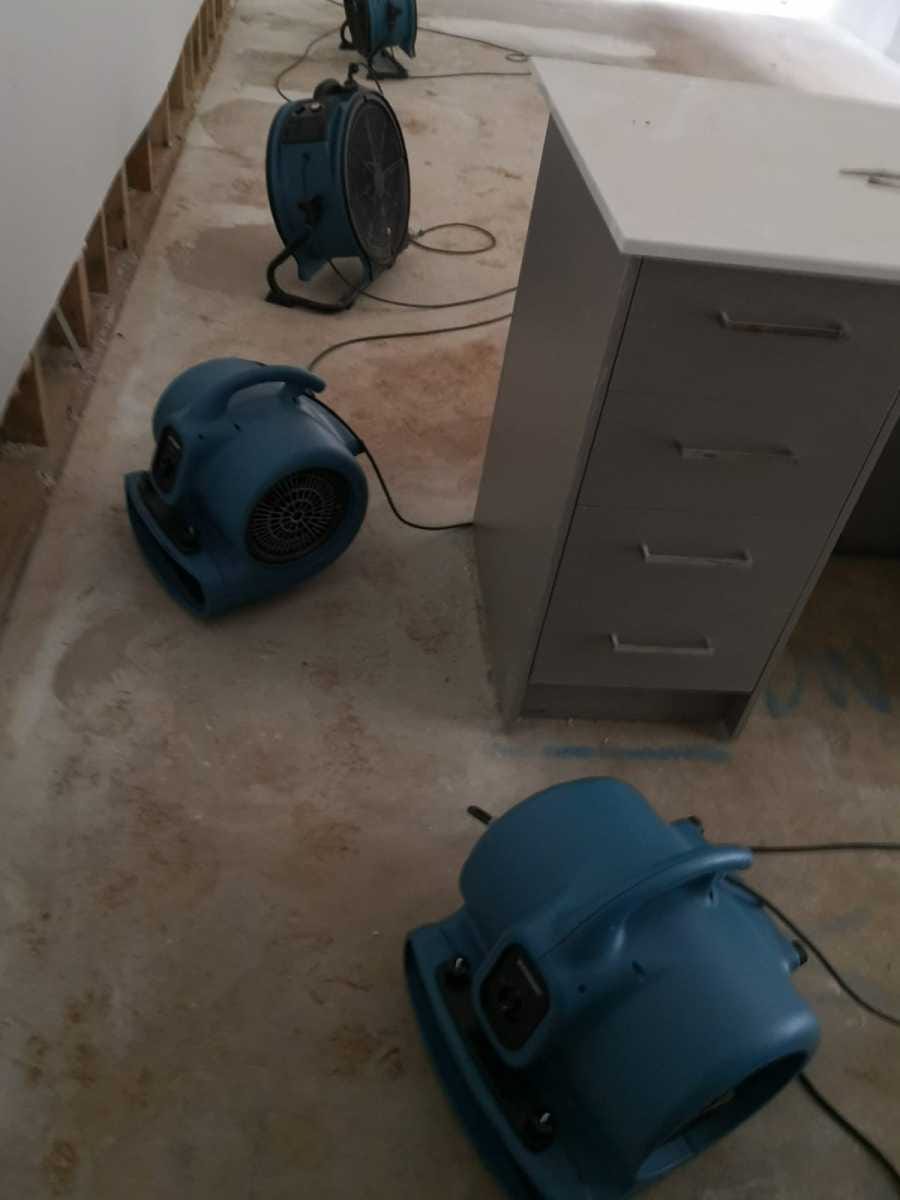
- Drying: Establish professional drying equipment where appropriate and monitor accessible moisture conditions.
- Handover: Document completed work and recommend repairs or independent verification where relevant.
Our IICRC-trained technicians adapt the process to the property. Mould remediation cannot always be completed in one visit because source repairs, drying, access, material removal and verification may occur in stages.
Structural Drying After an Urgent Water Event
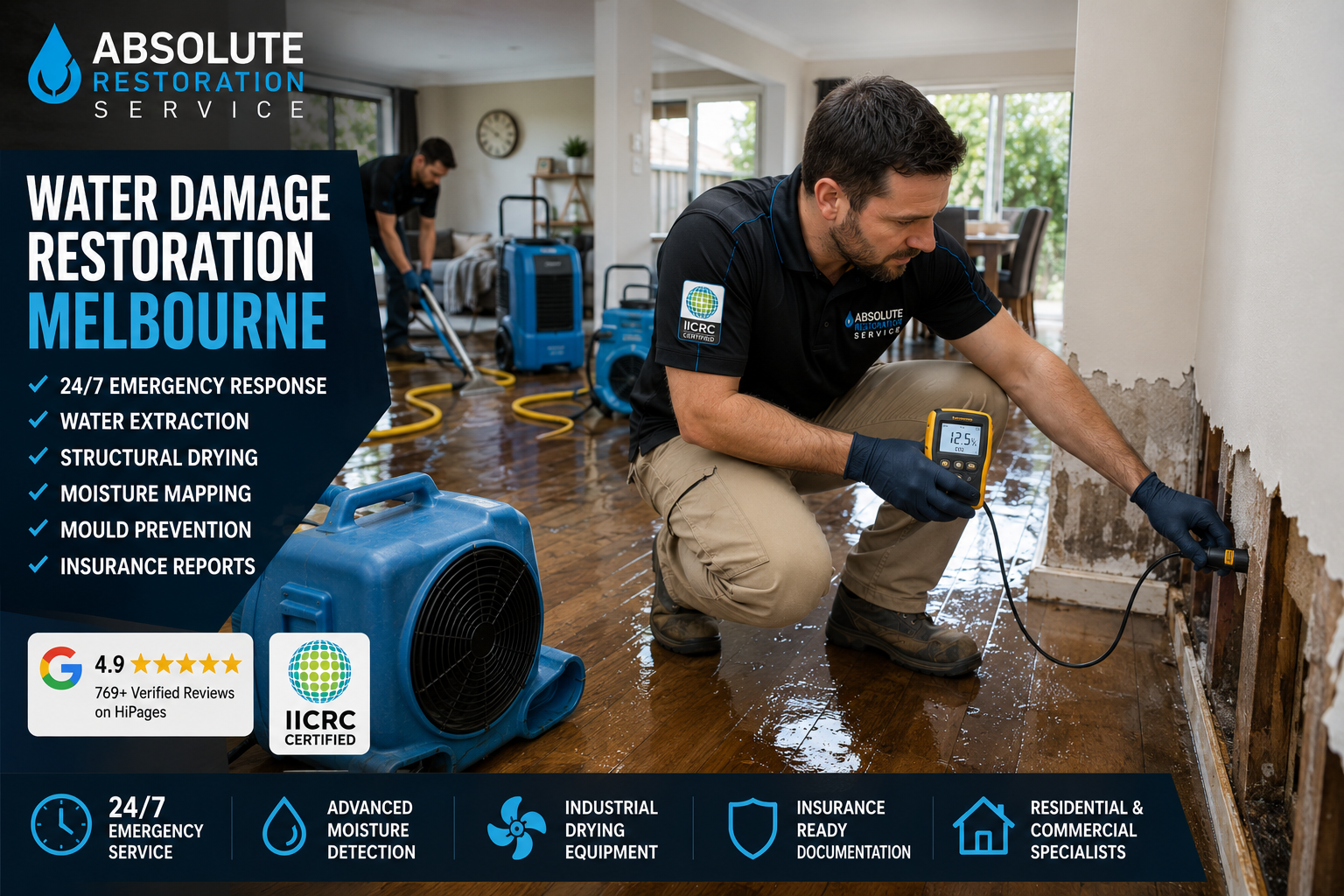
When mould risk follows recent water damage, accessible water may need to be extracted before dehumidifiers and air movers are established. Equipment selection depends on the water category, affected materials, room volume, electrical capacity and whether containment is required.
Drying should be monitored rather than based on a promised number of days. Materials respond differently, and repair work should not conceal substrates that have not been assessed as suitable.
What to Do While Waiting for Assistance
- Do not enter an area with electrical, structural, sewage or fire hazards.
- Stop the water source only when it is safe and within your ability.
- Avoid disturbing mould-affected materials or using uncontrolled fans on contaminated areas.
- Keep occupants and pets away from the immediate work area where practical.
- Photograph visible conditions before moving items, if safe.
- Notify the owner, property manager, owners corporation or insurer as required.
- Do not paint over growth or install replacement materials before assessment.
Rental, Apartment and Commercial Properties
Urgent work in managed buildings may require access approval and coordination with property managers, rental providers, owners corporations, facilities teams and licensed trades. Shared walls, service risers and common property can affect the sequence of investigation and repairs.
ARS documents observable restoration conditions and completed work. We do not determine liability, tenancy responsibility, insurance coverage or legal compliance.
Health Concerns and Mould Exposure
ARS does not diagnose illness or determine whether a property has caused symptoms. Anyone with health concerns should seek advice from an appropriately qualified healthcare professional. A medical emergency requires urgent medical assistance.
Sampling is not automatically required for every mould project. When testing is justified, it should answer a defined question and be designed and interpreted by a suitably qualified professional or laboratory.
Request Urgent Mould Assistance in Melbourne
Call Absolute Restoration Service on 1300 114 842 and describe the property, water source, affected areas and immediate hazards. For non-urgent requests, use the ARS contact form.
Emergency Mould Removal FAQs
When is mould an urgent restoration issue?
Urgent assessment may be appropriate when mould follows active flooding, affects a large area, involves sewage or contaminated water, is disturbing occupied essential spaces or requires immediate containment before other work.
Does ARS provide after-hours mould assistance in Melbourne?
ARS receives urgent restoration enquiries outside standard hours. Attendance timing depends on safety, technician availability, access and the information provided during triage.
Should I enter a room with extensive mould and water damage?
Do not enter when there may be electrical, structural, sewage, fire or other immediate hazards. Contact the appropriate emergency service or licensed professional first.
Can mould be removed immediately in one visit?
Not always. The source, moisture condition, affected materials, access and containment requirements must be assessed before the appropriate remediation scope can be completed.
What should I do while waiting for professional help?
Avoid disturbing affected materials, isolate the area where practical, stop the water source only if safe, document visible conditions and follow instructions from emergency services, insurers or property managers.
Who handles urgent mould in a rental or strata property?
Notify the authorised property manager, rental provider, building manager or owners corporation as applicable. ARS can document restoration conditions but does not determine liability or tenancy responsibility.