Dry Ice Cleaning Melbourne
Specialist dry ice blasting for selected fire-restoration, remediation and industrial-cleaning applications across Melbourne.
Dry ice cleaning can remove certain soot, coatings, grease and surface residues without adding water or leaving spent blasting media. However, it is not appropriate for every contaminant or substrate. Absolute Restoration Service assesses the surface, site hazards, containment needs and required finish before recommending the method.
Call 1300 114 842 or request a site assessment. Availability depends on project location, access, ventilation and equipment requirements.
What Is Dry Ice Cleaning?
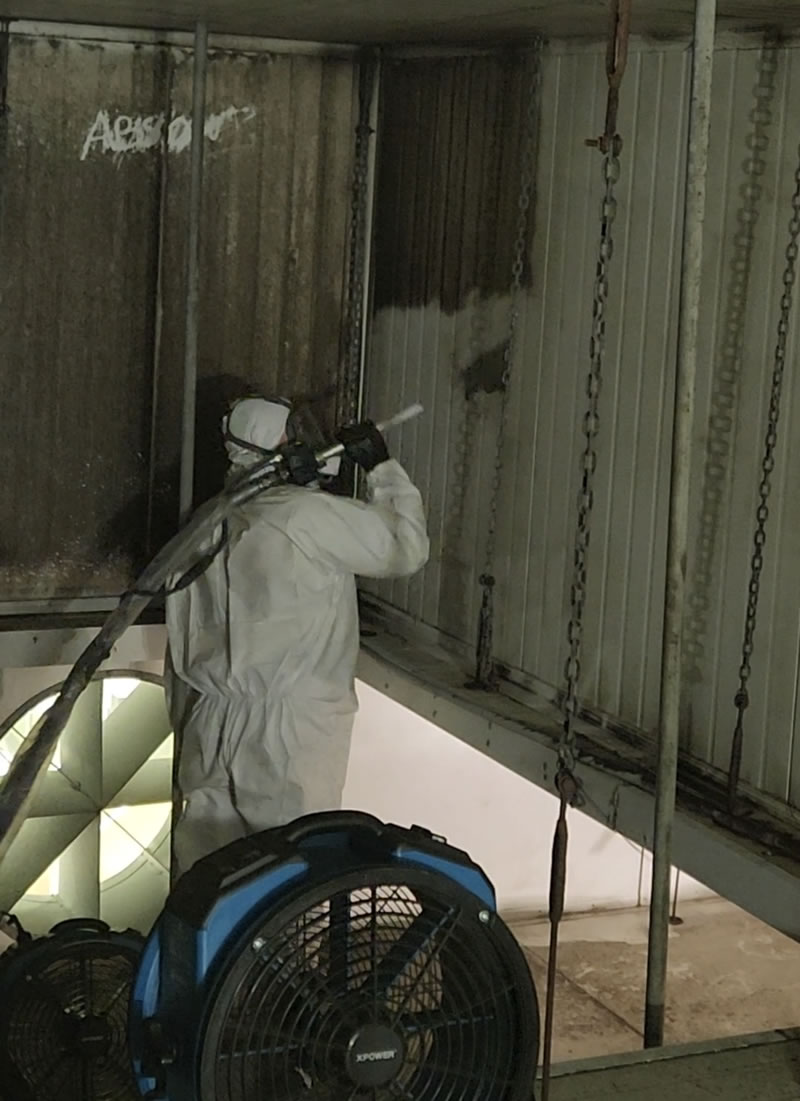
Dry ice blasting propels solid carbon-dioxide pellets through a specialised machine and nozzle. On impact, the pellets transfer energy to the surface and sublimate from solid carbon dioxide into gas. The combined effect can loosen selected surface deposits for collection.
The process does not add liquid water and the dry ice itself does not remain as spent blasting media. The removed soot, coating, grease, mould debris or other contaminant still remains and must be contained, collected and disposed of appropriately.
Where Dry Ice Blasting May Be Used
Fire and Smoke Damage Restoration
Following authority release and a site assessment, dry ice blasting may assist with removing selected soot, char and smoke residues from structural timber, masonry, concrete or other compatible materials. A test area helps determine cleaning effectiveness and whether the substrate could be altered.
Learn about our broader fire and smoke damage restoration Melbourne service.
Mould Remediation Support
Dry ice blasting may support physical removal from suitable structural surfaces, but it is not a complete mould-remediation strategy by itself. Moisture investigation, source correction, containment, HEPA cleaning and appropriate verification may also be required.
See mould removal Melbourne for the complete remediation approach.
Industrial and Commercial Cleaning
Selected machinery, production equipment, structural components and difficult-access areas may be suitable where water or conventional blasting media would be undesirable. Equipment status, isolation, manufacturer requirements, combustible dust and site operations must be reviewed before work begins.
Heritage and Sensitive Substrates
Dry ice settings can be adjusted, but the process is not universally non-abrasive. Timber, paint, coatings, masonry and delicate finishes can be marked or altered. Condition assessment, client approval and a controlled test patch are important before larger-scale cleaning.
Benefits and Limitations
Potential Benefits
- No liquid water introduced by the dry ice media
- No spent dry ice pellets requiring collection
- Adjustable pressure, pellet flow and nozzle selection
- Access to detailed shapes and selected hard-to-reach surfaces
- Potentially reduced dismantling or drying compared with some methods
Important Limitations
- Removed contamination still becomes waste or airborne debris and requires control
- The process can damage soft, brittle, coated or delicate surfaces
- It does not correct moisture, corrosion, substrate failure or the source of contamination
- Noise, projectiles, cold burns and elevated carbon dioxide require specific controls
- Some residues need other cleaning, removal or decontamination methods
- Confined or poorly ventilated areas may be unsuitable without engineered controls
Our Dry Ice Cleaning Process
1. Site and Contaminant Assessment
We identify the cleaning objective, apparent residue, substrate, access, adjacent areas and any operational constraints. Unknown or hazardous contaminants may require testing or specialist advice before cleaning.
2. Safety and Ventilation Planning
Dry ice releases carbon dioxide gas. The work plan considers ventilation, atmospheric monitoring where indicated, exclusion zones, hearing protection, eye and skin protection, safe handling and emergency arrangements. Dry ice is not used casually in confined spaces.
3. Test Area
A controlled test helps establish whether the method achieves the required result without unacceptable substrate change. Pressure, pellet feed, nozzle and stand-off distance may be adjusted.
4. Containment and Protection
Depending on the residue, we isolate the area and protect nearby surfaces, occupants and equipment. HEPA-filtered air management or collection may be used where the project requires particulate control.
5. Controlled Cleaning
Trained operators clean the agreed areas using settings suited to the tested surface. Electrical and mechanical equipment must be safely isolated or otherwise managed under the site’s authorised safety procedure; dry ice blasting is not permission to clean energised equipment.
6. Residue Collection and Review
Dislodged material is collected and managed according to the contaminant and scope. The completed accessible surfaces are reviewed against the agreed finish, with further treatment recommended where dry ice cleaning alone is insufficient.
Safety Considerations
Carbon dioxide is colourless and can displace oxygen. Dry ice can also cause cold burns, while blasting creates noise, flying particles and contaminated debris. Work should be undertaken with appropriate ventilation, monitoring where required, personal protective equipment and access control.
If a site contains suspected asbestos, lead, hazardous chemicals, combustible dust or biological contamination, those hazards must be identified and managed before the blasting method is selected.
Why Choose Absolute Restoration Service?
- Restoration-led assessment rather than one-method cleaning
- Trained operators and professional dry ice blasting equipment
- Test-patch and substrate-suitability approach
- Containment and HEPA air-management options where required
- Integration with fire, mould and contamination remediation scopes
- Residential, commercial and industrial project experience
- Melbourne service coverage subject to project requirements
Related Restoration Services
- Fire and Smoke Damage Restoration Melbourne
- Mould Removal Melbourne
- Biohazard Remediation Services
- Clandestine Remediation Melbourne
- Melbourne Service Coverage
Frequently Asked Questions
Is dry ice cleaning completely non-abrasive?
No method is automatically safe for every surface. Dry ice blasting can alter soft timber, paint, coatings and fragile materials. ARS assesses the substrate and completes a test area before proceeding where appropriate.
Does dry ice blasting create waste?
The dry ice sublimates and does not remain as spent blasting media. The material removed from the surface still requires containment, collection and appropriate disposal.
Can dry ice cleaning remove mould?
It may support physical removal from suitable surfaces, but it does not address the moisture source or replace containment, HEPA cleaning and other remediation controls.
Can it be used on electrical equipment?
Dry ice does not introduce liquid water, but electrical and mechanical hazards remain. Equipment must be assessed, isolated and managed under authorised site and manufacturer procedures before cleaning.
Is dry ice blasting safe in confined spaces?
Carbon dioxide can accumulate and displace oxygen. Confined or poorly ventilated work requires a formal risk assessment, ventilation, monitoring and appropriate controls; some spaces may be unsuitable.
How do I know whether dry ice cleaning suits my project?
A site assessment and test area are the best starting points. Suitability depends on the residue, substrate, required finish, ventilation, access, adjacent operations and waste controls.
Request a Dry Ice Cleaning Assessment
Call 1300 114 842 or contact Absolute Restoration Service to discuss dry ice cleaning for a restoration, remediation or industrial project in Melbourne.