Timber Mould Removal Melbourne
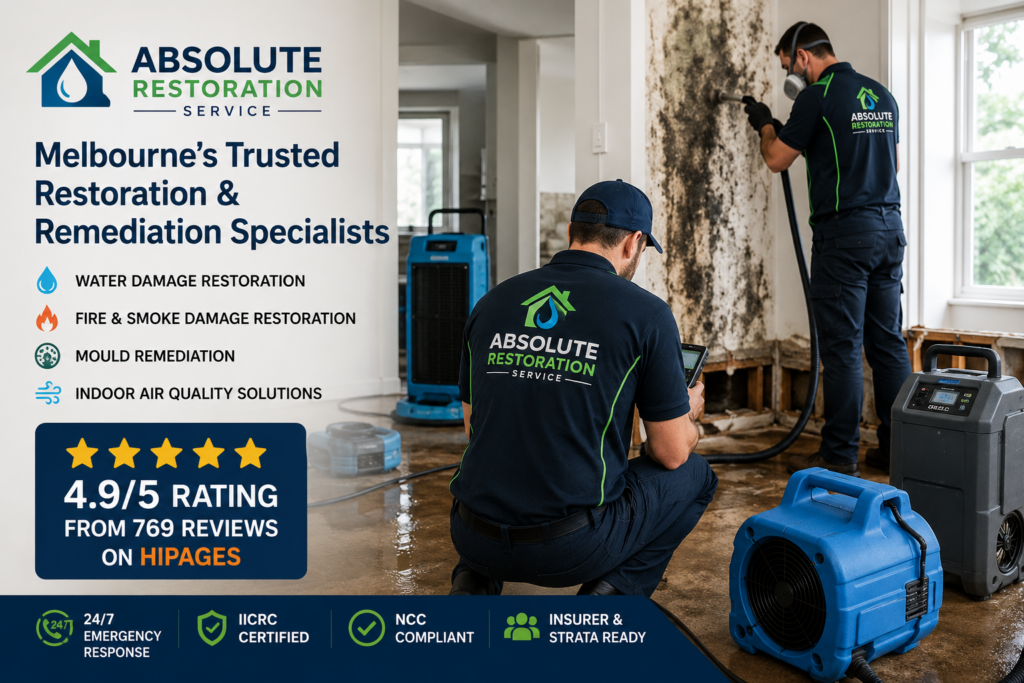
Timber mould growth is commonly caused by elevated moisture, poor ventilation, condensation, water damage, and subfloor dampness. If left untreated, mould contamination can progressively damage structural timber, flooring systems, wall framing, furniture, and concealed building materials.
Absolute Restoration Service provides professional timber mould removal Melbourne services, including moisture investigation, mould remediation, structural drying, and environmental treatment procedures designed to reduce ongoing fungal contamination and moisture-related deterioration.
What Causes Mould Growth in Timber?
Timber readily absorbs moisture when exposed to water intrusion, elevated humidity, condensation, or inadequate airflow. Once moisture content rises beyond acceptable levels, fungal contamination may begin developing within timber surfaces and structural materials.
Common causes of timber mould growth include:
- Roof and plumbing leaks
- Subfloor dampness and poor ventilation
- Condensation and elevated humidity
- Flood and water damage events
- Inadequate airflow within wall or ceiling cavities
- Long-term moisture exposure
Timber mould contamination commonly affects structural framing, flooring systems, roof timbers, subfloors, skirting boards, and timber furniture.
Signs of Timber Mould Damage
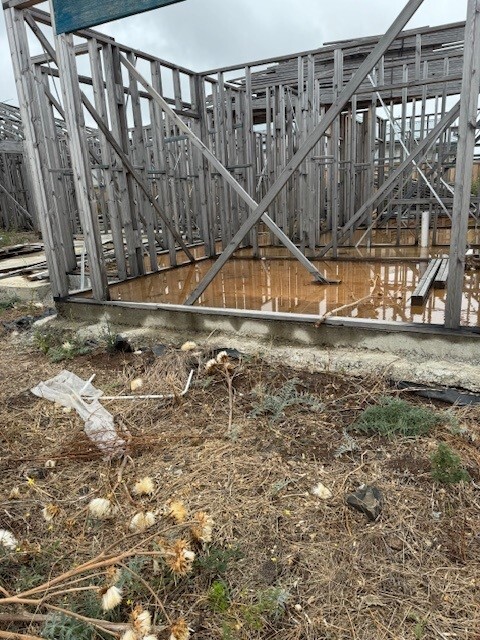
Timber mould contamination is not always immediately visible. Early identification assists with preventing further deterioration and secondary environmental damage.
- Musty odours
- Black, green, or white fungal staining
- Discoloured timber surfaces
- Warping or swelling timber
- Elevated indoor humidity
- Subfloor dampness
- Visible fungal growth on framing or flooring
- Deteriorating timber finishes
Professional Timber Mould Removal Process
Absolute Restoration Service follows structured mould remediation procedures aligned with ANSI/IICRC S520 principles and moisture-management practices.
1. Inspection & Moisture Investigation
Moisture readings, thermal imaging, and environmental assessment procedures assist with identifying active moisture sources contributing to mould growth.
2. Containment & HEPA Filtration
Containment systems and HEPA air filtration may be installed where necessary to reduce airborne spore migration during remediation works.
3. Controlled Timber Remediation
Contaminated timber surfaces are professionally treated using controlled remediation and antimicrobial cleaning procedures.
4. Structural Drying & Moisture Stabilisation
Commercial dehumidification and airflow management systems assist with reducing elevated moisture conditions within timber materials.
5. Post-Remediation Verification
Final moisture and environmental assessments assist with confirming remediation effectiveness and moisture stabilisation.
Subfloor Timber Mould Problems
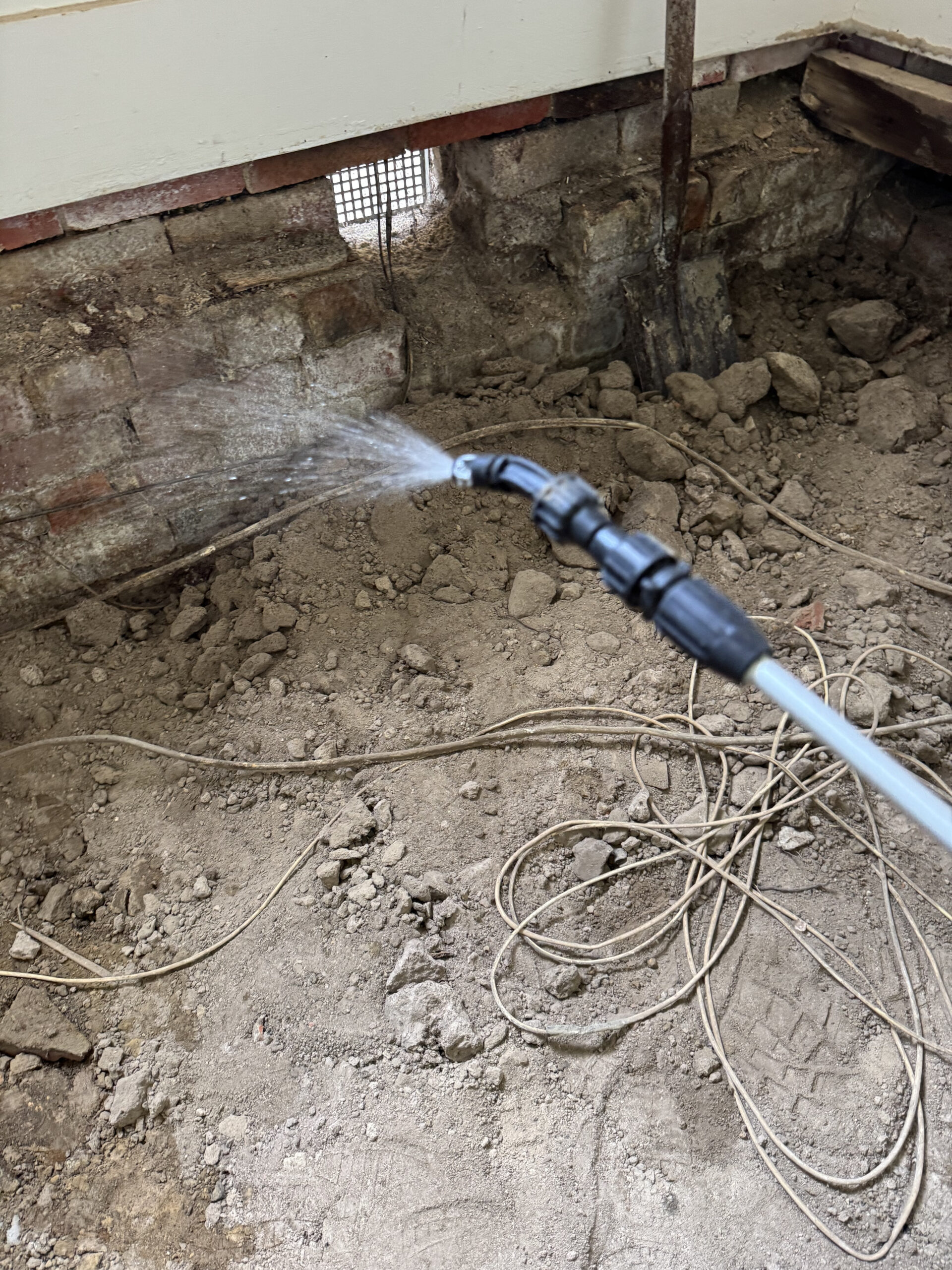
Subfloor mould growth identified on structural timber framing due to restricted airflow and prolonged moisture exposure beneath suspended flooring systems.
Subfloor environments are highly susceptible to mould growth due to restricted airflow, ground moisture, and elevated humidity conditions. Damp subfloor environments commonly contribute to fungal contamination affecting flooring timbers, bearers, joists, and indoor air quality.
Where ventilation deficiencies are identified, Subfloor Ventilation Melbourne to assist with moisture management and long-term mould prevention.
Timber Mould & Indoor Air Quality
Fungal contamination affecting timber materials may negatively impact indoor air quality by contributing to airborne particulate contamination, musty odours, and elevated microbial ecology within occupied environments.
Absolute Restoration Service also provides Indoor Air Quality Assessment Melbourne services to investigate ventilation performance, humidity imbalance, and environmental conditions associated with mould contamination.
Timber Mould Following Water Damage
Timber mould growth commonly develops following unresolved water intrusion events including roof leaks, burst pipes, stormwater ingress, and flooding.
Our Water Damage Restoration Melbourne services assist with structural drying, moisture stabilisation, and mould prevention following water-related property damage.
Structural Timber & Moisture Damage
Long-term fungal contamination and elevated moisture exposure may progressively compromise timber integrity, leading to deterioration, decay, swelling, and reduced structural performance.
Professional moisture investigation and remediation assist with identifying underlying moisture sources before significant structural deterioration occurs.
Why Moisture Control Matters
Mould remediation alone will not permanently resolve timber mould problems if the underlying moisture source remains active.
Effective moisture management may involve:
- Structural drying
- Ventilation improvements
- Subfloor airflow management
- Condensation reduction strategies
- Water ingress repairs
- Humidity control
Where extensive fungal contamination is identified, our Mould Removal Melbourne services may also be required.