Wall mould removal in Melbourne begins by establishing why the wall became damp and which materials are affected. Surface growth may involve condensation on a cold wall, while localised staining, damaged plasterboard or recurring odour can indicate a leak or concealed moisture.
Absolute Restoration Service provides moisture investigation and controlled wall-mould remediation for residential and commercial properties. Call 1300 114 842 to discuss the location, visible area, water history and access.
Professional Wall Mould Removal Melbourne
Our IICRC-trained technicians inspect accessible wall surfaces, compare moisture conditions and develop a scope suited to the material and extent. Work may include containment, HEPA-filtered air management, authorised removal of unsalvageable plasterboard and detailed cleaning of retained surfaces.
ARS does not assume that every dark mark is the same condition. The pattern, location, material, moisture history and source repairs all influence the response.
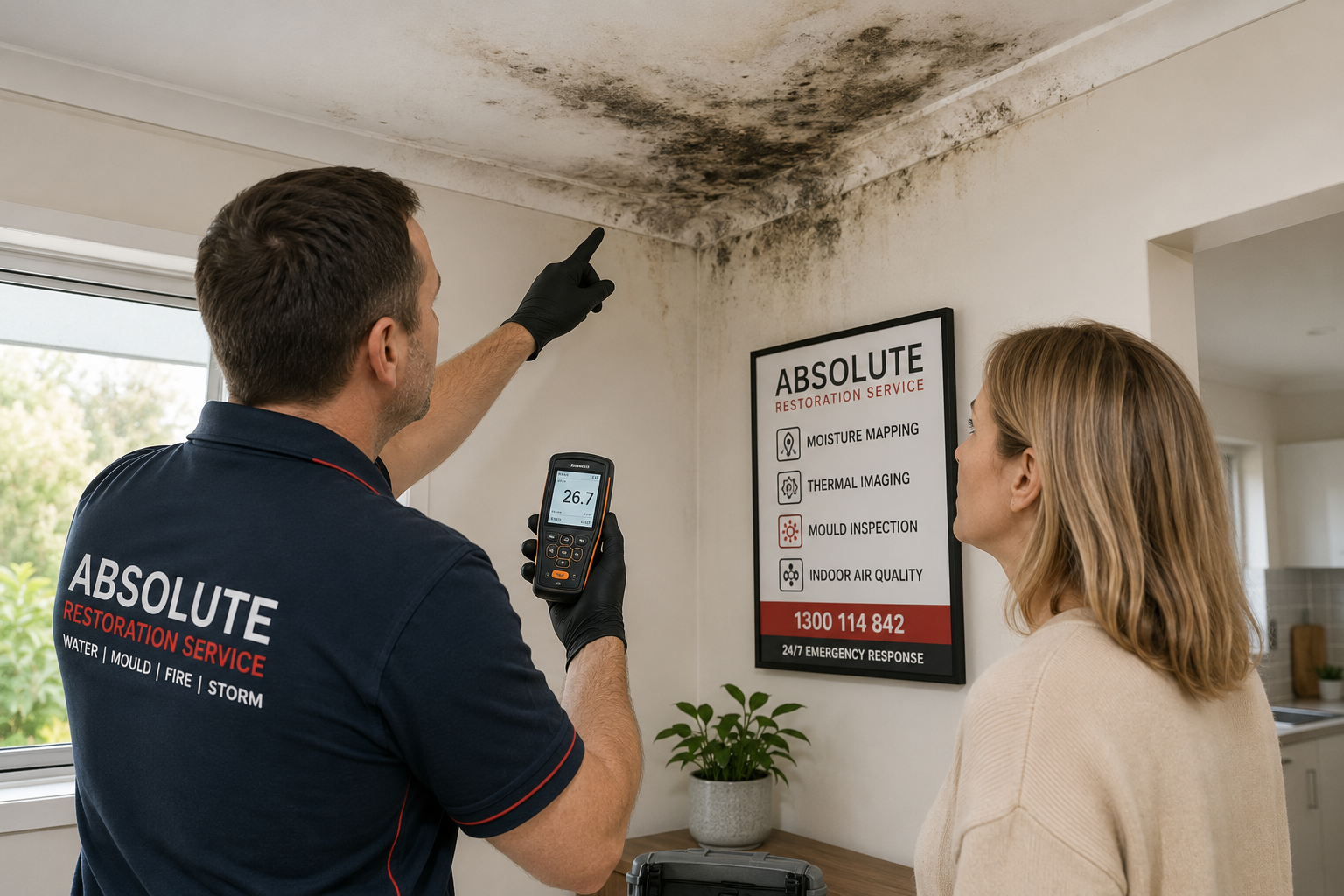
Common Causes of Mould on Walls
- Condensation: humid indoor air reaches a colder wall, corner or window reveal.
- Restricted airflow: furniture, wardrobes or stored items limit heat and air movement.
- Plumbing leaks: concealed pipes, fittings, drains or wet-area services affect the wall cavity.
- Roof or external water entry: rain penetrates through roofing, flashing, windows, cladding or joints.
- Water damage: burst pipes, overflows or flooding wet plasterboard, insulation and framing.
- Subfloor or ground moisture: dampness affects lower wall sections through building or drainage conditions.
- Insulation and thermal bridging: local cold surfaces support repeated condensation.
More than one factor may be present. For example, restricted airflow behind a wardrobe can make an already cold external wall more vulnerable to condensation.
Signs of Possible Concealed Wall Moisture
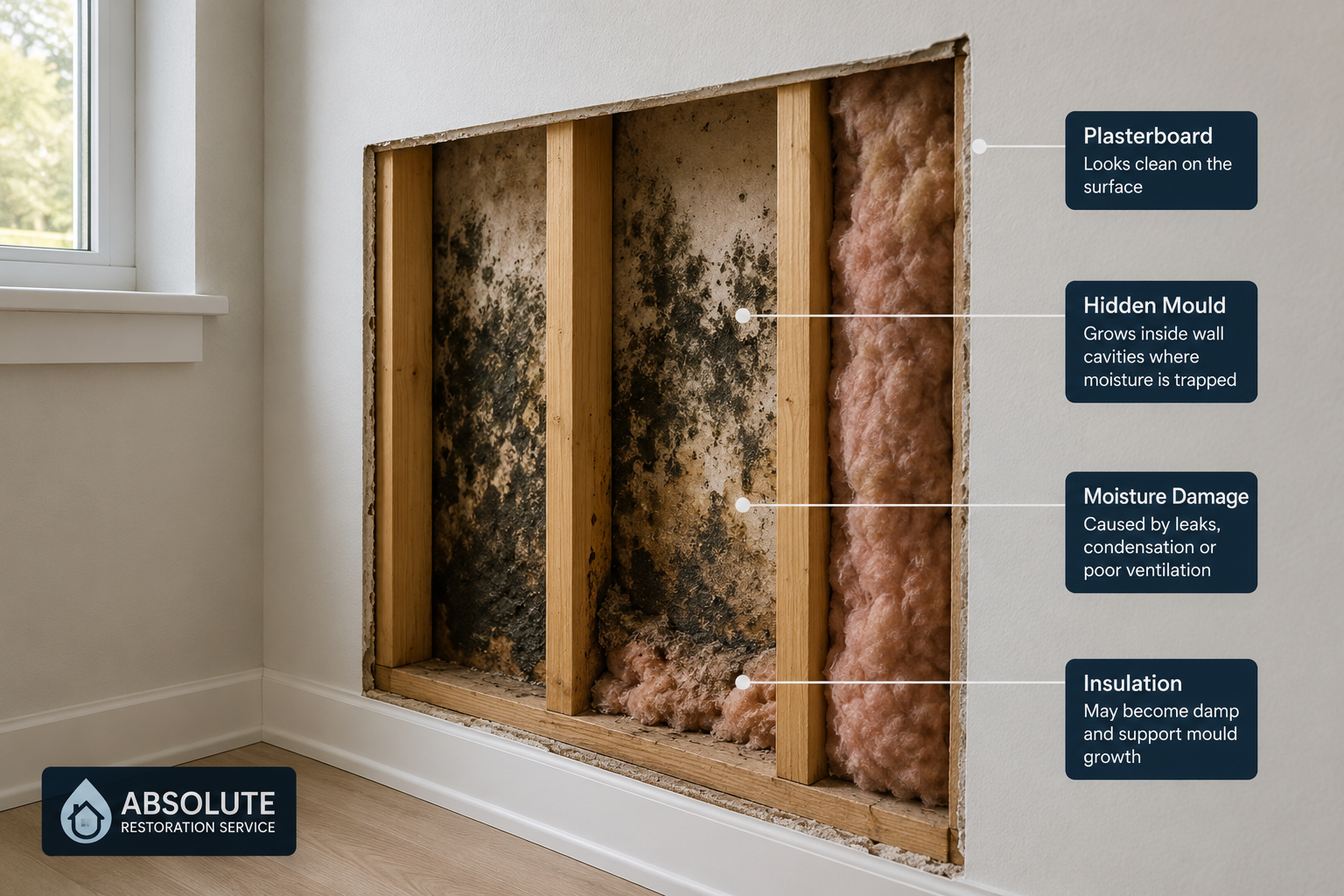
Warning signs can include bubbling paint, swollen skirting, soft plasterboard, salt deposits, local staining, recurring growth, damaged flooring or a musty odour. The affected point on the room side may not be directly beside the entry source.
Do not open a wall without considering electrical wiring, plumbing, structure, asbestos and contamination controls. Licensed trades or an independent assessor may be required before invasive investigation.
Moisture Investigation for Wall Mould
Technicians review the building and water history, visible conditions, room use and affected materials. Moisture meters can compare accessible wall areas with suitable reference locations.
Thermal imaging may show surface-temperature patterns influenced by evaporation, insulation, airflow, sunlight or construction. It does not see through walls, measure moisture directly or identify mould.
No non-destructive inspection can guarantee the condition of every inaccessible cavity. Where evidence justifies it, targeted opening may be recommended after authorisation and appropriate hazard checks.
Cleaning Versus Removal of Wall Materials
A sound washable coating with limited surface growth may be suitable for controlled cleaning. Soft, swollen, delaminated or contaminated porous plasterboard and insulation can be difficult to restore and may require authorised removal.
Material decisions consider porosity, condition, contamination, water source, duration, access and reinstatement requirements. Removal should not extend beyond the agreed scope without authorisation.
Bleach, fragrance products and paint do not repair a leak or condensation problem. Never mix cleaning chemicals. Coatings may stain, blister or fail when applied before source correction, assessment, cleaning, preparation and drying.
When Professional Wall-Mould Treatment Is Appropriate
Arrange assessment when growth is extensive, repeatedly returns, may be concealed, follows water damage, affects porous materials or cannot be accessed safely. Electrical danger, structural instability, sewage, asbestos or active water entry requires the appropriate specialist before remediation.
For a small accessible area on a sound washable surface, careful cleaning may be reasonable after hazards and moisture are considered. Avoid dry brushing, sanding or aggressive disturbance that can spread debris.
Our Wall Mould Remediation Process
- Initial review: Record the moisture history, visible conditions, access and known hazards.
- Investigation: Assess accessible materials and define areas requiring work.
- Source coordination: Refer plumbing, roofing, drainage or building defects to the relevant trade.
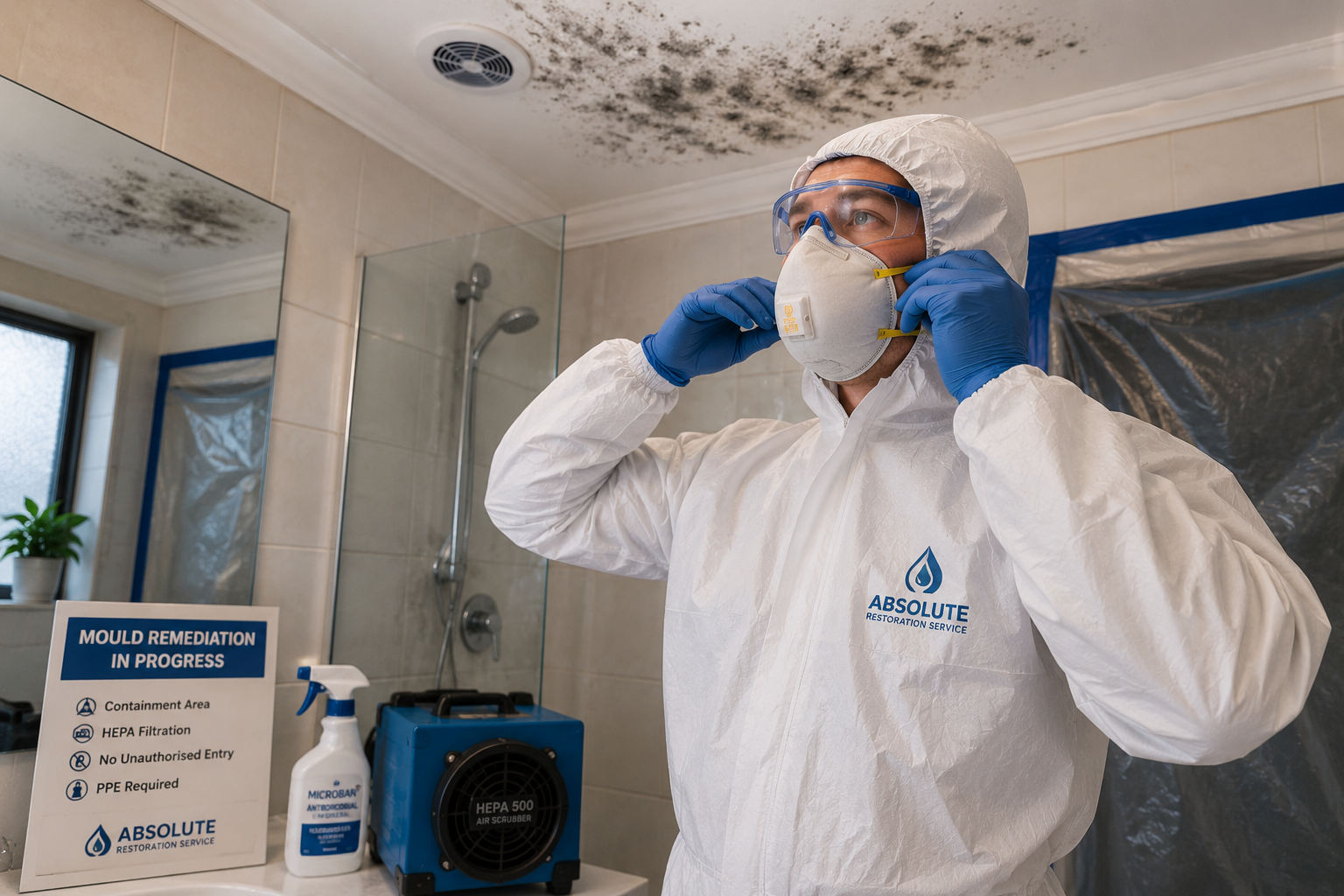
- Work-area controls: Establish restricted access, containment and HEPA air management where required.
- Material remediation: Complete authorised removal and material-appropriate cleaning.
- Drying and monitoring: Use suitable equipment and document accessible moisture conditions.
- Handover: Record the completed scope and outstanding repair or verification needs.
Preventing Wall Mould From Returning
Prevention must match the source. Recommendations may include plumbing or roof repairs, drainage work, improved wet-area exhaust, furniture spacing, insulation review, controlled heating, subfloor moisture management or structural drying after a water event.
Professional remediation cannot guarantee that mould will never return. Recurrence remains possible if moisture persists, repairs are incomplete, new water damage occurs or areas outside the authorised scope remain affected.
Residential and Commercial Wall-Mould Services
ARS works with homeowners, landlords, property managers, owners corporations, builders, workplaces and insurers across Melbourne. Commercial projects may require staged access, occupant coordination, documentation and liaison with independent assessors or trades.
Property remediation does not diagnose illness or determine whether a person should occupy a building. Health concerns should be discussed with an appropriately qualified healthcare professional.
Request a Wall Mould Assessment
Call 1300 114 842 or contact Absolute Restoration Service for recurring, extensive or suspected concealed wall mould. Photos, the discovery date and information about leaks or recent water events can assist initial triage.
For the broader service overview, visit mould removal Melbourne. If the source remains unclear, see moisture investigation Melbourne.
Frequently Asked Questions
Why does mould grow on internal walls?
Common contributors include condensation, restricted airflow, leaks, water damage, damp insulation and ground or subfloor moisture.
Can hidden wall mould be detected without opening the wall?
Evidence may guide closer investigation, but no non-destructive method confirms every concealed cavity.
Can painted wall mould be cleaned?
A sound washable coating with limited growth may be suitable for controlled cleaning. Damaged porous plasterboard may require removal.
Does thermal imaging detect wall mould?
No. It shows surface-temperature patterns that may guide moisture investigation.
Why does wall mould return after cleaning?
Recurring growth usually means moisture, affected material or incomplete source repairs remain.
When should wall mould be professionally assessed?
Consider assessment when growth is extensive, recurring, concealed, water-damage-related or affecting porous material.